Not long ago, the idea would have sounded like a punchline: Intel and NVIDIA — two companies that spent decades fighting over chip market dominance — joining forces to build something together. But in May 2026, this isn’t rumor anymore. Intel CEO Lip-Bu Tan publicly confirmed that the two companies are “collaboratively developing exciting new products.” And based on everything leaking out of the industry, there’s a lot more behind that careful phrase than it might seem.
Table of Contents
How It All Started: The Ceremony That Became an Announcement
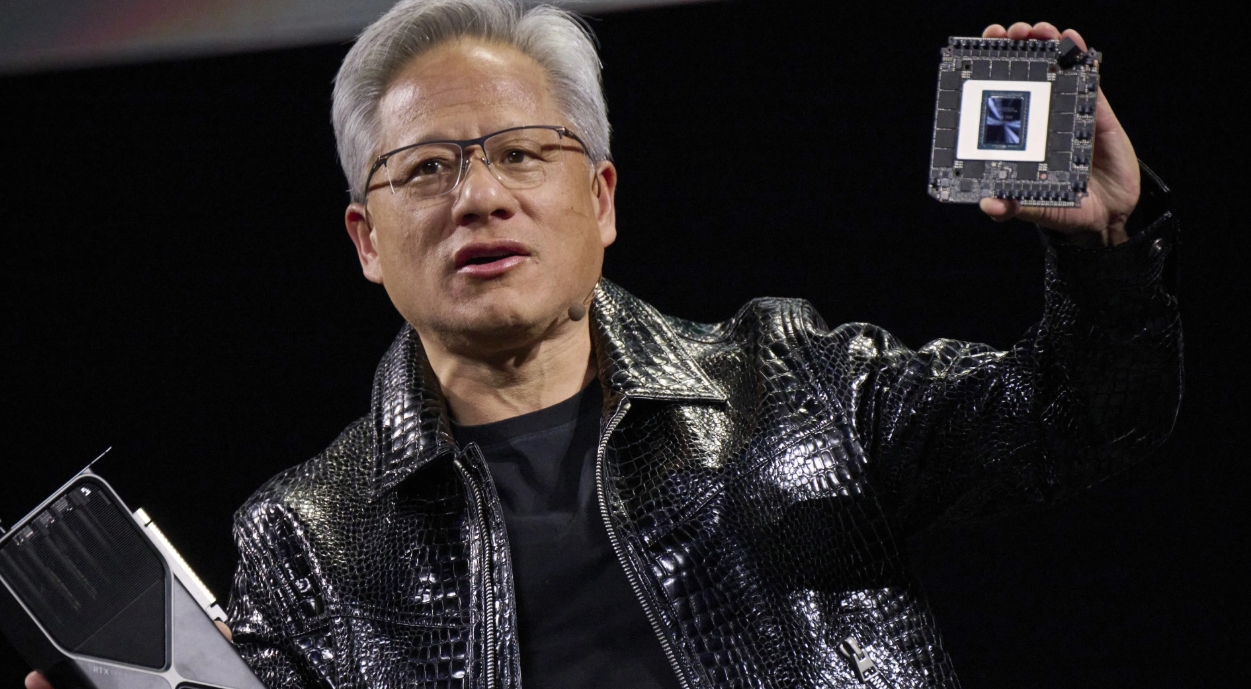
The confirmation came from an unexpected setting — a ceremony at Carnegie Mellon University, where Lip-Bu Tan was presenting NVIDIA CEO Jensen Huang with an honorary doctorate. Tan used the moment to say it plainly: Intel and NVIDIA are working on new solutions together. No specs, no timeline, no product names — but the public acknowledgment alone is a signal worth paying attention to.
This alliance didn’t emerge out of nowhere. Last year, NVIDIA purchased $5 billion worth of Intel stock. At the time, it was described as a “strategic long-term partnership.” Now it’s becoming clear that the investment was laying groundwork for something much more concrete.
Serpent Lake: What We Know About the Chip Everyone’s Talking About
Among the various joint projects being discussed, industry insiders keep circling back to one codename: Serpent Lake. According to leaks from insider Jaykihn, this will be a heterogeneous compute complex — not just a processor with a token integrated GPU, but a genuine fusion of two strengths:
-
CPU side: Intel Titan Lake generation cores
-
GPU side: An NVIDIA Rubin (or Rubin Next) architecture GPU tile
-
Memory: LPDDR6
In plain terms: imagine a single chip that handles both high-end CPU workloads and GPU performance at a level currently reserved for discrete graphics cards. The concept is already proven — Apple does it with M-series chips, and AMD does it with Strix Halo. Intel and NVIDIA are aiming to play the same game, but with a very different hand of cards.
This Has Happened Before — But This Time It’s Different
Veterans of the hardware space will remember Kaby Lake G — Intel’s 2018 processor lineup that incorporated AMD Radeon discrete graphics. It was a genuinely interesting experiment, but it never went mainstream and quietly faded away.
The NVIDIA partnership is a different beast entirely. For starters, NVIDIA is now an Intel shareholder. For another, the scope goes well beyond consumer hardware: Intel is adapting its Xeon server platforms for tighter integration with NVIDIA’s NVLink technology, enabling faster communication between processors and AI accelerators in data centers.
On top of that, there are discussions about using Intel Foundry Services manufacturing capacity to produce certain NVIDIA components. Given how heavily the entire industry depends on TSMC for cutting-edge production, this could be a strategically significant move for both companies.
What Serpent Lake Actually Means for Gamers
For gaming audiences, the potential upside is real — if the specs pan out:
Power and portability in one package. If Serpent Lake lands in laptops and compact PCs, it could mean playing demanding titles without a discrete GPU in a thin chassis. That’s a genuinely different value proposition from anything on the market today.
A direct challenge to AMD Strix Halo. AMD currently sets the pace in the high-performance APU segment — Strix Halo already powers devices like the ASUS ROG Ally X and a growing range of gaming laptops. Serpent Lake is clearly aimed at the same market, and competition at this level tends to benefit consumers.
AI features baked into the silicon. The Rubin architecture brings hardware acceleration for neural network tasks — DLSS, frame generation, ray tracing — all within a single chip, no discrete GPU required.
Workstations and professional use. For creators and engineers: faster rendering, AI-assisted computation, and fewer separate components to manage in a system.
Timeline: When to Expect It (And What We Still Don’t Know)
Here’s the honest answer: not anytime soon.
According to insider reports, Serpent Lake is at least two generations away from Nova Lake. That puts the earliest realistic consumer products at 2029 — and given how hardware roadmaps tend to shift, it could easily be later.
There are more open questions than answers right now:
-
Will Serpent Lake be available in desktops, or only in laptops and compact form factors?
-
What GPU performance level are we talking about — RTX 4070 equivalent, or higher?
-
Who manufactures the GPU tile — Intel Foundry or TSMC?
-
How will pricing work when two major companies are involved in a single product?
Why This Matters Even Before a Single Product Ships
Even with a 3+ year runway before retail availability, the existence of this project is already reshaping the landscape. AMD can no longer count on owning the high-performance APU space unopposed. Laptop and mini-PC makers now have another powerful platform to plan around.
More broadly, this is a signal about where PC hardware is heading. The era of “CPU separate, GPU separate, always” is gradually giving way to tighter integration. Apple demonstrated that it works brilliantly. AMD is pushing hard in the same direction. Now Intel and NVIDIA — former rivals — are betting on it together, in a partnership nobody really saw coming.
Whether Serpent Lake becomes the product that redefines gaming PCs or stays a niche workstation solution, the alliance itself is already one of the most consequential stories in hardware this decade.