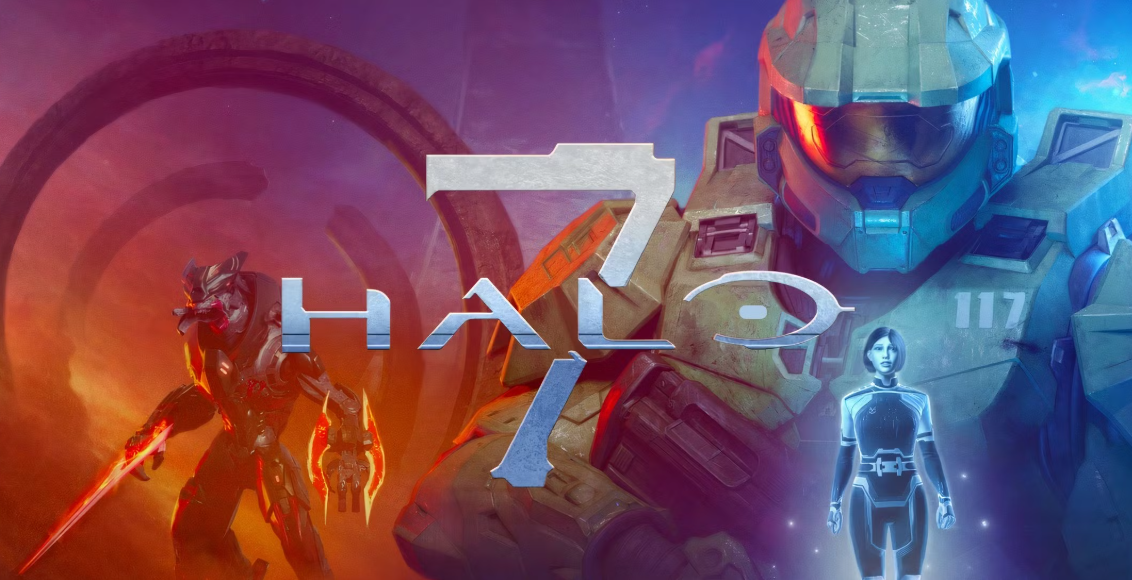
Halo Studios is laying the groundwork for Master Chief’s triumphant return: while fans await the Halo: Combat Evolved remake, scheduled to hit stores in late 2026, significant details about the full-fledged Halo 7 have surfaced online. The project, codenamed Halo Next, promises to be a direct successor to Halo Infinite, and it appears the developers have finally decided on their direction after a protracted studio restructuring.
Table of Contents
Halo 7 Development and the Current Status of Halo Studios
The road to a new installment of the legendary shooter has been thorny. Halo Studios (formerly 343 Industries) has been rocked by the past couple of years: major layoffs in 2023 and a complete reshuffle of its internal hierarchy have clearly not improved production rates. At the same time, the developers effectively curtailed active support for Halo Infinite’s multiplayer, shifting all available resources to next-gen.
Halo insider Rebs Gaming, who is heavily involved in Halo, released a fresh Halo Next breakdown on YouTube. According to him, the project has undergone significant changes following layoffs. Series veteran Joseph Staten was initially at the helm, and he had his own vision for where the franchise’s storyline should go.
Halo Next Plot and the Confrontation with the Endless
The main insight concerns enemies and lore. Many fans have been dreaming of the return of the Flood for years, but it appears we will not see the classic parasites in Halo 7—at least not as the primary threat. Staten planned not to delve into the past, but to expand the universe as much as possible with new entities.
The Endless are set to take center stage in Halo Next’s narrative. This advanced race debuted in Halo Infinite, and it is their story that Halo Studios plans to build the future saga on. This is a significant step for the series: the developers are trying to move away from repetition and create a truly fresh conflict capable of captivating audiences for years to come. (And that is no exaggeration—Infinite’s ending left more questions than answers.)

It is unclear how much the project’s vision has changed following the departure of key players in 2023, but the core of the Infinite story remains intact. We expect official announcements from Microsoft closer to the fall presentations.
Halo 7 on Unreal Engine 5 and Coming to PS5
Inside reports from Rebs Gaming have highlighted a curious detail: the project had long been known internally by the working title “Campaign Next.” While this might seem like a simple technical designation, it fits perfectly with Halo Studios’ recent job postings. The company is currently searching for a narrative design director for Halo Next—a near-official confirmation that a full-fledged title is in active production and will likely inherit the foundations of that very “campaign.” Advanced development on Halo 7 is well underway.
However, the road ahead for “Seven” will be a challenging one. The franchise has been mired in turmoil for years, and the fan community is divided. While the shooting in Halo Infinite was practically exemplary, players have raised numerous concerns about the story. Relying on the Infinite instead of the familiar Flood is a serious risk. The developers are clearly eager to push Infinite’s ideas to the limit, but a significant portion of the audience is still hoping for the return of classic enemies.
Technically, Halo 7 will be a new milestone for the entire Xbox ecosystem. Here are the key changes to look forward to:
-
Farewell, Slipspace Engine: The studio is permanently moving to Unreal Engine 5—the proprietary engine proved too finicky to support.

-
Neural networks in action: Halo 7 (as well as the Halo: Combat Evolved remake) is making extensive use of generative AI to speed up development.
-
Master Chief on Sony consoles: Perhaps the biggest shocker is the game’s confirmed release on PS5. Microsoft’s flagship exclusive is officially losing its “Xbox-only” status.

Therefore, the success or failure of the upcoming Halo: Combat Evolved remake will be a decisive factor for Halo Studios. If the updated classic is a hit with audiences, Halo 7’s credibility will increase. Otherwise, Microsoft will have to work hard to sell players on a new story on a foreign turf. Releasing on a competing platform is a forced move, but a logical one given the current market realities. What’s next? We will see in the first gameplay demos.
Why Halo Studios is Switching from Slipspace to Unreal Engine 5
The Slipspace engine has a lot of character. For Halo Infinite, it proved a real curse: on paper, it was “perfect for Halo,” but in reality, every new feature turned into a clunky hack. Production was slow, the live service was clunky, and the developers spent months just adding a single mechanic.
And now Halo Studios (formerly 343 Industries) has announced: they are switching to Unreal Engine 5. It is not just about pretty pictures. It is an attempt to plug the systemic holes that have plagued the series for years.
Critical Bugs and Shortcomings of the Slipspace Engine
The engine was built from scratch for Halo. It sounds great, but in practice, it turned out to be a monster that no one wanted to support. Every new feature required careful hand-holding. And after a wave of layoffs in 2023, Slipspace’s internal expertise dwindled—there were simply no specialists left capable of confidently polishing it.
UE5 offers a ready-made ecosystem. It has pipelines, tools for AAA shooters, and a huge community. Hiring is easier—thousands of developers know Unreal, not “that version of Slipspace that no one documented.”
Technical Advantages of Unreal Engine 5 for Halo
The main differences—we will not put them in a table; it is better to list them:
-
Support—Slipspace has internal and meager support. Epic has crowds of modders and professionals.
-
Development speed—on the old engine, it is a snail’s pace. With UE5, it is fast because ready-made solutions are already out of the box.
-
Graphics—Slipspace’s are home-made and unstable. UE5 thrives on Nanite (unlimited geometry) and Lumen (real-time lighting).
-
Tools—narrow, tailored specifically for Halo. Unreal has Blueprints, MetaHuman, whatever your heart desires.
-
Hiring—Slipspace needs shamans with unique experience. With UE5, it is easier: hire any senior industry expert.
-
Network code—Slipspace offered limited flexibility. UE5 is online-friendly out of the box.
A special boost is the combination of Nanite and Lumen. The former removes all limitations on environment detail: you can sculpt mountains of polygons without worrying about optimization. The latter illuminates everything in real time, without boring baked lightmaps. For Halo, this is a chance to make the locations feel alive again – not as flat and lifeless as in Infinite.

Risks of Porting Physics and Multiplayer to UE5
But there are pitfalls, of course. Halo has always felt different. Physics, firing timing, recoil—all of it has been honed for its own engine since Bungie’s time. Porting to UE5 is a risk: you could end up with a technically flawless, but not quite the same, shooter. If the studio does not meticulously re-tune the core gameplay, fans will say, “It is a good FPS, but it is not Halo.”
Multiplayer is a separate issue. UE5 can handle online play, no doubt about it. But Halo requires meticulous attention to tickrate, hit registration, and projectile behavior. This is precisely where Slipspace, with all its quirks, was deeply honed to the needs of the series. Will Unreal be able to replicate that magic? That is a question that remains unanswered.