While most racing simulators keep their modding communities at arm’s length, KUNOS Simulazioni is doing the exact opposite. Update 0.7 for Assetto Corsa EVO, released on June 3, 2026, doesn’t just add new cars — it opens the development toolset to the entire community. That changes the stakes for the whole Early Access programme.
Table of Contents
Four New Cars in AC EVO 0.7: From GT3 to Japanese Classic
The roster gains four additions that are hard to call padding. Each one has a distinct identity and brings something genuinely different to the garage:
| Car | Class / Character | What Makes It Special |
|---|---|---|
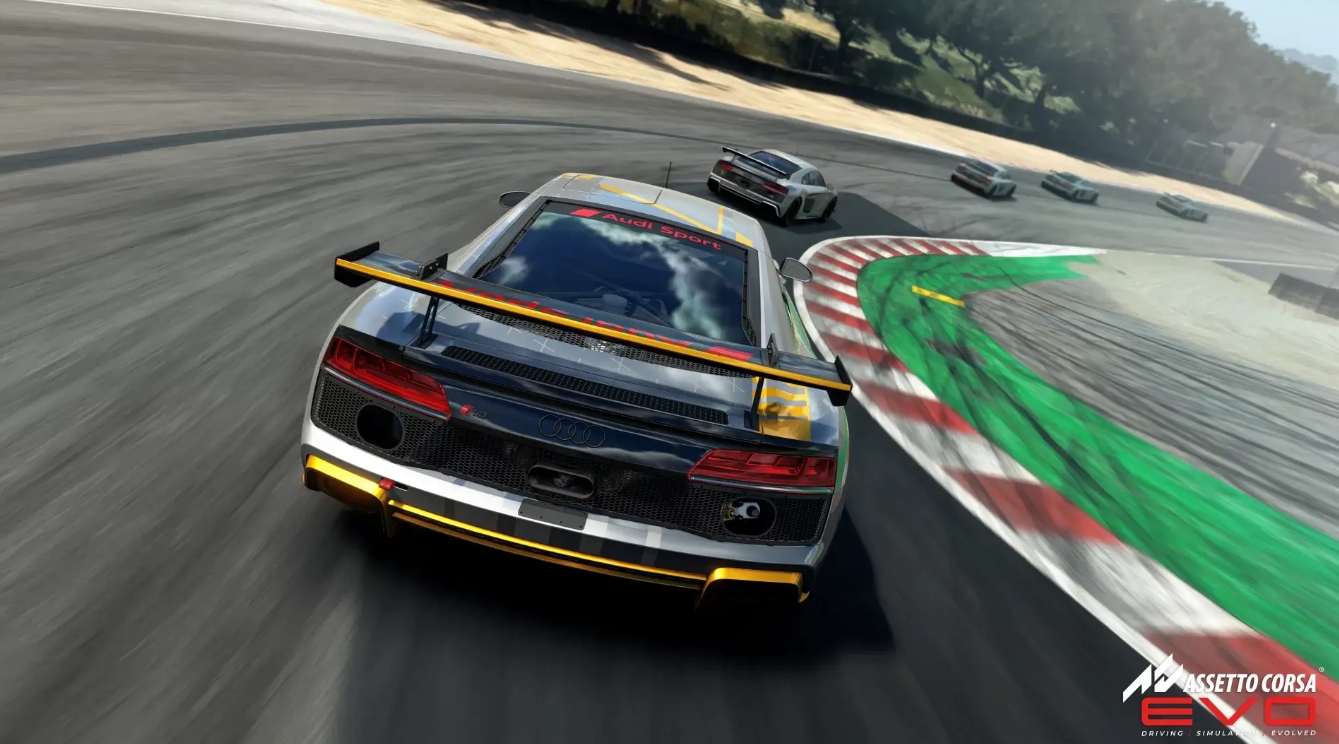
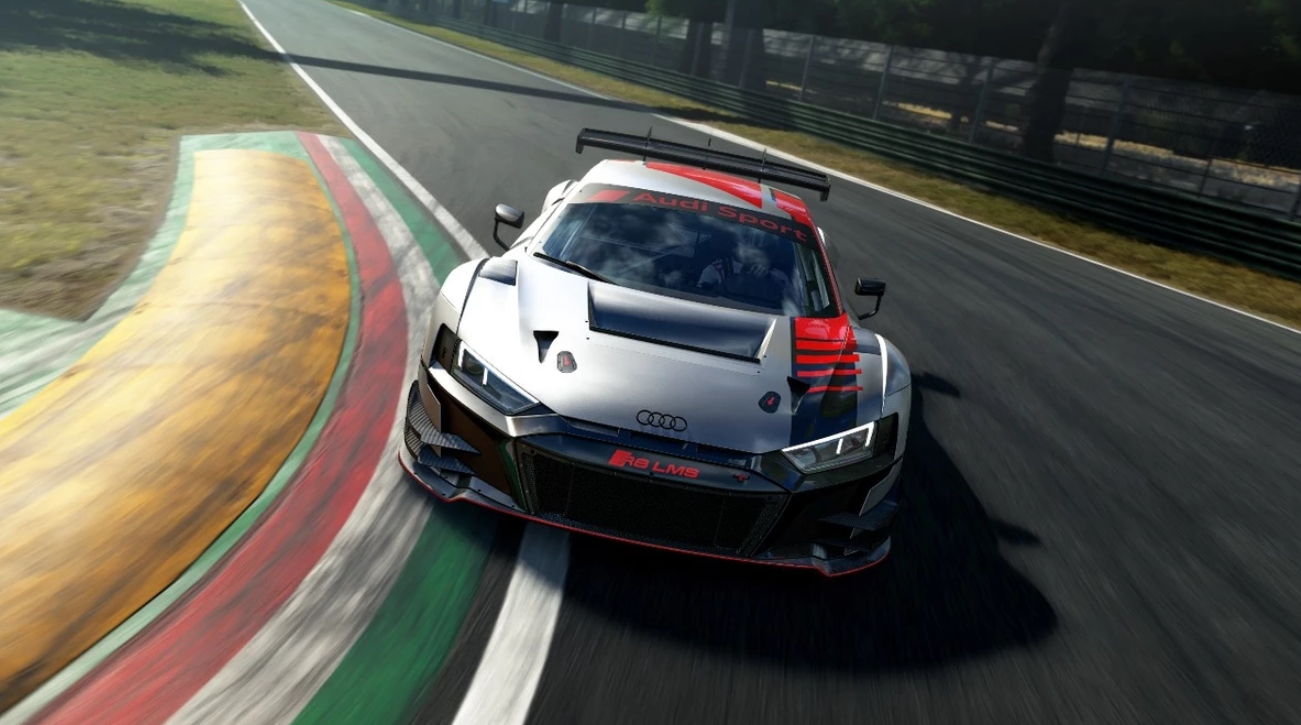
| Audi R8 LMS GT3 Evo II | GT3 / Modern | Mature aero balance, predictable rotation, consistent reward |
| Datsun 240Z (2 variants) | Japanese Classic | Stock variant + cornering-focused interpretation |
| Porsche 935 | Icon / Track Car | Long-tail bodywork on GT2 RS Clubsport platform |
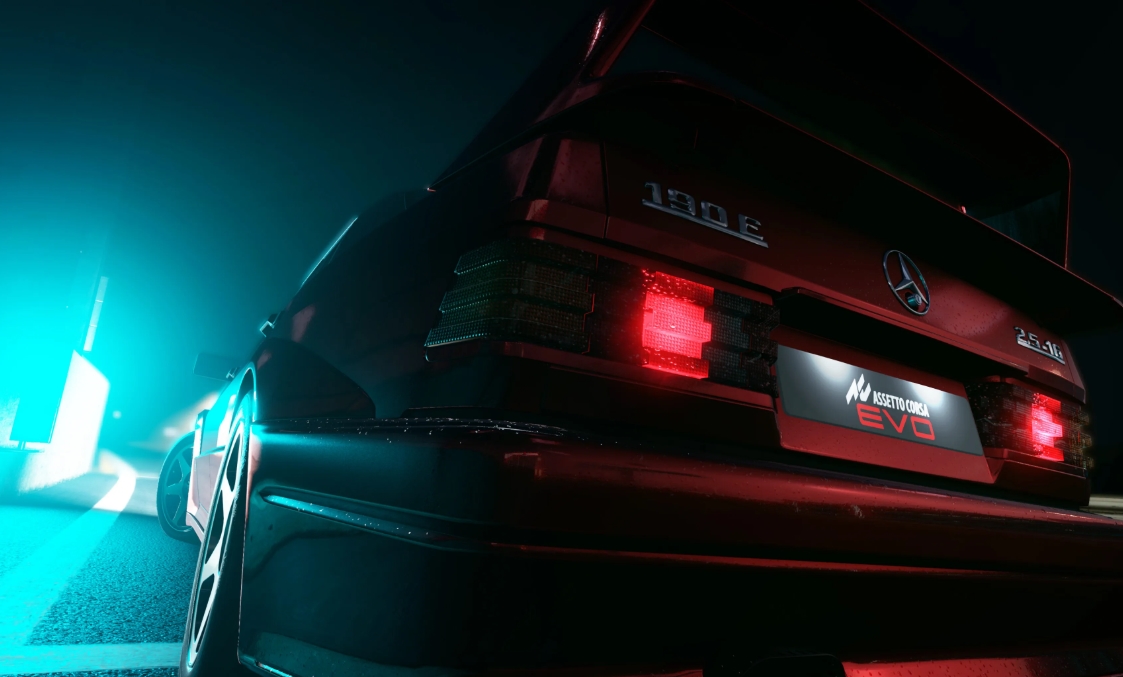
| Porsche 911 GT2 RS Clubsport Evo Kit | Extreme Track Car | One of the most uncompromising road-derived Porsches ever made |
The Datsun 240Z is arguably the most surprising addition. Two variants: one in near-stock form, the other tuned for sharper cornering dynamics. They feel like completely different cars — analogue inline-six feedback, no driver aids to hide behind, pure mechanical connection to the road.
The Porsche 935 is a modern tribute built on the GT2 RS Clubsport platform, wrapped in the unmistakable long-tail bodywork of the original 1970s racer. Dramatic aerodynamics paired with a rear-mounted engine — a combination that demands real respect under braking.
Assetto Corsa EVO SDK — The Official Start of the Modding Era
This is the most significant addition in 0.7, and it’s hard to overstate what it means. The original Assetto Corsa became a genre legend largely because of its modding scene — thousands of tracks, hundreds of cars, a community pipeline that produced more content than any official team could match. KUNOS is now opening those same doors for EVO.
What the AC EVO SDK delivers at launch:
-
Full creation of custom cars for single-player use
-
PBR (Physically Based Rendering) material pipeline — the same standard the development team uses internally
-
Complete LOD (Level of Detail) management
-
Support for aftermarket components — both visual and mechanical variants
One important caveat: this first release is aimed at technically skilled creators, not casual users. The car editor is the foundation — livery and track tools will follow in a later update.
User-generated cars currently work in single-player only. Multiplayer support is on the roadmap, alongside custom liveries, for a future update.
New Particle System: Smoke, Dust and Spray Finally in the Game
The particle system was one of the most visible gaps in EVO since Early Access launched. Update 0.7 closes it. The new effects cover:
-
Tyre smoke — appears correctly during wheelspin, slides and drift work
-
Dirt and dust — kicks up when running across gravel, grass or off-circuit edges
-
Spray — builds realistically in wet conditions, adding to both visual quality and immersion
-
Impact effects — give physical weight to hard moments on track
Everything is enabled by default. A fallback video setting is available for lower-end hardware. Particle filtering for internal cameras keeps the cockpit view clean on closed-interior cars — an important detail for drivers who race from the driver’s seat view.
EVO Safety Rating System: Clean Laps or Close Racing?
The new Safety Rating is its own philosophical statement. Most platforms reward the simple absence of contact. EVO SR is built around a different idea: your rating grows by spending time racing closely with other cars without making contact.
Five tiers — Rookie, D, C, B and A — chart progress from where everyone starts to a top tier that has to be earned through genuine racecraft. Contact is read directly from impact data: aggressors lose rating, victims are protected, and severity scales smoothly so a light brush is absorbed while a heavy collision leaves a lasting mark.
Graphics, Audio and Physics: Everything Else That Changed in Patch 0.7
The update runs deeper than the headline features.
Graphics and Rendering
-
New GPU-feedback texture streaming pipeline — eliminates random low-res textures on larger maps and reduces streaming stutter
-
Indirect specular, cloud shadows and fog in reflections all corrected
-
New texture quality setting for manual control over GPU memory usage
Audio
-
Toyota Supra RZ (stock) — complete sound overhaul covering interior, exterior, turbo and backfires
-
Toyota Supra drift variant — revised turbo, rev-limiter and idle behaviour
-
Lotus Exige V6 — brand-new interior sounds
-
FMOD engine updated, horn sounds refreshed
Physics and Balancing
-
BMW M3 E30 and Mercedes-Benz 190E — balancing pass for cleaner head-to-head encounters
-
BMW M3 E46 — engine inertia tweaks
-
Toyota GR86 — refreshed default setup
-
VW Golf 8 GTI — adjusted power figures
What Update 0.7 Means for Players — and What Comes Next
Update 0.7 is a turning point in the Early Access cycle. KUNOS are steadily building toward the formula that made the original Assetto Corsa iconic: a fully open, endlessly expandable platform built on top of genuinely honest physics.
Opening the SDK is a long-term play. The AC1 modding community created more content than any official development team could have produced in a decade. EVO now has access to that same energy.
What’s coming next: multiplayer support for user-generated cars, livery creation tools and, presumably, a track editor further down the line. The update cadence — roughly every six weeks — is encouraging. If 0.8 maintains this density of changes, EVO could be a serious challenger for the top spot in PC sim racing well before the end of the year.