The offlane is the top lane for the Radiant team and the bottom lane for the Dire team. This lane is used by specialized heroes who want to secure at least some farm early on and, if possible, slow down the enemy team’s progression. However, the offlane is one of the riskiest, and you’ll have to be constantly on guard. This is because you’ll often be facing 2-3 enemies who can kill you at any moment. The danger will last at least until the 10th minute, and you’ll need to somehow maintain farm.
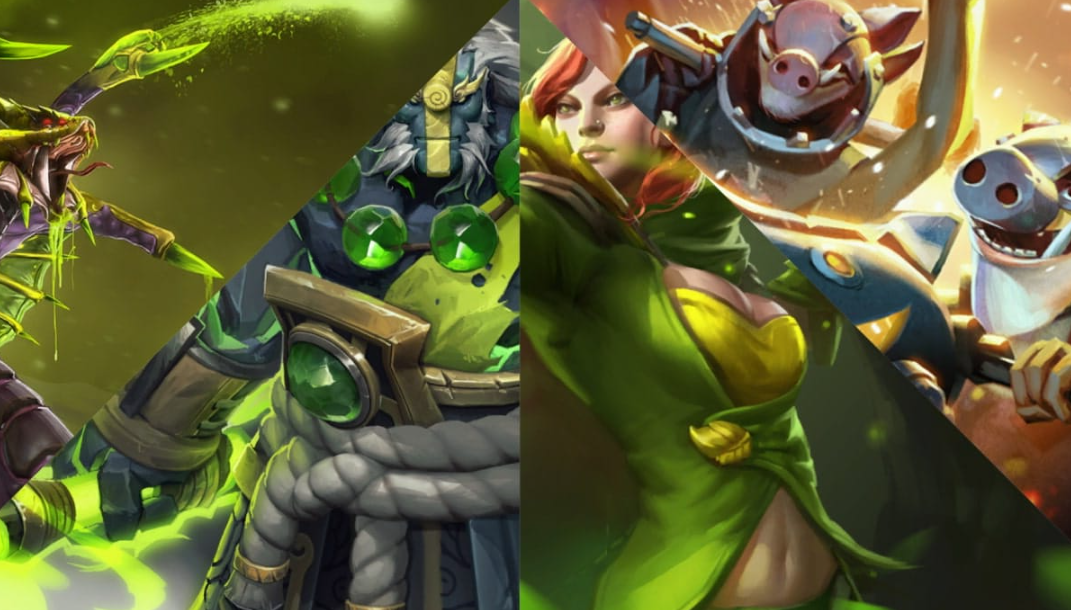
Enemies may also start pulling, which complicates the situation. In this situation, standing by the tower is no longer an option, and you’ll have to risk it again to secure any farm. Examples of heroes who are effective in the offlane include:
-
Nature’s Prophet
-
Dark Seer
-
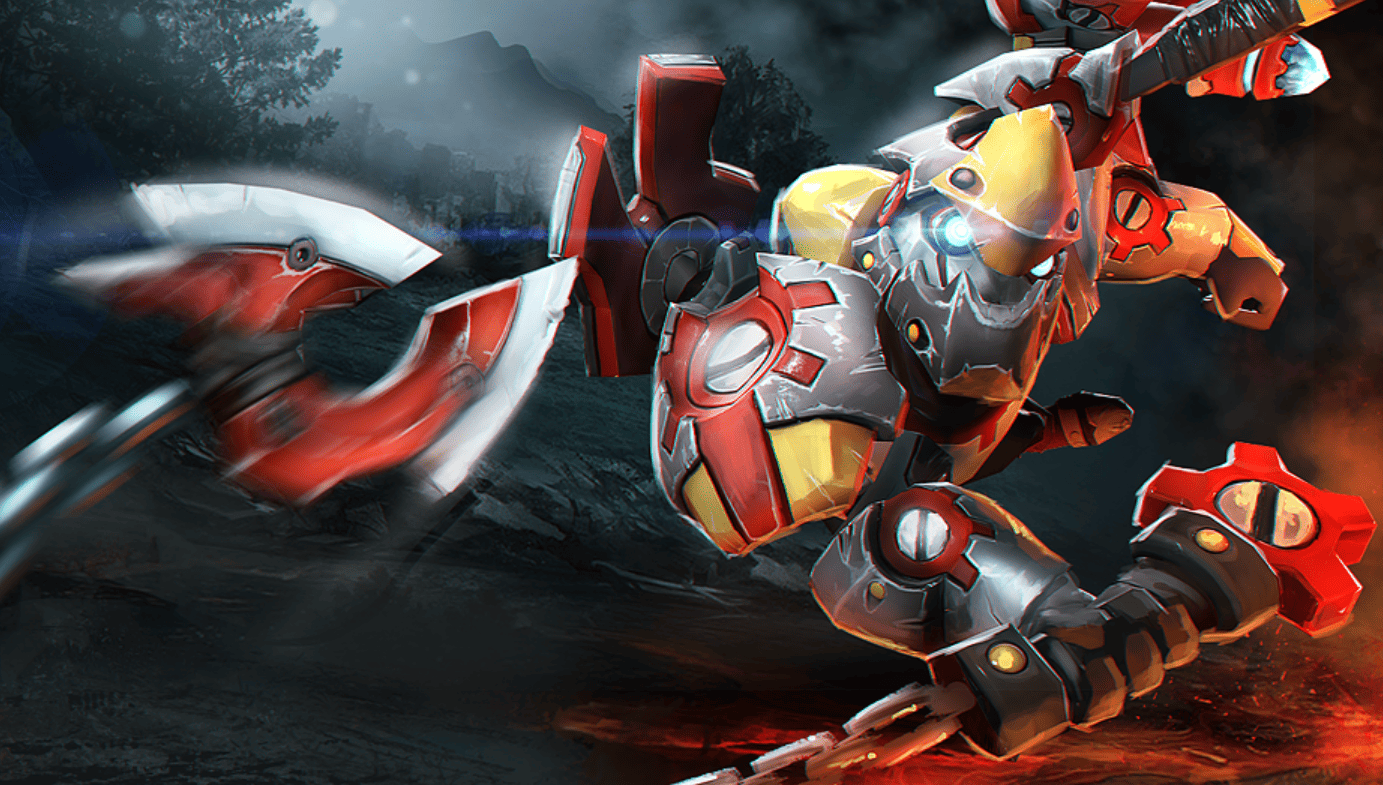
Clockwerk
-
Centaur Warrunner
-
Bristleback
-
Timbersaw
-
Axe
-
Tidehunter
Generalizing tactics for this lane is difficult because everything depends on the hero selection and enemy composition. We usually consider situations where you’re facing multiple enemies at once, since a 1v1 situation is similar to the safelane.
Table of Contents
Priorities and positioning: tower defense, farming, and aggression against enemies
When encountering the hero in the off-lane, let’s begin at the beginning. Before anything else, it’s critical to avoid death while accumulating as much gold and experience as possible. You must be on surveillance at all times to avoid dying in the lane. Additionally, make steps to slow down the enemy’s farm, especially their carry. In the long run, this will be advantageous for your team. Don’t forget about tower defense: it must remain intact, and enemies should not be able to attack it unhindered. Plus, maintain team map control. Survey nearby runes, arrange ganks, and rotate lanes. These moves usually occur when it is no longer possible to stay in the lane. The off-lane hero tends to adopt a defensive stance. In order to prevent enemies from ganking and killing you, the general rule is to keep a safe distance. It’s crucial to strike a balance, though: prevent yourself from getting too close to creeps to run the risk of getting hurt, but don’t stay too far away from them either to avoid losing experience. It’s critical to evaluate the enemy tri-lane or dual-lane composition before making a choice. Think about how quickly they can destroy you and how many disables they have. If you need to retreat, this will help you do it more effectively. Remember to consider enemy heroes’ synergies. Combinations like Mirana and Bane, for some reason, can neutralize you quickly or keep you neutralized for a long time. You need to always be alert when playing in such a matchup because they can attack from behind. You need to think about your safety and survivability in advance. Once you assess the strength of your opponents, you can decide how close to the creeps you can stay. If the enemy is weak at the start, you might be able to last-hit. But if the enemy is strong, even the slightest mistake can lead to punishment. If enemy supports remain in lane and can’t kill you, they waste a lot of time that could be used for pulling. During this time, the enemy carry also suffers, not gaining enough experience. This gives you a significant advantage if you defend and gain experience while the enemy team can’t farm effectively. If the enemy team begins to realize you’re playing cautiously and one of their supports goes into the jungle to pull, this gives you the opportunity to play more aggressively and start last-hitting. The key here is to find a balance between defense and light aggression.
Even in the most challenging situations, an offlane hero must think creatively and gain experience from creeps. To do this, simply position yourself so that creeps die within a 1300 range of your hero. At first, it can be difficult to understand at what range you gain experience and at what ranges you don’t. One way to do this is to use wards, which provide 1600 vision. This allows you to calculate a smaller range and roughly estimate the distance to the creeps. Beginner players often make the mistake of thinking that if they see creeps, they’re already gaining experience. In fact, this is not true. During the day, the hero’s review is 1800, which is much more than the experience range from creeps. At the right moment, you can always approach the creeps when they die, and the rest of the time hide behind trees or camp next to the allied tower. If you have wards in the enemy forest and you see how the enemy support is moving, you can play more aggressively without fear of sudden ganks. The main advantage of the wards is the ability to enter the forest when the enemy withdraws. You don’t need to try to kill someone or finish off neutrals – just be there and gain experience from the enemy. This is useful not only to gain experience, but also to see the movements of enemy support. This way, you will know for sure that they are really engaged in withdrawal, and not preparing to attack your line. It also helps your team: you provide an overview, reducing the chance of an unexpected attack on the middle line. In addition, being in the forest prevents the enemy from withdrawing twice. You can provoke creeps at an early stage to prevent them from moving to the next neutral camp. If you ignore the taps, chances are good that the creeps won’t reach your line and will leave you without experience.
Be careful when entering the enemy forest: always keep an eye on the line, especially the enemy carry. If he’s moving towards you, it’s best to step back right away. If the enemies catch you in the forest, you probably won’t make it to the allied tower. If you play carefully at the beginning of the game and place wards in the forest, sooner or later the enemies will be forced to withdraw. Carrie and support usually stay on the line, and these two characters are often not too strong to kill you. At best, enemy support will try to prevent you from picking up creeps, but you will have a chance to finish them off sometimecareful when entering the enemy forest: always keep an eye on the line, especially the enemy carry. If he’s moving towards you, it’s best to step back right away. If the enemies catch you in the forest, you probably won’t make it to the allied tower. If you play carefully at the beginning of the game and place wards in the forest, sooner or later the enemies will be forced to withdraw. Carrie and support usually stay on the line, and these two characters are often not too strong to kill you. At best, enemy support will try to prevent you from picking up creeps, but you will have a chance to finish them off sometimes. By noticing not only enemy creeps, but also your own, you slow down the development of enemy carry. This, in turn, affects the team and may affect the outcome of future battles.
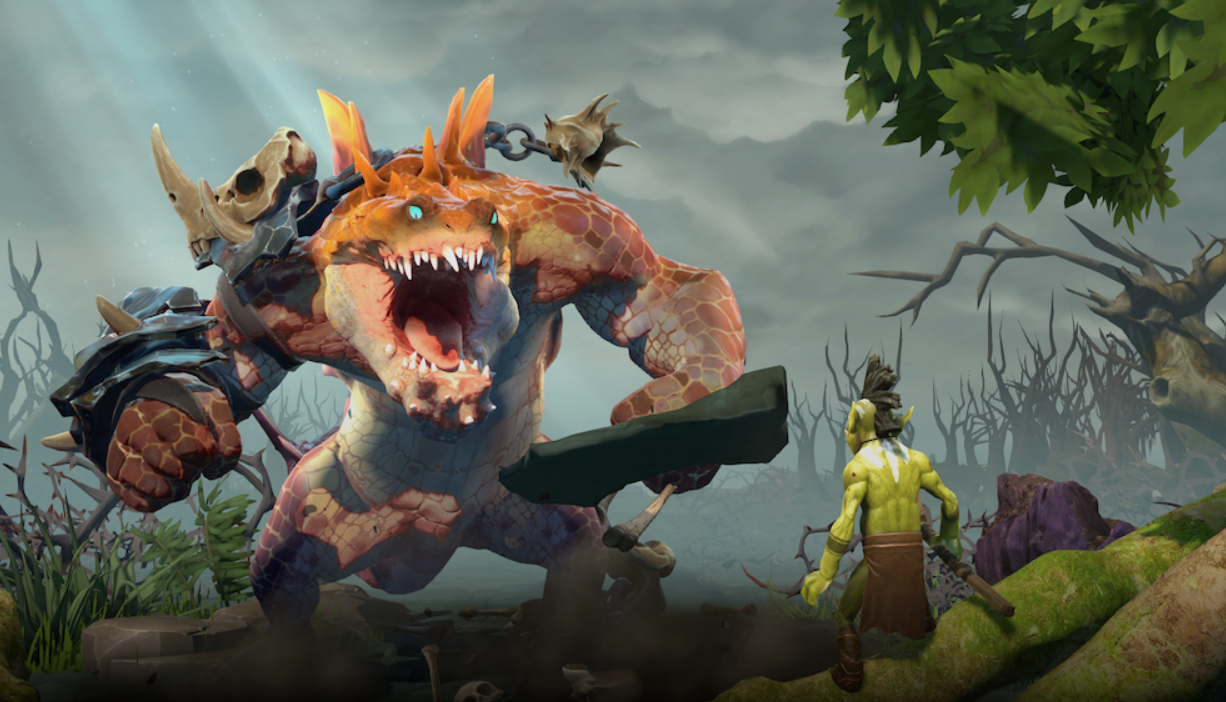
If for some reason the enemies leave carrie unsupported on the line and can’t kill you, you can become more aggressive. Even if the last hits don’t always work out, Kerry will be constantly distracted by you, and this can lead to mistakes in his farming. Even minimal intervention on your part will create a significant advantage in farming and can If for some reason the enes leave carrie unsupported on the line and can’t kill you, you can become more aggressive. Even if the last hits don’t always work out, Kerry will be constantly distracted by you, and this can lead to mistakes in his farming. Even minimal intervention on your part will create a significant advantage in farming and can greatly change the course of the game for your carry on the other line. When enemies cannot directly damage you, they will most likely try to bypass you through a river or jungle. Therefore, if you do not see all the enemies on the line, it is better to avoid the enemy forest.
Sometimes enemies may try to ambush you by going around your tower. For example, if you notice that enemies are actively pushing the line, quickly killing creeps and moving towards your tower, but their support has not appeared for a long time, this may mean that they have outflanked you and are about to leave the forest. In such a situation, the enemies will try to block your escape behind the tower. Attacking you will be risky. If enemies start attacking directly under the tower, you need to avoid their disruptions and use the scaffolding to maneuver. As soon aSometimes enemies may try to ambush you by going around your tower. For example, if you notice that enemies are actively pushing the line, quickly killing creeps and moving towards your tower, but their support has not appeared for a long time, this may mean that they have outflanked you and are about to leave the forest. In such a situation, the enemies will try to block your escape behind the tower. Attacking you will be risky. If enemies start attacking directly under the tower, you need to avoid their disruptions and use the scaffolding to maneuver. As soon as the enemies start attacking, the tower will switch to them, giving you a chance to counterattack. If you manage to destroy at least one enemy, it will be a great result, and even if you are killed, the losses for your team will be minimal.
If enemies lose control of their emotions and play too aggressively, cutting off your farm, staying in lane is pointless. In this situation, you can farm ancient creeps if your hero has a long-range attack (like Windranger). Yes, it will take time, but at least you’ll get a profit and can then return to lane when the enemies start pushing. If you’re a melee hero, you can take a rune, and if it proves useful (such as a speed rune or double damage rune), enemies will try to gank the mid lane.
One of the main tasks of the offlaner is to protect the tower from enemy pushing. If your hero has abilities with good range, they can be used when creeps approach your tower. This will allow you to draw creeps towards yourself and pull them behind the tower, which will then attack the enemy in return, preventing them from breaking down your defense. If your hero doesn’t have long-range abilities, it’s not worth taking risks; it’s better to ask your supports for help protecting the lane from pushes.
Farming and Lane Management in the Offlane for Victor
Farming in the offlane is no easy task, as you’ll be fighting on two fronts with opponents trying to keep you from getting close to the creeps. However, there are ways to make things a little easier. For example, Windranger can use Powershot, and Clockwerk can launch Rocket Flares to aid in farming. Success in the lane largely depends on how well your opponents control creep positioning. If the enemy carry is actively last-hitting creeps and the supports are pulling, the creeps can end up close to the enemy tower, which can be a major problem for the offlaner, as moving too far from your tower in such a situation is dangerous.
To improve your positioning, you need to learn how to block creeps on the move, just like you do in the mid lane. A well-executed block on the first wave of creeps will give you priority in the initial minutes of farming—the creeps will meet closer to your tower, giving you a chance to finish them off. Another way to change creep positions is to issue an attack command to an enemy hero while within a 500 radius of the enemy creeps. This will cause them to pursue you and may pull closer to your tower or even under the tower itself. It’s important to remember that creeps will only pursue you for a short time before switching their attention to a nearby target, so this technique can be repeated several times. However, it’s important to keep in mind that this requires you to get close to the creeps, making it a bit of a risk.
One option for expert lane control without anyone noticing. The idea is to move into the enemy jungle or river and enter the enemy lane just as the creeps are already moving. Upon encountering you, they will begin to follow you. Your task is then to carefully pull the creeps toward the first and second allied towers using kiting. Remember that you need to be in your lane just as your creeps are moving. This will greatly improve the encounter conditions between your and the enemy creeps, allowing you to farm undisturbed. Furthermore, this maneuver will allow you to successfully knock down your creeps, allowing you to change their encounter location to a more favorable one. This method is quite risky and rarely used, but it can be very effective. Heroes like Lone Druid (with his Summon Spirit Bear) or Bounty Hunter (with the invisibility of Shadow Walk for added security) are excellent candidates for this.
One of the most effective methods of controlling the enemy lane is the pull technique, where supports direct their creeps toward neutral monsters. The hardlaner must react to these actions and disrupt them as much as possible. Of course, small pulls into a small neutral camp can be difficult to deal with, unless you can manage to place a blocking ward. However, there are several ways to maximize their impact in small doses.
First, try to approach the neutral camp so that you’re 1300 range from the creeps, so you can get some experience without engaging the nearby creeps. Second, if the enemy tries to double-pull, you have a chance to disrupt it. Once a wave of creeps destroys the small camp, the supports will likely try to redirect them to the neutral camp’s middle camp. To prevent them from doing this, you can either aggro the enemy creeps and run back to the lane with them (although this is quite risky), or preemptively attack the neutral monsters in the next camp with your abilities, preventing the enemy from pulling. This approach will not only help you gain some experience, but also, if the enemy fails to double-pull, the remaining creeps will return to the lane. Ultimately, this will create a cluster of enemies who will push your lane en masse. In turn, with your permission, it will become easier to farm near your tower, taking creeps with minimal risk. If an enemy makes a double pool and all his creep troops die, this is an unpleasant situation for you: you lose an important amount of farm and experience. However, with a single bullet, although you lose a little farm, later you can compensate for the losses at the tower, where the creeps will reappear. Keep an eye on the movements of the enemy carrier: if he starts moving in your direction, it is better to immediately retreat to avoid trouble. If you play as Radiant, you have the opportunity to drag neutral creeps from the enemy forest to your line. To do this, you need to damage a couple of trees, wait for the allied creeps to approach, and then attack the neutral monsters and drag them to your side. This method is not difficult — try it a couple of times and everything will work out. Such a pool will disrupt the creeps’ position in the line, because your allies will die faster. Of course, the enemy will notice that the creeps are stuck and will head into the forest, but you can always stay close and gain some experience, because experience from neutrals is shared between all the heroes, regardless of who killed them. Another useful way is to place wards in the enemy forest to block the spawn of neutrals. This is a protective and at the same time gentle method. While the enemy supports are trying to make a pool, they will either have to stay on the line or search for your hidden ward, wasting time and resources.
Rune Control and XP in the Offlane: Playing with an Advantage
Rune control is not only a task for support or miders, but also an important role for the hero offline. Sometimes it’s worth picking up a rune, especially if your enemies are actively surviving and you don’t have time to farm. In such cases, the rune will be an excellent alternative to wasting time. Acceleration or Double Damage runes will be especially useful, which give you a significant advantage, as well as the XP rune with the first appearance at 7 minutes and throughout the match will appear at such an interval, take it as soon as possible by telling your support.
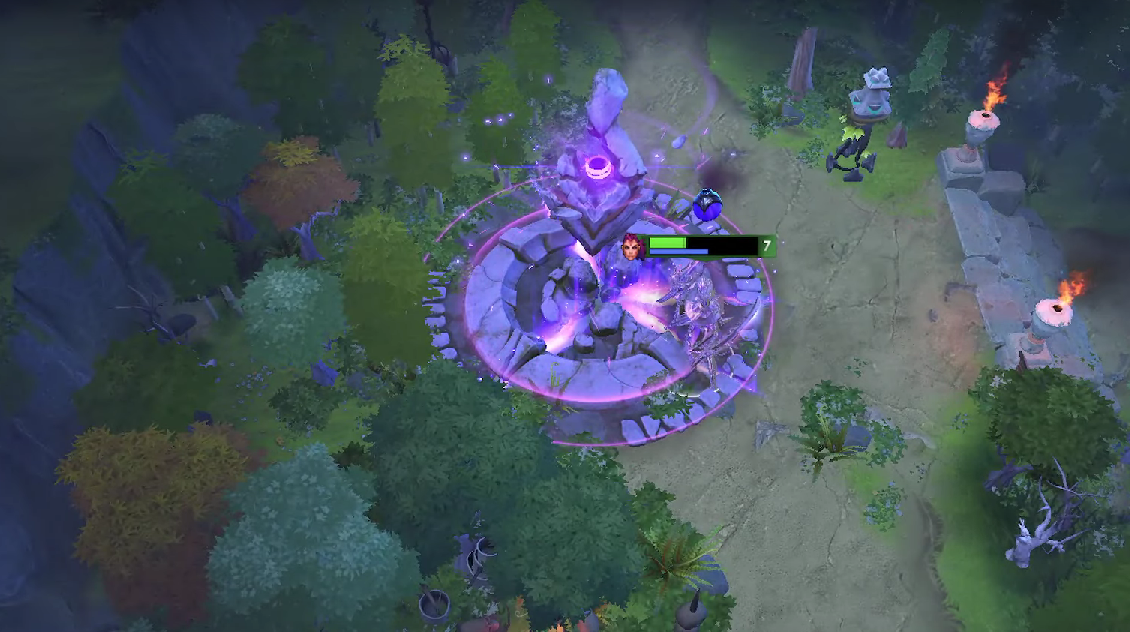
Do not forget to analyze the runes of your mider. If he controls them well, don’t stop him from taking the rune, and if not, your help definitely won’t hurt. Even if you don’t get a bonus from the rune, at least you won’t let the enemy use it.
Harassment techniques for the offlaner
Problems with harass arise when you need to reduce the enemy’s health, but not kill him. For an offline player, such tactics can vary greatly depending on the chosen character. For example, if your character uses ranged attacks, you can periodically damage the enemy with normal attacks. For a nearby hero, you will need to buy a Stout Shield item and carefully calculate your strength before you start harassing. However, the biggest threat to the enemy is harassing the enemy carry, as he will be forced to change his playing style or even skip the creep. Dealing damage forces the enemy to spend healing items, and he will need to decide whether to continue standing on the line with low health, buy new consumables, or return to base. Each of these solutions will be beneficial for your team, but it is not always easy to achieve this. Often you will have to fight with the enemy support, which protects its carrier. Sometimes he overestimates his strength and tries to harass you. In this case, you can use auto attacks or your abilities to win this battle. For example, when playing as Windranger, if the enemy support is Keeper of the Light, who is trying to knock you off the line, use Windrun to dodge attacks and at the same time land several shots. After several such attacks, it will clearly become harder for him. If the enemy continues to attack you, you can use Shackleshot to catch him and end the battle. If you play as Bristleback, Quill Spray is a great way to deal damage, especially if the enemy ignores these needles at first, but later begins to realize how painful they are. Viscous Nasal Goo will help you slow down your opponent so that you can “finish him off”. These examples show how underestimating the strength of an offline player can lead to dire consequences for the enemy.
Kills and Rotations for Destroying Enemy Towers and Defending Your Lanes in the Offlane
As for the rotation between the lines, it all depends on the hero and his abilities. Some heroes begin to actively move between the lines and do so effectively only after a certain level or purchase of the necessary artifacts. Others start earlier and are no less successful. In any case, you can always buy a Town Portal Scroll to quickly teleport to the right line and help your allies. If you decide to go down the line with the intention of making a gank, it is important to carefully assess whether your help will be decisive. Think about whether you and your team can destroy the enemy. If in doubt, it’s better to stay on your line and continue farming. However, rotating between lines is not always just about killing an enemy. If your hero is able to defend the tower from push, and several enemies are going to demolish it, teleporting there will be a great solution. If you have a powerful fluffy hero, going offline to destroy an enemy tower is quite justified. Quick reaction skills and the ability to navigate on the map are extremely important for offline users. Although there may be few resources on the line, skillful ganks and quick reactions will help make up for this and catch up on farming. In any case, you should not focus only on staying offline.
Choose your heroes based on the latest patch and the best characters.
It is very important to remember that the rules of the offline game are constantly changing with each update. For example, Icefrog may make changes to the jungle, and then our current strategies will become irrelevant. Therefore, offline players should monitor not only changes in their role, but also other positions in order to always stay on the wave.
For me, the secret to being a good offline player is to make sure that my carriers don’t run into problems with pharma. This means that I choose heroes who can actively support the team, but are not dependent on gold. For example, Bane performs well in pubs, and it occurred to me: “Why not use him in team games?” As it turned out, my EG partners supported this idea — Bane is quite effective in such a role.
Offline in different teams
Each team approaches the role of an offline player in its own way. For example, in EG, a hero is important who relies more on his abilities than on objects. In the current patch, it will be difficult to collect many artifacts offline, so it is more important that the hero can use his skills to benefit the team.
An excellent example of such a hero is Pak. His versatile abilities are suitable for most situations. If there is a problem with gold in the game in the later stages, a talent for gold can help compensate for this point.
More aggressive and extravagant characters are acceptable in teams such as Team Secret, where carrion can make do with minimal farming. For example, Ace can play even with a small amount of gold, which allows the offline player to choose a hero who is more dependent on the farm.
If I decide to take a more greedy character offline, I’ll probably need help from my teammates. I can say, “Don’t enter my line unless you’re sure you can kill the opponent.” In the case of universal heroes, I try to give more space to my allies, collecting as much gold as possible at this time.
Don’t forget about the beginning of the game
Now the initial stage of the game has become much more important due to changes in the mechanics of experience withdrawal. Previously, even if you were severely “rolled back”, you could make up for the lost experience. Now it’s much more difficult to do this, so the starting stage of the game becomes crucial.
In addition, there is now an important change in mechanics — a full bonus is given for the experience taken away, even if the creep is killed by neutrals. Creeps now appear closer to the tavern on safeline, which makes the battle for experience faster and more equal. This is a really useful innovation from Valve for offline players.
There is no one right way to play on a difficult line
Offline mode in the current patch gives a lot of room for imagination when choosing characters. The main thing is that your character benefits the team and his skills work effectively throughout the game.
Conclusion
When the game reaches 50 minutes, your choice of offline hero depends on the situation and which hero you have chosen. Offline players can be initiators, half-monsters or tanks, and your actions will depend on the characteristics of the chosen hero. Playing offline is not an easy task. Here you need to find a balance between defense and attack. If you play too carefully, you may not get enough gold and lose the enemy’s farm. Playing too aggressively can lead to a quick death. Therefore, a successful offline game requires the right combination of these two strategies. It is important to understand exactly what your opponent can do, take into account his abilities and evaluate in advance how and when he will use them. Offline is always associated with risk, because you cannot be sure of the opponent’s position.