In October 2025, the Counter-Strike 2 community faced a serious financial problem: the market for game items dramatically lost $2 billion. The total amount was one third of the total value of all inventory items. Until October 22, the market was estimated at $6 billion, but after an update from Valve, it dropped to $4 billion, according to statistics. The reason was the reworking of the mechanics of Trade Up contracts, which negatively affected the entire trading system.
Players all over the world were hysterical, and they had good reason to be. Let’s figure out what went wrong.
Table of Contents
Revolution or collapse? Why there was a collapse in prices for knives in CS2 with the update
Previously, it was possible to get the knives or gloves of the series that a person dreamed of, almost only from special cases, where the chance of their loss was scanty. It was this total shortage that generated fabulous prices, making such items not just a thing, but a status symbol. However, the update turned everything upside down.
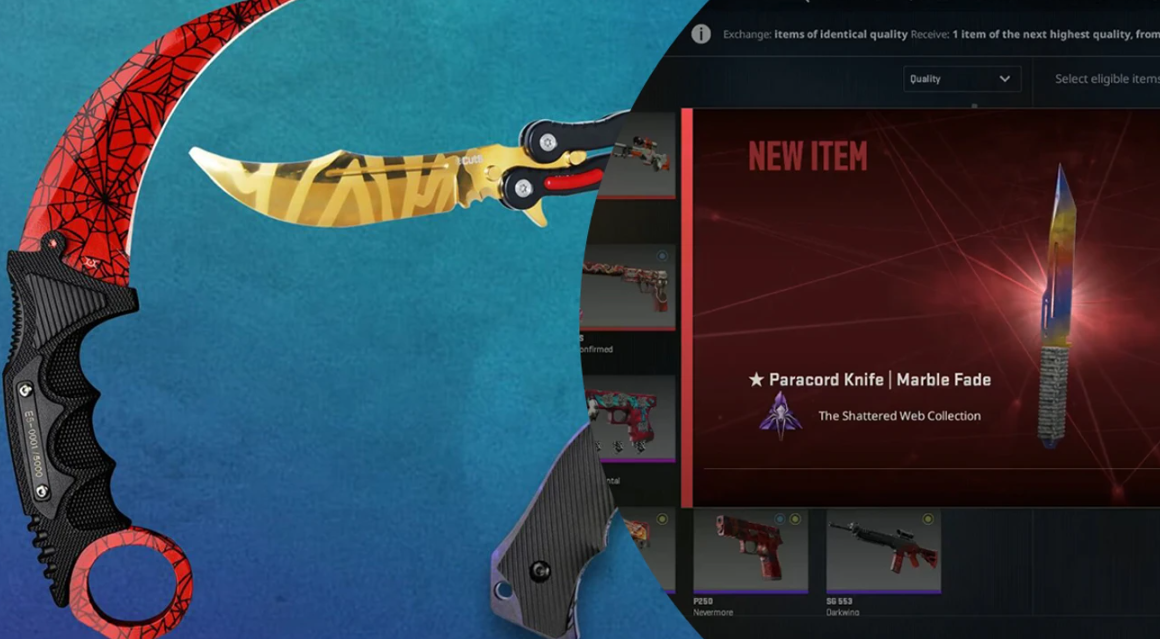
Players now have the opportunity to exchange five Covert-rank skins (the famous red rarity) for guaranteed knives or gloves from the corresponding collection. It would seem that what’s wrong with that?
The whole hidden idea turned out to be in the details. Rare knives, which had previously been in short supply, rushed into the market with a rapid downward trend in analysis. The confusion began, which many dubbed a market nightmare. Players began to create these once-exclusive items en masse, buying up more affordable “red” skins for this. The result? The prices of the knives themselves have collapsed at the speed of sound: what cost $1300 yesterday was flying off the shelves for $200 today.
The situation is complicated by the fact that a decrease in some prices was accompanied by a sharp increase in others. In particular, the demand for Covert skins has caused an increase in their cost, in some cases exceeding 2000%. As a result, a paradoxical picture is observed: expensive items lose their value, and their components become rare and valuable.
As a result, the market has developed with a character of great instability. Assets that were previously considered reliable have depreciated, while less important goods have suddenly acquired the status of scarce and expensive.
CS2 Market Volatility: Why Skins Behave Like Cryptocurrency
The gaming audience responded warmly. Many players and merchants internationally were shocked by the rapid changes. For those who owned expensive knives and rare gloves, this was a serious financial blow: their valuable collectibles were sharply devalued. At the same time, the market saw an increase in prices for Covert skins, and trading platforms experienced unprecedented excitement.
Merchants quickly changed their strategies. Some were trying to capitalize on the rise in price of Covert items, while others were hastily selling gloves and knives that were losing value. There were so many new offers on the market that the most popular ones sold out in almost a matter of seconds.
And here’s the paradox: even against the background of a general market decline to $4 billion, some rare items in the inventory have suffered losses, just look at the numbers with growth.:
-
Moto Gloves | Cool Mint (Well-Worn) — soared by 142%
-
Karambit | Case Hardened (Factory New) — increased in price by 119%
-
Specialist Gloves | Mogul (Minimal Wear) — added 109%
-
M9 Bayonet | Doppler (Minimal Wear) — an increase of 106%
-
Sport Gloves | Superconductor (Well-Worn) — doubled in price (+100%)
Analysts draw direct parallels with the fever in the cryptocurrency and stock markets. The Counter-Strike 2 skin market is really famous for its wild volatility — in other words, prices here can jump into the sky or collapse in a couple of days. The price of items is affected not only by the principles of gameplay, but also by the opinions of merchants, speculators and collectors. But unlike bitcoin, it has its own manager, Valve. Its updates can quickly change the entire market, affecting supply and demand.
The reaction of the players and the silence of Valve
The skin market in Counter-Strike 2 has long ceased to be just an element of the game, turning into a complex financial system where skins and items are traded for real money in any currency. The changes made by the developers have a resonant effect on this system. A recent update has led to dramatic price fluctuations, resulting in multibillion-dollar losses for owners of rare skins.
The players express their dissatisfaction, claiming betrayal on the part of the developers. Social media was filled with calls for a boycott and demands for compensation. Players who have suffered losses view skins not just as items, but also as investments and status symbols. Stories of financial losses are spreading online. There are even reported cases of suicide in the wake of the crash.
Traders, these whales of the virtual economy, fared the worst. The market collapsed overnight, leaving them no time to maneuver. In a panic, someone threw the skins onto the playgrounds, trying to save at least something. Others, on the contrary, froze transactions in the vain hope of an early price recovery. Trading platforms literally trembled from the abnormal activity. The community split in two: some welcomed the changes as a welcome democratization and a breath of fresh air, while others vehemently accused Valve of carelessly destroying an established ecosystem.
But, as often happens, in a crisis, there were those who saw new opportunities. The market has suddenly become more accessible for beginners and those who previously only looked at rare things with a tone. As a result, an extremely tense and toxic atmosphere developed, where the fear and anger of some mixed with the hope and excitement of others. Valve is still fiercely silent about the stability of the situation, and the entire community is holding its breath in anticipation of the next step. One thing is for sure — this story is still far from its denouement.
Reassessing Values: How Approaches to Monetization in CS2 Have Changed
The decline of the skin market in Counter-Strike 2 caused confusion and a sober assessment of the situation in the professional environment. The players and the leading teams felt a blow to their image, reputation, and finances. Valuable items that formed part of their image and brought additional income quickly depreciated. The community discusses losses, shares experiences, and asks Valve questions about the lack of warnings for such situations.
However, the new excitement around trading has prompted many to rethink the value of virtual assets. Now the focus is not so much on the rarity as on the ability to quickly sell an item. Others are looking for new ways to make money by strengthening partnerships and producing content for monetization, as the old monetization methods have stopped working.
“I feel robbed. I think so does a good half of the community,
” says Mikhail “Kane” Blagin, an assistant coach at Inner Circle.
On the sidelines of clubs and at management meetings, it’s not just about short-term losses. The main issue is long—term stability. How to keep motivation in the team? How do you fulfill sponsorship obligations when one of the team’s assets is so unpredictable? So far, there is little clarity: the risks remain, the rules of the game have changed, and there is simply no single plan on how to proceed.
Women’s esports: how to break stereotypes and build a career
As a result, opinions in the pro scene were divided. Someone says that we need order in the management of things, skins and normal communication with fans. Others believe that the crisis is a reason to change everything and think about who does what in esports.
Streamer Alexander “Nix” Levin says that the changes in crafting and trading are to blame for everything. He joked about the “conspiracy,” but actually said the main thing – the developers don’t explain anything. Due to the sudden changes during the day, everything broke down in the balance of supply and demand.
The story suggests a lot of thoughts, but only that the gaming economy is very weak. Just yesterday, all the players and traders felt good, but today their investments and plans are already in question. Yes, the new rules have made some things cheaper. But at what cost?
And yes, the main thing is to remember: no knives, skins, or even the games themselves are worth your peace of mind, much less your life.
CS 2 skins market capitalization grew by 19% in November
The market of skins for Counter-Strike 2 showed an intensive growth progression: in the 24 hours of November 2, 2025, its total capitalization jumped by as much as 19%.
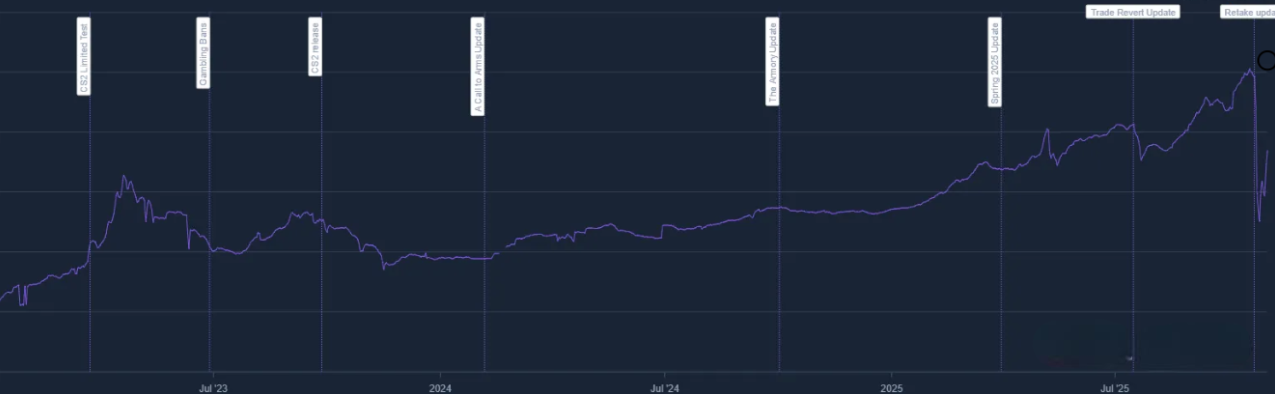
After the recent market crash on November 24, when the value of online items dropped by $1.8 billion, there has been some recovery. The drop was caused by the release of an update that introduced the ability to create knives and gloves. This sharp decline is the largest in CS2’s history. The total value of the items dropped from $6.057 billion to $4.689 billion.
It all started on the night of October 23, when the game introduced an exchange system: five items of classified quality could be exchanged for a random knife. And after that, players were allowed to create weapons with StatTrak.
What do you think about the future of the skin market? Will he justify himself and return the old price tags? Or are we witnessing the end of an era? We are waiting for your thoughts and forecasts in the comments — this picture is incomplete without you.