

The year was 2007, a remarkable time that gifted us with many iconic games. It was in this memorable year that Overlord made its debut. Though it had its flaws in both gameplay and visuals, it provided players with a captivating experience. The narrative explored a familiar heroic fantasy from a fresh and unique angle, allowing players to step into the intriguing shoes of the Dark Overlord and embrace their power.
Table of Contents
Overlord Raising Hell Free Steam Account
The concept of good and the quest to save the world is a recurring theme in almost every fantasy game, where a knight of light finds himself in bizarre confrontations, such as battling a donkey for some odd cause. At best, we encounter dilemmas involving the choice of the lesser evil or navigating through a spectrum of gray morality. Even within the realm of adult-themed dark fairy tales, playing the villain often does not provide any significant advantages or rewards.
However, as the genre continues to evolve, it becomes increasingly saturated with clichés and familiar tropes that have been worn thin over time. This trend raises the likelihood of parodies or satirical works that aim to mock or outright ridicule these overused elements. So, let’s skip the lengthy introductions and focus on a game from June 2007—Overlord. Just be careful not to confuse it with the similarly titled anime featuring an all-powerful yet somewhat foolish skeleton, which frequently overshadows this project in search results and discussions. It’s essential to recognize the unique charm and creativity that Overlord brings to the table, setting it apart from more conventional titles in the genre.
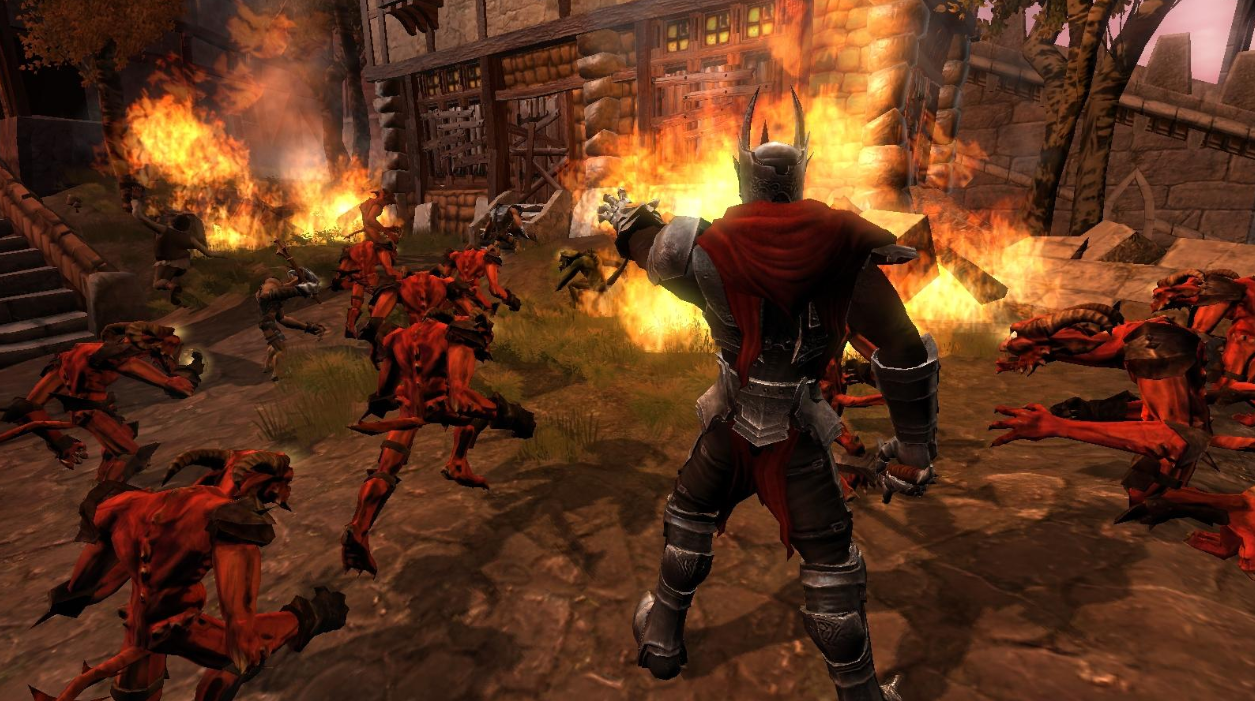
But let’s dive right in. Our guest today is an action-adventure game that seamlessly blends RPG elements, real-time strategy, and metroidvania mechanics. Quite impressive for a relatively brief game without an open world, wouldn’t you agree? Developed by the talented Dutch studio Triumph Studios, which is known not only for “Overlord” but also for the beloved Age of Wonders series, this title was published by Codemasters, a company that’s now part of EA. The game is available on both PC and various consoles, making it accessible to a wide audience.
Before we get into the details, it’s essential to note that we’ll be discussing the game alongside its expansion, Raising Hell, which was released just six months later, in February 2008. This expansion not only enhances gameplay but also deepens and concludes the intriguing story of our main antagonist. Additionally, I usually analyze games through their narratives, as understanding the context is crucial for grasping why I feel a certain way about each title. So, be warned—spoilers are ahead! If you’re sensitive to those, feel free to jump straight to the “Gameplay” section, where I’ll discuss the mechanics in detail without revealing any plot twists.
Plot
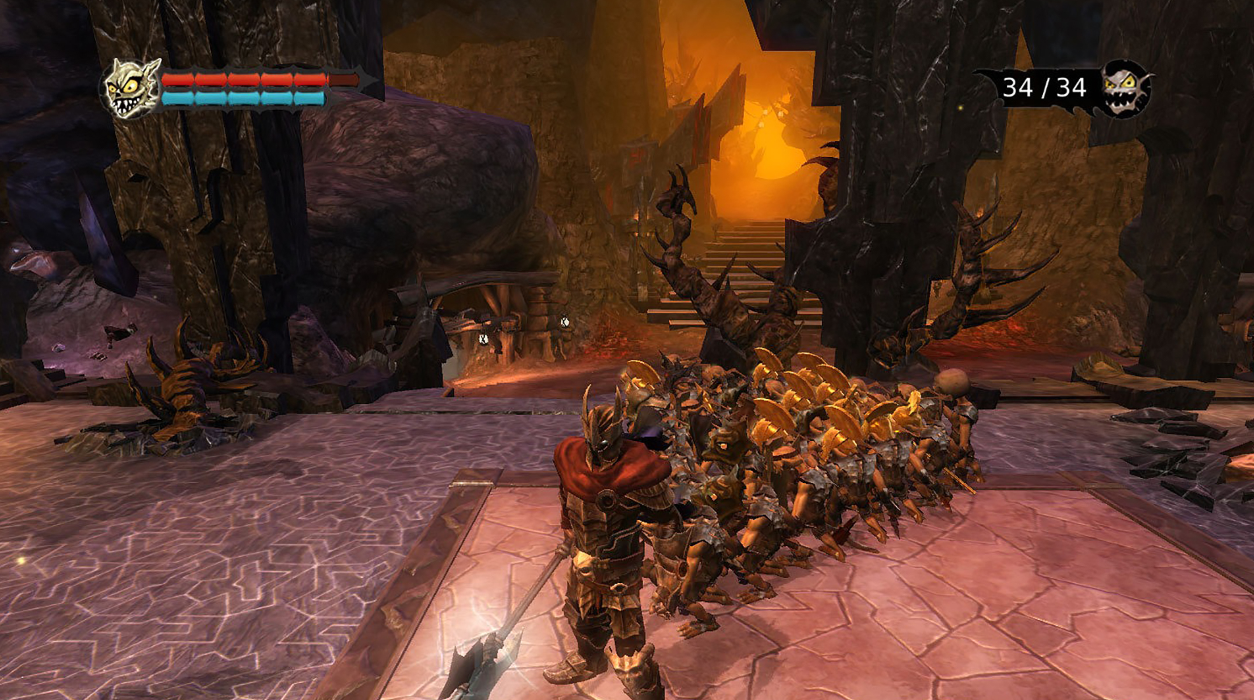
The story begins at the moment our quiet protagonist, with sparkling, curious eyes, is unearthed from the rubble and adorned in a menacing armor that evokes the fearsome presence of Sauron. As a dignified ruler, we must gather an army, a wise advisor, and a cunning jester. All these roles are humorously filled by quirky minions—a peculiar blend of goblin, leprechaun, and Santa’s whimsical elf. Offering sage advice and elucidating the gameplay will be Gnarle, the oldest and wisest among them, whose experience is invaluable. For the time being, our battles will be fought using the common brown creatures—the most abundant and reliable of our allies.
The first crucial task for our newly appointed Lord is to seize lands from which to extract much-needed tribute and resources. The nearest village, Kutyezh, unfortunately, is already under the control of plump halflings, who are far too comfortable in their dominance. Naturally, this arrangement is far from satisfactory to us, so we set off on a quest to determine whose club is truly mightier and who will emerge victorious in this struggle for power.
So, what was I saying about those plump hobbits? I might have been too quick to judge. I really underestimated their leader, Melvin. If this game were released in today’s world, Twitter warriors would tear into the developers for daring to make this symbol of body positivity into a villain. Although… he is technically a Hero who overthrew the previous ruler and seems to stand for Good, which should make him admirable in many eyes. Yet, he’s been resting on his past achievements and indulging in sheer pleasure.
Anyway, when that hefty fellow exploded, our Lord was faced with a significant moral quandary: should he keep the food for himself to boost his health or share it with the citizens of his newly established Empire of Evil? Such dilemmas will certainly arise throughout the game, forcing players to think critically. I’ll prioritize long-term benefits over immediate gain, so, naturally, the provisions will be given to the villagers instead. After all, building a strong foundation is key to true power.
Meanwhile, the army received a welcome influx of new recruits: the Reds, skilled archers capable of absorbing flames. This was fortuitous timing, as one of the three nearby foundries had just been discovered, offering a chance to upgrade our equipment significantly.
Shortly after, an unexpected attack on the castle of Kutezh unfolded, launched by a group of audacious bandits. Our Lord, initially bewildered by the chaos, decided to confront them directly, but in a surprising twist, he ended up finding a wife amidst the conflict. The local ruler, Rose, quickly assessed the situation and realized who would wield power in these lands in the near future. Without hesitation, she moved into our Tower and began to impose her vision of order and organization within the freshly renovated structure, determined to bring stability to the realm.
Our next destination took us to the enchanted elven forest, where peculiar roots twisted through the earth like ancient serpents. There, we stumbled upon the ethereal spirits of the elves and their regal king, Oberon, who was entwined with the Great Tree, caught in a timeless slumber beneath a shimmering magical barrier. To stop the relentless spread of the aggressive flora that threatened the balance of nature, we needed to carefully prune the roots of this hybrid menace. Almost immediately, we encountered the green minions, impervious to poison and deadly in combat, whose eyes glinted with a fierce intelligence. However, they were quite fragile in direct assaults, which was completely understandable given their nature.
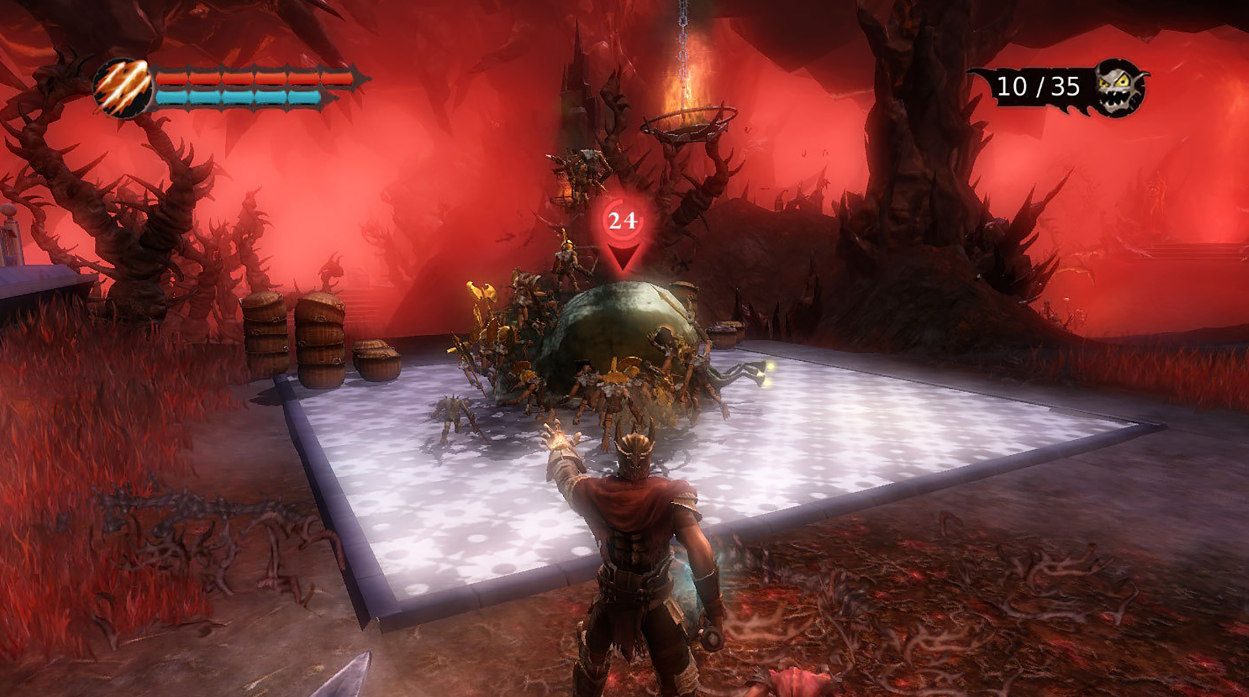
At this moment, eliminating Oberon is out of the question, as we are missing the final type of subordinates—the elusive blue ones, which we must track down near the city known as Celestial Abode. There, a new chaos was unfolding: a terrifying rise of the undead, creeping through the shadows like a nightmare come to life. Nonetheless, we must remain focused; after discovering the last stronghold, we would turn our full attention to Oberon and his fate. Along the way, we also met another curious duo: Julia and Kan, who had grand plans to rob the elves but were outpaced by the cunning dwarves, who always seemed to be one step ahead.
It was indeed crucial to stop the spread of the infection, as the Master was struggling to gain control over the undead, and without loyal subjects, the treasury and storehouse would see no replenishment. The minions didn’t mind their circumstances; they could survive on mushrooms and insects, but our Evil still yearned for a hearty meal. Furthermore, a single forge simply couldn’t sustain itself without help.
In the city, William appeared—another former hero who was supposed to marry a woman named Elena (originally Velvet). However, due to recent calamities, his wedding preparations were temporarily halted. The issue turned out to be a rather unfortunate detail: either the bride was being uncooperative or she simply did not wish to offer herself before the wedding. This situation led our vanquisher of evil to summon a succubus, inadvertently triggering a localized zombie apocalypse.
During some chaotic and improvised chases through the city, he mentioned an old sorcerer with intriguing powers. Along the way, he managed to “interact” with the local clergy—known as the Silent Monks—who, after some deliberation, ultimately recognized the Master as their new deity. This unexpected turn of events marked a significant shift in the balance of power, adding an interesting layer to the unfolding chaos.
When both “honorees” departed this world one after the other, a new dilemma emerged for us: Lenochka had transformed into a captivating brunette, aiming to secure her place as the Dark Lord’s consort. Unsurprisingly, Rose found this development quite unappealing. Interestingly, these two are sisters, which complicates matters even further. Now, the choice between them became much more significant, as both offered valuable long-term advantages: the brunette boosts the green and red minions, while the fiery redhead enhances the brown and blue ones.
There was certainly a strong temptation to choose Lenka, with her alluring charm and charisma, but William’s past misfortune weighed heavily on my mind. My familiarity and comfortable routine with Rose ultimately tilted the decision in her favor, making the choice feel more secure despite the allure of the other sister.
Now, it was time to venture into the realm of gold and beer—the dwarves, notorious for their boldness and revelry, who had audaciously stolen the statue of the Mother Goddess from the elves. Upon arrival, we learned that the pointy-eared creatures had been enslaved, forced to toil tirelessly in the dark mines, enduring harsh conditions. Racism and intolerance are rampant in this world… How charming, I thought sarcastically. This game increasingly earns my respect, exposing the complexities of morality and choice in a fantastical setting.
As we embark on our relentless mission to cleanse the dwarven strongholds, we take a moment to stop by a bustling brewery, robbing the little folk of their cherished drink and uncovering the last remaining forge. With purpose, we scour the depths of the mine in search of hidden gold. During our exploration, we unexpectedly stumble upon the elusive statue we’ve been searching for. However, rather than claiming it for ourselves, we decide to place a few bears nearby and leave it untouched, as Julia is actively hunting for it. To successfully locate her camp, we realize we need to conduct some reconnaissance.
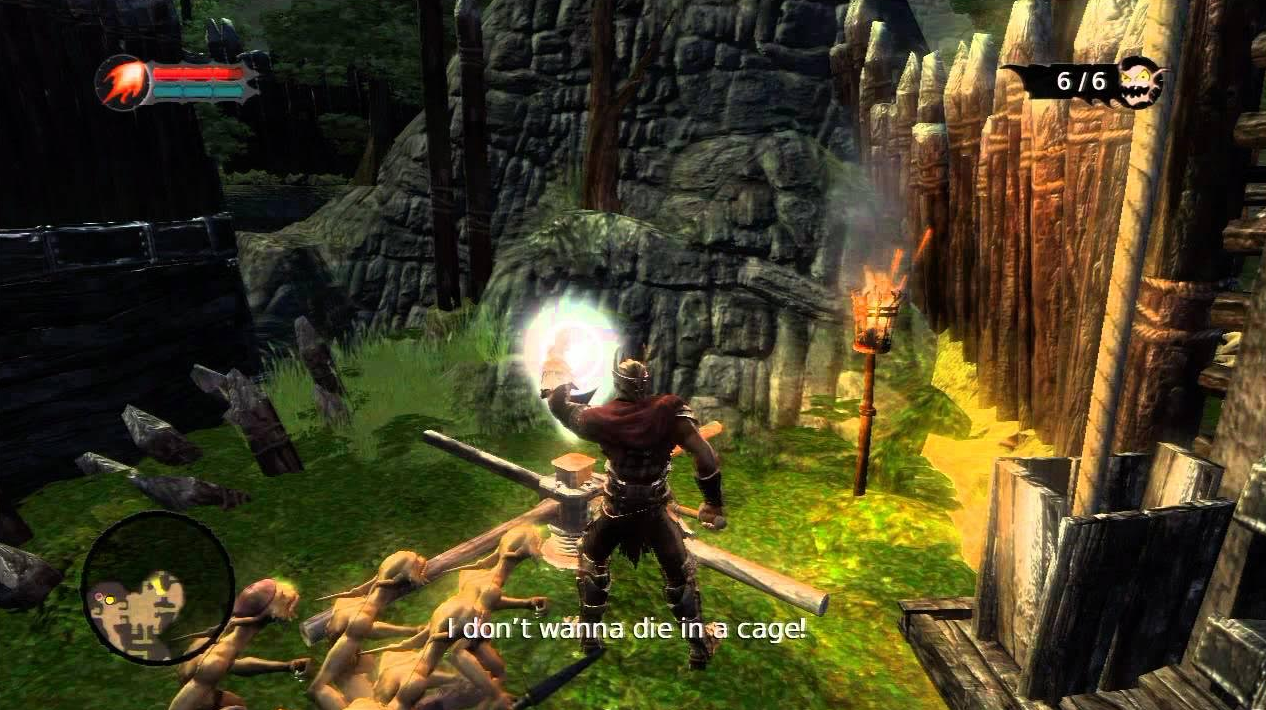
In the climactic conclusion, we confront Goldo, a character utterly consumed by his insatiable greed. Within his fortress, which is strained to the breaking point by relentless metal extraction, he attempts to protect himself in his fiery tank, Rolly. Unfortunately for him, he meets his end at the hands of the Overlord, showcasing the stark reality of power. Now, we face a crucial dilemma: should we offer hope to the elves by rescuing their captured women from despair, or should we seize the dwarven treasure for ourselves? The choice weighs heavily on our hearts.
Regardless of our choice, at this moment, Yulka is dragging off the statue, inadvertently revealing the location of her hideout. It’s the perfect opportunity to venture into the vast desert for a visit. By the way, I can’t help but notice a nod to “Tremors” or “Dune,” depending on your taste: the instant you step onto the shifting sands, a massive worm surfaces, capable of decimating our entire army in no time.
Chasing after the elusive thief turned out to be quite the adventure, but this fool had a rather poor escape plan that left much to be desired. To make matters worse, her base was essentially constructed right on a teleport stone leading directly to the Tower. By cleverly employing minions like colorful flags in a wolf hunt, we manage to corner her and send her straight to our dungeon, where we can keep a close eye on her.
Incidentally, the hideous statue can either be kept for ourselves as a trophy or offloaded to the elves, who might appreciate its peculiar charm. However, I seriously doubt anyone would genuinely want to display it in their Tower, as its appearance is rather unsettling.
In this tale, we seek to uncover more about the old man, but our exploration is interrupted by Kan, who is desperately trying to rescue his beloved. He initially unleashes chaos in Kutuzh, seizing control of the area with a fierce determination, and then he turns his attention to the Celestial Sanctuary. Yet, ultimately, he faces defeat.
Thus, the Master, who governs with a ruthless grip, returns to the Tower, a place filled with shadows of past decisions. Following him, we emerge as his temporary substitutes, tasked with filling the void left behind. At this moment, a captivating twist unfolds, with clear hints sprinkled throughout the narrative. Our Villain is not just an adversary; he is a once-noble hero, betrayed by comrades who brutally murdered the former Lord, leaving him to die in a moment of despair. The previous Evil could not accept its defeat, transforming into a sheep’s guise before cunningly seizing control of the old wizard—a local Gandalf—who was the architect behind the team of Good’s champions.
Meanwhile, the forsaken, nameless one, robbed of his memories and identity, became a mere marionette in this grand scheme. As the once-celebrated Heroes languished in complacency, indulging in their past glories, the Villain plotted meticulously and crafted an assassin from their former friend. And, adding to the complexity of this tale, he is also the father of Rose and Lena, intertwining their fates in a web of intrigue and betrayal.
At this juncture, our hero would face his inevitable demise, but the lady who holds his heart, in my story a spirited redhead, chooses to take action and rescue her beloved. With determination, she hurls a cobblestone at the Heart of the Tower, the very wellspring of Evil’s dark might. Gathering every ounce of courage and reclaiming control over the strongholds, the Villain ultimately triumphs over the former Lord in an intense and fierce confrontation that defines their destinies.
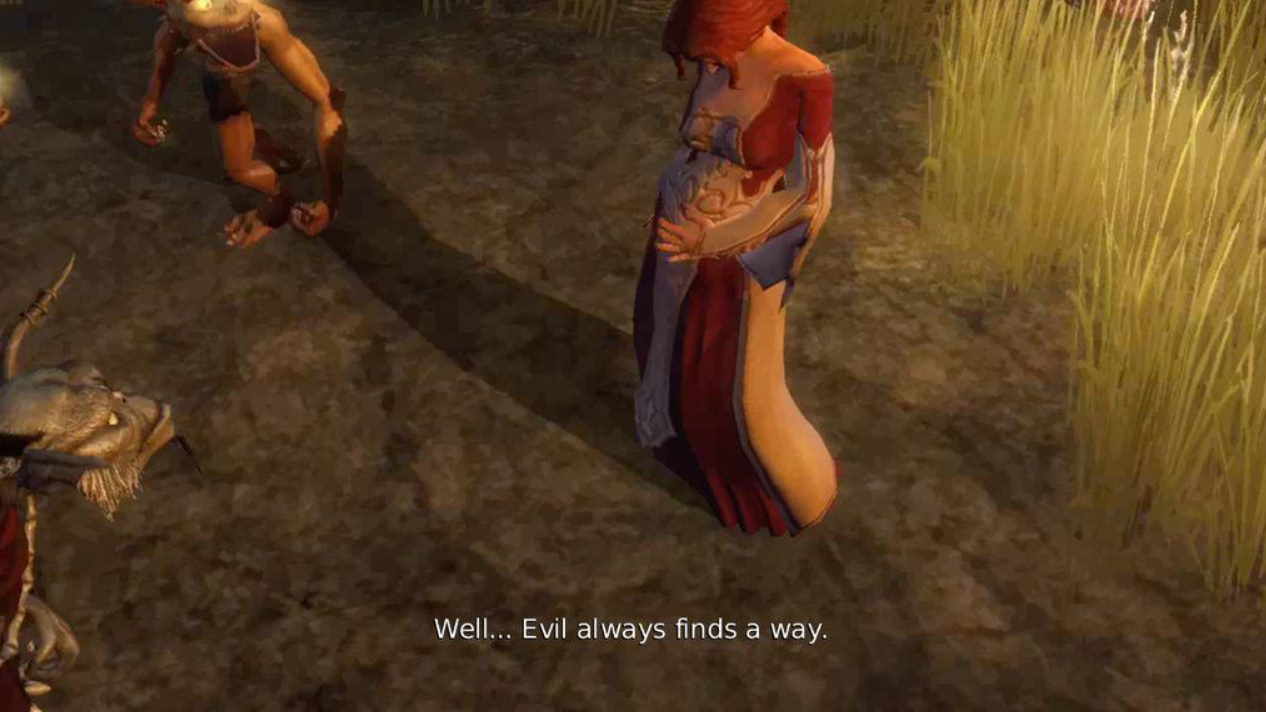
In my instance, everything concludes positively: the nation flourishes, peace returns, and the Lord revels in the loving company of his devoted wife. However, one must remember that darkness always finds a way to seep back in…
Overlord: Raising Hell
Now, let’s delve into the expansion. Ideally, this should start after you’ve completed the main storyline, as this is where the real shift begins, and darkness once again infiltrates our world. A jester, who clearly hasn’t faced enough consequences for his actions, performed a ritual that summoned the Nameless God, who has been imprisoned in the Abyss for eons. As a result, rifts began to open in the conquered territories, luring unsuspecting residents with promises of various enticing rewards.
The adventure kicks off in the Ripe Hills, where the first gateway to Hell reveals itself. Here, the locals are seduced by visions of paradise, only to face brutal betrayal and find themselves shackled in chains. Our main adversary in this twisted tale is the spirit of Melvin, who is caught in a never-ending cycle of gluttony and the inevitable death that results from his excesses.
In this segment of gameplay, the developers decided to unleash their creativity, particularly by introducing a feature that wasn’t fully explored in the main narrative: rolling around like a ball on the battlefield. We’ll step into the shoes of a former hero, engaging in an improvised game of golf and Arkanoid, using him as a bomb with legs to attract enemies with enticing food offerings. As we progress, we’ll also unlock a form for the Axe of Fear, adding depth to our gameplay experience.
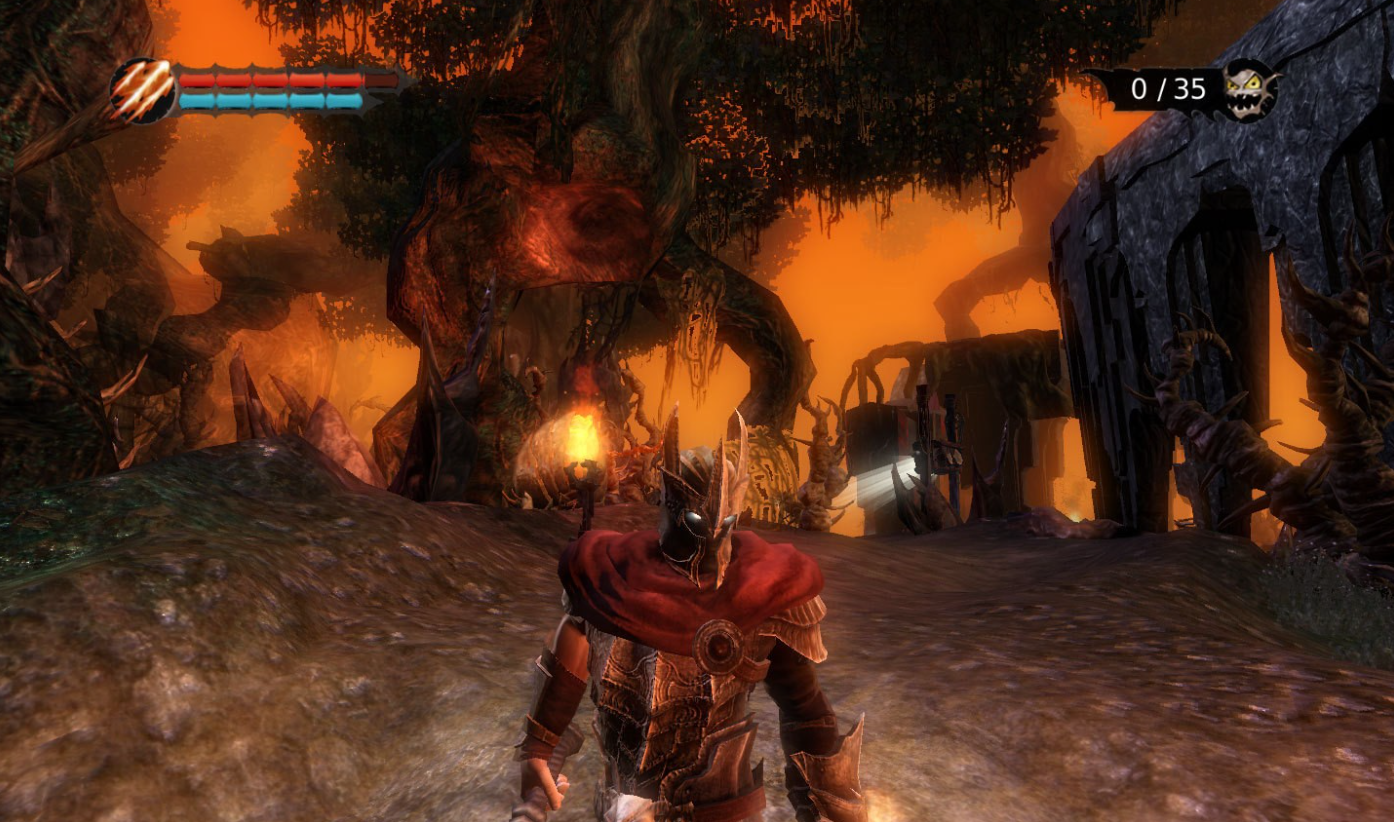
Next, a rift tears open in the Gloomwood, revealing a mysterious puppeteer who rules over this twisted realm. He’s staging a cruel three-act play mocking the elves — but due to a broken mechanism, the third act never begins. As a result, Oberon and his loyal court are forced to watch the first two acts on an endless loop, damned to eternal reruns. Bonus reward: the Mace of Dire Fate.
After that comes the Celestial Sanctuary — a feminist stronghold gone rogue. Here, women who descended into the Abyss have turned all the men into obedient slaves. If it weren’t for the game’s low age rating, the devs would’ve clearly dressed everyone in leather — and some NPCs outright say as much. Your task is to restore order, using William as a makeshift engine for cleaning contraptions, and later delivering some well-placed enchanted slaps to cure the ladies of their more… dangerous ideas. This section reportedly caused a localized warp rupture on Twitter from the sheer explosion of butthurt. Also found here: the Reaper’s Mask.
After that, we embark on a journey to the Golden Hills. Unsurprisingly, Goldo becomes our next formidable boss, but there’s an intriguing twist: only dwarves can bring him down, and we’ll need to entice them with gold to do so. This means we’ll have to run around quite a bit, gathering treasures and resources. Unlike the other bosses we’ve faced, Goldo possesses two distinct forms: the imposing Fire Armor and the menacing Life-Drain Sword, each presenting its own set of challenges.
Once we finally gather all four Abyss Stones, we make our way into the vast Desert, where these stones serve as keys to unlock the final area. Here, we encounter the fearsome Lord of the Undead, the Forgotten God, who once betrayed the Mother Goddess herself. As a result of his treachery, he was condemned to this dimension, leaving him a truly pathetic Level 100, wouldn’t you agree? Amidst this chaos, we also stumble upon Kana, now reduced to a grotesque heap of half-bound flesh, so he certainly doesn’t count as a boss.
Defeating the Forgotten God proves to be an arduous task, testing our skills and teamwork. However, the real shock comes afterward: his death triggers massive instability within the rift, which begins to break apart, effectively cutting the Abyss off from the main reality. In a dramatic turn of events, our jester manages to escape just in the nick of time, while the Lord remains trapped forever, now bound to his newly formed army of undead, left to wander the desolate realm.
Gnarle sighs over the loss of yet another Lord of the Tower—one who had such potential. But Rose, gently resting a hand on her rounded belly, gives a knowing smile. Evil, she says without saying, always finds a way back…
Gameplay
It’s time to get down to the heart of the matter — the gameplay, where the real fun begins. As mentioned earlier, this is an elegant combination of several genres that won’t let you relax for a minute. Let’s go through them one by one, starting with the action-adventure element. You’ll take control of the Master — a hero who can both smash enemies to pieces with powerful weapons and crush them with destructive magic. The game’s equipment deserves special attention: you’ll have to try on terrifying helmets and armor, presented in three categories of durability and effectiveness. In addition, there is a special unique set that stands out among others for its rarity and effects. The arsenal also includes three types of weapons to choose from: a light but weak sword for lightning-fast attacks; a heavy mace, whose strength compensates for slowness; and an axe that is balanced in all respects. This choice motivates you to try different combat approaches, adapting tactics to your own style.
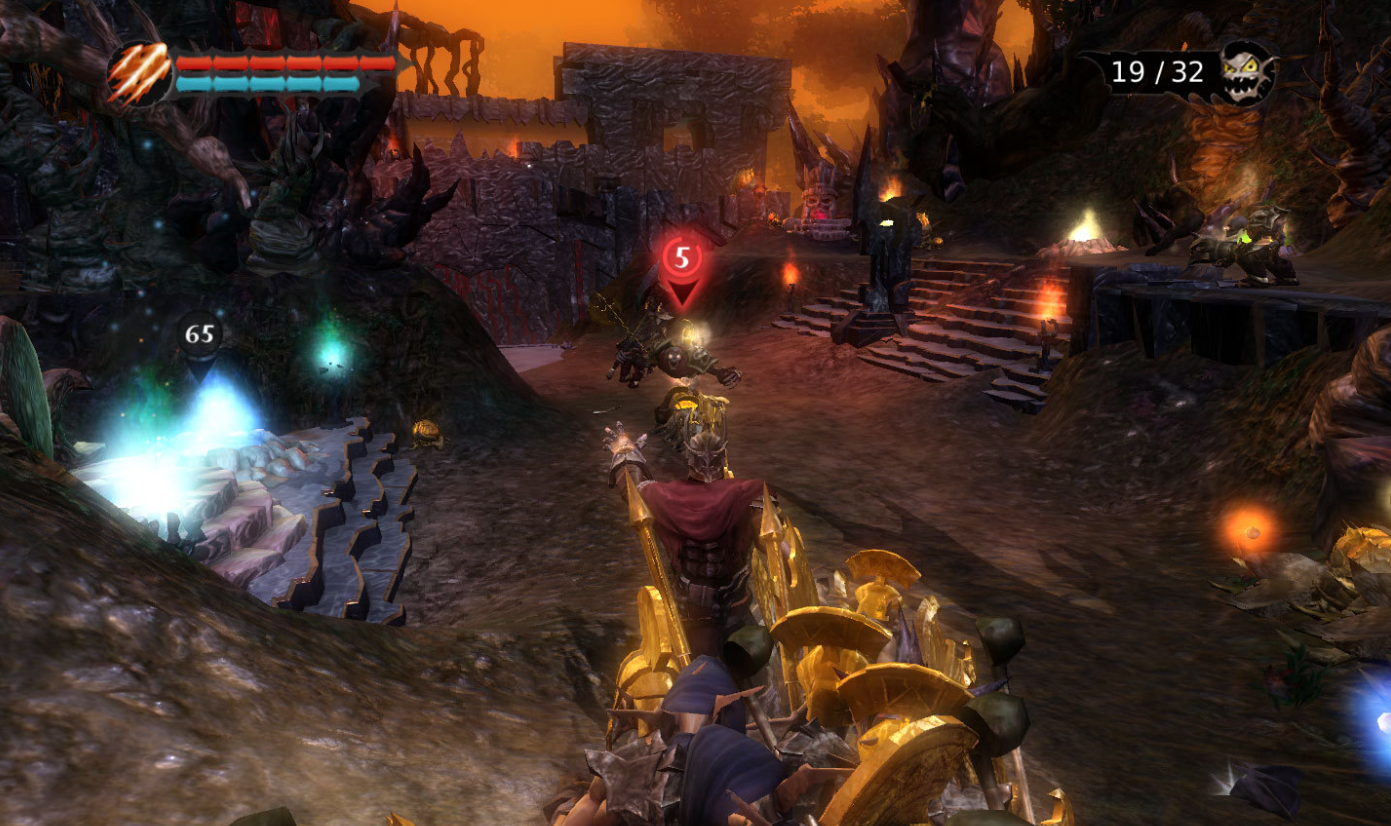
Upgrading of equipment takes place in the forge. There, by sacrificing a certain number of minions, you can significantly strengthen your equipment. There are four upgrade directions to choose from, each of which opens up unique bonuses and can radically change the tactics of combat. As for rare items, they do exist, but their creation requires significant effort. If you decide to explore the Abyss, as the developers intended, there may not be time left to fully use these artifacts. It seems that they were designed specifically for the “New Game +” mode, which I have not yet encountered. This creates intrigue and fuels interest in further exploration of all the possibilities of the game.
When it comes to spellcasting, the game features four distinct categories of casts, each containing three spells: offensive (naturally, fire), defensive, debuffs, and support for your minions. You can easily toggle between these categories using the functional keys F1-F12, with the default action conveniently set to the E key, allowing for smooth gameplay.
Now, let’s delve into the role-playing aspect. It’s not really about intricate stats, which are sparse and not overly complex. Instead, the game presents a simple yet familiar portrayal of either a benevolent or malevolent Lord. Yes, it’s basic. Yes, it’s somewhat one-dimensional. However, against the backdrop of the chaotic mess we often see in recent AAA titles, this approach feels refreshingly original and engaging.
Additionally, I mentioned that there are strategic elements at play in this game. Your minions act as your army, comprising infantry, archers, assassins, and resurrection mages. It sounds exciting and full of potential, but this entire crew is surprisingly fragile, like glass, even in the later stages of the game. Losing your entire squad can occur in the blink of an eye, which adds a layer of tension and urgency to your strategic decisions. You must carefully consider your moves to avoid catastrophic losses.
The game’s control system is intuitive: left-clicking sends a minion forward, and right-clicking returns it to your hero. Pressing both buttons simultaneously allows you to precisely direct minions along a selected route. The Shift key activates movement toward a specific target, and pressing Q makes them take up a position and remain motionless. However, despite the apparent simplicity, in practice the controls are accompanied by a number of noticeable problems. In the main game, they may not be noticeable, but in the expansion, where puzzles are tied to the precise behavior of minions, these shortcomings become critical. Minions often get stuck in the geometry of the levels, scatter to the sides, or quickly fall into traps. In addition, moving between points often requires excessively precise and frequent mouse manipulations, which makes the gameplay tedious. The player will either have to adapt to this control feature, or risk that the irritation from the mechanics will negate all the pleasure from the passage. It’s a real test of endurance that can either enhance or completely ruin your experience of the game.
Alright, let’s dive into the fascinating world of minions themselves. First off, it’s crucial to note that everyone except the blue ones can’t swim. Even a tiny puddle can spell disaster for the army, leading to unfortunate losses. Now, let’s break down each type and explore their unique traits:
-
Brown Minions – The core of the troops. Tough, resilient, and dependable, they don’t possess any flashy special perks but can arm themselves with whatever they find on the battlefield. They’ll wield anything from a humble pumpkin to a hefty two-handed weapon dropped by a fallen foe, showcasing their adaptability.
-
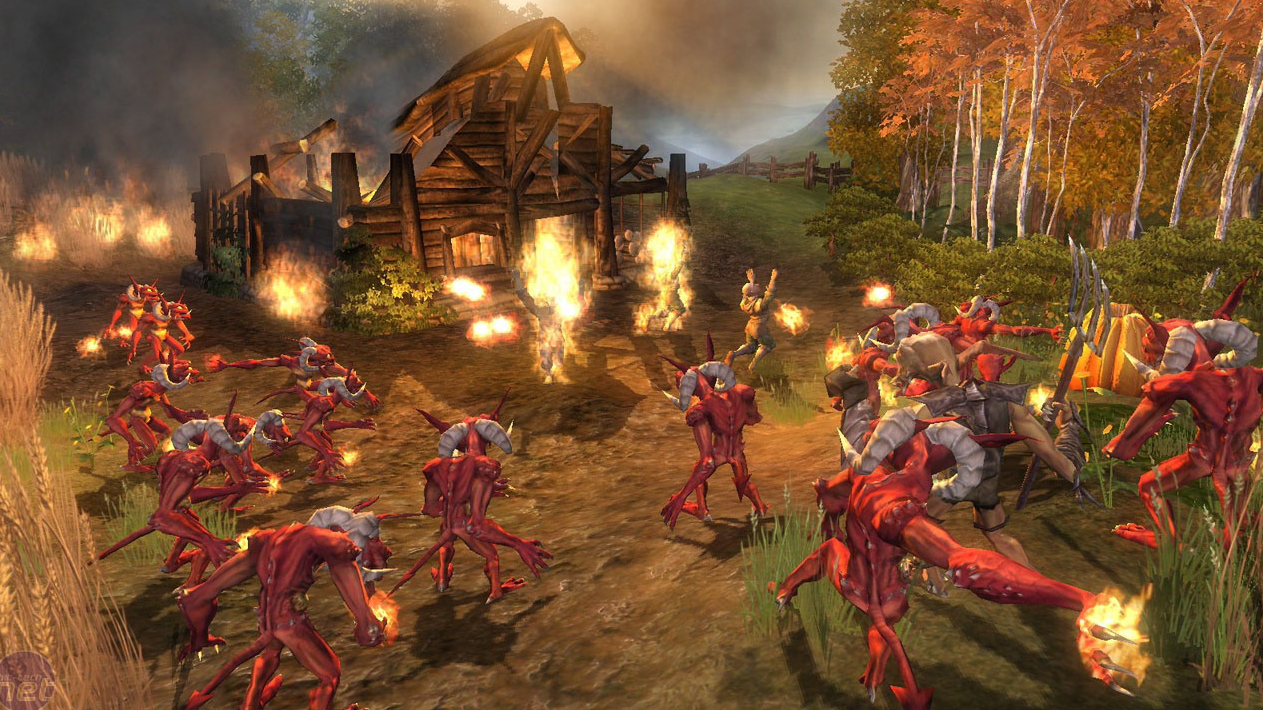
Red Minions – The ranged division of the army. These fiery little warriors are immune to flames and even have the ability to absorb fire, clearing a safe path for their comrades to advance. Their archery skills can rain down devastation from a distance, making them essential for taking out enemies before they close in.
-
Green Minions – Stealthy assassins capable of delivering devastating damage from behind and leaping down onto unsuspecting enemies from elevated positions. When tasked with holding a point, they can turn invisible, making them perfect for ambushes and surprise attacks. Like their red counterparts, they’re resistant to poison and eagerly seek out toxic mists to enhance their abilities.
-
Blue Minions – The frailest yet the most crucial for survival in battle, as they possess the unique ability to revive fallen comrades before they fully vanish into oblivion. They can easily traverse water without a hitch, which can be a game-changer in various terrains, and attack using powerful magic. However, in close combat or against foes that are physically immune, they quickly find themselves outmatched. Only harmless fairies and elusive elf spirits come to mind when thinking of their limitations.
To summon new units, you need three essential components: a breeding ground at your base, a suitable lair on the current map, and life force. Gathering that life force can sometimes prove to be quite the challenge, as each unit has its own unique requirements and preferences.
Minions, on the other hand, have an undeniable passion for smashing everything in their path and raiding buildings. They eagerly equip any gear they come across, so you must be cautious—your fighter will become vulnerable for a few seconds, completely distracted by their shiny new loot. If they stumble upon gold, energy, or potions, they’ll excitedly haul those back to the Overlord. And let’s not forget about their love for beer! Minions absolutely adore it, and it provides a delightful temporary boost to their abilities. Just keep in mind that the liquid will eventually leave their bodies with a cheerful gurgle, which can be quite amusing.
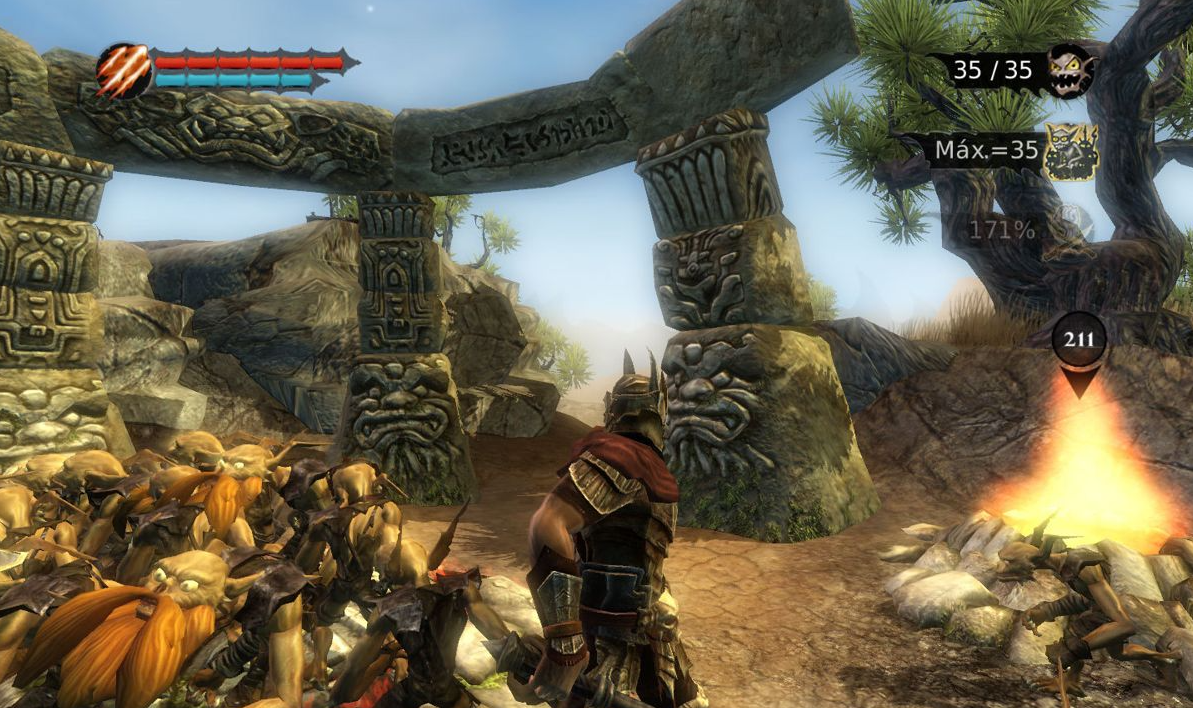
Now, let’s transition to the last point—metroidvania elements. These features are relatively straightforward but are cleverly integrated into the gameplay. While there aren’t an overwhelming number of secrets, there are certainly a few hidden gems that contain new spells and upgrades. To uncover these treasures, you’ll need one or two specific types of items. This means that revisiting areas you’ve already explored can sometimes yield valuable rewards and surprises. This adds an extra layer of strategy to your adventure, encouraging you to keep an eye out for opportunities as you progress.
Conclusion
So, what do we ultimately have here? A solidly average game that hails from the PS3 and Xbox 360 era. It’s a bit peculiar, isn’t it? Yet, surprisingly, it still manages to feel quite engaging today. The game playfully mocks clichés, and it features some surprisingly adult humor that stands out, especially for a title rated 12+. Its cartoonish style aligns beautifully with the zany action. I’d even call it a form of animated ultra-violence—harsh and intense, yet devoid of blood and guts.
On the positive side, the gameplay is refreshingly unique, blending a variety of genres in a way that keeps things interesting. Plus, there’s the hilarious option to kick a teammate if they die during a mission, which definitely saves your controller from being thrown against the wall in frustration. However, on the downside, the controls can sometimes feel awkward and unresponsive, and the unique gear often ends up feeling nearly pointless in the broader context of the game.
When I took a look at my Steam account, I noticed I had logged around twenty hours of playtime. It felt much shorter because the game was truly captivating, with events zooming by one after another in a whirlwind. I wholeheartedly recommend it, especially if, like me, you’ve put off playing it for years. The experience is immersive and packed with excitement. And if you’ve already played and enjoyed it, it’s definitely worth diving back in for another round.
That’s all for now! Please consider subscribing and liking, as it really helps boost the YouTube channel and the DTF blog, motivating me to create not just more content, but better content that truly resonates. Remember, evil always finds a way in, so stay vigilant!
Overlord: Raising Hell System Requirements
The minimum system requirements indicate the PC configuration on which the game can be run without problems with minimum graphics settings.
Minimum Requirements:
Operating System: Windows XP SP2
Processor: Intel Pentium 4 @ 3.0 GHz or AMD Athlon XP 3000+
Memory: 1 GB RAM
Graphics: GeForce 6200 / Radeon X600 128MB (DirectX 9 compatible)
Storage: 5 GB free disk space
Sound Card: DirectX compatible
Recommended Requirements:
Operating System: Windows 7 SP1
Processor: Intel Core 2 Duo @ 2.4 GHz or AMD Athlon 64 X2 5000+
Memory: 2 GB RAM
Graphics: GeForce 8800 GT / Radeon HD 3870 (256MB+ VRAM)
Storage: 5 GB free disk space
Sound Card: DirectX compatible
How to play Overlord: Raising Hell for free on Steam via VpeSports
Do you want to plunge into a world where power does not belong to heroes, but to those who can subjugate evil? Overlord: Raising Hell is not just a game. This is your personal journey into hell, where you are not a savior, but the Lord of Darkness, around whom minions swirl, ready to tear apart everything in their path. Forget about nobility: burn villages, create chaos, collect artifacts and pave your way to absolute power.
We have done everything so that you can start playing without a headache. No complicated actions: go to our website, register, log in to your account – and Overlord: Raising Hell is ready to launch. Here you will find a list of free Steam accounts. And so that you do not get lost, we have prepared detailed instructions – even those who launch Steam for the first time can figure it out. All that is required of you is a little time and the desire to take power into your own hands.
When you pass a couple of levels and get a taste of evil, don’t be lazy, write a few lines about your impressions. We read every message. If the review doesn’t appear right away, it means it needs to be corrected a little. After moderation, you will receive access to your email. Everything is fair and transparent.
In order not to miss fresh accounts, news, funny discussions and just chat with the same fans of darkness as you, take a look at our Telegram channel. Life is always in full swing there. And if something goes wrong, there is a section with guides and technical support in the chat. We will always help. Together we will subjugate this world.