The developers of Jurassic World Evolution 3 have unveiled a new DLC called Rebirth, which significantly changes the familiar management of prehistoric parks. The main feature of the expansion is an advanced energy system and a unique enclosure type designed specifically for flying lizards. We explain how this new mechanic works and how to design the perfect home for your pterosaurs.
Table of Contents
How Open Enclosures Work in Jurassic World Evolution 3 Rebirth?
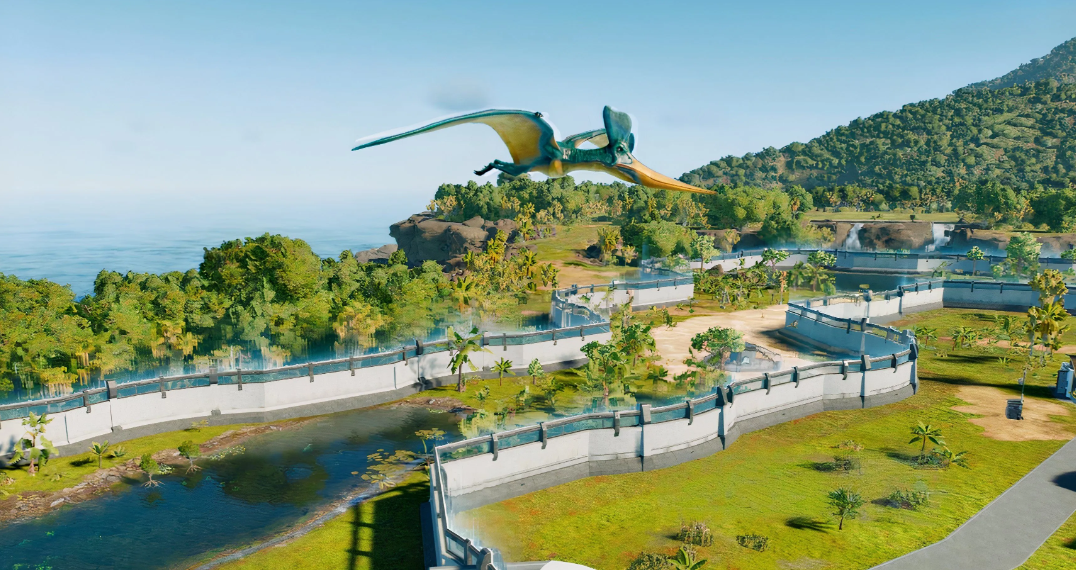
Unlike the classic domed enclosures from previous games in the series, the new open enclosures give flying reptiles the illusion of complete freedom. The design allows the lizards to soar at maximum altitude and dive without restriction, effectively fulfilling their spatial needs. A happy animal is a calm animal. In practice, this mechanic minimizes the risk of a pteranodon getting bored, going berserk, and smashing walls in an attempt to escape to tourists.
These enclosures simply have no physical ceiling. Instead of a steel mesh, an invisible electromagnetic field is used to keep the creatures within the perimeter. It looks futuristic and aesthetically pleasing: you can now view the fliers from afar, rather than through cloudy protective glass. Incidentally, if the neon glow of the barrier spoils your view, it’s easy to turn it off. Simply click on the enclosure, go to “Settings,” and uncheck “Show barrier.”
Construction and Expansion of Flying Reptile Areas
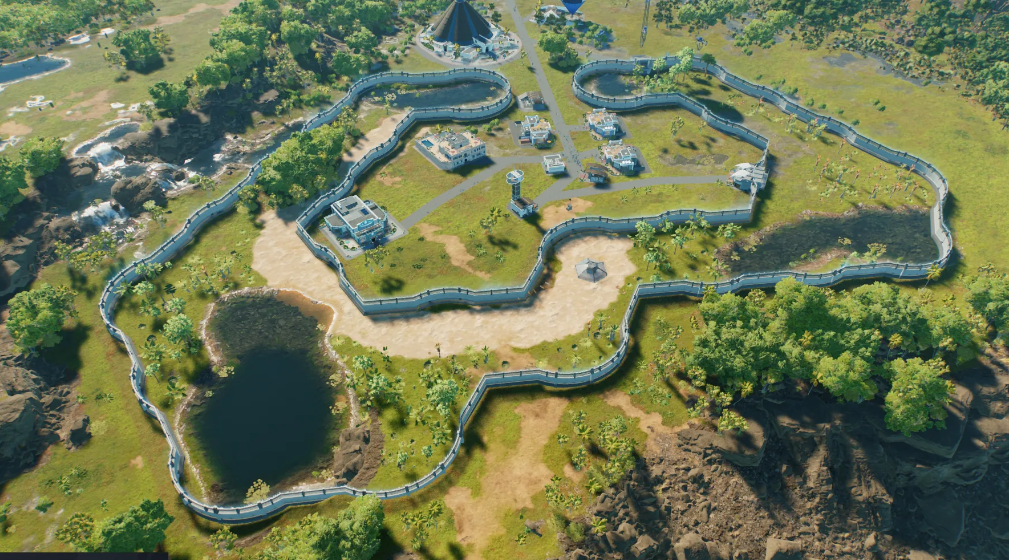
In terms of construction, the new structures are not much different from the standard structures in Jurassic World Evolution 3, but there are a few differences. The game engine won’t allow you to place a fence in deep water or on rocky cliffs—you’ll have to find a level area. Otherwise, the size is limited only by your imagination and the park’s budget. As with the old domes, the zone’s size can be expanded on the fly by simply attaching new round sections to the existing enclosure.
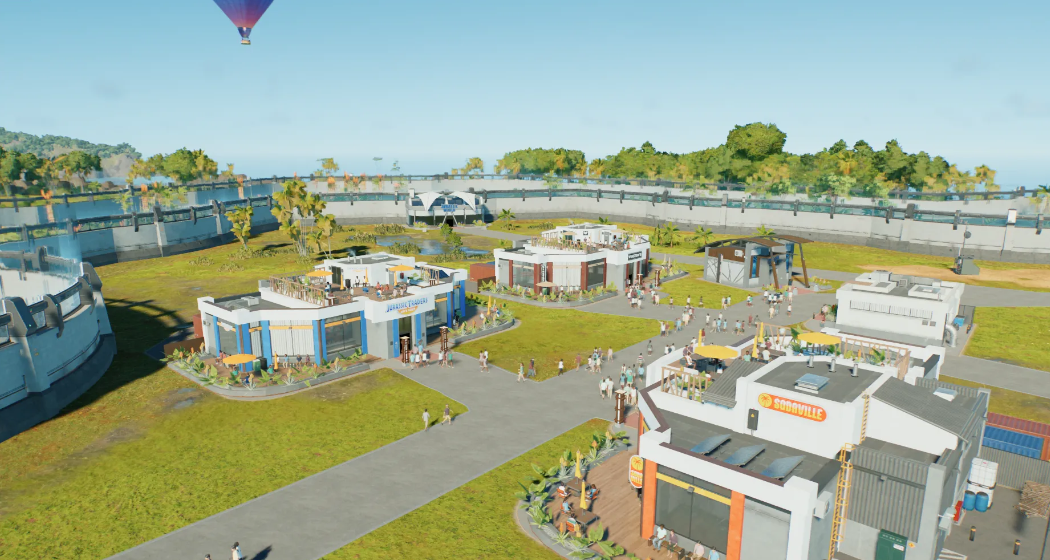
The larger the area, the denser the ecosystem can be. To add a splash of color to the enclosure, it’s best to mix species. The key is to ensure predator compatibility.
Tested and safe pterosaur combinations:
-
Geosternbergia + Pteranodon + Tropeognathus
-
Quetzalcoatlus + Dimorphodon + Tapejara + Cajuajara
How to increase viewing ratings and decorate an open enclosure?
The new type of structure offers greater flexibility when designing viewing areas. Regular tours are weak here, so the emphasis should be on verticality. Three formats are best suited for generating revenue and rave reviews:
-
Classic viewing platforms;
-
Dedicated enclosure viewing galleries;
-
Hot air balloon tours, allowing you to appreciate the scale from above.
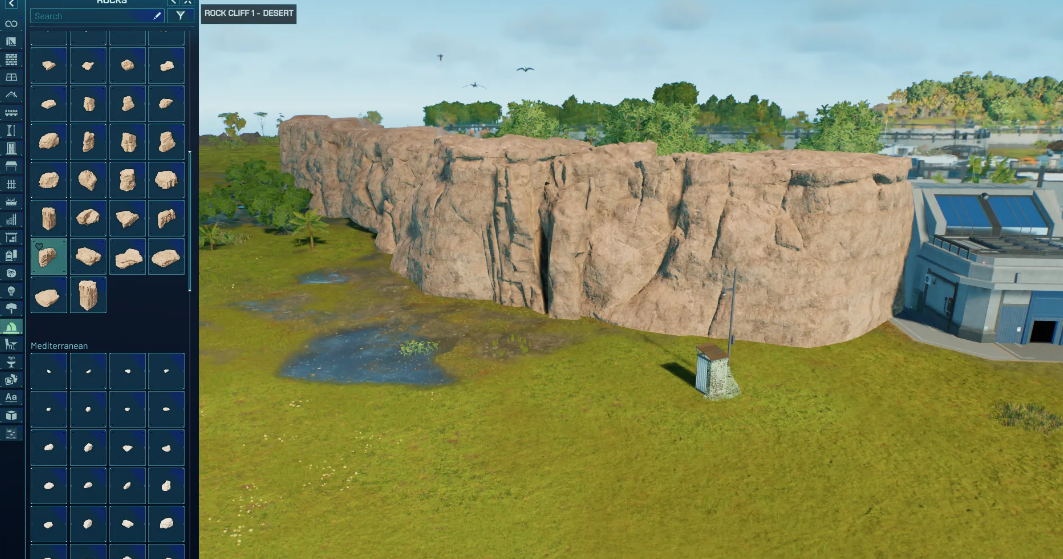
Bland futuristic walls can and should be customized. For example, by lining the outer edges with stone decorations to seamlessly blend the structure into the natural environment. Inside the enclosure itself, it’s also worth working with the landscape editor—creating rocky hills or constructing high terraces. Incidentally, elevation changes combined with deep pools now make it possible to create full-fledged waterfalls. Achieving this level of life simulation in the confined domes of the original Jurassic World Evolution was practically impossible.