

Human fear always stems from the unknown. We fear not so much the fanged monster itself as the shadow gliding across the window. While the eye fails to register details, the mind desperately searches for familiar shapes and names. But where nothing fits into a familiar image, the imagination conjures up terrifying pictures, capable of frightening more than any real beast.
And yet, the familiar can also turn into a nightmare. Just as a musician instantly senses a false note, so we sense the slightest distortion of the familiar. A smile that widens too much or lingers too long on the face turns a sweet grimace into a dead mask, making you want to look away.
What’s more frightening: emptiness or a flaw in the familiar? Trioskaz Studio decided not to separate these fears and combined them in a single project. This is how the horror game No, I’m Not a Human was born—a dark story about the end of time, when people hide behind closed doors and are greeted by uninvited guests every night.
The game first attracted attention in the Violent Horror Stories anthology, then captivated audiences with its demo, and finally, on September 15th, its full release met the expectations of genre fans.
Table of Contents
No, I’m not a Human Free Steam Account
It’s usually easiest to describe a game through its gameplay, but No, I’m not a Human breaks the usual rules—it all starts with the plot. The world is on the brink of extinction: solar flares have turned daylight into a deadly weapon. Now people leave their homes only at night, for the dawn could cost them their lives.
It would seem salvation has been found in the darkness, but it has brought a new threat. Aliens have emerged from the depths of the earth—cunning creatures capable of perfectly imitating humans. They disguise themselves as neighbors, friends, or even family members to infiltrate homes and destroy those who prove too trusting.
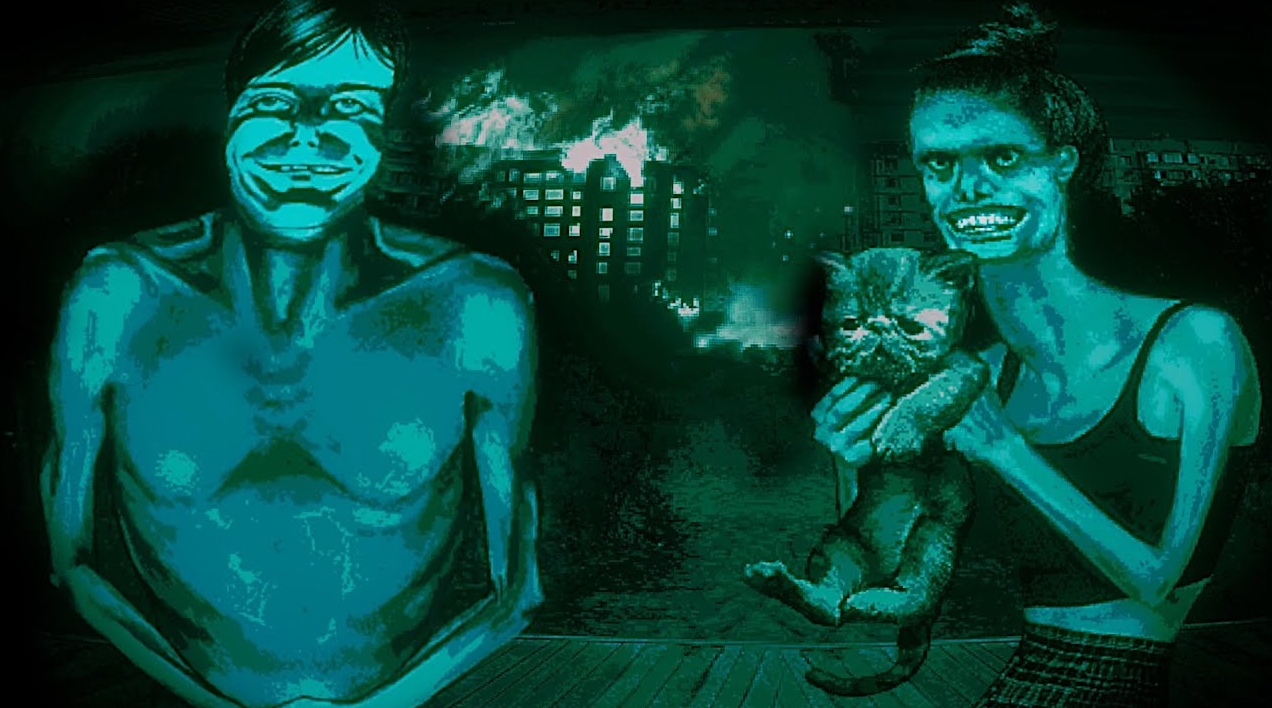
The government has issued simple but terrifying instructions: don’t be left alone, don’t open doors without a check, and trust only those who have passed strict identification. But these are just guidelines. The real responsibility falls on the shoulders of the homeowners, for they decide who will have a chance to survive and who will become the next victim—the aliens or the merciless sun.
The player will immerse themselves in the role of such a shelter owner. You don’t simply manage the space, but literally decide the fates of people—whose lives will be saved and who will be doomed.
Less stress, more fun – choose an account steam free.
Gameplay of No, I’m not a Human
In No, I’m Not a Human, everything is based on a constant rhythm of day and night. During the day, you tend to your shelter: interact with guests, manage resources, and undertake side quests that unlock different endings. But as soon as the sun sets, the most dangerous part begins—uninvited visitors knock on the doors at night, and every decision you make can change the fate of all the residents.
The hardest test is understanding who stands before you: an ordinary person or a stranger from the underworld. It’s impossible to tell them apart at first glance. Therefore, the choice of whether to let a guest in or send them away is based on observation, personal sympathy, and intuition. The real tests are postponed until daylight hours, when you can more soberly assess the situation.
On paper, everything seems simple: follow your moral compass and decide who to accept. An empath will readily open the door to anyone vulnerable or wounded, while a pragmatist will only let in those who can be helpful or share important information. But the gameplay quickly proves that the rules are much stricter here.
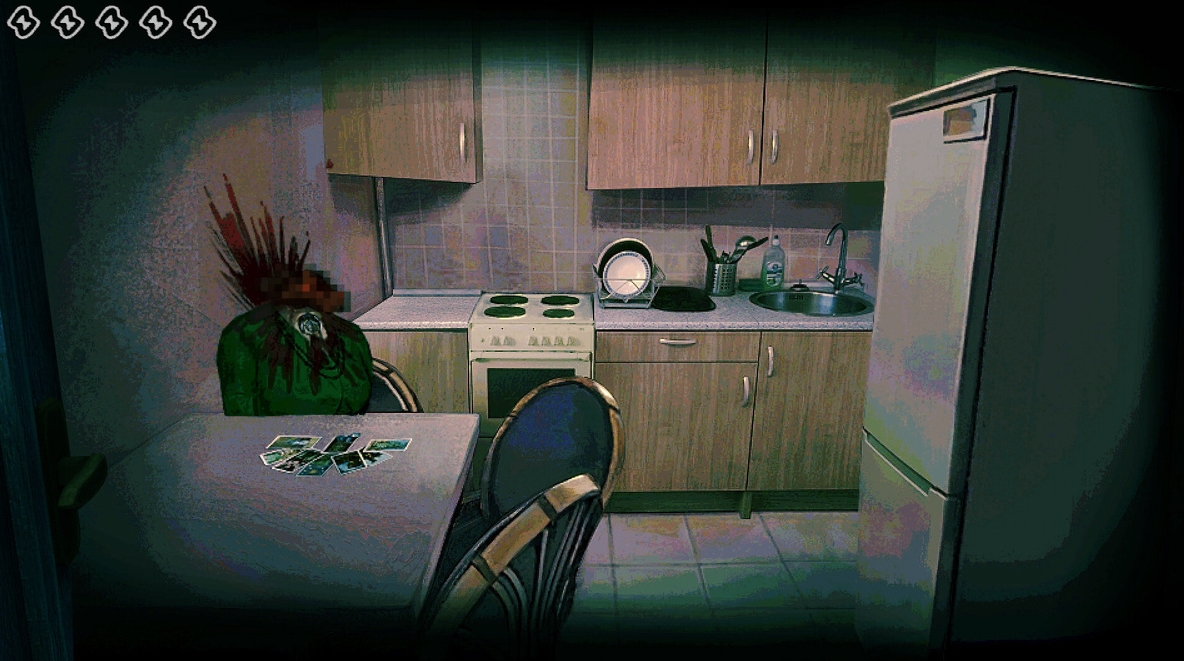
The game constantly challenges you: sometimes you have to let in even the most insane visitors to avoid being left alone when strangers arrive. In other situations, on the contrary, you have to refuse the help of reasonable residents, saving space for those who may prove crucial to your survival. Certain endings even require you to assemble a specific team—for example, keeping all the cultists alive.
The guests here are not only diverse but also dangerous. Cultists can break in without your permission, quarantine officers conduct inspections and take residents away for examination, and one of the underground residents acts openly and can kill the owner of the house if they make the wrong choice of neighbors.
To further complicate matters, the order of visits is always randomly generated. It’s impossible to calculate the perfect strategy in advance: you have to keep notes, analyze the consequences of every move, and find a balance between risk and safety. And it’s precisely this unpredictability that makes playing No, I’m not a Human truly tense and exciting.
Life in No, I’m not a Human
Every new day in No, I’m not a Human begins the same way: you need to check the guests recommended by the government. On TV, a newscaster reads out the latest clues about outsiders—these might be excessively white teeth, reddened eyes, or a strange phantom aura that appears in photographs. Neglecting these checks is crucial: every night, uninvited “guests” take the life of one of the residents.
Trioskaz Studio remains true to its roots: seemingly simple mechanics gradually reveal their full depth. A single sign is almost always insufficient to identify an outsider. Pure white teeth, for example, can easily be explained by simple hygiene. Therefore, jumping to conclusions is dangerous—it’s better to listen to the visitor themselves. Sometimes, it’s their story that helps you understand the truth.
The player’s energy is always low, and there are too many residents. It’s impossible to check everyone, so you have to prioritize: who to examine first, who to put off until later, and who to trust your own instincts about. A mistake can be costly.
But inspections aren’t always a blessing. Guests are also watching the host and aren’t willing to forgive inconsistencies. If your traits turn out to be an extra detail, the punishment can be death. In such moments, you have to expend energy on self-examination or even change your traits to suit the new agenda—the game has special mechanics for this.
In critical situations, a refrigerator stocked with useful supplies comes in handy. A can of energy drink will restore your strength for additional inspections, and cat food given to a furry guest can save someone’s life. Resources can be obtained in various ways: as gifts from visitors or through a courier service, which, as in Death Stranding, continues to operate even in a world on the brink of collapse.
To prevent routine inspections from becoming monotonous, the game features numerous dialogues with guests. Everyone has their own story: some share family tragedies, others speculate about the causes of the disaster and the origins of the strangers. Sometimes these revelations are so gripping that you want to spare the resident just to hear the rest.
But conversations aren’t the only activity. The player can listen to the news on the radio, call numbers they’ve found, or simply spend time with the cat, who strolls solemnly through the house. And if you want to reach special endings, you’ll have to carefully explore the shelter and solve obscure puzzles that hide new secrets.
The unique style and visuals of No, I’m not a Human
Games have long ceased to be just entertainment with rules and mechanics. Today, they are a full—fledged art that combines the power of cinema, the expressiveness of painting, the depth of literature and the emotional intensity of music. Together, this creates a unique experience that cannot be reduced to dry terms like “gameplay” or “genre.”
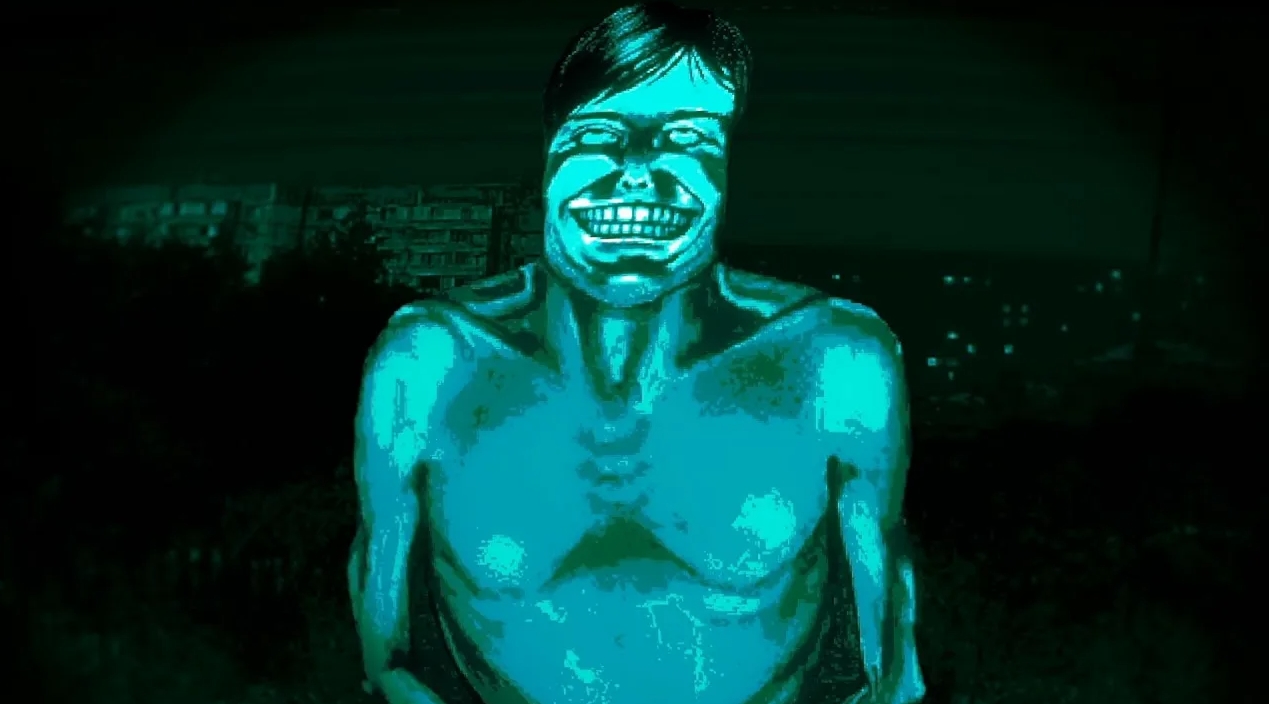
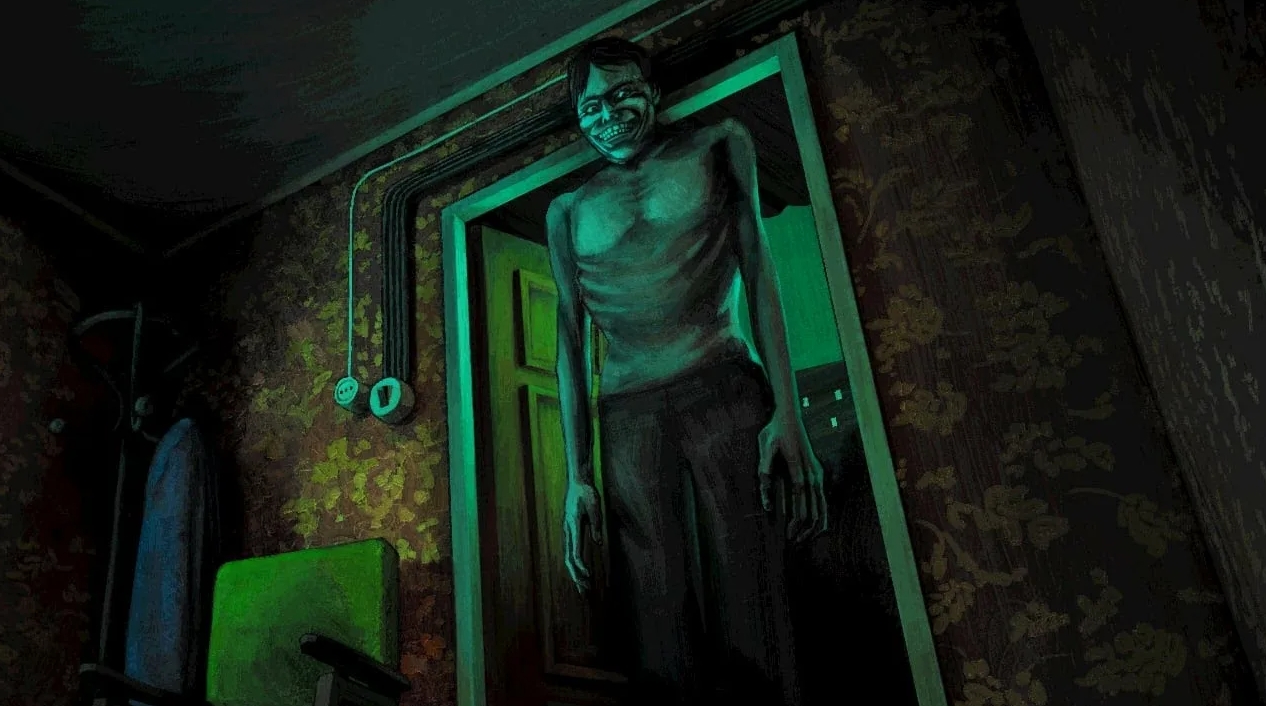
No, I’m not a Human being is just such an example. This game captured the attention of the players not by its usual realism and not by imitating popular trends, but by its own unique style. Trioskaz Studio has proposed a dark and disturbing visual solution based on grotesque, frightening images. They stand out sharply against the background of the monotonous mainstream and give the game its unique face.
A special atmosphere is created by uninvited guests, creatures that seem to have descended from the caricature pages of old newspapers. Their elongated features, down-to-earth proportions, and smiles frozen in creepy grimaces cause real discomfort. There is no life in their eyes, just a cold emptiness. And the deathly palette emphasizes the alienness and turns meeting them into a real nightmare. It is thanks to these visual solutions that the game finds its paranoid mood.
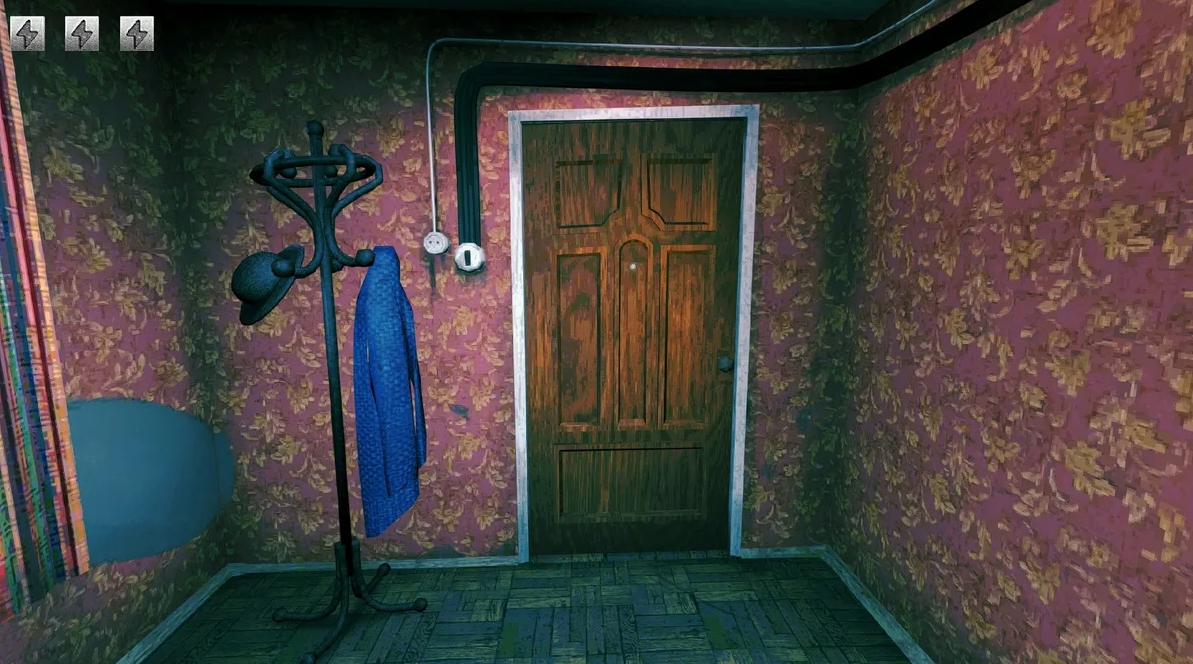
The anxiety is reinforced by the very space of the house where the action takes place. The interiors are devoid of comfort: faded walls, echoing corridors, heavy furniture with prints of the last owner. Everything around seems frozen, as if the house does not live for people, but preserves its own gloomy memory.
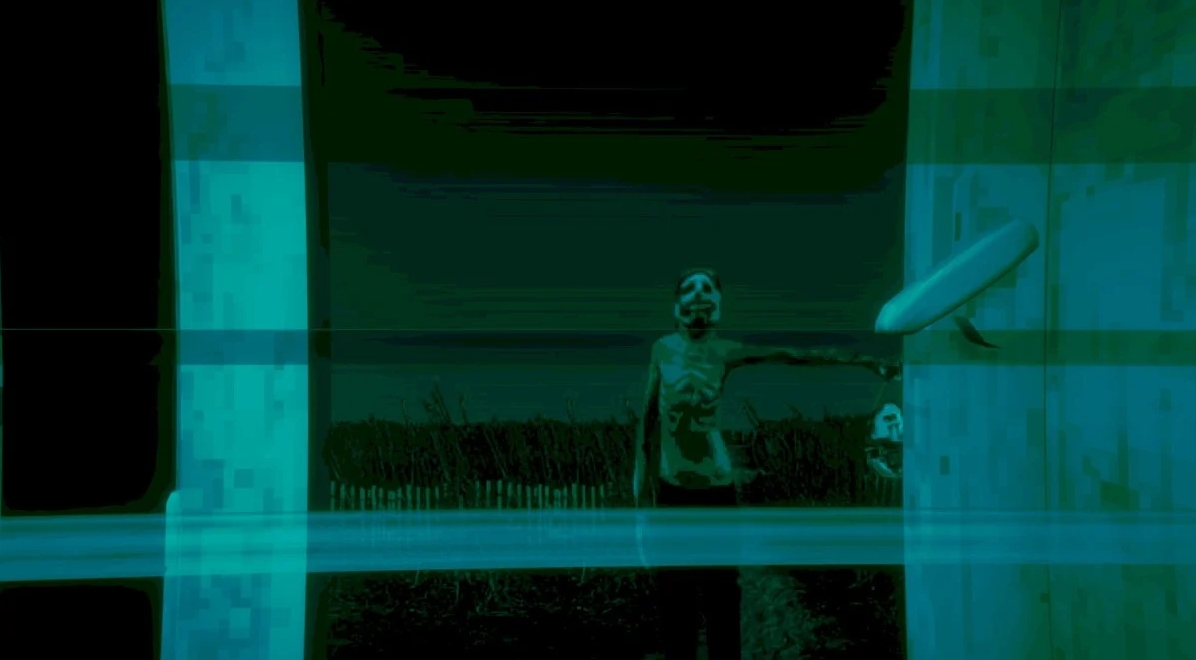
Another expressive technique is the constant transitions from three—dimensional scenes to flat drawings and back again. These jumps make perception unstable: the world looks like reality, then turns into an illustration, then becomes an obsessive dream. The player can only dive deeper into the atmosphere of paranoia, which is finally fixed by sound.
The musical accompaniment in No, I’m not a Human is based on electronic meditative motifs. They put you in a light trance, while simultaneously generating latent anxiety. The sounds do not crush, but seem to envelop the player, turning every decision about the fate of the guests into a truly intense choice.
Strengths and Weaknesses of No, I’m Not a Human
No, I’m not a Human could grow into a real gameplay sandbox, where the tension would be kept at the level of the endless Papers, Please mode. The game already has all the necessary blanks: the random order of guest visits, the chaotic generation of underground aliens, the constant feeling of unpredictability. But now the cycle of passing is much more tied to history, and after three or four attempts, monotony begins to feel. Most of the lore is open, the backstories are familiar, and the magic of novelty disappears.
When the storylines are completed, the hunt for “secret” endings becomes more of a routine — endless scrolling of dialog boxes. The mechanics work stably, but they clearly lack depth: I want to see new guest verification patterns, fresh tricks of underground inhabitants that would force the player to change strategy and constantly be on the alert.
However, the problems with learning and the interface are much more striking. The tutorial explains a lot in passing, but omits some important mechanics altogether. The result is frustration. For example, if you don’t turn on the TV on the right day, you can completely lose access to the supply of resources. And it doesn’t get highlighted in any way. If the idea of the developers was to open delivery only from a certain point, it would be more logical to do it through a story character — this is exactly what the creators of the domestic Static Dread did.: The Lighthouse, and the solution worked much more organically.
Feedback in critical situations also fails. An attempt to lynch a guest ends with the game offering to re—interrogate him, but not warning him that he can no longer be executed after that. As a result, the player is wasting energy. The system of consequences seems to be shy about talking about itself out loud: sometimes they are hidden deep in dialogues and are not visually highlighted in any way. At the same time, there are visual markers themselves in the game, but they are used for small things, like quarantine tickets, to speed up the examination of residents.
With all these rough edges, No, I’m not a Human leaves a strong impression. There are almost no technical problems, bugs are rare, and clunky interface solutions are offset by the thick atmosphere and author’s style. This is the case when the game attracts attention not only by its mechanics, but also by its special presentation, in which the creator’s hand is felt.
No, I’m Not a Human is a true gem of the indie scene, having managed to transcend its local market and resonate with an international audience. And this is no coincidence: Trioskaz studio has created an unusual horror game where the main source of fear isn’t a sudden jump scare, but a lingering paranoid atmosphere that grips the player from the very first minute.
This game captivates with its distinctive presentation: a unique style, dark art, and colorful characters make you feel part of a disturbing yet captivating world. And thanks to multiple endings, “No, I’m Not a Human” is easy to replay again and again, each time discovering new facets of the story.
What We Liked:
-
Tense suspense that keeps you hooked until the end;
-
Expressive and memorable characters;
-
Distinctive visual style that creates a unique atmosphere;
-
High replayability with multiple endings.
What Could Have Been Better:
-
Over time, the gameplay may become monotonous;
-
The interface leaves much to be desired and sometimes hinders immersion.
No, I’m not a Human System Requirements
No, I’m not a Human – System Specs
How to play No, I’m not a Human for free on Steam via VpeSports
From the first minutes in No, I’m not a Human, it becomes clear: This is not just a game, but a kind of experiment on perception. You find yourself in a world where the usual boundaries between a person and something else are blurred, and each new event seems to prompt questions about who we really are. The atmosphere here is intentionally strange and even disturbing, but that’s exactly where its special charm lies — you want to go further to find out how this absurd story will end.
We have made sure that the path to this experience is as simple as possible. Forget about endless settings and complicated instructions: registration takes a couple of minutes, and after logging into your personal account, No, I’m not a Human will be ready to launch. For convenience, the opportunity to start the game through a free steam account is also available — this is the easiest way to get inside an unusual adventure without unnecessary steps.
Playing here means not just passing levels, but experiencing emotions. Someone laughs at the paradoxes, someone feels a slight irritation or even fear, but this game does not leave anyone indifferent. That’s why it’s so important to share your impressions: write your review after completing the game, and it will become part of the discussion with other players. If a comment doesn’t appear right away, it’s okay, you just need to correct it a little, and it will definitely pass moderation.
To stay closer to the community and not miss important updates, join our Telegram channel. There you can find out about new patches, fresh accounts, the latest game news and just chat with those who, just like you, are looking for answers to the questions embedded in the plot. And if you encounter difficulties, the “How to play for free — The Complete Guide” section contains all the useful tips, and we are always ready to help you in the chat.