

Did you miss the good old Tetris, but don’t you feel the same excitement in it anymore? A team of enthusiasts from Sleepy Mill Studio decided not just to shake up the classics — they gave it a new lease of life. In Drop Duchy, familiar figures turn into pieces of a living kingdom: somewhere a future hill falls, a little further away are the walls of a future citadel, and then a garrison descends, ready to defend your lands. And all this is served with the sauce of a card “bagel”, where each move resembles a board game, and one unsuccessful card can turn the balance of power.
The resulting game feels like a pleasant surprise: it seems to have recognizable mechanics of folding blocks, but it has a place for strategic thinking, improvisation, and those “what if” moments that good indie projects are famous for. This is not just another variation on the theme of the legend — it is an attempt to build your own duchy with character, with its weaknesses and victories. We will have to strengthen the defense, think over the architecture, and constantly listen to the pace of the growing world in order to repel the raids of uninvited guests.
How did this eccentric cocktail of nostalgia, strategy, and card chance turn out? We understand all the details in our review — honestly, with warmth and a slight degree of pickiness.
Table of Contents
Drop Duchy Free Steam Account
Drop Duchy is one of those games that make it clear from the first minute that this is not another attempt to “modernize” the classics, but an honest experiment born of love for genres. It’s as if the authors take the familiar Tetris mechanics by the hand and lead them into a completely different world, where each figure is not geometry, but part of a living kingdom. The falling blocks become a rolling plain, a dense forest, a lazy river, and sometimes a real military facility. And all this works in the frame of a card “bagel”, in which every decision sounds like a small strategic choice.
Gradually you realize that this is not a puzzle, but a full-fledged chronicle of the duchy’s development. By filling out the rows, you collect wheat, wood, stone and gold — resources without which the economy will not budge. And at this point, the game pleasantly pushes you to think: which landscape is more profitable, where is it better to direct production, and which structure should you create first? Each cell seems to acquire its own character, influencing the rhythm and stability of your small state.
But development is only half the task. The Duchy needs to not only prosper, but also defend itself. The enemies do not sleep here, which means that farms, quarries, sentry towers and combat garrisons have to be placed among the forests and plains. The game instantly shows that it is impossible to blindly scatter buildings: a farm on barren land is a waste of time, and a tower placed without support will only become a beautiful decoration. Drop Duchy gently but confidently teaches you to think ahead, build logistics and take into account the proximity of objects — a real strategic ecosystem.
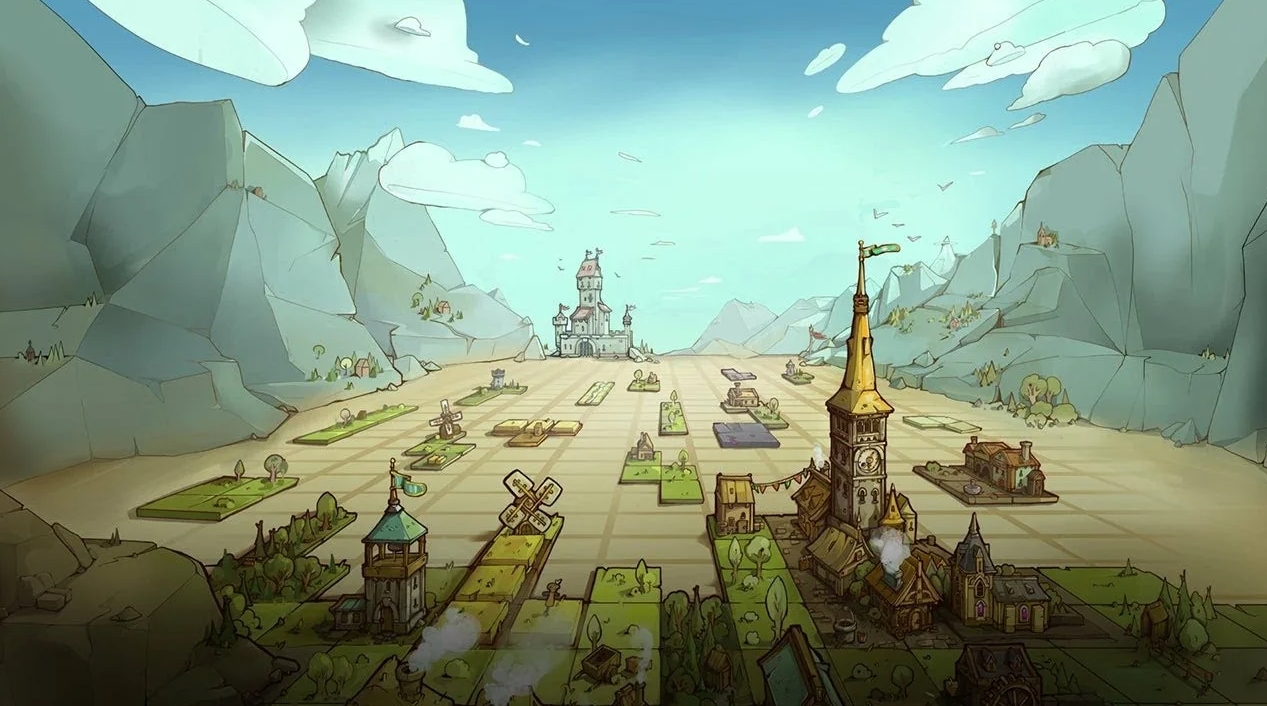
Sometimes it’s especially nice to see how a successful idea creates a chain of synergies. They planted a forest and set up a logging camp nearby, which will turn trees into useful resources and clear a place for future fields. A tower grows nearby, capable of feeding more soldiers, and the defense line suddenly comes to life. These little discoveries make the gameplay especially cozy — as if you are not playing, but taking care of your own world, watching it blossom.
But you can’t do without a fly in the ointment: your enemies also want a piece of your pie. Paradoxically, you also have to place their blocks, and this adds an almost chess—like tension to the game. Every wrong move can lead to the strengthening of the enemy. Only one block can be set aside as a “reserve”, and not always: a lot depends on the mode and the selected difficulty level. The random generation of figures makes you constantly adjust, but this is where the excitement comes from — the feeling of real tactics, where plans change right on the fly.
When the field is filled to the limit, the climax begins — the fight. This is where it becomes clear how far-sighted your decisions were, whether you allocated your resources correctly, and whether you were able to create a sustainable defense system. Drop Duchy turns the familiar tetris “glass” into an arena where luck, logic and tactical flair collide. And there’s something really lively and surprisingly engaging about this mix.
Love gaming? Then you’ll love our steam free accounts!
Drop Duchy’s battle system
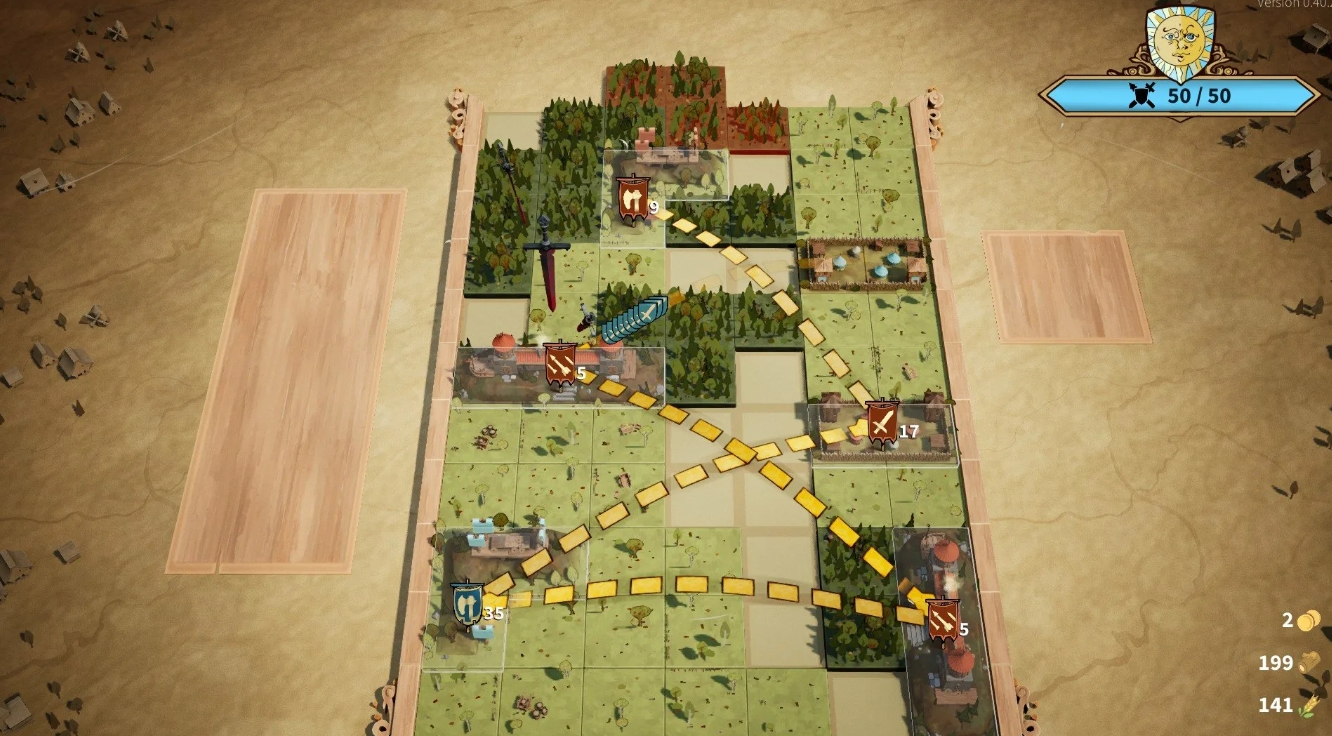
At first glance, the battle system in Drop Duchy seems almost like a toy, it is so simple and intuitive. But behind the external conciseness lies the familiar rock—paper—scissors tactic, only shifted to military units. Archers confidently deal with axemen, axemen break the formation of swordsmen, and swordsmen easily emerge victorious from duels with archers. This circular logic creates a dynamic gameplay in which it is important not only to have an army, but also to understand its structure.
The advantage of the dominant type of troops is very clearly expressed: the leading side receives a 50% strength bonus. As a result, even a small tactical advantage turns into a real force. For example, a squad of ten swordsmen can nullify fifteen archers, and if the number is equal, some of the swordsmen will survive the battle. This makes it necessary to closely monitor the balance of the army and select the composition of troops for the upcoming battle.
The player is given full control over who exactly to attack and in what order to strike. The attack route is drawn in just a couple of clicks, and the ability to combine units opens up access to more subtle strategic solutions. This makes the battle system feel not mechanical, but alive — one where your choice really affects the outcome.
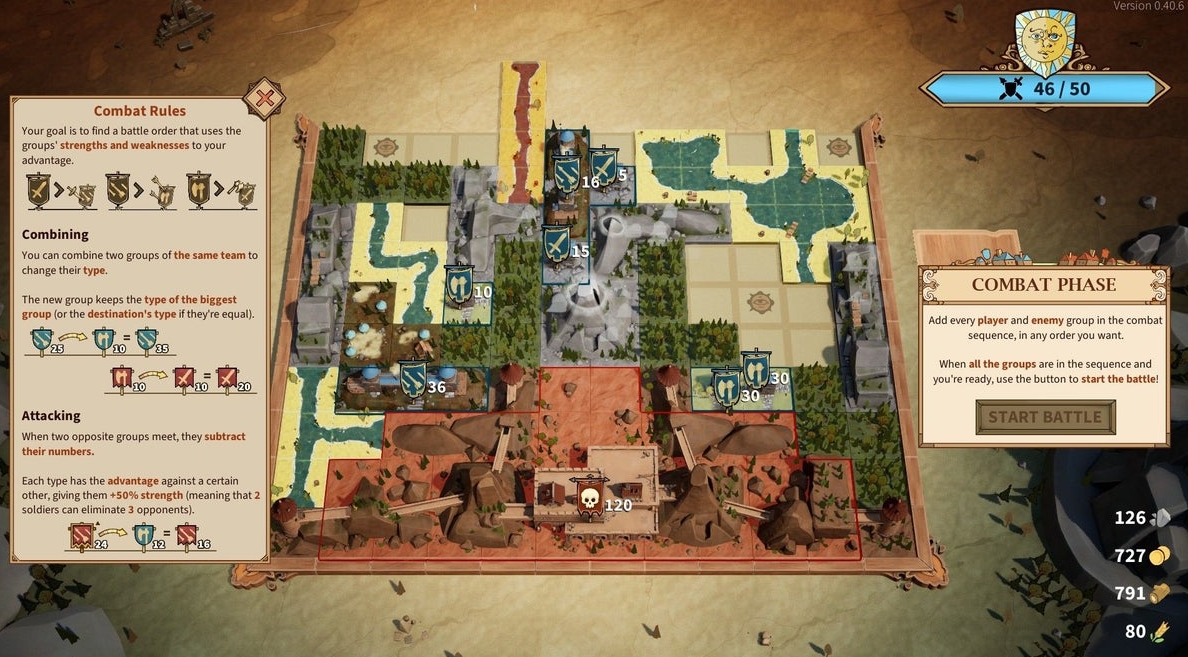
For example, if you are facing an impressive squad of 30 axemen, but have only 15 archers and 5 swordsmen at your disposal, the situation can be turned in your favor. Take a route through the swordsmen first, then combine them with the archers, and the final squad will be 20 archers. This is already enough to be guaranteed to defeat the enemy. And it’s these small wins that make the game really exciting.
However, you can not relax. If at least one enemy warrior survives the battle, he will hit the defense points — in fact, the “health” of your duchy. When the score drops to zero, the game ends. But every allied soldier who survived the clash brings a currency. It can be invested in improvements, strengthening your army before the next battle.
Before the start of the round, the player sees in advance which enemy military buildings will enter the battle, and can choose eight buildings for his battle deck from the total pool of the current race. This is another plank of strategic planning, where it is important not to saturate the deck with random solutions and not clog it with useless cards. And if suddenly there are no combat units in your deck, no one forbids hiring mercenaries for resources. They are fighting for you, but they occupy such valuable slots, so you should resort to their help only as a last resort.
Drop Duchy Campaign
The basic Drop Duchy campaign is divided into three acts — a classic format for games with elements of “roguelike” and card strategy. We are moving along an extensive map, where military clashes are juxtaposed with peaceful stops. In such locations, you can do household chores: replenish resources, restore defense points, exchange excess goods, upgrade an existing card or add a new one to the deck. All this is reminiscent of a journey in the spirit of Slay the Spire, only here the development is based around Tetris fields, rather than pure deck-building tactics.
Each act ends with a meeting with the boss, and each such battle is a small test of attentiveness. The first boss, for example, is called a Wall: it limits the height of buildings and forces you to think through every step. The second boss reinforces his troops if you place a building on marked squares, turning the field into an analog of a mine. Meetings with bosses serve as a kind of exam, where the winner is not the one with the most resources, but the one who knows how to flexibly adapt the strategy.
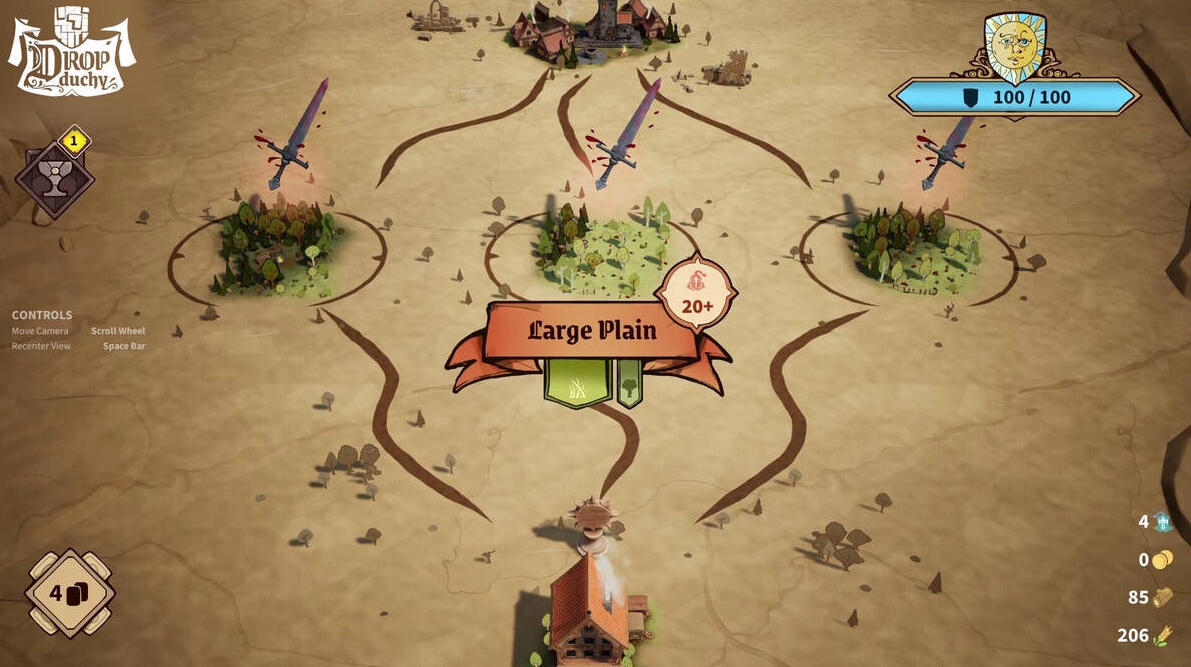
Before the start of the race, the player chooses one of three factions: the Duchy, the Republic or the Order. Each of them offers its own set of maps, mechanics and development strategy. This is not just a decorative difference — the factions really change the style of the game.
-
The Duchy focuses on farming, extracting basic resources, and strengthening the economy.
-
Republic — specializes in obtaining gold and turning lands into cities, enhancing trade.
-
The Order is built around faith, rituals and crusades, giving preference to spiritual mechanics.
The developers call the Order a complex faction, but practice shows the opposite. It is worth collecting several copies of a building that hires troops for every point of faith, and the game turns into a rapid leap to victory. All investments go into faith leveling, units are hired almost automatically, and the added map, which lures enemy troops, makes the Order a real victory machine, capable of subjugating even bosses.
On the contrary, playing for a Duchy or a Republic requires much more concentration. It is important to consider subtle synergies, block placement time, and its surroundings. One failed building and the strategic puzzle crumbles, forcing you to start the race all over again.
Nevertheless, the change of faction is really refreshing. Each one opens up new tactical opportunities and pushes us to find innovative solutions. But only one default fraction is available. To unlock the rest, you need to move up the development tree, complete tasks and challenges, gradually expanding access to new maps, mechanics and types of terrain.
And here, it would seem, it’s time to praise the developers for their scale. Dozens of buildings, unique terrain types, and fresh synergies diversify builds and create a sense of vibrant development. But there’s also a caveat: with so many options available, it’s easy to lose control of what’s happening, especially if you’re distracted by just one bad move.
Is Drop Duchy worth playing?
In the early hours, Drop Duchy pleasantly surprises with how rapidly progress is felt. The player literally goes with the flow: one task closes by itself, followed by another — he improved the building, collected a successful combination of blocks, passed the act. The game generously rewards every action, creating a sense of confident growth and a brisk pace.
Completed challenges are rewarded with crowns, a special development currency that unlocks new terrain types, buildings, factions, and other elements in the progress tree. And completing fractional tasks brings permanent bonuses that make subsequent races noticeably easier. All this forms a meta-progression familiar from the best bagels, where even failures become a contribution to future development.
In addition, each successfully completed challenge brings an achievement to Steam — and there are no fewer than 133 of them here, so trophy hunters will definitely have something to do.
However, the system has an unpleasant side effect. Some challenges require less skill than endless patience: you have to restart the round over and over again until you get the right combination of blocks. At such moments, strategy stops playing the game — luck alone rules.
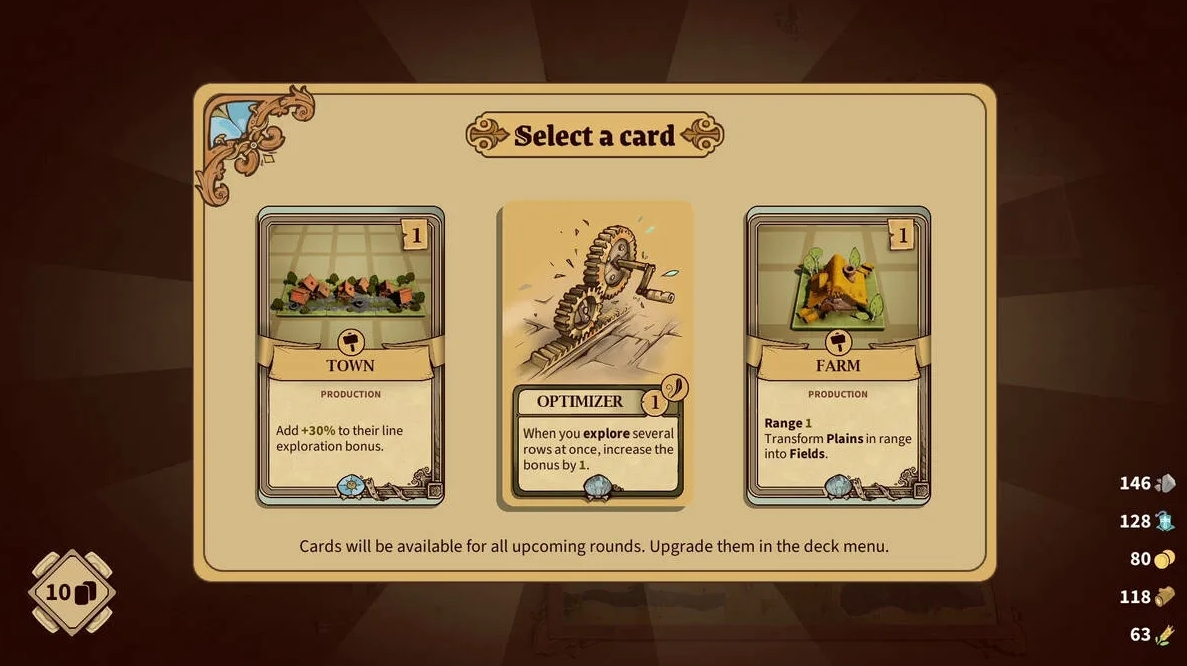
When several random elements overlap, uncontrollable chaos ensues. Yes, the developers have provided the opportunity to restart the round indefinitely, but it’s worth asking yourself — how exciting is it? The mechanics turn into a routine, and unsuccessful attempts only emphasize the dependence on randomness.
In addition, the progression plays against the player: by opening new buildings and technologies, you increase the pool of possible cards, which means you reduce the chance of getting the right one. Paradoxically, the more you unlock, the less you affect the current race. Gradually, the management of the situation slips out of hand, giving way to randomness.
Over time, the races start to feel monotonous. The maps behave similarly, the bosses repeat themselves, and completing simple challenges ceases to bring novelty. Even the discovery of new factions only temporarily enlivens the process. In the end, it all comes down to one optimal strategy, which every player consciously or not strives for.
To dilute the repeatability, the authors added a difficulty level and “challenge” modes.
They affect parameters such as:
-
Number of enemy troops;
-
Initial amount of resources;
-
Cost of improving maps;
-
The price of hiring mercenaries;
-
The rigidity of the conditions of passage.
But in practice, this often leads to the player relying more and more on constant restarts, trying to catch a good start. The complexity increases, and the diversity feels weaker than we would like.
The “challenge” modes are also not always revealed from the best side. They set unusual restrictions — for example, a stripped-down deck or a start with one point of defense — and offer to get out of these conditions. It sounds intriguing, but in fact, such modifiers often do not add depth, but only worsen the player’s position, making the races more difficult, but not more interesting.
And yet, the hand does not rise to call the game unsuccessful. Drop Duchy is genuinely addictive: that same “one more race”, which started at six in the evening, easily turns into a game night. The mechanics of merging blocks, tactical structure, and card solutions work harmoniously and create a cozy, intense rhythm.
But after about twenty hours, the game started to lose me. Winning races stopped bringing a sense of growth, enthusiasm faded, and the desire to experiment disappeared. At some point, I closed the game, took a deep breath, and said to myself, “That’s enough. It’s time to write a review.”
Drop Duchy Verdict
From the very first minutes, Drop Duchy makes an almost magical impression — as if someone took familiar mechanics from different genres, gently shook them in their palms and got something surprisingly solid. The game doesn’t just demonstrate an original idea, it makes you fall in love with it: one part of the brain solves tricky puzzles, another builds strategic chains, and the third greedily catches roguelike surprises. It all works so seamlessly that you find yourself thinking, “Why didn’t anyone think of this before?”
But time puts everything in its place. After twenty—five hours, another feeling comes – as if the game is still taking its first confident steps and it just needs a little more maturity. You start to notice the little things: sometimes the balance is lame, random sometimes behaves like a moody god, and in some situations there is not enough basic freedom of choice. I would like at least a little more control, for example, the choice of starting maps or variations in boss fights. And this is especially disappointing, because the potential of Drop Duchy is really huge, it can be felt right under your fingers.
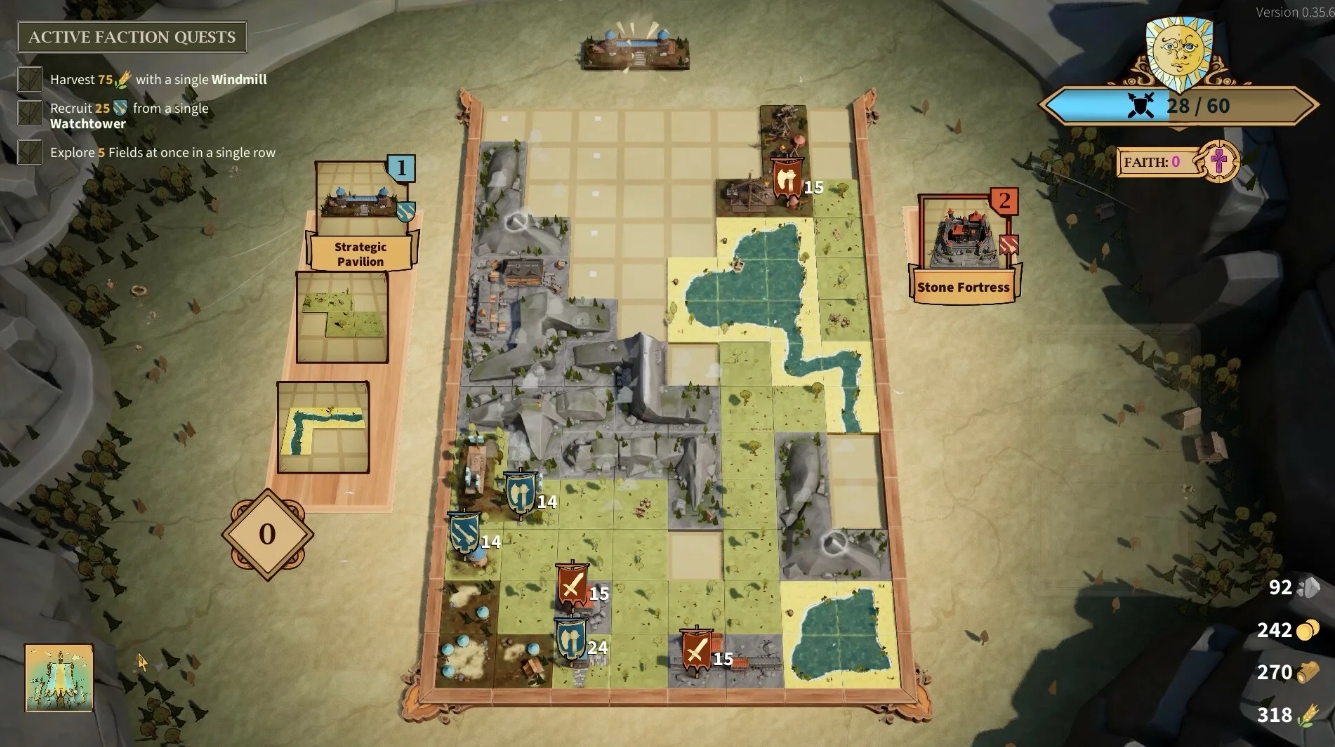
It is worth slightly tweaking the mechanics, slightly relaxing the dictates of chance, giving the player more space for creativity — and the game can grow into one of the most elegant and unusual “Tetris hybrids” of recent years. In the meantime, it remains something like a brilliant draft: charming, fascinating, but still not perfect.
Nevertheless, the language does not rise to reproach Drop Duchy for lack of pleasure. On the contrary, it is surprisingly comfortable. The medieval ambient acts almost like an antistress, the soft visual relaxes, and the gameplay — despite its roughness — pleasantly tickles the brain. This is the case when you go in for half an hour “just to look,” and three hours later you find yourself still there, under the soft tapping of falling blocks and a thought: “Okay, last race, and sleep.”
Drop Duchy may be imperfect, but she’s sincere. And if you like roguelike card games, catchy puzzles, and meditative strategies, you should at least give it a shot. There is a high probability that it will hook you too.
Drop Duchy System Requirements
How to play Drop Duchy for free on Steam via VpeSports
In Drop Duchy, everything starts with the feeling that you accidentally stepped into someone else’s story… and she suddenly accepted you as her own. The wind carries the smell of wet earth, the voices of peasants can be heard somewhere in the distance, and it seems that the world is only looking at you, deciding whether you are ready to become the duke who will change his fate. There is no feeling of artificiality here: every detail seems to be alive, reacting to your decisions. Once you make the first move, the universe begins to open up in a new way, trusting you more and more.
We tried to make the entrance to this world not just fast, but almost homelike: without unnecessary questions, without technical quests that only repel. A couple of minutes and you’re already inside, as if you’ve returned to where you’ve been waiting for a long time. There are no difficulties, just you and the duchy, which still does not know at all what kind of ruler you will become.
When you finish the next session and the emotions are still vibrating a little inside, don’t keep them to yourself. Register on the site and write a review — honest, lively, the way you feel. Sometimes the system may delay a comment, as if rereading it several times. If that happens, change the wording a little and everything will appear. After the publication, we will send you an email with all the necessary information.
And if you want to be closer to the world of Drop Duchy not only in the game, come to our Telegram channel. There’s always someone discussing something – finds, funny moments, unexpected twists, and just sharing the mood. We post fresh accounts, tell you about new patches, and give you useful tips. And if something gets you confused or stops you, don’t worry. Our free game guide and support chat are always nearby, without formalities and dry phrases. We are here to make you feel comfortable, like in a good community where people come not only to play, but also to breathe in a little friendliness.