

It’s hard to believe, but A Quiet Place: The Road Ahead is the first game project based on A Quiet Place. And it’s been six years since the film was released! With such an atmospheric setting and the idea of silence, the game could become a benchmark among stealth horrors, like Alien: Isolation. Or does it only look perfect on paper?
Table of Contents
A Quiet Place: The Road Ahead Free Steam Account
The film, released in 2018, truly stood out from other films of the genre with its unusual approach to the post-apocalypse. This time, the cause of the destruction of civilization was not something familiar like zombies or a virus, but a sudden invasion of strange alien creatures. They are completely blind, but have super-sensitive hearing, catching even the faintest rustle – be it the click of a dropped drop of water or an inadvertently exhaled word. Upon hearing something, these creatures instantly break away, like predators in a mad frenzy, and rush to the source of the noise to tear apart everything alive in their path – or simply shred a car in which the alarm suddenly went off.
People have no choice but to shut up – literally. Almost all the dialogue in the first film is replaced by sign language, and the first words spoken out loud are heard by the viewer only around the fortieth minute — and only against the backdrop of a roaring waterfall, which temporarily drowns out dangerous sounds. The heroes walk barefoot, moving exclusively along soft paths of scattered sand. The first two parts are essentially chamber thrillers built around one idea: sound is death. Anything loud is mortally dangerous.
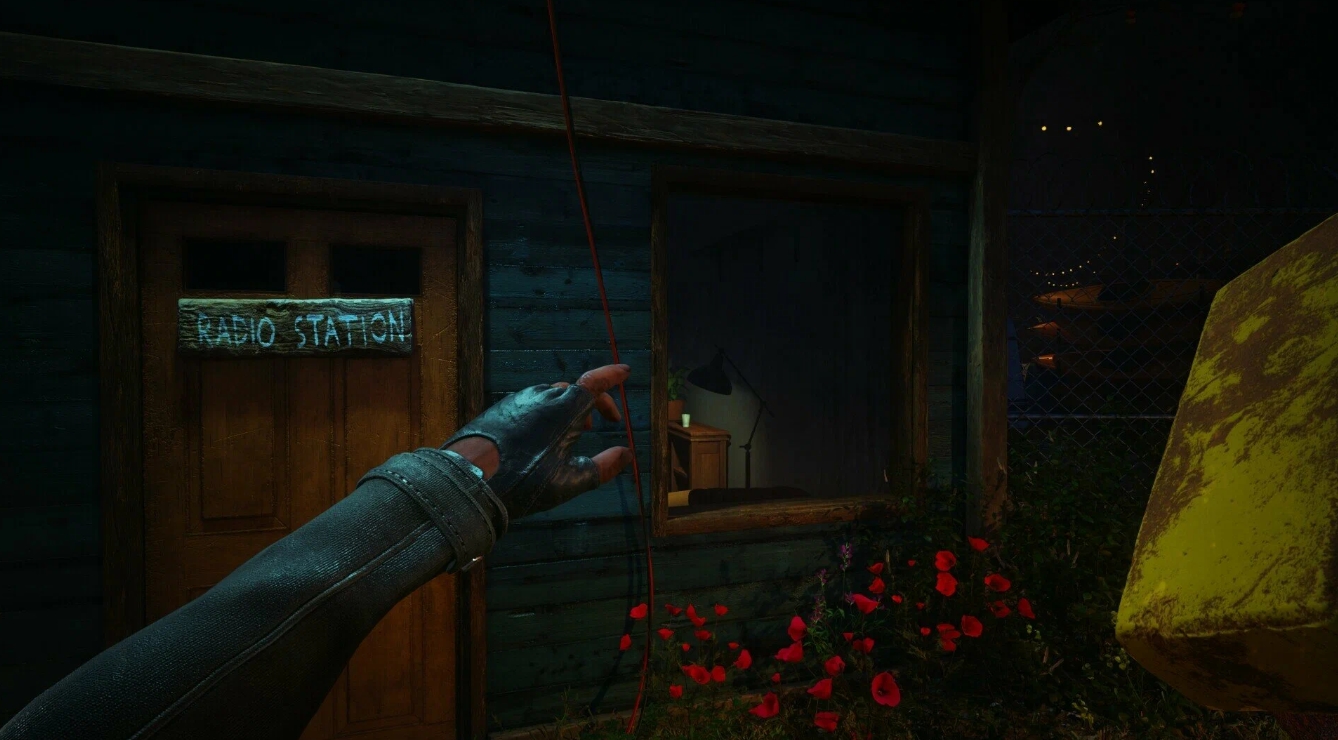
But A Quiet Place: Day One (2023) is a completely different approach. Less horror for the sake of horror, more of an atmosphere of disaster, experiencing a tragedy on a large scale. Yes, the film has lower ratings than its predecessors, but personally I found it much deeper and more expressive. This is no longer just a horror film, but rather a metaphorical statement about fear, silence, loneliness — and the art of survival in chaos. Plus, there are far fewer logical inconsistencies that the previous parts were guilty of.
Sure, the idea of blind monsters reacting to any sound, be it a crumpled sheet of paper or a newborn’s cry, still looks impressive. But if you look closely, the setting doesn’t stand up to serious criticism. Nevertheless, the film works because it’s emotionally engaging, and that’s probably the most important thing in cinema.
Add a little magic to your routine with steam free accounts!
Plot A Quiet Place: The Road Ahead
In A Quiet Place: The Road Ahead, the authors, fortunately, do not repeat the most extreme scenes from the films – no one gives birth in a basement under the monster’s nose or hides a baby in a box with oxygen. But this does not mean that the story has become less tense. The main character, a young woman named Alex, is also pregnant – and, in addition, suffers from asthma. In a world where any sound can become a death sentence, this sounds almost like a death sentence in advance. From the very beginning, we are met by tragedy: the father of her unborn child dies before Alex’s eyes. After that, she is practically alone – only with her own father, with whom, as you can guess, she has a far from ideal relationship. Together they set off on a desperate journey, full of dangers and pain to the boat that should take them to a safe place. After all, monsters, like in the films, hear perfectly well, but have never learned to swim.
This path is not just a physical overcoming of distance. This is a journey through fear, loss, disappointment and attempts to cope with internal pain. Unlike the second film, where the emphasis was on the clash with aggressive survivors, here the conflict is closer – it unfolds between relatives. Alex has a complicated relationship with the mother of her deceased lover – her mother-in-law, who, according to the classic genre, did not accept the girl into her heart. But behind the external domestic hostility is hidden a deep emotional wound, which the heroine will have to deal with as the game progresses.
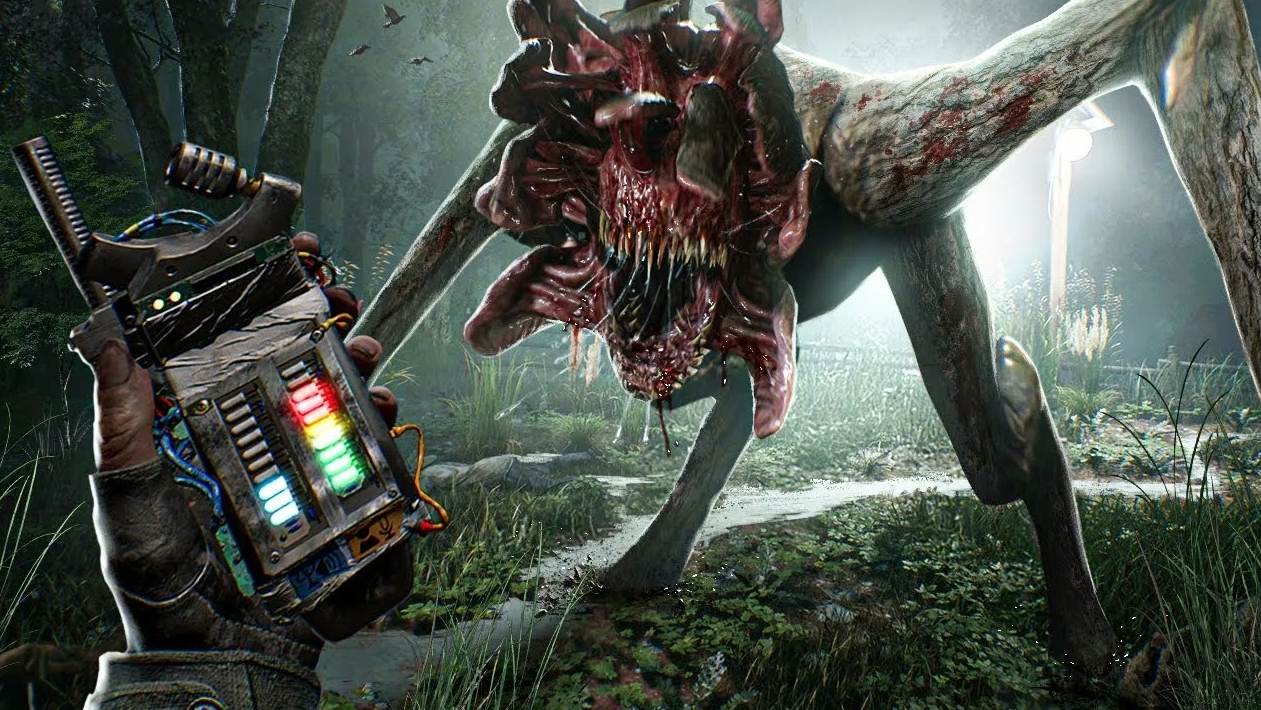
The scriptwriters build the story carefully and competently. The first third of the game alternates the present with flashbacks, revealing the backstory of the characters and gradually drawing you into an atmosphere of hopelessness and human drama. Through cut scenes, found letters, diaries and dialogues, the game tells not only about the fate of Alex, but also about other people – those who tried to survive, who fought, who gave up. There is a lot of humanity in these details, and even subtle references to films are pleasing to the eye – like, for example, the story of a female poet who involuntarily resembles Sam from the prequel A Quiet Place: Day One.
However, unfortunately, closer to the middle and especially towards the end, the game begins to lose momentum. The hide-and-seek mechanics, which at first frightened and kept you in suspense, eventually turns into a routine. At some point, there is a feeling that the game does not let you go simply because it is afraid to part. Instead of an emotional cut-scene by the boat, there is another puzzle: turn on, twist, restart. And you sit, harboring irritation, thinking: “Well, how much can this go on?!”
The pace, by the way, is a separate topic. If the first two films could be jokingly called a parade of bare feet, because they were shown on screen more often than faces, then The Road Ahead is a slow, viscous, almost stagnant thriller, where standing in the shadows or under the table is the norm, not the exception. You want dynamics, especially towards the end, but the game seems to deliberately slow down, giving neither a denouement nor breathing. Nevertheless, despite the protractedness and some tedious moments, the game feels genuinely trying. This is not just an adaptation based on the films – it is an independent, albeit imperfect, story about pain, love, guilt and an attempt to survive in a world where you can’t talk, cry or even breathe too loudly.
How does the survival mechanics in the game differ from Alien: Isolation?
It’s impossible not to think of Alien: Isolation when you start playing. In both stories, the main heroines encounter an almost invulnerable monster, from which you can only hide. It hears the slightest noise perfectly well – and in the case of the Alien, it also sees perfectly well. But if Ellen Ripley had a motion sensor, then Alex has a phonometer. It shows how loud you sound compared to the environment. Cross this threshold – and the monster will immediately become wary. And if the noise is repeated, it will go looking for … and is unlikely not to find.
Alex can distract the creature by throwing bottles or stones, but you will not have to hide in cabinets – this is not necessary here. From time to time, simple puzzles come across: dragging boxes, looking for codes and keys, turning valves, changing fuses – nothing complicated, but it creates variety. However, in Isolation, crafting and action were added to this. Here, the bet is made on one thing – stealth.
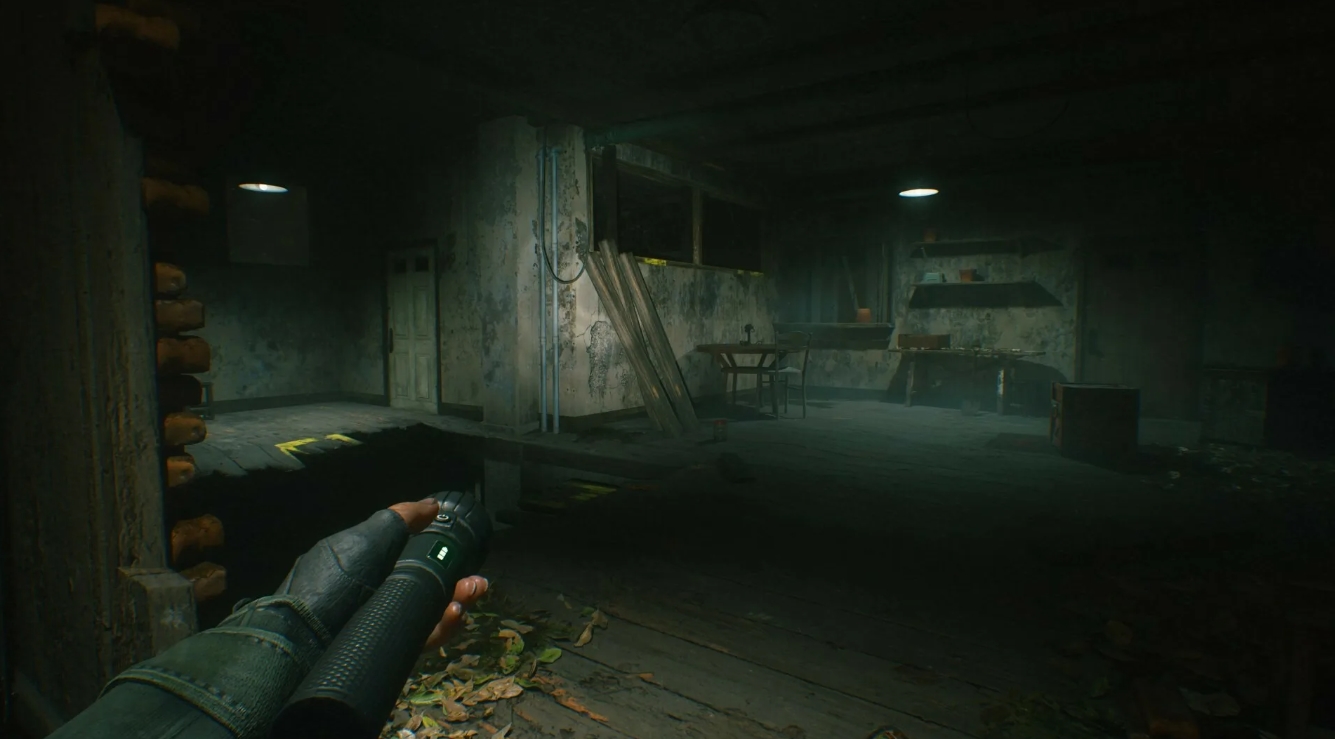
Hide and seek become the core of the gameplay. And you have to act extremely carefully: move literally millimeter by millimeter, making sure not to touch a jar, not to step on glass, and not to creak a door. You throw a stone and freeze, hoping that it will be distracted.
Over time, new mechanics appear: you can, for example, lay down sand to walk more quietly, or freeze when the creature is nearby. Sometimes you even have to throw stones into traps to use them against the enemy. These elements liven up the action a little, but not for long – overall, the game remains about slow, tense survival.
How Stress and Survival Work in the Game
We must give credit where it’s due – in terms of adrenaline and suspense, this game knows how to squeeze you into your chair. Especially at the very beginning, when you’re not yet accustomed to its rules and don’t know what to expect. Every shadow seems like a threat, every sound is a harbinger of death. The creature that roams the levels evokes not just fear, but something on the level of deep, almost animal horror. It’s not just scary – it’s frightening with its unpredictability and almost otherworldly presence. In this regard, the game is not far from the cult “Alien”: the same constant anxiety, tension and the feeling that you are prey.
Moreover, even if you set the easy difficulty level, you won’t be able to relax. The monster hears any steps perfectly, acts quickly and does not forgive mistakes. For example, at first I was completely sure that I accidentally turned on hardcore – each skirmish seemed so merciless. And if you decide to go into survival mode, be prepared for complete silence: the interface disappears, prompts are turned off, and any sound can be fatal. Literally — the creature can emerge from the darkness just by hearing you take a breath in the wrong place.
And here begins a real nightmare for the main character — Alex. She is not a super soldier or a fearless action hero, but an ordinary girl prone to stress. Moreover, her anxiety level increases not only from encounters with the monster. Even ordinary actions like dragging heavy objects — boards, barrels or furniture — can drive her into a state of panic. And if suddenly the monster looms right in front of her face, or the room fills with dust, Alex begins to literally lose control of herself.
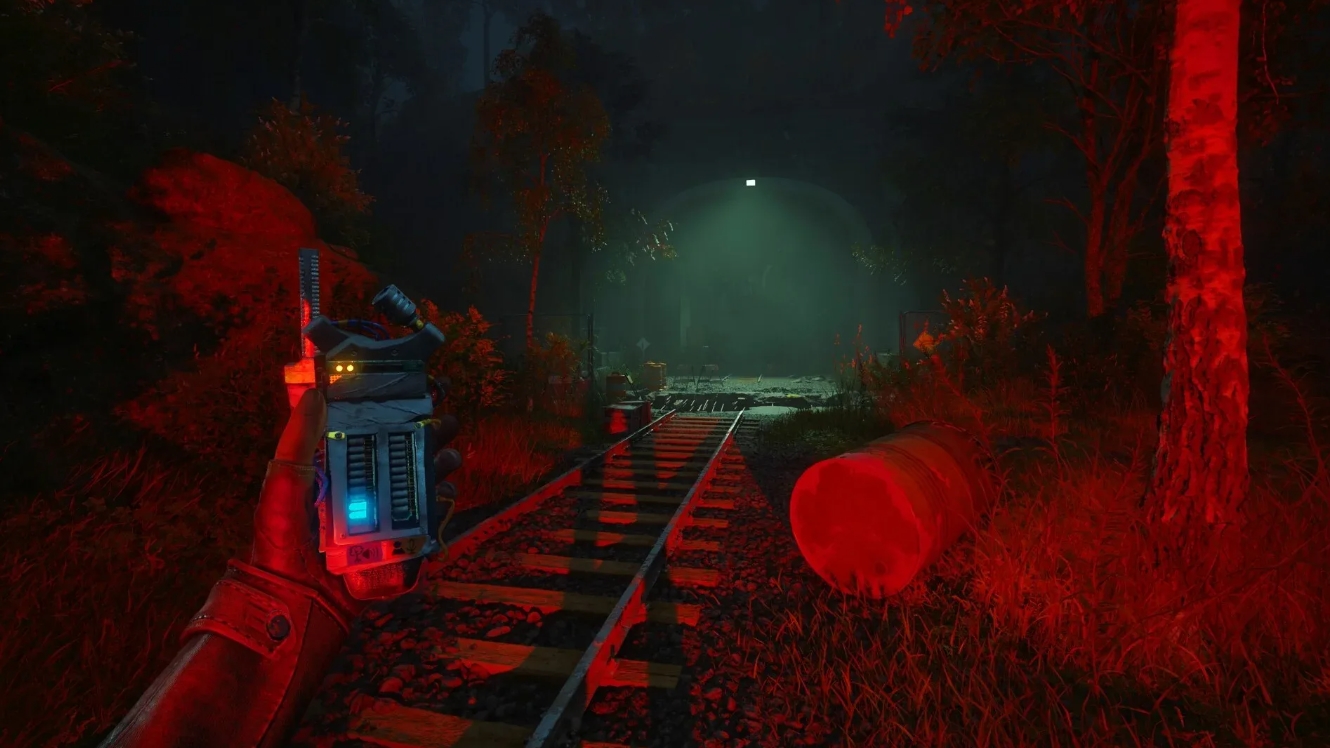
This stress is not just a visual effect. It directly affects the gameplay. The higher the anxiety level, the higher the chance that the heroine will have an asthma attack. It can be postponed if you complete the mini-game in time – you know, a psychological test of agility and reaction. But if you miss or don’t make it in time – Alex starts coughing. Loudly. No chance of going unnoticed. And it almost always ends fatally.
If that’s not enough for you, the developers suggest turning on the microphone. Yes, a regular microphone in your room. And then the game will start eavesdropping not only on you, but also on everything that happens around you. Any loud sound – a door slamming at the wrong time, someone in the household sneezing, or, as in my case, a cat suddenly jumping on the table and demanding food – and the monster is already wary. At that moment, I looked at the poor animal as if he personally brought a demon with him. Funny, of course. But also really scary, if you forget that this is just a game. Just don’t forget to calibrate the microphone sensitivity in advance, otherwise the monster will literally “hear” the game itself from the speakers.
True, over time it becomes noticeable that this entire system works according to certain patterns. The monster moves along recognizable routes, stressful situations begin to repeat, and the pace remains leisurely. At some point, fatigue sets in. It all depends on how much you like such games. If you like tense stories in the spirit of “A Quiet Place”, where every move is worth its weight in gold, you will be delighted. But those who were expecting dynamics and variety will most likely just give up at some point.
A Quiet Place: The Road Ahead – is it worth playing for horror fans and fans of the film?
A Quiet Place: The Road Ahead is a game created primarily for fans of the eponymous film universe. What’s important here is not the dynamics and action, but the silence, anxious anticipation and the feeling that every rustle could be the last. It’s about the atmosphere, not the extreme. Fans of horror in a more classic sense may be interested at the start, but there’s a chance that somewhere in the middle they’ll lose interest and quietly turn off the road.
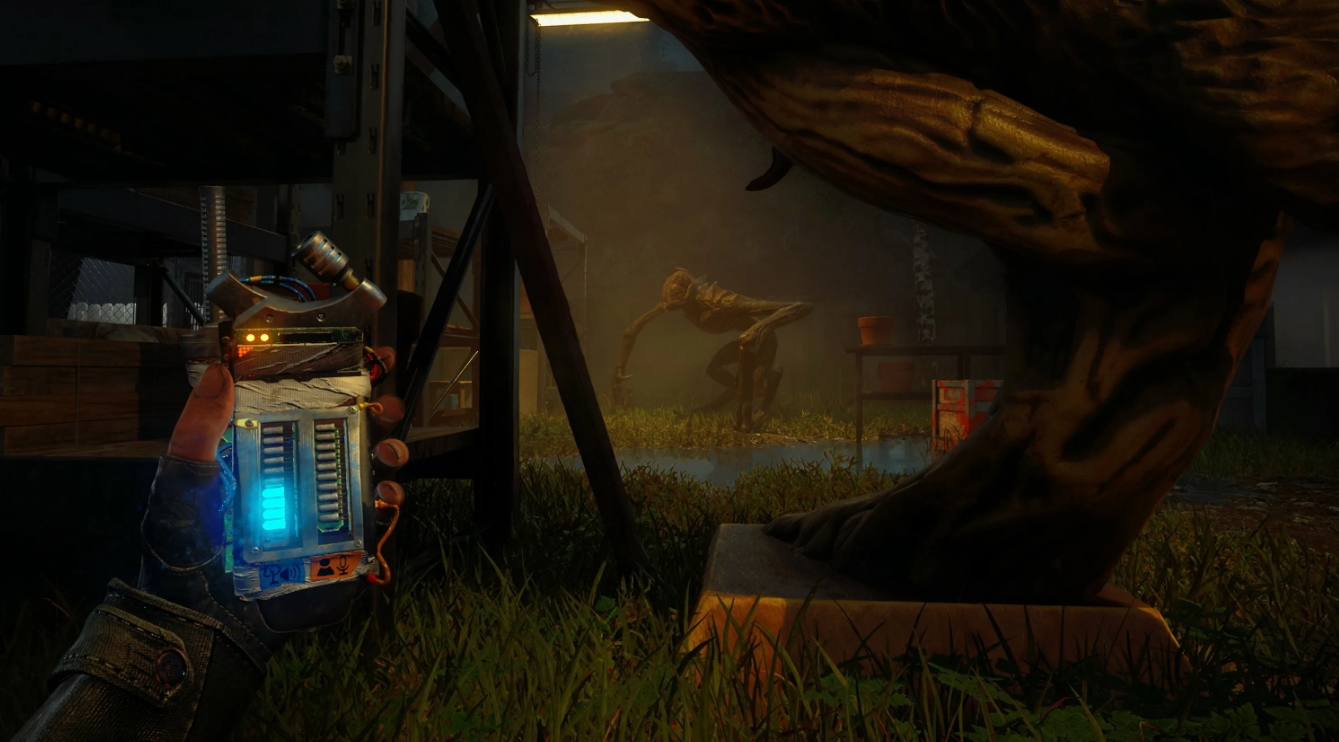
The plot unfolds in the spirit of the original – slowly, tensely, with an emphasis on survival, family and emotional scenes. The beginning is especially intriguing: the world is destroyed, danger is in the air, and the heroes are desperately trying to cope with the threat, hiding in silence. However, closer to the end, this formula begins to tire of itself.
Pros:
-
An intriguing beginning to the plot that makes you closely follow the development of events.
-
Deeply written characters and realistic relationships between them. The characters feel alive.
-
Atmospheric stealth moments with hiding from monsters, especially in the first half of the game.
-
Interactive microphone – enemies can hear sounds from your real room if you enable this function.
-
Excellent sound work – every detail, every rustle creates tension and increases immersion.
Cons:
-
The gameplay becomes monotonous closer to the middle – the tension disappears, and routine begins.
-
The pace of the game is too slow, and over time it begins to irritate.
-
Some moments are overloaded with complexity, and this breaks the balance between challenge and pleasure.
-
The final part seems weaker than the first half – the emotional intensity subsides.
A Quiet Place: The Road Ahead System Requirements
System Specs – A Quiet Place: The Road Ahead
How to play A Quiet Place: The Road Ahead for free on Steam via VpeSports
The world has fallen silent—not by choice, but out of fear. Every step, every breath, every small sound can mean the end. In A Quiet Place: The Road Ahead, you’re not just playing a game—you’re clinging to life in a place where silence isn’t golden, it’s the only thing keeping you alive. Through tense exploration, heart-pounding stealth, and emotional moments that hit deep, you’ll walk a path full of dread and hope. And the best part? You can begin this haunting journey without spending a dime.
We’ve done the hard work behind the scenes so you don’t have to worry about the tech. You won’t need to fiddle with settings or chase down complicated files. Just register, sign in, and you’re good to go. The game is available through a free Steam account, and we’ll guide you every step of the way so you can focus on what really matters—surviving the unspeakable.
We know how powerful stories like this can be, and your voice matters. After playing, feel free to share your thoughts—every review is checked by hand to keep our space clean and respectful. If your comment doesn’t show up right away, give it a slight adjustment and try again. Once it’s approved, you’ll get all the access details by email.
If you want to stay in touch with the latest updates or connect with others walking the same quiet road, join our Telegram channel. That’s where we share fresh accounts, patch news, gameplay tips, and even hold discussions about strategy, lore, and survival. Need help? Our full guide “How to Play for Free” is always up to date—and our support chat is open if you’d rather talk to a human.