Let’s get straight to the point: the developers at Playground Games didn’t reinvent the wheel. At the start of the campaign, May will offer you three cars to choose from—and, as in previous games, you can eventually pick up all three. You can switch between them with just a couple of clicks. So, don’t panic over making the “wrong” choice—take the one you like visually.
But if you want to take a more calculated approach, we’ve broken down the characteristics of each candidate. Spoiler: there’s no universal winner, but each car has its own advantages for specific tasks.
Table of Contents
Starter Cars in Forza Horizon 6: Silvia, Celica, and Jimmy
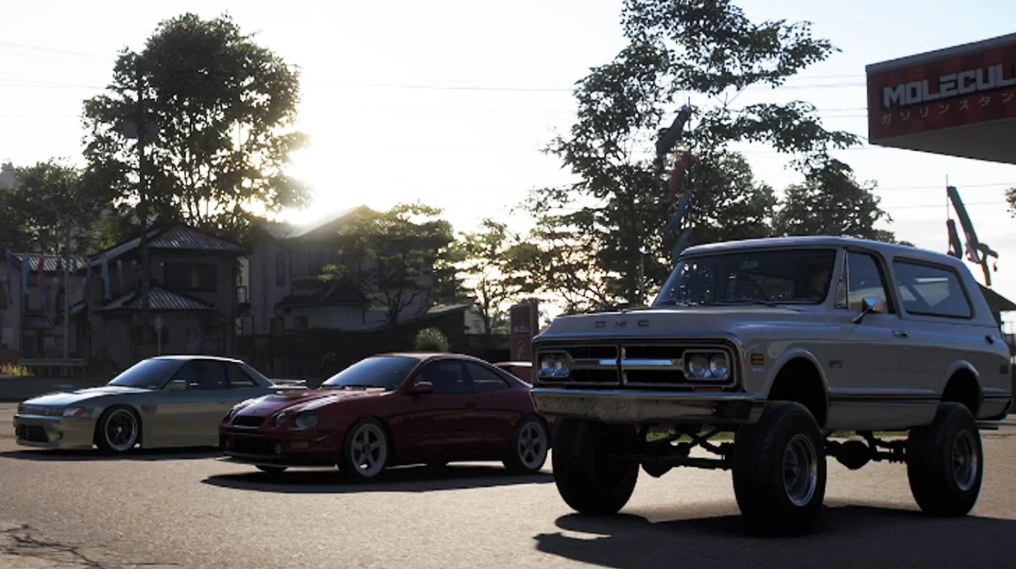
You’ll find three cars representing different eras and philosophies in your garage:
-
Nissan Silvia K’s (1989)—a classic rear-wheel-drive Japanese drift coupe.
-
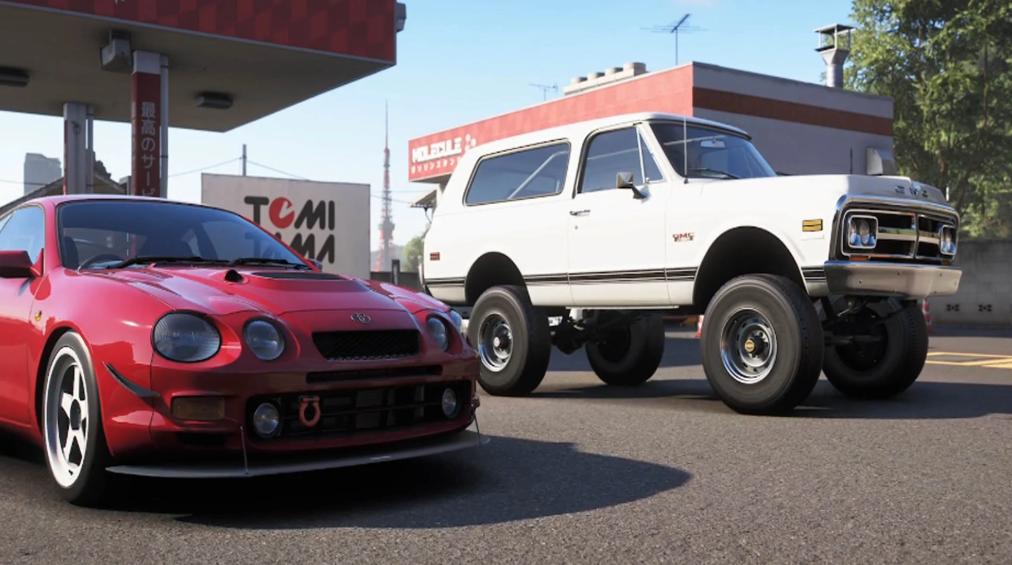
Toyota Celica (1994)—an all-wheel-drive sports sedan with an emphasis on handling.
-
GMC Jimmy (1970) — a rally SUV with monstrous torque and all-wheel drive.
Comparison of Forza Horizon 6 starting cars by characteristics
Which car is best for your racing style in Forza Horizon 6?
The Toyota Celica is a true all-rounder. It has the best top speed of the three and near-perfect handling (4.8 versus the Silvia’s 4.7). Plus, it brakes just as effectively as the Jimmy. If you’re unsure what you’ll be doing in your first few hours, go with the Celica. It can handle highways, technical turns, and even light off-roading.
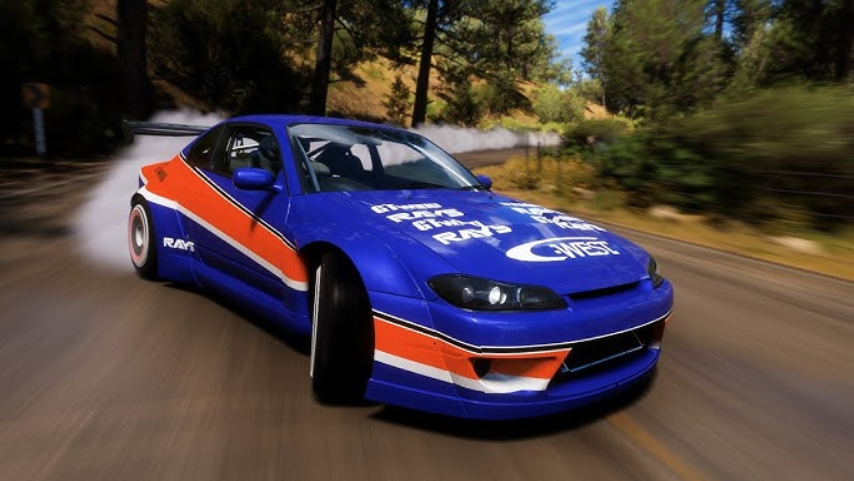
The Nissan Silvia is built for drifting. Rear-wheel drive, a lightweight frame, and responsive steering. Sure, it’s slower than the Celica, and the brakes are so-so (2.1 is objectively bad). But if your goal is to carve curves at every intersection, the Silvia will give the others a run for their money. Incidentally, it costs 40,000 credits—right between the budget Celica and the more expensive Jimmy.
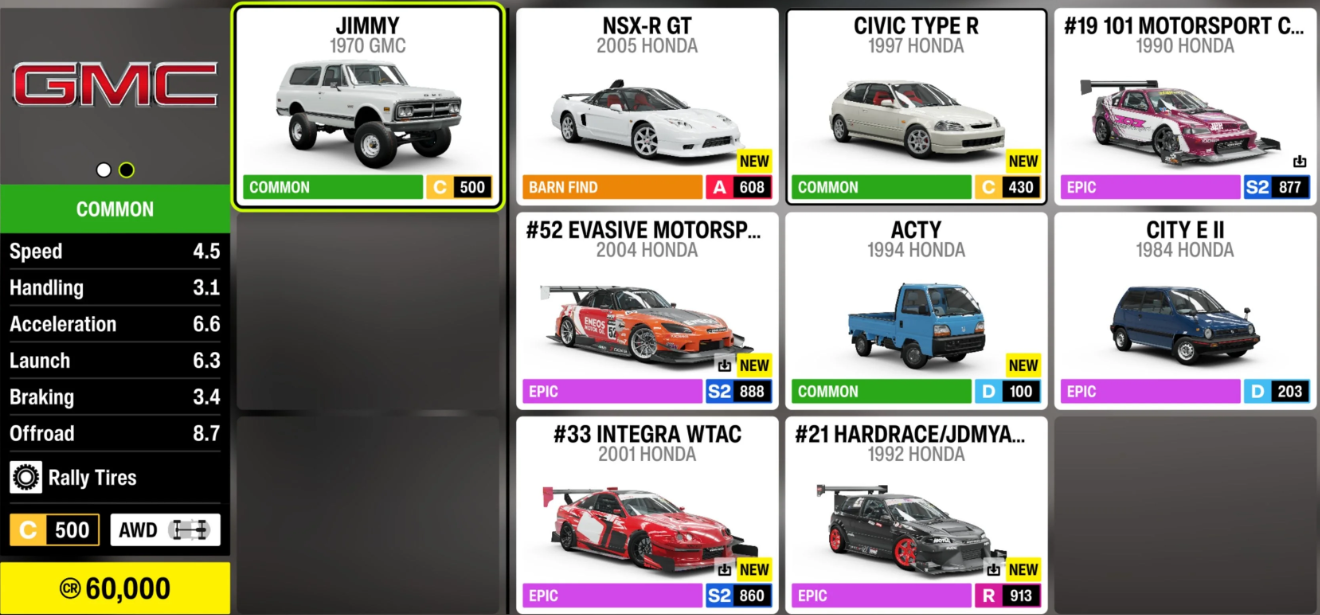
The GMC Jimmy is the king of off-roading. Its off-road rating of 8.7 is a laugh-out-loud joke for a starter car. Acceleration at 6.6 and launch at 6.3 are best in class. Torque at 507 Nm turns this box into a real tractor. True, handling on asphalt is terrible (3.1) – on the highway, it will sway from side to side. But if you immediately tackle mud and rocks, the Jimmy will not let you down.
Tuning Starter Cars in Forza Horizon 6: Where to Start
In Forza Horizon 6, stock driving is just a demo of your garage’s capabilities. At the start of your career, you are firmly locked into the B500 class, where every extra Performance Index (PI) can be fatal. The biggest mistake beginners make? Trying to cram more horsepower into the engine. On narrow and winding tracks, pure power is absolutely useless if the car can’t corner. We work by the golden rule: “traction is more important than strength.” This approach allows you to consistently beat your rivals on lap times without exceeding the regulations.
What should you spend credits on early in your FH6 career?
Even budget upgrades for 8,000-12,000 credits can completely redesign the car’s handling. If your budget is limited, forget about turbos—go straight to the chassis.
-
Tires (Street or Sport): New rubber provides a colossal boost in cornering control and significantly reduces braking distances.
-
Suspension (Street): A necessary evil for body stabilization. It eliminates the alarming roll of the GMC Jimmy and tames the nervous rear axle of the Nissan Silvia K’s.
-
Transmission (Street): Allows for quicker gear shifts and smoother acceleration off the apex.
-
Differential: The cheapest way to fine-tune traction. For all-wheel drive vehicles, it cures excessive understeer, and for RWD, it helps control drift.
Budget Builds for the Silvia, Celica, and Jimmy in B500
Each of the three debut titles in the garage has its own character, and they require targeted treatment.
Nissan Silvia K’s (RWD): Street Tires, Street Suspension, and Race Diff are the top priorities. The result is predictable drifting without a critical loss of speed and fewer “breakaways” on exit. To prevent the Silvia from drifting, set the tire pressure slightly below stock, and crank the diff settings to 35-45% (Accel) and 15-20% (Decel).
Toyota Celica (AWD): A good choice for those who value stability. Install Street Tires, Street Transmission, and Street Suspension. The car starts to drive like it’s on rails, even on the most technical roads. A little life hack: set the AWD balance to 60:40, favoring the rear axle – this will noticeably improve the pace and corner exits.
GMC Jimmy (AWD): A true off-road king, but only after installing Offroad Tires. Add Street Suspension and Street Transmission to eliminate excess roll. Lower the tire pressure, and soften the rear springs slightly for better bump absorption.
Meta B500 in Forza Horizon 6: Why Grip Matters More Than Power
In Forza Horizon 6, don’t chase spec numbers. Extra horsepower will quickly push you beyond the B500 limit and won’t provide any real benefit in the starting championships. For B-rank multiplayer races, the Toyota Celica is best—it maintains the pace most consistently. The Nissan Silvia K’s requires a steady hand and an understanding of rear-wheel drive physics, while the GMC Jimmy remains a situational tool for mud. Remember: the right tires and suspension will shave more off your lap time than any engine swap. Economy should be prudent, and tuning should be prudent.
Which starter car is best in Forza Horizon 6?
There is no best car—and that’s okay. Decide which racing style suits you best:
-
Road and technical → Celica
-
Drift and parking → Silvia
-
Off-road and rally → Jimmy
And remember: all three will end up in your garage after a short conversation with May. So the only right choice is the one that won’t make you regret the seconds spent thinking about it. Let’s go.