You can determine a Fortnite player’s skill level before they fire their first shot—by five habits that subtly but surely reveal whether they’re a beginner, casual, or pro. These signs apply to Battle Royale, Zero Build, and even Reload, and we’ve added a couple of features not found in other guides.
Fortnite remains one of the most competitive games on the planet—millions of players mingle here, from casual spectators to esports professionals, and the skill range in each lobby is enormous. You can tell who’s up against you not only by their rating, but also by their behavior, skin choice, reactions to storms, and other details. We’ve compiled five key markers that still apply in 2026, supplemented by a breakdown of their psychology and tactics so you can read your opponent like an open book.
Table of Contents
Spawn Island as a Warm-Up Before a Fight
Spawn Island is the first area where you can assess a potential threat. Those who immediately start doing 90-degree jumps, practicing edits, and jumping off ramps after loading are likely to be the most dangerous opponents in the match. They don’t just wait for the start; they use every second to warm up, and this gives them away.
Newbies on Spawn Island usually stand still, run aimlessly, or try to break things with a pickaxe. If you see a player who has already built a five-story tower a minute before spawning and is editing walls on the fly, remember their nickname. They won’t hesitate in battle.
Fortnite Skins and Ranked Cosmetics
Skin choice is the most noticeable, but also the most insidious, sign. Experienced players often use skins that give them a psychological advantage or, conversely, blend into their surroundings. However, there are common patterns that will help you form a first impression. Standard and free skins (Winterfest, base skins) are most often owned by bots, newbies, or very casual players. Exceptions do exist, but they’re rare.
Bulky skins are easy to spot behind cover, creating unnecessary noise and visual clutter. Typically, their owners aren’t known for their advanced mechanics.
Rare and collectible skins (Travis Scott, Monarch, Kratos, Polo Proji) are often associated with veterans who have been playing for years. But be careful: accounts with such skins can be purchased from boosters, so this isn’t a foolproof indicator.
«Sweater» skins are customizable superheroes, Lara Croft, Aura, and football models. These skins are beloved by hardcore players for their practicality and minimalism.
Ranked skins and back blings are where the real value lies. Jewelry awarded for ranked achievements (Diamond, Champion, Unreal) directly reflects a player’s progress in the ranked season. This is the most objective indicator. Below is a brief table of the Fortnite ranking system for 2026, so you can understand what these icons mean:
If you see a player with the «Unreal» back bling, stay away from them or prepare for a brutal frag. If a player has a standard skin but a Diamond rank on their back, they could be a booster or someone who simply prefers minimalism.
Building and Editing in Battles
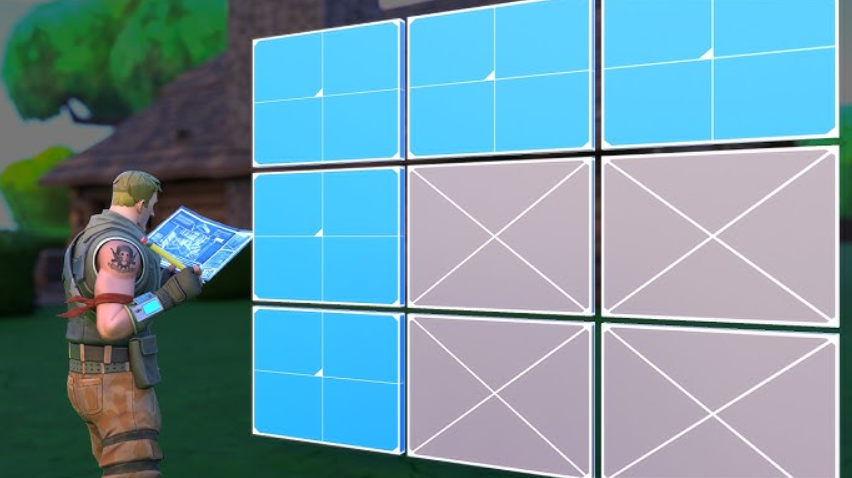
Building in Fortnite is the language of the pros. The way a player places walls and ramps can tell you their skill level in a matter of seconds.
Single walls and ramps without reinforcement are a classic rookie tactic. They don’t know how to quickly switch between materials and often leave their structures without health.
Excessive upward construction after a shot is a sign of panic. If an enemy starts climbing into the sky after the first hit, they waste resources and open themselves up to attack from below. An experienced player, on the other hand, will block their view and go on the defensive or counterattack.
Using brick or metal early in a match may indicate either a lack of wood or inexperience. These materials gain durability more slowly, and in a fast-paced battle, they are easier to destroy before they can build up.
Advanced techniques include Ramp Rush, Triple Edits, Box Fight, and Protected Side Jump. If you see a player red-up through a window in a wall and immediately shoot, they’re a pro, no doubt about it. Such moves require hundreds of hours of practice.
Late-game base building is a sign of strategic thinking. Pros don’t just run around the field; they construct fortifications, plan rotations, and control zones. This is especially noticeable in the endgame, when the storm dwindles to a minimum.
By the way, building is unavailable in Zero Build mode, but it does offer other mechanics, such as portals, shields, and trampolines. Experienced Zero Build players make excellent use of movement items and know every hidden spot on the map, which also reveals their skill level.
Player Movement and Survival Tactics
Movement is another language that can’t be faked. Even in Zero Build, where there’s no building, the way a player runs, crouches, and slides is a dead giveaway.
Walking crouched in open areas is a sign of bots or complete beginners. They think it makes them invisible, but in reality, it only slows them down and makes them an easy target.
Running in a straight line is a classic. Such a player is easy to hit from any distance. Pros never run in a straight line; they use zigzags, jumps, and slides.
Excessive use of escape after taking damage – if an enemy immediately runs away without attempting to counterattack, they are clearly unsure of their strength. Strong players, on the contrary, often engage in combat, even when their health is low – they rely on mechanics and luck.
Sliding while sprinting is a good sign. Experienced players incorporate slides to conserve stamina and make their trajectory less predictable.
Crouching and sliding in firefights is already a high level. Pros use these moves to throw off the enemy’s aim and buy a split second to get a shot off. Attacking with Shock Grenades or Jetpacks — if a player actively uses movement items to quickly close in, they’re confident in their aim and willing to take risks. This is a sign of an aggressive style, typical of strong players.
Compare this to Zero Build, where all these indicators are even more effective because there’s no construction, and movement becomes the primary means of survival. While in Battle Royale you can hide behind a wall, in Zero Build you either move correctly or die.
Storm Behavior and Zone Rotation
The storm is a powerful psychological factor. A player’s reaction to the zone can reveal a lot about their level.
Quickly exiting the storm in the first few circles is usually a sign of a cautious or inexperienced player. They’re afraid of losing health and prefer safety to aggression.
Active fighting within the storm — if you see an enemy building a base or hiding in the storm, prepare for a serious fight. The damage from the first circles is small, and experienced players often use this to catch the enemy off guard or wait for a favorable position.
Players who stay in the storm until the very end to control the zone are truly skilled. They know exactly how much damage they can withstand and use the storm as a tactical resource.
But the most interesting thing is nerves. When a player is under the pressure of the storm and simultaneously fighting, their true level is especially evident. Panic, chaotic movements, rash decisions—all these betray a newcomer. Calmness, precise actions, and resource management are the hallmarks of a pro.
Three Ways to Determine Your Opponent’s Level
Before the first shot rings out, you have a few seconds to assess your opponent. Here are three things to consider.
Point 1: Observe Spawn Island
We’ve already talked about training, but it’s not just construction that’s important here. Pay attention to how a player moves around the island: if they’re purposefully gathering materials or searching for weapons, that’s one level. If they’re simply running around and looking around, that’s another. Pros often take positions that allow them to observe others and don’t waste time.
Point 2: Analyze Skins and Ranked Cosmetics
Look not only at the skin, but also at the back bling, pickaxe, and glider. Ranked rewards are the most reliable indicator. Even if the skin is standard and the back bling is diamond, you’re dealing with either an experienced player or someone who has purchased an account. In any case, caution is a good idea.
Point 3: Reading Movements in the First Seconds of a Fight
As soon as you encounter an enemy, their first movements will tell the whole story. If they immediately build a wall and edit a window, prepare for a difficult fight. If they simply shoot from a standing position and don’t move, they’re an easy target. Pros always use cover, change positions, and don’t stand still.
Psychology and Behavior under Pressure
The most interesting thing is psychology. When a player is under stress (close combat, storm, low health), their true colors reveal themselves through impulsive actions.
Panicked upward movement—we’ve already mentioned it. This is a response to fear, an attempt to escape danger, which usually backfires.
Running without looking back—if the enemy turns and runs after the first hit, they’re clearly not ready for a firefight. An experienced player will either engage in combat or retreat, but wisely, using cover and objects.
Frequent reloads at inopportune moments—nervousness forces you to reload even when your magazine is almost full, and this often results in death.
Calm rotations and zone control—pros are the opposite: they maintain composure even when their health is low. They know when to retreat and when to take risks. Their movements are smooth, their decisions deliberate.
The Storm is a great test of nerves. A newbie will panic and run to the center of the zone, even if there are enemies there. A pro will assess the situation, perhaps staying in the Storm for a few seconds to attack from an unexpected angle. This ability to read the map and anticipate enemy actions is a key differentiator at a high level.
Three questions for analyzing your match
Now that you know all the signs, it’s time to put them into practice. After each match, ask yourself three questions:
Who did I kill, or who killed me? — evaluate your opponent based on the markers described. Was their behavior typical for a newbie or a pro?
What did I do under pressure? — Think back to your reactions at a critical moment. Did you panic? Build up? Or act calmly?
What can I improve in the next match? — Choose one habit you want to develop and work on it.
These questions will help you not only play, but also learn from every mistake and progress faster.
And remember: Fortnite is a game where knowing your opponent is often more important than perfect aim. Learn to read your opponents, and you’ll be one step ahead even in the most chaotic encounters. Good luck on the island.