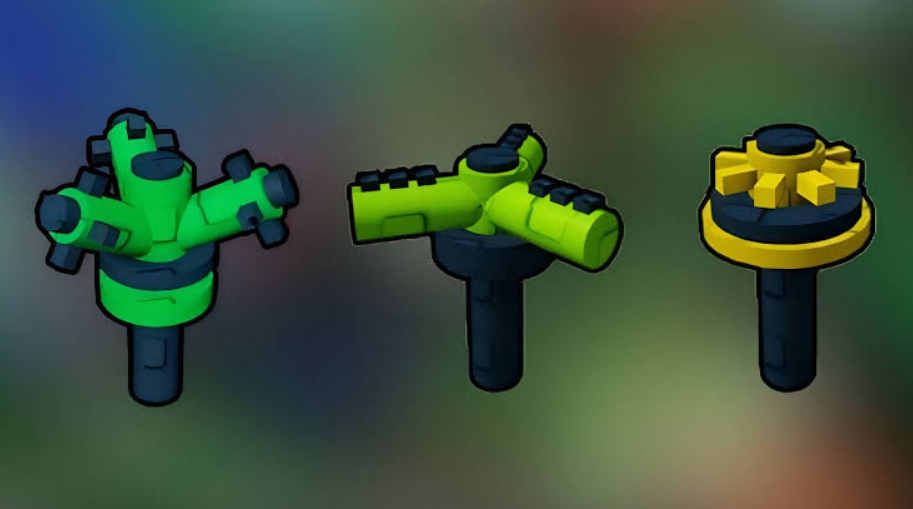
If you’re stuck on the starting beds and the shekels are just a dream, it’s time to take a closer look at sprinklers. These things really speed up ripening, make fruits larger, and even increase the chance of mutations. And mutations, as we know, are the ticket to the world of expensive varieties.
Let’s break down all the models so you don’t waste 100K on a legendary that will gather dust in your inventory.
Table of Contents
How sprinklers work in Grow a Garden 2 and why they are needed?
Install them, and your crops immediately come to life. The effect is temporary, but in a couple of minutes you can harvest a crop that would have taken twice as long to ripen without watering.
-
Growth accelerates—harvest fruits more often, rotate faster.
-
Size and weight increase—large specimens fetch a higher price on the market.
-
Mutation chance increases—some models add a significant bonus to the likelihood of getting a rare variant (which is a whole other level of money).
Characteristics and price of all sprinklers in Grow a Garden 2
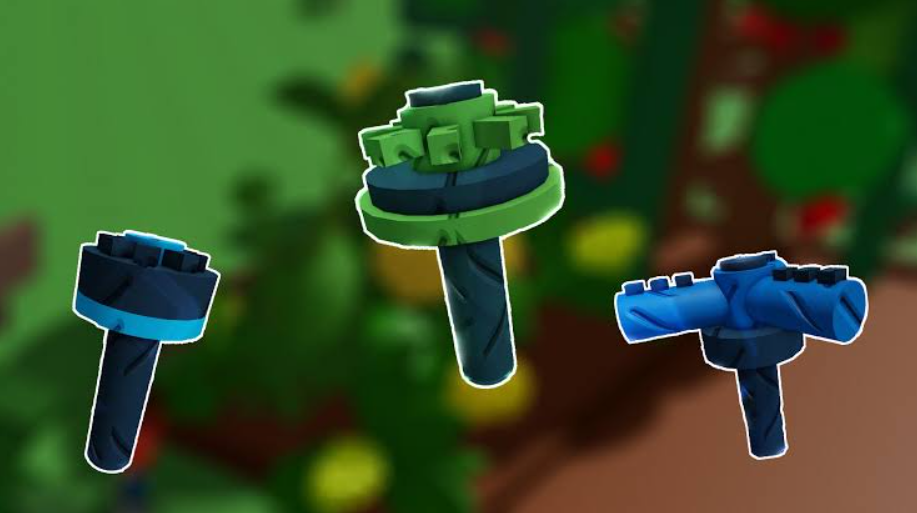
Prices for Rare and Super have not yet been revealed—they will likely be added in a future patch or unlocked through special achievements. But it’s clear: the top models provide a significant boost.
Best cultures for planting under sprinkler in Grow a Garden 2
Watering cheap strawberries with an advanced system is a surefire way to wipe out your farm’s economy. In Grow a Garden 2, automation works as a powerful multiplier: if you water cheap seedlings, the output will be just as cheap, while top-end seeds with a boost show an explosive increase in income. The main rule of advanced gardening in 2026 is to spend your equipment resources exclusively on those items that can recoup every second of the timer’s time.
The key factor in efficiency is no longer the physical size of the fruit, but its genetic modification. Recent patches have radically changed the rules of the game: now each plant can only support one mutation, and the old tactics with stacking effects from the first Grow a Garden no longer work.
Forget about waiting for bamboo to accumulate three buffs in a row – grab the first strong modification like Electric, Gold, or Rainbow and immediately send your harvest to market. The financial difference here is colossal. For example, a basic Venus Fly Trap sells for around 3,840 shekels, but if you catch the Electric Mutation on it, the price skyrockets to a hefty 159,000 shekels.

To optimize your farming, all available crops for automatic watering should be divided into three clear categories:
-
Speed farming for quick monetization– Bamboo. It costs only 700 shekels in the Seed Shop and ripens in a symbolic 20-60 seconds. Here, size is everything: stems with a growth timer of over a minute grow enormous and sell for several times more than standard ones. A proven tactic for the early and mid-game is to completely buy out your seed stocks with each inventory update (the shop releases approximately every 5 minutes).
-
Conveyor harvesting for boost stacks – Pomegranate, Cherry, Poison Apple, and Dragon Fruit. These reusable plants produce a ton of fruit in a single cycle, with each plant swelling with active watering. Charging them with a two-minute Legendary or Super sprinkler will allow you to harvest several hefty batches in a row, quickly recouping the setup cost.
-
Maximum weight and guild leveling: Pineapple. A top-tier option for those who have already amassed some starting capital and acquired good hardware. Pineapples surpass bamboo in density and weight potential, although the setup itself requires a significant investment.
Table of plant profitability under sprinkler in game
The main secret of synergy is dense planting. A dense cluster of plants under the crisscrossing radius of several irrigation systems will always yield more profit than a dozen isolated plants on dry rations. Overlap the beds, be sure to summon the Deer pet for an additional 10% maturation speed, and harvest in a circle while the timer ticks.
If you’re lucky enough to grow an expensive crop with a rare modification, don’t rush to take it to the buyers. Hold onto the goods until the appropriate weather event begins, catch the Lightning bonus, and lock in maximum profits through the Daily Deal, after activating the Friend Boost.
Progression and upgrading irrigation systems in Grow a Garden 2
The evolution of technical equipment in the game is like climbing a ladder, where jumping three steps at a time usually results in a drain on your budget. Each new model should pay for the next: basic hardware accelerates farm turnover, increased capital allows you to upgrade to an advanced unit, which then squeezes the most out of elite seeds that a regular Common option would simply ruin. Hanging around in the early stages for months is as much of a mistake as trying to buy a top-end device with your last pennies.
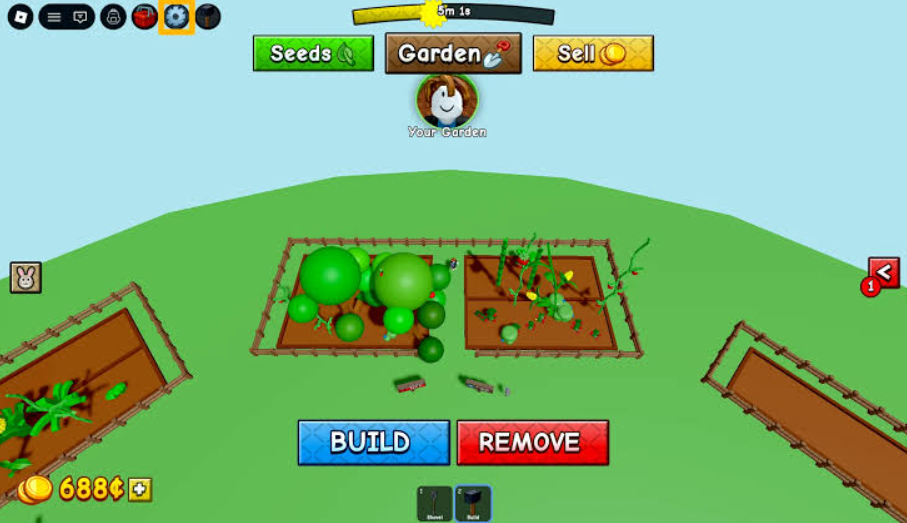
Farm Development Stages and Choosing the Right Equipment
-
Starter Stage (capital up to 50K)
-
Equipment: Common → Uncommon
-
What to plant: Strawberry, Tomato, first batches of Bamboo
-
Goal: Understand timings and initiate initial shekel turnover.
-
Early Midgame (capital 50K–100K)
-
Equipment: Stack Uncommon and Common
-
What to plant: Industrial-scale bamboo
-
Goal: Save up a significant amount of money to purchase rare components.
-
Solid mid-game (capital from 100K)
-
Equipment: Regularly purchasing Rare models
-
Planting: Mushroom, Dragon Fruit
-
Goal: Achieving a stable passive income; Rare is your main workhorse.
-
Late-game (capital from 1M)
-
Equipment: Legendary models
-
Planting: Reusable elite crops for mutations
-
Goal: Harvesting several batches of expensive fruits in a single boost cycle.
-
Endgame (free millions)
-
Equipment: Hunting for Super Sprinklers in the store
-
Planting: Dense clusters of Moon Bloom and Dragon Fruit
-
Goal: Squeezing the absolute maximum out of all farm stats.
Beginner growers should remember that Common for 2K and Uncommon for 10K are just a temporary stepping stone, not the ultimate goal. Their combination speeds up farming quite well at first, but the basic unit’s modest minute of operation is only suitable for learning. Save up for Rare units as soon as you can. This category will become the foundation of your farm, as these units are constantly appearing on the Gears Shop shelves. The same can’t be said for the scarce Legendary and Super units, which appear randomly.
Experienced farmers need to learn another rule: conserve the resources of top-end equipment. Wasting a Super or Legendary unit on a couple of random bushes near a fence is an unacceptable waste. Save this hardware for guild runs and prepared plantations with elite plants.
Before installation, be sure to activate the Deer, and fire a Super Watering Can into the very center of the watering zone. The Eloise merchant in the Gears Shop updates his inventory every 5 minutes—set up notifications on Discord via special notifiers to instantly redeem Legendary and Super models as they spawn.
And finally, an important detail that many people overlook: the automation system must be installed strictly before harvesting, on empty beds. Only then will the significant bonus to fruit size and mutation risk be correctly transferred to your next crop.
Farm Economics and the ROI of Expensive Sprinklers
The 2,000-dollar Common is a starting aid to get a feel for the mechanics. A minute of work is, unfortunately, a bit short, but it’s good enough for your first few plots.
The 10,000-dollar Uncommon is more interesting: two minutes and a mutation bonus. If you farm not only quantity but also quality, this is your minimum.
The 100,000-dollar Legendary sounds expensive, but it pays off if you plant your field with expensive crops. For example, mutation varieties with a high base weight—the difference in income per cycle more than makes up for the investment in a couple of harvests.
The Super Sprinkler is still a mystery, but judging by the description, it should be the ultimate tool for those chasing record harvests. We’re waiting for pricing and testing.
By the way, don’t forget about Grow a Garden 2 codes—they give free bonuses that will help you save up for a good sprinkler faster, especially at the start. It’s not a panacea, but it’s a nice help.
A step-by-step strategy for long-term garden bed development with boosts
If you’re serious about playing, don’t skimp on sprinklers. Yes, Common is cheap, but its effect is too short-lived to boost serious crops. It’s better to stick to this rule: buy at least Uncommon, and when you have some spare cash, upgrade to Legendary. Super will likely only be available to experienced farmers, but its potential is definitely worth striving for.
How to choose the best sprinkler for specific goals
Choosing a sprinkler in Grow a Garden 2 isn’t just a waste of money. It’s an investment in your progress. If you’re playing for speed, it makes sense to aim for the top models right away. But budget isn’t everything: some options only appear in the store once a week.
Advantages of the Super Sprinkler and the mythical harvest boost
This unit provides the maximum boost across all parameters. It lasts longer, speeds up growth to the max, and even mutations occur more frequently. If you’re lucky enough to see it in the Gears Shop, grab it without hesitation. Yes, the price is steep, but the return on investment thanks to the accelerated cycles is incredible. Two or three harvests with it, and you’re already in the black.
Legendary Sprinkler Return on Investment for 100,000 Shekels on a Farm
Super is good, but not everyone can afford it. This is where the Legendary comes in. It’s almost as effective, but significantly cheaper (100,000 isn’t crazy if you’ve been farming for a couple of days). Two minutes of work is enough to harvest several batches of expensive crops. It’s a reliable option that won’t let you down.
Regular Farming and Using the Rare Sprinkler in the Gears Shop
Rare is what you’ll buy most often. Super and Legendary aren’t available in the shop every day, but Rare appears regularly. Yes, it’s weaker than the higher-end ones, but the difference isn’t so critical that you’ll have to wait weeks. For the average farm, it’s more than enough.
Are Common and Uncommon sprinklers worth buying at the start
At the start, definitely. For 2K and 10K, you get a noticeable speed boost that will help you progress faster. But don’t linger on them. As soon as you save up for Rare, move on. Common, with its one-minute runtime, is more of a toy for getting acquainted with the mechanics. Uncommon is already better, but still significantly inferior to the top-end ones.
Ultimately, the strategy is simple: start with cheap ones, save up for Rare, and then, when your farm starts bringing in a stable income, upgrade to Legendary or, if you’re lucky, Super. And don’t forget about codes—they’ll help speed up your accumulation.
Which sprinkler and crop combination gave you the most profit? Let us know in the comments—we’ll discuss.