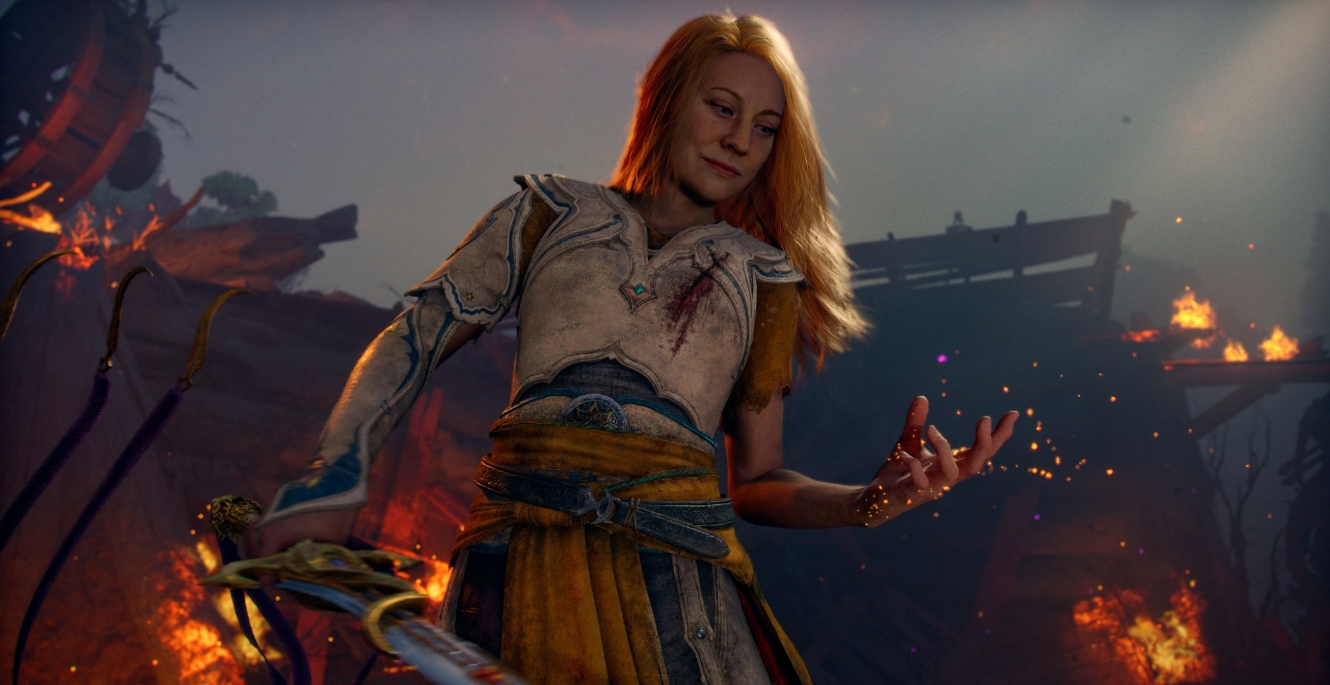
Picture this: a game about the mother of Atreus, a realm of dead gods, clashes with pantheons from every mythology — and right in the middle of all that epic weight, a talking gelatinous cube shows up with a sword stuck in its side. That was the reaction from a chunk of the God of War fanbase after June’s State of Play, where Sony Santa Monica unveiled God of War: Laufey. The new companion named Frank instantly became the most divisive element of the announcement — and now the developers have decided to respond.
Table of Contents
Who Is Frank and Why Does He Even Exist
Frank is not a last-minute oddity scribbled on the final page of a concept document. According to game director Ariel Lawrence, the character was one of the very first ideas conceived for the entire project — created by creative director Cory Barlog during the earliest stages of shaping God of War: Laufey.
In other words, the gelatinous cosmic cube is not a compromise or a marketing gimmick. It is the starting point of the whole game.
Mechanically speaking, Frank is a sentient being of unknown origin with a sword lodged inside him — and attached to that sword is a mysterious living ribbon named Ro, a self-described guardian whose true nature has yet to be revealed. This unlikely duo forms Faye’s core companion roster as she navigates the realm of dead gods.
What the Game Director Says: “Play It First”
In an interview with the YouTube channel, Ariel Lawrence neither apologized for Frank nor dismissed the criticism. Her stance was calm and confident: the cube’s unconventional shape deliberately opened up a range of gameplay and narrative possibilities that would have been difficult to achieve with a more traditional-looking character.
The team’s core challenge, she explained, was turning something that appears inanimate at first glance into a character players would genuinely connect with emotionally. That creative puzzle was precisely what made the concept exciting for the developers.
The argument from the studio is simple: judge Frank after you play, not after the trailer.
How Frank Actually Works in God of War Laufey Gameplay
This is the part that tends to get buried under the design discourse. Frank is not set dressing and not just a source of banter. The developers have outlined several distinct gameplay roles for the character:
| Frank’s Role | Description |
|---|---|
| Combat Companion | Actively participates in battles — notably by leaping onto enemies |
| World Exploration | Helps Faye traverse locations and interact with the environment |
| Puzzle Mechanics | Used in puzzle sequences that take advantage of his unusual physical form |
| Narrative Anchor | Helps Faye remember her vow and guides her in mastering magic |
That makes Frank fundamentally different from the typical “talking item in the inventory.” Based on what State of Play revealed, the cube is embedded in the game’s systems at a level comparable to Atreus in God of War (2018) — but with an entirely different mechanical identity.
Ro, Frank and the Sword: How Faye’s Companion Set Is Built
Beyond Frank, Faye is accompanied by Ro — a living ribbon lodged inside the sword that juts out of the cube. Ro calls herself a guardian and serves as an active narrator of events, clearly positioned to play a central role in the story.
Some players online have already drawn a connection to the legend of Excalibur — a sword in a stone. The result is a kind of reinterpreted Arthurian myth wrapped in a science-fantasy aesthetic.
Frank is voiced by Jack Quaid, best known as Hughie Campbell in The Boys. To achieve accurate animation for the cube, Quaid performed in a custom motion-capture rig made of pipes. Faye is once again voiced by Deborah Ann Woll (Daredevil).
Why the Backlash Against Frank Is a Familiar Story
Looking at the franchise’s history, this has happened before. When God of War in 2018 dramatically shifted its camera angle and swapped Greek mythology for Norse, the skepticism was loud. Atreus was initially seen as a liability. Both decisions ultimately became the game’s greatest strengths.
Frank now finds himself in the same position. Here is what most of the criticism has in common:
-
Visual dissonance — the cube feels too lighthearted against the series’ dark aesthetic
-
Dialogue tone — Frank speaks in a contemporary, casual voice that clashes with the Norse fantasy setting
-
D&D associations — some players see him as a Dungeons & Dragons reference rather than a God of War element
-
Fear of “kiddie” vibes — concern that the companion will soften the game’s overall tone
Every one of these concerns is understandable. None of them have been validated by actual gameplay yet.
God of War Laufey Setting: The Afterlife Where Gods Fight for Power
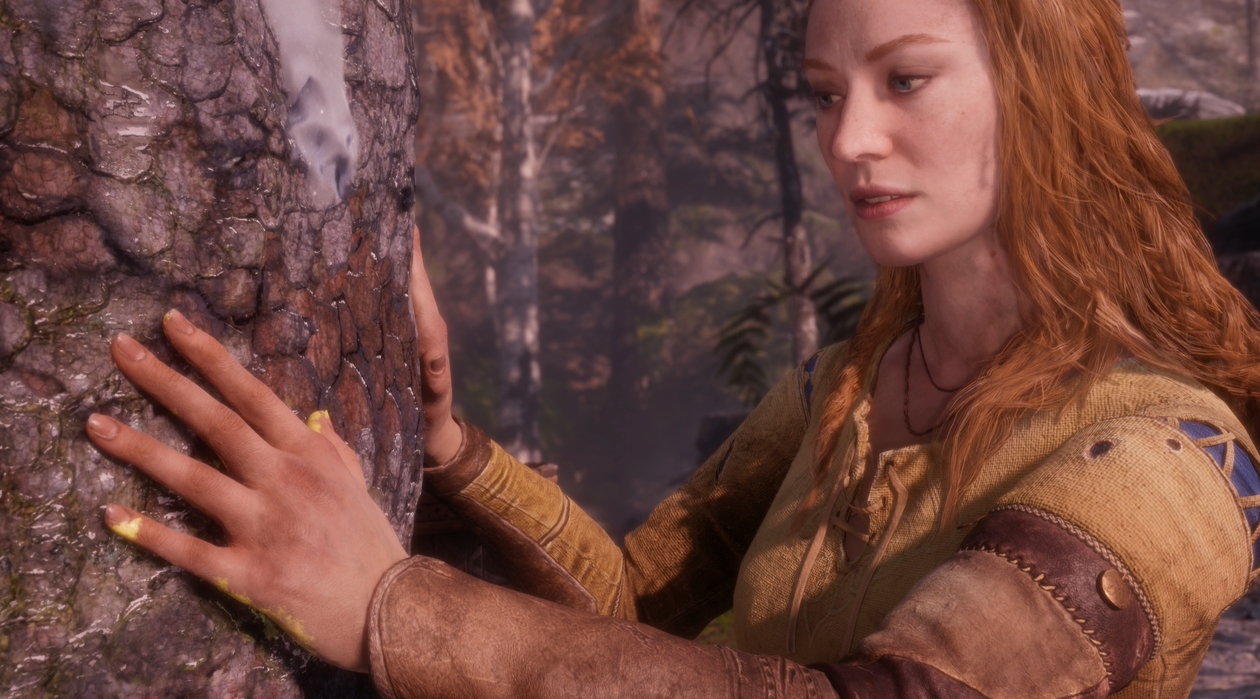
For those who have not yet dived into the announcement details: the game takes place in Eternity — an afterlife realm where gods from different mythologies arrive after physical death and continue their struggle for dominance.
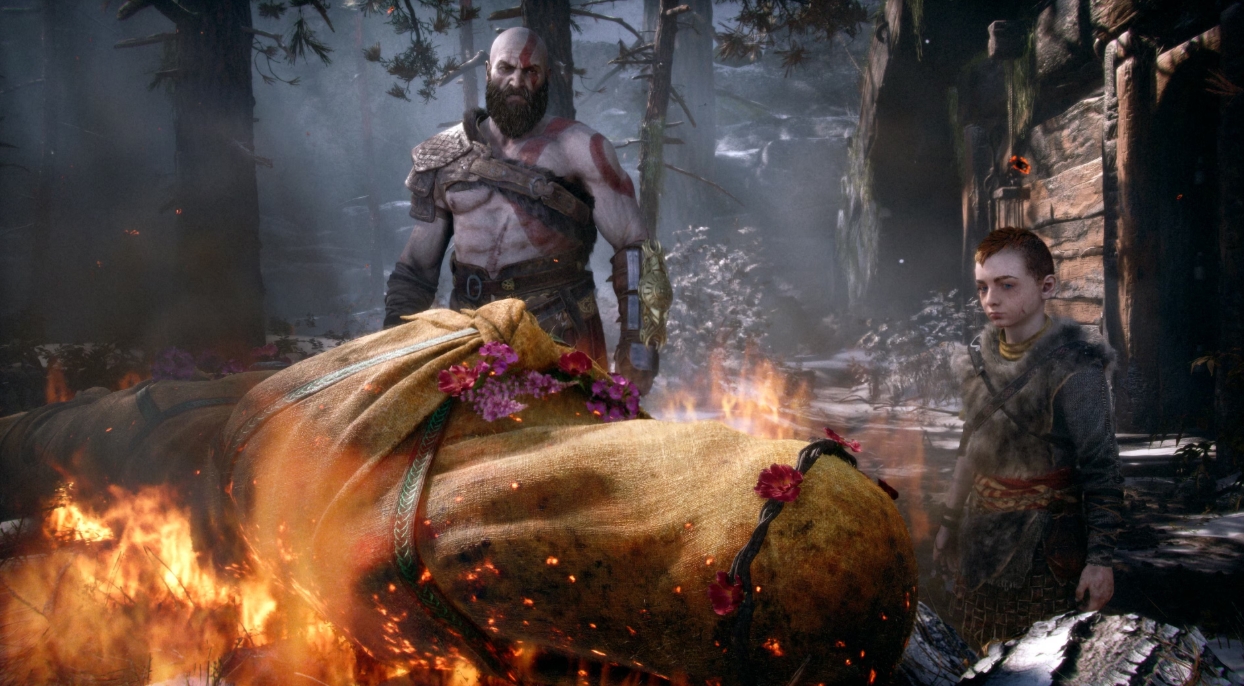
Faye ended up here after her own funeral, glimpsed in the prologue of God of War (2018). Her goal is to save Kratos and Atreus, whose lives are at risk. The story unfolds in parallel with the Norse duology, giving the developers room to build out the lore without rewriting the established canon.
The combat system sits noticeably closer to the classic trilogy — high mobility, double jumps, juggle combos. Reviewers and players have compared the feel to Devil May Cry and Darksiders 3.
What This Means for Players and What to Expect Next
God of War: Laufey is not simply a spin-off about Atreus’s mother. All signs point to Sony Santa Monica laying the groundwork for a full franchise multiverse, where the afterlife realm of gods from multiple pantheons becomes a permanent stage.
In that context, Frank is a bold but deliberate bet. The developers clearly want to introduce emotional unpredictability into the series — not through a familiar gruff-companion archetype, but through something genuinely different. Whether it lands is a question only a controller in hand can answer.
A release date for God of War: Laufey has not been announced. But one thing is already clear: this game is intentionally breaking expectations — and that is almost certainly exactly the effect Barlog and Lawrence were going for.