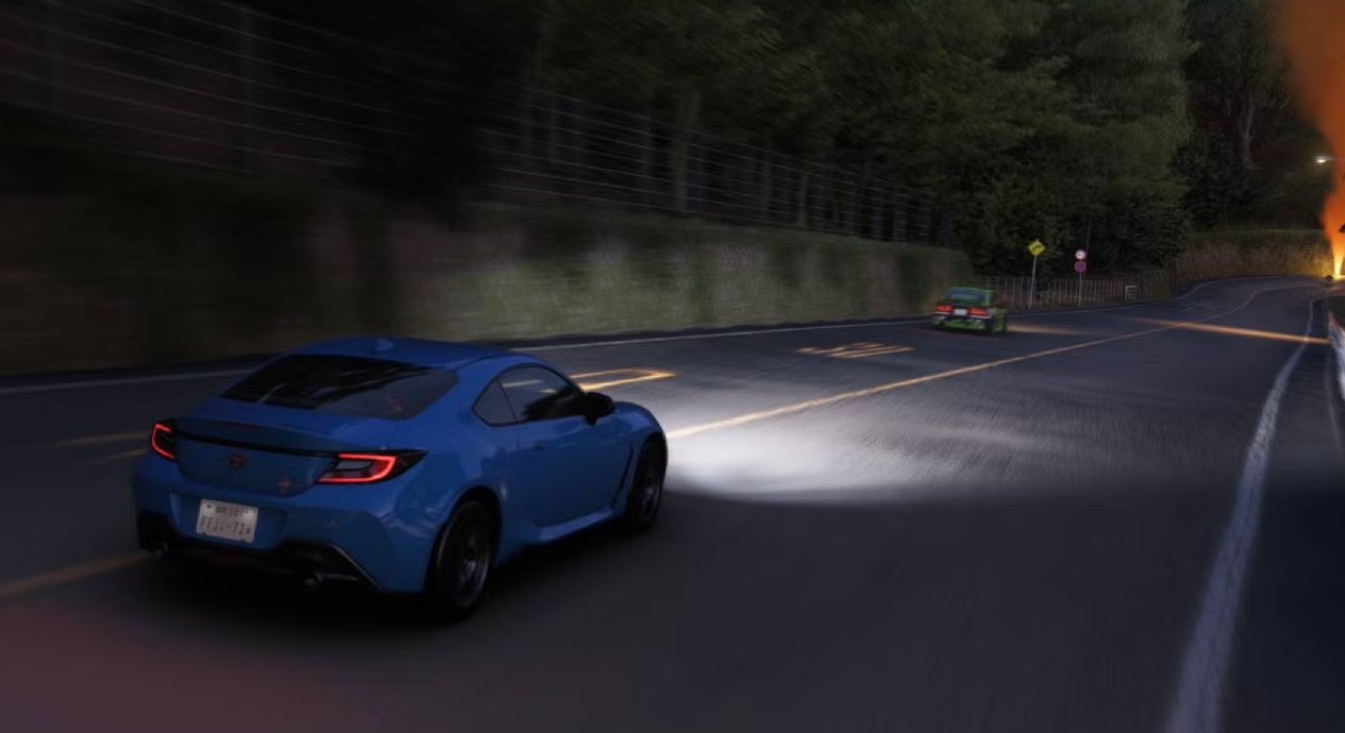
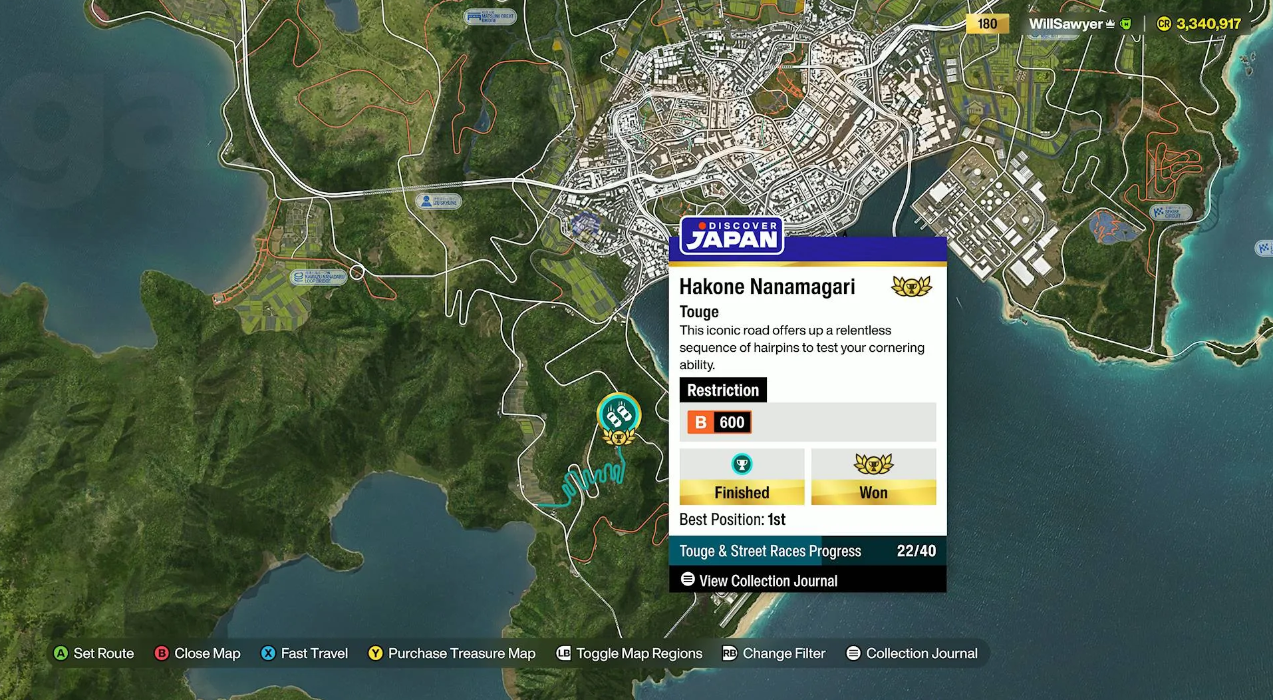
The south of the map, in the Nangan region, is where you’ll find it. A toge-style race called Hakone Nanamagari isn’t listed on the map by default. You’ll have to drive there yourself. The start is at the top of a winding mountain road, northwest of the space center, according to the map. A marker will appear as soon as you pull up.
The track is incredibly technical. Hairpins, tight turns, and overtaking here is a real joy (read: almost impossible). But this is where you need to win the Gazoo Race Week mission. And the car is a Toyota GR86.
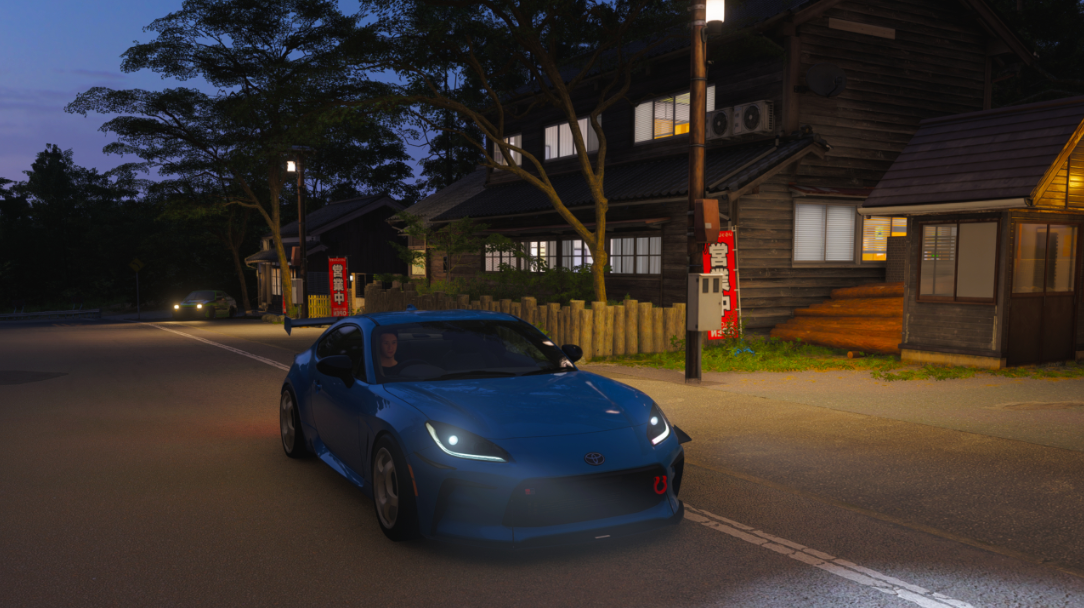
Table of Contents
Toyota GR86 Problems on the Hakone Nanamagari Track
For Initial D fans, it’s logical to take a drift car and beautifully corner sideways. But beautiful doesn’t mean fast. And if you want to honestly complete the weekly mission, forget about spectacular drifts. Drifting on Hakone Nanamagari looks amazing and feels even better, but it’s a bit slower than a classic race.
Your opponent is Scott Tyler in a souped-up toga car. Driving a GR86 against him is like riding a bike against a motorcycle. However, the challenge requires you to win.
How to beat Scott Tyler in the Gazoo race?
Secrets to navigating hairpins and setting up FH6
-
The easiest way is to lower the AI difficulty. Also, tweak the assists in the FH6 settings.
-
The second option is to push Scott off the track. If he goes off the track, well, it’s his own fault. The judges won’t see it.
-
Want some sporting pride? Then forget about drifting, cut lines, and brake straight. Take the hairpins with a tight grip, without spinning out.
By the way, the race only opens after a personal visit to the start. So, first you get there, then you participate. And yes, the 2022 Toyota GR86 is a must-have for the assignment. There’s no other option.
The Best Cars for Practice in the Nangan Region
Hakone Nanamagari doesn’t forgive blind driving. The track punishes ignorance of the route far more harshly than a weak setup. Trying the mandatory Toyota GR86 for the first time is a downright disaster. You’ll ruin your spatial orientation attempts. First, get a comfortable car, memorize all eight hairpins, and only then jump into the GR86 to secure victory.
Alternatives to the Toyota GR86 in the B-Class
All five options below are honest B-Class cars, which can be earned without a long grind. They perform extremely predictably on the track.
-
Mazda MX-5 ND (2015) [RWD, PI 690–710]. The absolute benchmark for learning the track. The lightweight wheelbase and neutral balance will instantly highlight any imperfections in the line (no all-wheel drive crutches). Cons: traction is frankly lacking when exiting tight hairpin turns.
-
Subaru BRZ (2022) [RWD, PI 700–720]. The closest relative of the target car. The platform here is identical to the GR86, so the handling on asphalt will be practically 1-to-1. The familiar drop in low-end power is also included.
-
Nissan Silvia S15 [RWD, PI 710–730]. An iconic car in the spirit of Initial D. The extremely sharp steering will honestly point out any mistakes when entering the apex. Hit the gas a little too early? The car immediately goes into a spin.
-
Honda Civic Type R FK8 [FWD, PI 720–740]. The optimal choice if you want to cut off the oversteer factor and focus on braking points. FWD is surprisingly lively on the local tight hairpin turns. But be prepared for underpowered drifts in fast transitions.
-
Mitsubishi Lancer Evo X [AWD, PI 730–750]. The all-wheel drive reliably protects you in challenging sections and pulls you through the exits. The price for comfort is predictable. The extra weight causes this Japanese car to heat up the tires instantly.
The main advice (and don’t ignore it): don’t push the PI above 750 during practice sessions. Extra horsepower on this type of terrain only masks driving errors, preventing you from finding your rhythm. Our goal is to understand the road geometry, not to overcome the AI with pure power.
Next guide: How to level up fast in Forza Horizon 6?