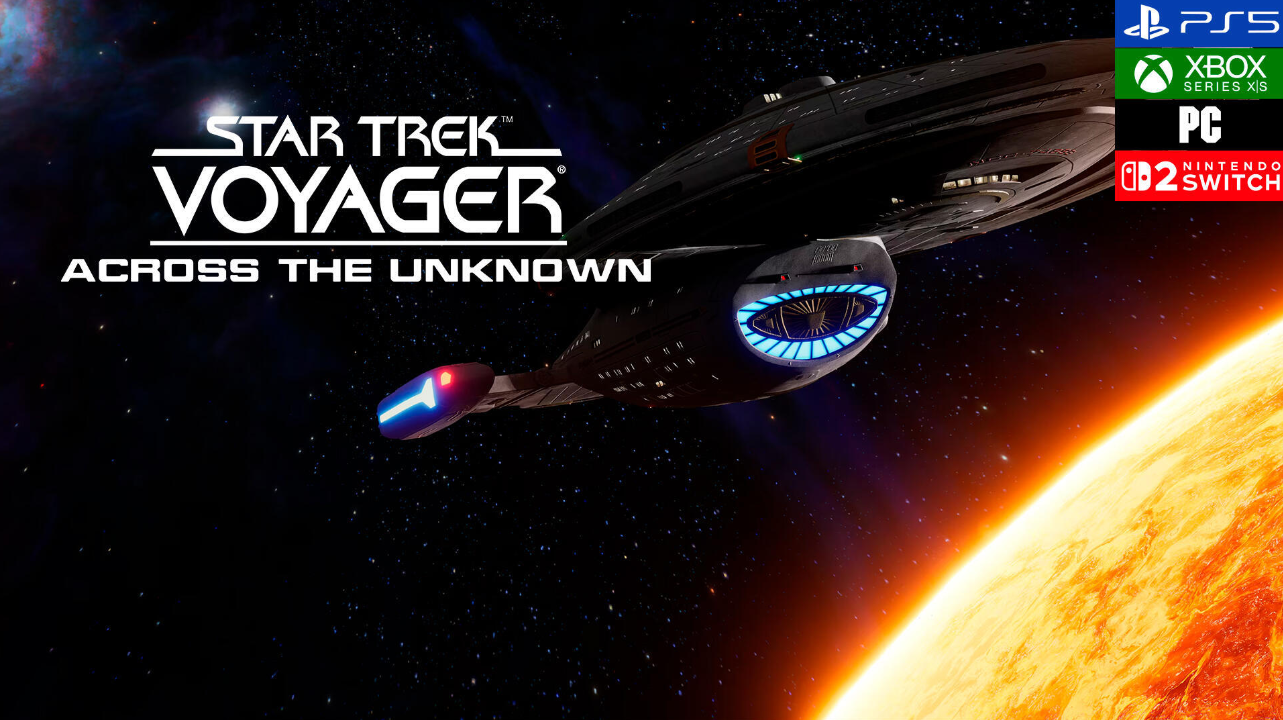
On PCs and consoles of the latest generation, including the Nintendo Switch 2, Star Trek: Voyager – Across the Unknown has finally been released – this is, in fact, a tough strategy game about survival in the depths of space, which fans were waiting for at 10:00 a.m. (EST, UTC-5) in New York. The developers decided not just to retell the old series, but to give us the helm of that legendary ship. In fact, the project looks like a powerful attempt to bring iconic science fiction to life through modern mechanics, and here’s what you should know about it.
Table of Contents
Star Trek Voyager Review: Plot and ENT for Beginners
The Star Trek franchise is celebrating its 60th anniversary this year, as the first show took place back in September 1966. Voyager is considered one of the top branches of this universe, and the game, apparently, fits perfectly into this background. The plot here revolves around a crew that was thrown 70,000 light—years from home – it sounds impressive, really. The player will have to navigate his way through completely unexplored sectors, constantly risking the heads of his subordinates.
If you don’t know who the Borg or Vulcans are at all, it doesn’t matter. The creators of the project have emphasized that each of your choices really changes the canon, so that the lack of knowledge about the series will even play into your hands, creating the effect of complete obscurity. This is an independent adventure where you can rewrite the fate of the Janeway team from scratch. This is a great chance to roll into the Star Trek setting without having to watch hundreds of episodes of an old show.
Gameplay Features of Star Trek: Voyager – Across the Unknown
-
Absolute non-linearity — Captain Catherine Janeway is now acting on your orders, and every decision, in principle, can lead either to salvation or to the death of the entire crew — the stakes here are really high.
-
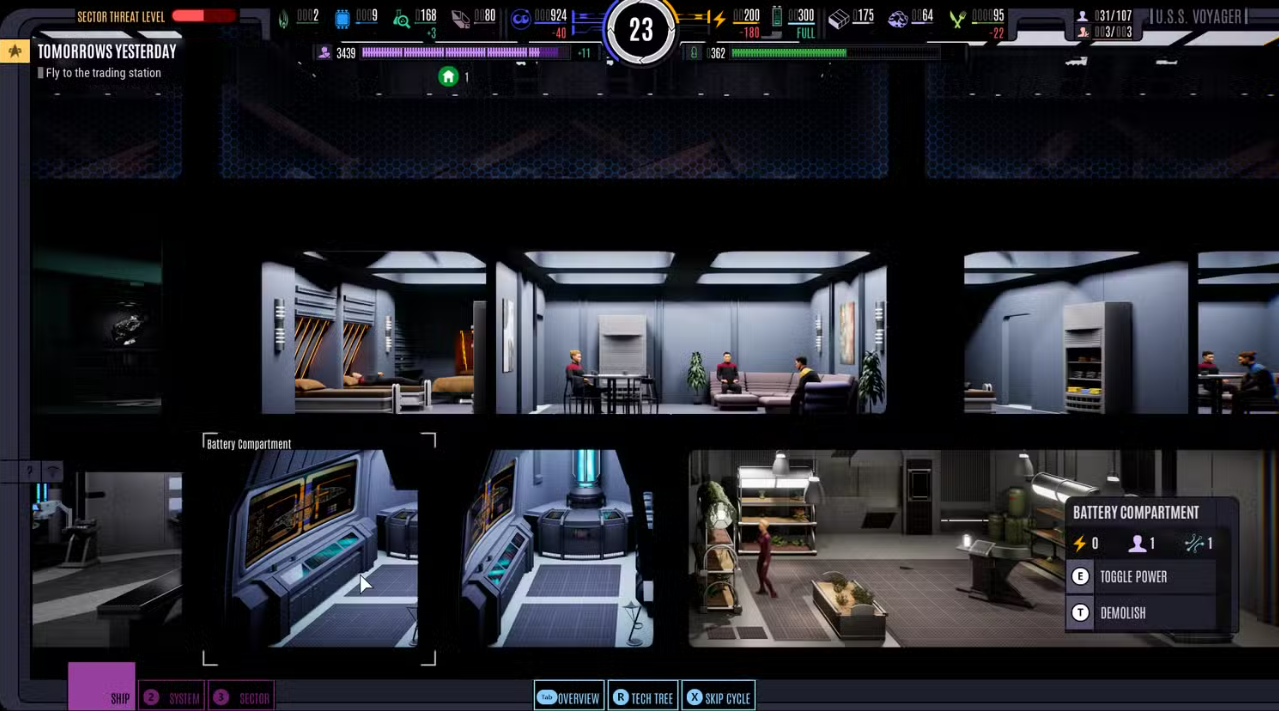
Deep ship management — You don’t just need to fly ahead, but literally rebuild the ship’s interior for current tasks. It looks like Fallout Shelter, but with much more complex specifics — the compartments turn into science centers or residential modules, depending on the situation.
-
Dangerous Space — Survival requires resources, so you’ll have to constantly scan planets and make contact with alien races. By the way, the game punishes mistakes quite harshly — carelessness here is equivalent to death, so you need to prepare for landings seriously.
-
Tactical Battles — When diplomacy fails, Voyager engages in combat. The battles look spectacular— and that’s where the roles of your officers on the bridge are crucial. The team’s skills, in fact, can pull out even the most hopeless mess if you properly distribute energy across the systems.
Gameplay in detail: Voyager management, resources, crew, and what-if scenarios
In Star Trek: Voyager – Across the Unknown, gameplay is essentially tied to total control of the USS Voyager in a hostile Delta Quadrant. You play the role of a captain who has to constantly balance between survival and the excitement of an explorer — and all this in a rigid roguelite structure. In truth, such a mixture of strategy and random events makes the brain boil after half an hour of playing.
USS Voyager control system: modernization and repair
Voyager’s management requires the player to pay close attention to the details — you can’t just press the “fly” button and relax. You will have to patch up the compartments and build new modules, like laboratories or shield generators, literally cutting out every meter of free space. It’s reminiscent of Fallout: Shelter, but to be honest, with much deeper stakes at stake.
-
Shields and engines — energy, by the way, must be transferred manually right in the heat of battle, otherwise you will lose a critical node.
-
Navigation — you have to navigate through anomalies with an eye on the sensors, because both life and death can hide around every corner.
-
Automation — routine, of course, can be pushed onto AI, but once a signal from the Borg appears, you will have to take control into your own hands.
Space skirmishes unfold in real time with a tactical pause — here you need to squeeze phasers and torpedoes in time, looking at cooldowns. Diplomacy and shooting here, in principle, are inextricably linked: negotiations can sometimes save the situation, but in fact phasers solve issues much more quickly.
Ship System Specifications
Farming resources in the Delta Quadrant: dilithium and energy
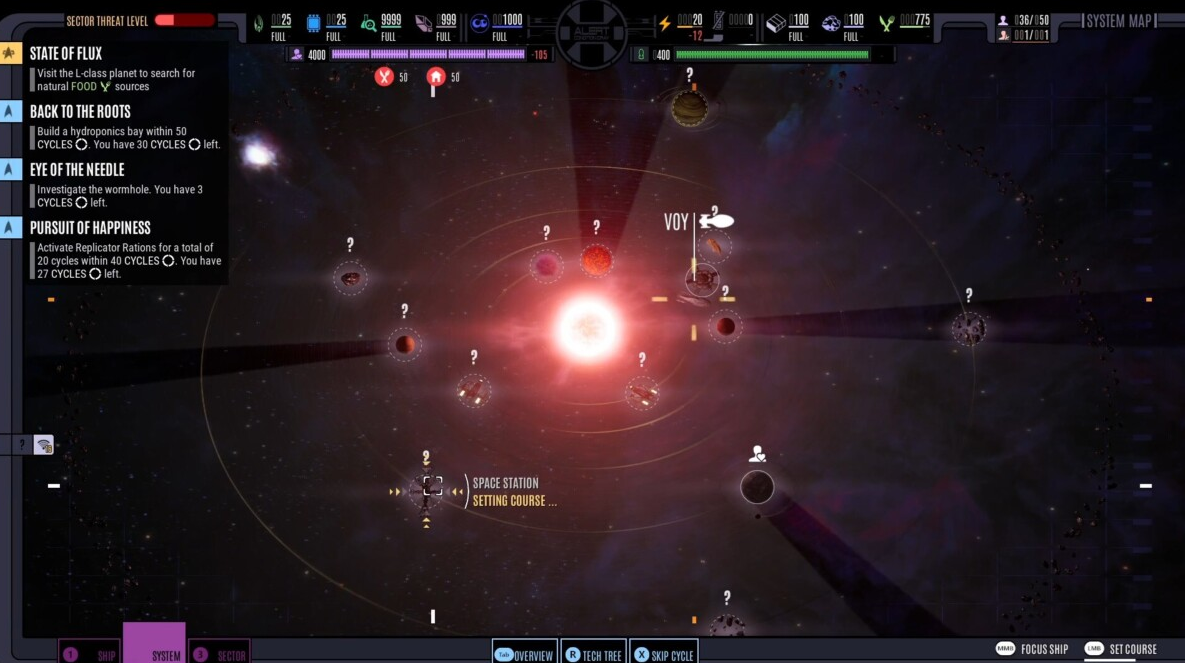
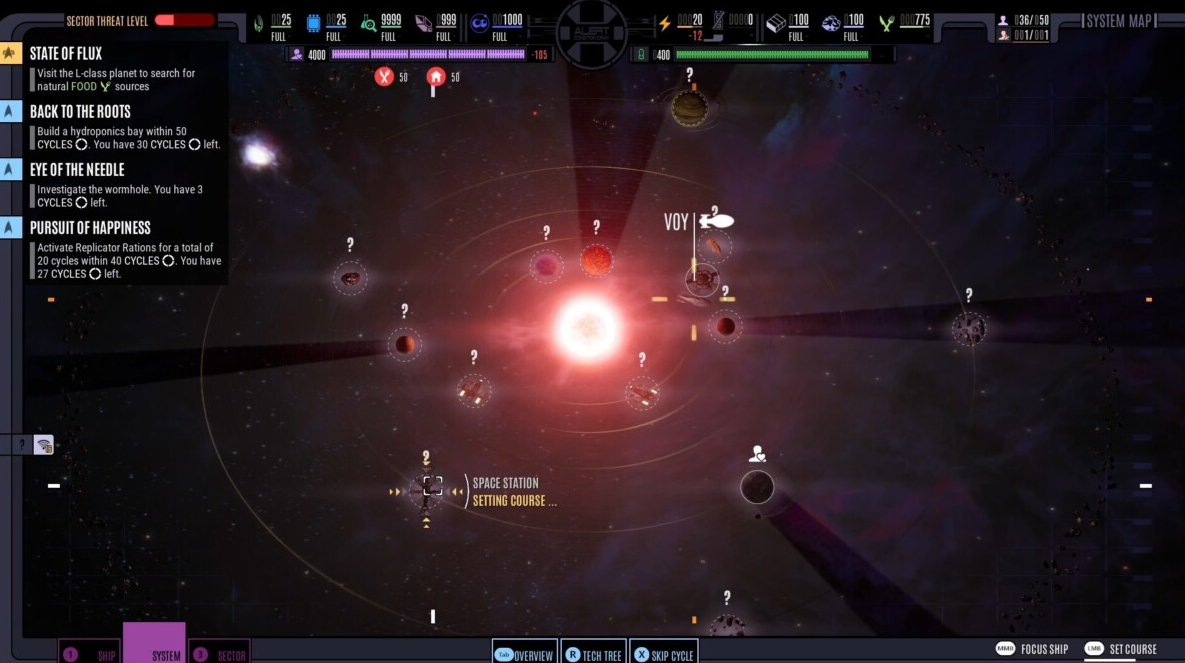
The resources in this game are the fuel for everything living and inanimate, literally. Dilithium is needed for warp jumps, metal is used for hull repairs, and exotic matter is bread for your scientists. You have to scan every asteroid by sending probes, but the risk is high: an anomaly can either boost or simply annihilate your equipment.
Mining is focused on risk assessment: we have found a point of interest and decided whether it is worth digging deep. The mechanics of Across the Unknown constantly presents a choice — to take risks for the sake of rare isotopes or to pass by, preserving the remnants of the skin.
-
Dilithium is the main limiting factor, as 70% of the pathways are simply closed without it.
-
Energy — it melts before our eyes: scanning, crew life support, shields — everything eats up the resource.
-
Rare artifacts — they powerfully accelerate the technology tree, but, apparently, they often provoke Klingon raids.
Any mistake in balance, in fact, leads to disaster — lack of food or energy quickly leads to breakdowns and even riots. And here we smoothly move on to those who make this pile of iron fly.
Crew management: officers skills and morale
Your crew is not just extras, but 150+ unique personalities with their own talents. Tuvok has science, Torres has engineering, and Janeway, of course, is a god of diplomacy. It is necessary to assign people to posts wisely: scientists in the lab accelerate progress, and doctors in the infirmary patch holes in the psyche of the staff.
Missions on the surface of planets are a separate kind of pain. You assemble a squad for a specific task: say, an engineer and a tactician to clean up the ruins. The risk of death is real here — the roguelite component introduces permanent death for those who are unlucky.
-
Morale — grows from victories, but falls exponentially during a hunger strike. Low morale is sabotage, by the way.
-
Skills — they improve over time, and cool diplomacy, in fact, allows you to avoid almost half of all fights.
-
Rotation — 7 officers are always on the bridge, the rest are in reserve, and this needs to be monitored.
Crew Roles & Bonuses
What-if scenarios: how to change the plot of the series in the game
What-if scenarios are probably the coolest thing in the game. You can literally replay episodes of the series by choosing alternative paths. Try Borg technology? The ship will become an imba, but the cubes will start to flock to you like flies to honey.
Every sneeze changes the balance of power in the Delta Quadrant: if you become friends with the Talax, you get a trade, you show aggression, and you make enemies for life. The game throws up more than 50 branches with real scenes from the 90s, but with your participation.
-
Episode “Scorpion” — you can choose to ally with the Borg, and then your crew will receive implants. Unexpected, right?
-
“Year of Hell” — here you either suffer hardships or try to erase history — the ending will change radically.
The depth of the study here, to be honest, puts the series itself under the belt. Decisions accumulate like a snowball, leading to one of 10+ endings — from a triumphant return home to creating your own empire in the void.
As a result, we got not just another licensed game, but a comprehensive survival simulator. It seems that KRAFTON or any other major publisher could envy such a detailed study. In general, if you like space and tactics, you definitely shouldn’t skip it.