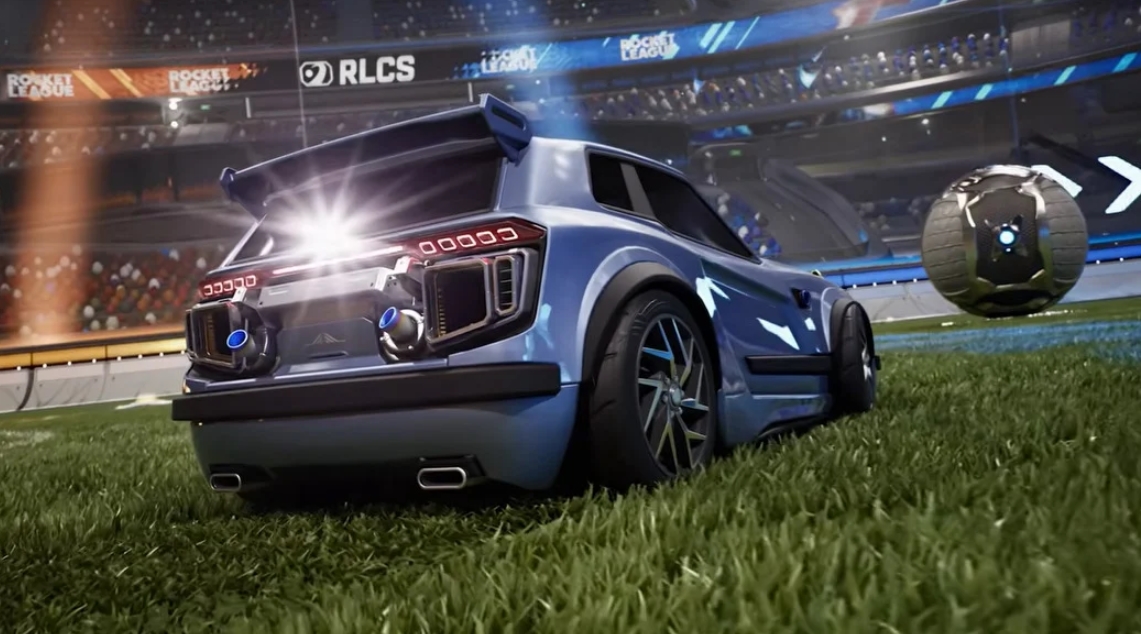

Eleven years. That’s how long Rocket League has been running on an engine older than the very concept of a battle pass. While the rest of the gaming world cycled through two full technological generations, rocket-powered cars kept chasing a ball on the same Unreal Engine 3 — a platform that dates back to 2004. Then, during the semifinals of the RLCS Paris Major 2026, Epic Games and Psyonix dropped a bombshell: Rocket League will become one of the first games in the world to run on Unreal Engine 6.
Table of Contents
Why Rocket League Was Still Running on a 2004 Engine
Rocket League launched in 2015, when UE3 was already well past its prime. After Epic Games acquired Psyonix in 2019 and made the game free-to-play, speculation about an engine upgrade never really went away. In 2021, the studio officially confirmed that a port was in active development. Then — nearly five years of silence.
The problem with UE3 isn’t just that it’s old — it’s that it fundamentally handcuffs developers. Limited multithreading support, no modern procedural content tools, and the difficulty of onboarding new developers who’ve never touched a twenty-year-old engine. In practice, Psyonix has been pushing updates with one hand tied behind its back.
The Paris Major Reveal: The World’s First Look at Unreal Engine 6
The hype was building for days — pro players, streamers, and studio staff had been dropping hints about a major announcement. When the moment arrived, the crowd in Paris erupted. The teaser showed photorealistic cars, richly detailed arenas, light bouncing off vehicle bodies — and at the very end, a logo with the number 6.
The detail that caught everyone’s attention: this was no tech demo or concept art. The developers explicitly stated that everything shown was captured in real-time inside the actual game. Compare that to Unreal Engine 5’s debut in 2020, when Epic wowed the world with the “Lumen in the Land of Nanite” demo — a showcase that never became a playable game. This time, it’s a working Rocket League.
What makes this even bigger: it marks the first public demonstration of Unreal Engine 6 in any form. Rocket League didn’t just make news as a game — it became the launchpad for an entirely new engine.
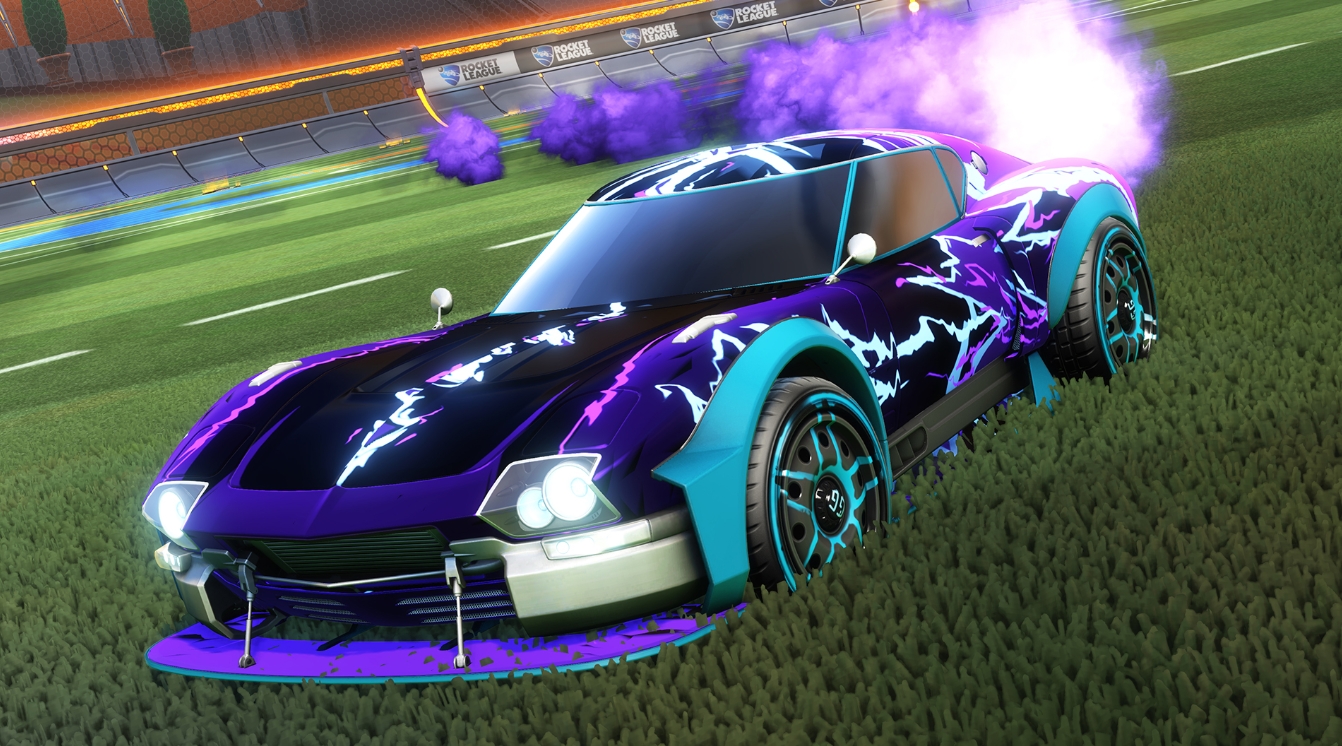
What Changes in Rocket League on UE6: A Full Breakdown
Epic hasn’t released detailed technical specs yet, but based on what’s known about UE6 and what was shown in the teaser, here’s how the picture shapes up.
| Aspect | Now (UE3) | After UE6 Transition |
|---|---|---|
| Graphics | Dated shaders, limited visual effects | Photorealistic real-time rendering |
| Performance | Limited multithreading | Improved multithreading, higher FPS |
| Custom Content | Virtually nonexistent | Likely Fortnite Creative-style integration |
| Game Updates | Slow and complex pipeline | Real-time hotfixes become feasible |
| Epic Ecosystem Integration | Minimal | Deep ties with Fortnite, UEFN, and more |
There’s one area that deserves its own section — and it’s where the community is most anxious.
The Big Fear: Will UE6 Break Rocket League’s Physics?
Ask a seasoned Rocket League player what they’re most afraid of, and they won’t say “bad graphics” or “server lag.” They’ll say: “Just don’t touch the physics.”
The feel of hitting the ball, how the car behaves mid-drift, the predictability of wall bounces — all of it was refined over years on UE3. The community reacts with surgical sensitivity to any mechanical changes. When a 2020 update quietly shifted car behavior during certain maneuvers, the forums were on fire for weeks.
Migrating to a new engine is essentially open-heart surgery on the game. The physics system will have to be rebuilt from scratch, and even the smallest deviation will be caught immediately by top-level players.
There is one reassuring argument: Epic built both UE3 and UE6. They know both systems from the inside out. The goal isn’t just to port the game — it’s to reproduce the physics behavior with surgical accuracy. Whether that’s achievable down to the smallest detail remains to be seen.
What UE6 Could Mean for Custom Content and the Modding Community
One of the most anticipated side effects of the engine switch is the potential for official custom maps and mods. Right now, third-party tools like Bakkesmod let players create training packs, mini-games, and obstacle courses — but all of it exists in a grey zone, completely outside the game itself.
Unreal Engine 6 is built around bringing user-generated content closer to the core experience — much like how Fortnite’s Creative mode works. That could open the door to:
-
Official custom maps accessible directly inside the game
-
A community workshop with ratings and content discovery
-
Integrated training packs built into the UI itself
-
Social features: community hubs, in-game streaming, live watch parties
-
Fortnite ecosystem crossovers: collaborative events and shared content
When Will Rocket League on Unreal Engine 6 Actually Release?
Spoiler: not soon. According to current reports, the expected release window for the UE6 version is 2028 — giving Psyonix roughly two years to develop, port, and test everything.

Rocket League has run on Unreal Engine 3 since its launch in 2015, with the core technology unchanged throughout. What makes this transition unusual is that the game will jump straight to UE6, skipping the fifth version of the engine entirely — a move that’s rare even by industry standards.
For context, Epic CEO Tim Sweeney stated in early 2026 that the company is evolving beyond Unreal Engine 5 toward UE6, with broader “next generation of Epic” plans unfolding later this year. Rocket League is landing right at the front of that wave.
What the UE6 Move Means for Rocket League Esports
This isn’t just a visual upgrade story. For the competitive scene, the engine transition could mean:
-
Higher tick-rate servers — better responsiveness and more accurate hit registration
-
Improved server stability — UE6’s architecture promises more consistent performance
-
New broadcast formats — built-in social tools could reshape how RLCS events are watched and co-streamed
The one question that lingers: can the developers preserve the exact “feel” of the game that both casual players and Supersonic Legend veterans with thousands of hours have come to rely on?
Why This Announcement Is Bigger Than It Looks
Rocket League is a rare thing: a game with a decade-old active playerbase that didn’t just survive but is now getting a full technical rebirth — on an engine that hasn’t even officially launched yet.
For players, it means that almost every long-standing complaint — the lack of official custom content, the dated visuals, the slow update pipeline — is theoretically solved in one move. In practice, there are two years of waiting ahead, plus the anxiety of what the final product will actually feel like.
If Psyonix nails the physics port and opens the door to community tools, this could go down as one of the most carefully executed relaunches in online gaming history. If it doesn’t — get ready for an epic meltdown across every Rocket League forum on the internet.