South Korea is seriously determined to repeat its triumph — the country has officially decided on the names of the mentors who will take the national team to the 2026 Asian Games in Japan.
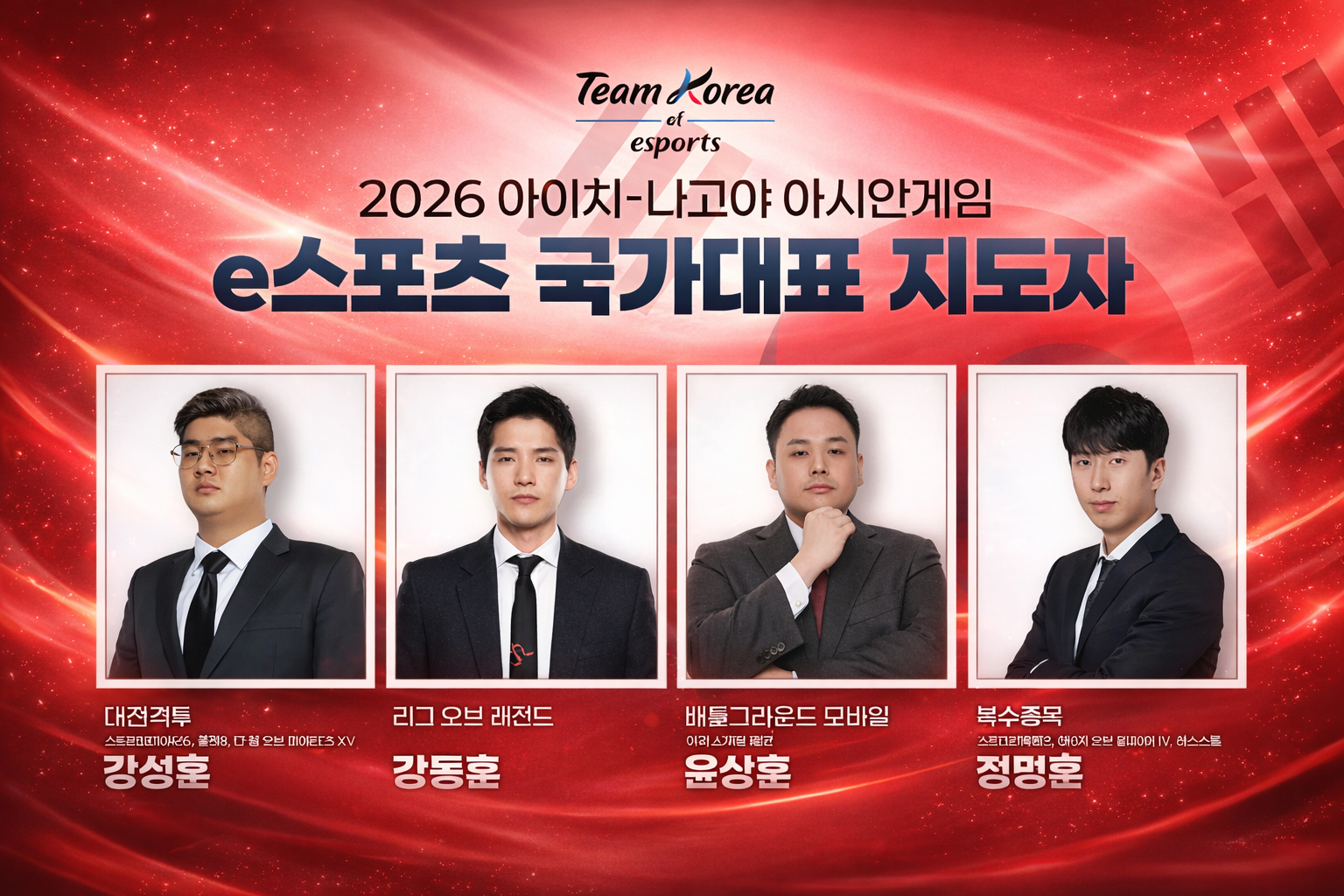
The upcoming event will take place in Aichi Prefecture from September 19th to October 4th. The scale is impressive — as many as 11 disciplines are announced in the esports program. South Korean officials decided not to waste time and concentrated on 9 medal standings, for which they need to select the 37 best gamers. The responsibility for this “meat” selection fell on the shoulders of four professionals — it became known on February 12.
Table of Contents
Mentors of the Korean national team 2026: full list of names and disciplines
Kang Sung-hoon will take fans of classic bruising under his wing. His task is to assemble an elite squad for Street Fighter 6, Tekken 8 and, in fact, The King of Fighters XV. I wonder if they will be able to keep the bar?
The hottest direction, League of Legends— was entrusted to Kang “Hirai” Dong-hoon, who used to drive at KT Rolster. The stakes here are exorbitant. Korea is the reigning champion, and the legendary Lee “Faker” Sang-hyeok will probably defend this title again. A six—time world champion in the squad, of course, is a powerful argument for any opponent.
Yun Sang-hoon from Nongshim RedForce will be responsible for the mobile segment, namely PUBG Mobile. He will have to find those who will survive the royal battle the best. At the same time, Jeong Myung-hoon will focus on less massive but important things — eFootball, Gran Turismo 7 and even the logical Puyo Puyo Champions.
Interestingly, the Koreans decided to completely ignore Pokémon Unite, Honor of Kings and the popular Mobile Legends: Bang Bang. Apparently, the chances of winning medals there were regarded as doubtful, that’s it.
MLBB and Honor of Kings Boycott: Why KeSPA Closed Borders
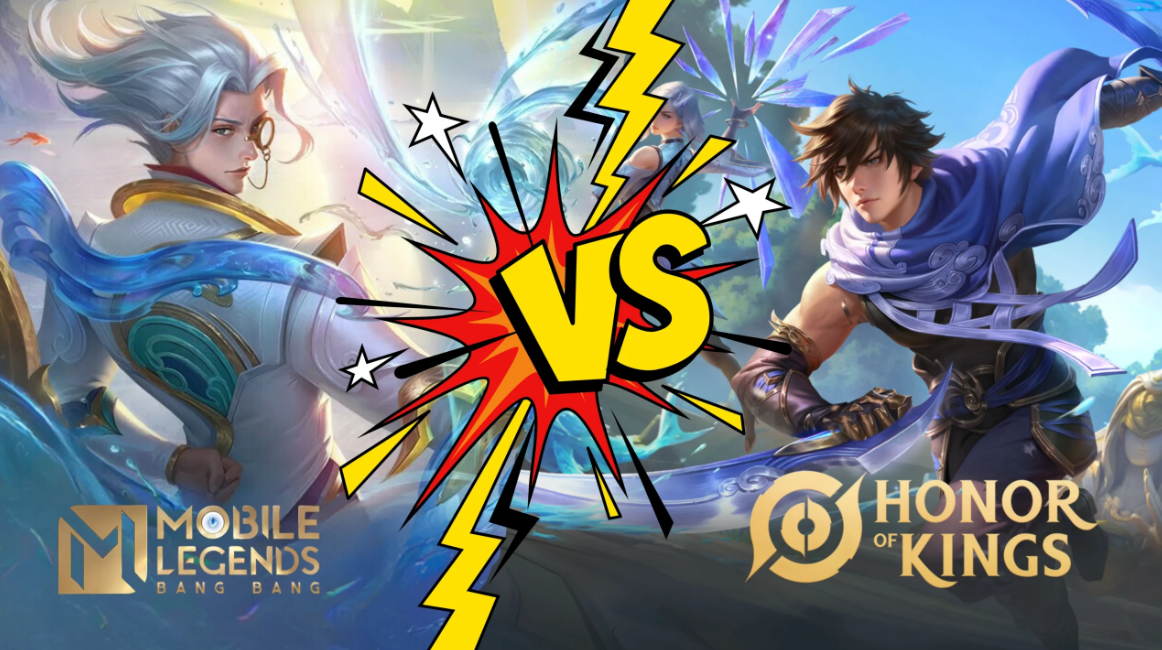
The Korean esports machine is not a business, it is a digital religion. While the rest of the world is absorbing mobile content, Seoul is erecting barricades. The refusal of KeSPA (Korea e-Sports Association) to integrate Mobile Legends: Bang Bang (MLBB) and the failure of Honor of Kings (HoK) at the Asian Games is not an accident, but a strategic sweep of the territory. The basis here is simple: protecting the League of Legends (LoL) ecosystem from Chinese expansion.
Honor of Kings failure: technical chaos and anger of delegations
The scandal surrounding the Honor of Kings at the 2022 Asian Games has become a point of no return. Tencent was unable to provide technical stability, which led to network collapses right during the matches. To be honest, the dominance of Chinese teams against the background of technical failures caused fury among the Korean and Japanese delegations.
According to an insider, KeSPA regarded this as a “manipulation of the environment” by China. For Korea, where the image of national champions is more important than profit, the risks of being associated with “Asian chaos” outweighed any benefits.
Dominance Stats: Why Mobile Gaming is Dead in Korea
The Mobile Legends market in Korea is practically dead. The average Korean gamer chooses grind on a PC, where the mechanics are polished to a high gloss. Moonton made a critical mistake: 0 official tournaments, 0 marketing investments in the region. As a result, MLBB remains a ghetto for expats from Southeast Asian countries (SEA).
Comparison of leaders:
MOBA Disciplines Comparison (South Korea)
Protecting the LCK ecosystem: how Seoul is blocking Chinese expansion
KeSPA’s organization is aimed at preventing talent leakage. If mobile MOBAs like Honor of Kings with their 139 million DAU in China are allowed to enter the market, local sponsors can reallocate budgets.
The main blocking factors are:
-
P2W threat: Korean regulators see hidden Pay-to-Win mechanics in Chinese titles, which contradicts the ethics of fair play.
-
Financial gap: Prizes in MLBB tournaments are 5 times less than in LCK.
-
Plagiarism: Korean players frown at MLBB, perceiving it as a secondary product that violates the intellectual property of Tencent/Riot.
Until Moonton and Tencent offer transparent infrastructure, Korea will keep the gates closed. For the only time in a decade, mobile gaming has lost the battle for the Korean soul even before it began.
Legacy of Champions: Korea’s Historic Victories at the Asian Games
It is worth recalling that at the last games of 2022, the guys performed just top-notch. In addition to the predictable gold in League of Legends, they snatched victory in Street Fighter 6. There, Kim “M.Lizard” Gwang-woo, in fact, left Bruce Yu-lin Xiang no chance in the decisive battle.
There were other awards:
-
PUBG Mobile: silver medal — it’s a shame, but a lot.
-
EA Sports FC: Kwak Jun-hyouk took the bronze.
As a result, Key esports is currently in maximum mobilization mode. With such a coaching staff, South Korea expects, in principle, not only to confirm the status of the favorite, but to collect even more awards in Nagoya. The details of the selection system for the players themselves are promised to be rolled out a little later — we are looking forward to it.