South Korea, along the way, is seriously aiming for the place of the host of the first Olympic Games in esports (OEG) — this became a reality when the partnership between the IOC and Saudi Arabia suddenly cracked. By the way, a high-profile parliamentary forum was held in Seoul on December 22, where KeSPA officials and bosses discussed whether the country should get involved in this race for the right to host the historic event.
Table of Contents
South Korea’s bid to host the Olympic Esports Games
The forum, under the ambitious name “The Forum for the Olympic Games in Esports in Korea”, gathered in the building of the National Assembly the entire color of the industry — from deputies Koh Dong-Jin and Jin Jong-oh to representatives of the CSOC.
We discussed, in fact, everything in a row — from the global strategy to the risks and that’s quite enough.Korea is in a strange position right now. On the one hand, there is a powerful base, on the other, China with its standards and Saudi Arabia with its endless money are on its heels. In truth, the situation has escalated to the limit.
It’s worth considering that Koh Dong-Jin sees esports not just as toys, but as a full-fledged industrial ecosystem connected with AI and powerful hardware. To be honest, his logic is clear — Korea should use its experience and software to the fullest.
Jin Jong-oh, who is an Olympic champion himself, added pepper to the discussion. He stated bluntly that the IOC desperately needs young people, and South Korea can be an ideal lifeline for them. It seems like it’s time for Seoul to roll out all its international connections to take this fat piece for itself.
As a result, we have the following: the struggle for the OEG is moving into a new phase. Korea, apparently, is ready to take risks in order not to remain on the sidelines of history. I’m curious how the competitors will react to this. In fact, we are in for a tough battle for influence in digital sports.
KeSPA’s plan to organize a series of OEG tournaments in Seoul
South Korea, apparently, is seriously intending to consolidate its status as the “homeland of esports” through hosting the Olympic Games. KeSPA Secretary General Kim Chol-hak, by the way, rolled out a rather audacious plan — he believes that a one-time event will not give the right exhaust. According to him, the country should focus on holding two or even three tournaments in a row.
Such a model, in fact, will create a single management standard, which can then be successfully sold to other countries. Kim also insists that Korean titles should be featured at such events, such as PUBG: Battlegrounds or FC Online. In general, the idea is to turn the Olympics into a huge showcase for local publishers, which is quite logical.
In truth, Korea’s esports past is no longer enough. Jin, by the way, emphasized that in order to really engage the IOC, it is necessary to present esports as a strong cultural mix of media, unique content and a fan base. Relying only on past achievements is a path to nowhere, let’s tell you this.
Compliance of Korean esports with IOC standards
However, not everyone is thrilled with this idea, and there is enough skepticism in the industry. Oh Kang Ji-hwan, the boss of Nongshim RedForce, questioned whether modern gamers had given up on this Olympic brand. To be honest, he is annoyed by the IOC’s focus on “virtual sports” — this is when, instead of League of Legends or VALORANT, they try to slip us digital copies of rowing or cycling.
It seems that the interests of the real audience and the officials from the committee are very different. Oh gave the example of the recent championship in Saudi Arabia, where the guys coped without any Olympic rings and got a top result. Apparently, Korea should think about developing its own independent projects, rather than running after the IOC.
By the way, KRAFTON also sets strict conditions. Kim Woo-jin bluntly stated that the tournament would only make sense if Korean—made games were included in the official program. Look at Japan or China — they’re actually pushing their franchises through international arenas.
As a result, we have the following: Seoul has big and ambitious ambitions, but the barriers are through the roof. Finances, bureaucracy, and a cultural gap with the IOC are what will have to be overcome. South Korea probably has a very difficult diplomatic game ahead of them if they really want to drag the Olympics to themselves.
Which games will be included in the program? Conflict of interest and Korean hits
League of Legends, in truth, has become a real stumbling block for Olympic officials. While Riot Games is fiercely resisting, the organizers are trying to cross a hedgehog with a grass snake — popular esports and a strict ban on any violence. By the way, Korean developers are already actively proposing to replace bloody battles with peaceful simulations and professional strategies.
In this analysis, we will look at real candidates, understand the stubbornness of developers and find a way out of this impasse.
League of Legends participation and Riot Games position
Representatives of Riot Games, apparently, are not eager to adapt to the rigid patterns of the IOC. The committee, by the way, demands complete sterility — not even stylized fights of champions, which sounds like a verdict for the League. As a result, the company logically relies on its own Worlds-type events, where the audience is in the millions.
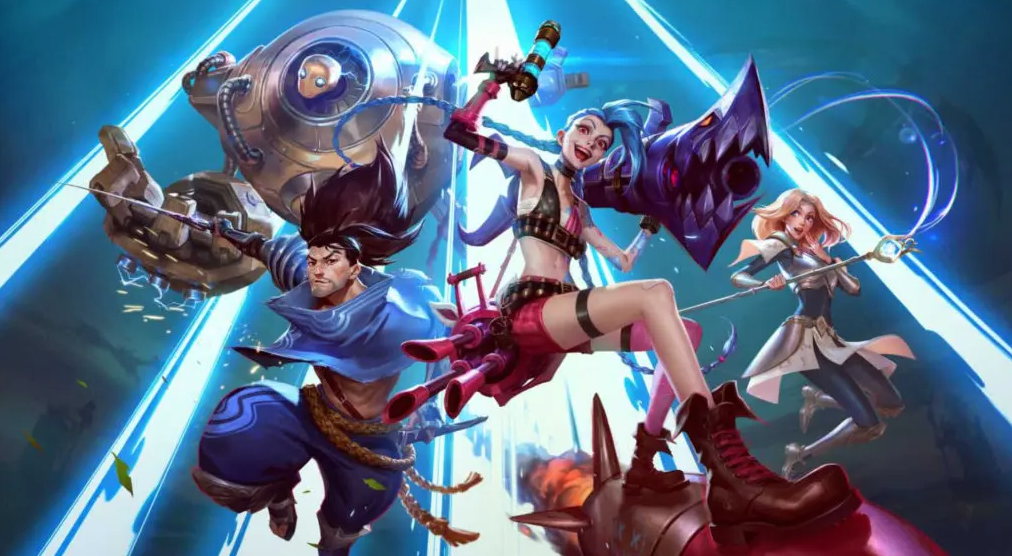
The Olympic Arena, in general, craves neutral projects — something in the spirit of sports taikuns or building cooperatives. It seems that Riot should invest in developing the narrative adventures of its characters in order to somehow adapt the game to Olympic standards in the future.
List of non-violent esports disciplines for the IOC
The list of medal contenders now revolves around global hits and Korean projects, where brains and teamwork are more important than the speed of clicking on the enemy. Here, in fact, are the key examples:
Journey: Imagine players wandering through the desert to a distant peak, communicating only with gestures — the purest cooperative without a drop of aggression.
-
LittleBigPlanet: A knitted Sackboy solves puzzles in a cardboard world — Riot could spy on their level designer mechanics.
-
Machinarium: Robot Josef saves his city solely with logic and a wrench — Korean studios like Nexon are now making similar robot simulations.
-
Stardew Valley: A farming saga with multiplayer, where teams compete to grow more cabbages — the perfect format for Olympic gold, really.
These titles have already proven their power: Journey is adored for its meditativeness, and in Stardew Valley, people kill millions of hours without any anger.
Contradictions between the values of the IOC and esports
The organizers of the Games, of course, dream of dragging Korean hits to themselves for the sake of frenzied coverage — in Korea, the League of Legends brand has been leading Google trends for years. However, the IOC has stuck its nose into the “Olympic values”: no bloodshed, just sport.
Developers, in general, are afraid of losing face — if you remove the fights from LoL, it will turn into a farm, and this is a completely different genre. Apparently, the solution lies in hybrid formats. For example, you can add a special mode with arena simulations where champions strategize rather than face off, plus introduce a neutral Tetris Effect for dropouts.
| Game | Why It Fits | Downsides for LoL Developers |
|---|---|---|
| Journey | Wordless co-op, shared team progression | Lacks the competitive depth of LoL |
| Stardew Valley | Multiplayer farming, resource management strategy | Overly relaxed pacing |
| Machinarium | Cooperative logic and puzzle-solving | Primarily single-player, requires adaptation |
| Tetris Effect | High-speed competition without violence | No character-driven narrative |
Korean simulators as an alternative
Studios from South Korea are now really dominating this niche: the same Nexon or NCsoft are releasing bundles of cooperative constructors or peaceful versions of MapleStory. Imagine an Olympic “Build-Off” based on the Riot engine — this will save the fans and satisfy the committee.
As a result, the benefits for gamers are obvious — train team synergy in Journey or thoughtful planning in Stardew Valley. It all comes down to what will be the key to leadership in future Olympic disciplines.