

Usually, The Stanley Parable is remembered from the textbook: the 2013 game, the cult status, the virtuoso analysis of the “fourth wall” and the mockery of the very idea of freedom of choice in video games. These formulations are so hackneyed that they themselves have become part of the irony that the project once ridiculed. The Stanley Parable: Ultra Deluxe seems to wink at this legacy and say, “Yes, we all know that. Now let’s talk about something really important.” For example, about the bucket.
Is it funny? Sure. But from that moment on, the game starts working at a new level of perception. An ordinary bucket, an object with no history, no character, and seemingly no chance of philosophical reflection, suddenly becomes the center of attention. It doesn’t just exist in the game space — it enters into an unspoken dialogue with you, becomes part of the narrative, a reflection of the absurd and at the same time an emotional support. This is the magic of Ultra Deluxe: through minimalistic gameplay and deliberately simple images, it manages to evoke sincere feelings and break the usual patterns of perception.
And that’s where the strangest thing happens — the game goes off the screen. After a few hours spent in this ironic maze of choice, narrative, and introspection, you begin to see reality differently. My own bucket, the one into which a dirty rag had been flying for years without a shadow of respect, suddenly ceased to be just a part of everyday life. Now it stands next to me, almost like a silent witness to my thoughts. And who knows, perhaps this is the merit of The Stanley Parable: Ultra Deluxe, a game that not only explores the nature of choice, but gently and persistently teaches you to see meaning even where before there was only emptiness and everyday function.
Table of Contents
The Stanley Parable: Ultra Deluxe Free Steam Account
At first glance, it seems almost absurd that the main meme and symbol of The Stanley Parable: Ultra Deluxe has become an ordinary bucket — a joke devoid of direct connection with discussions about the future of the gaming industry or complex postmodern structures. But this is exactly the irony: a game that actually talks about breaking the “fourth wall”, self-irony of developers, interaction with the community, and the construction of a video game narrative unexpectedly chooses an extremely mundane object as an emotional anchor. The bucket here is not just a gag, but a concentrate of the author’s approach to game design and meta-commentary.
To be honest, for the first twenty minutes of playing The Stanley Parable: Ultra Deluxe, I was noticeably skeptical about what was happening. It is difficult to repeat the effect that the original once produced: as you know, you don’t enter the same river twice. What seemed audacious and revolutionary for interactive storytelling nine years ago is now perceived more calmly — during this time, the industry has managed to rethink breaking the “fourth wall” dozens of times. And brilliantly, as Daniel Mullins, the author of Inscryption, did, for example, where choice, deception of expectations and meta-levels of narrative became the basis of gameplay and atmosphere.
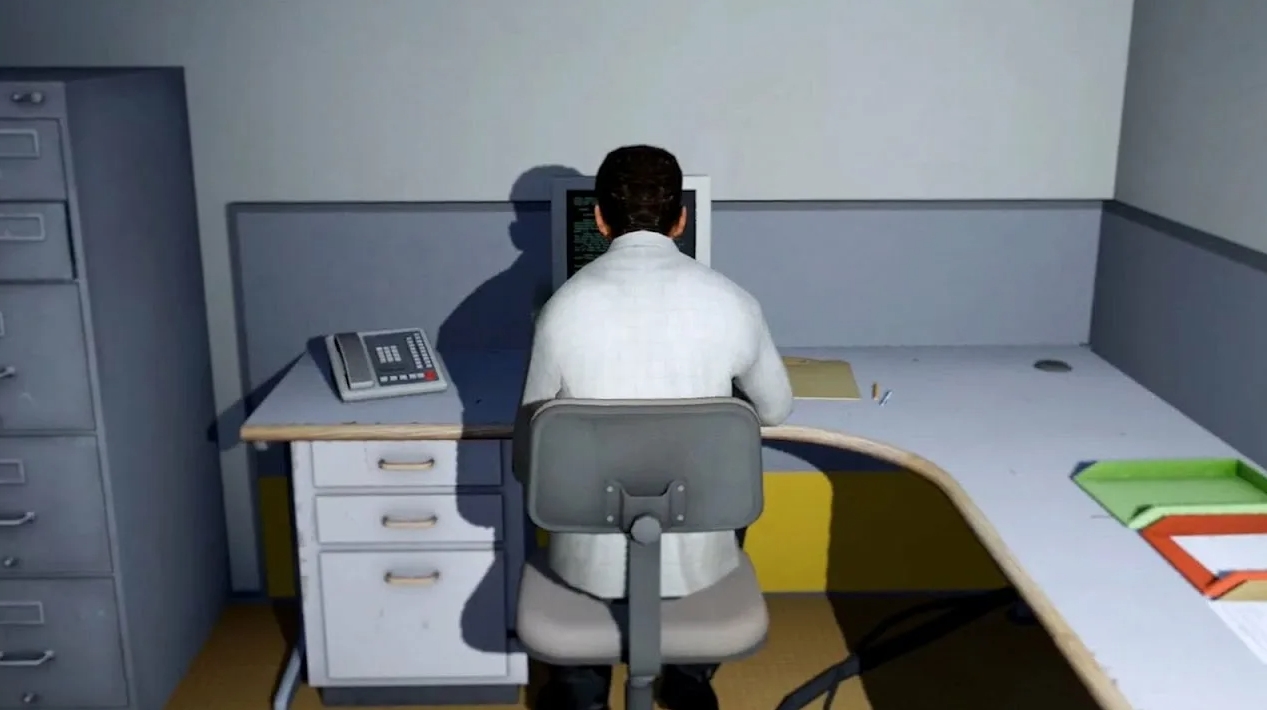
And yet The Stanley Parable has something that still works flawlessly — the narrator. His voice, intonation and sarcastic delivery suddenly evoke a feeling of strange nostalgia. It’s clear now that I’ve really missed him over the years. Here, the “fourth wall” is broken not for effect, but as a dialogue tool: developers use it to ironically discuss the nature of choice in games, player expectations, and the development process itself. And they do this not head—on, but through interactive interaction – allowing us, in the role of Stanley’s office clerk, to go against instructions, make alternative decisions, watch the narrator lose his temper (sometimes even provoking sympathy), and discover new endings step by step.

However, it’s worth remembering: we’ve already seen all this — nine years ago. And that’s why the first introduction to the expanded edition begins rather mundane. Ultra Deluxe welcomes us with a museum of achievements, where the awards and reviews received by the game over the years are neatly displayed. Nearby there are exhibition halls with additional materials: concept art of locations, early versions of the Stanley room, notes on the progress of development and the selection of the team. It’s interesting and really informative in some places, but more as a bonus for fans than as a complete reinvention of the gaming experience.
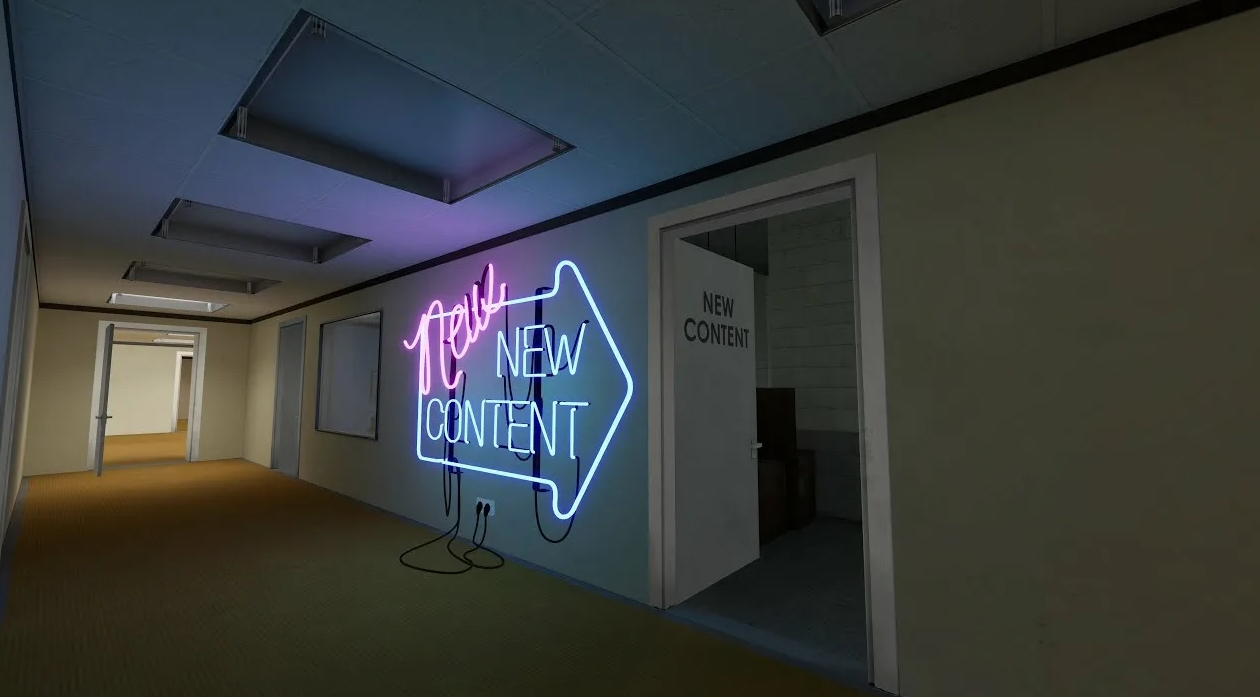
The authors, of course, do not miss the opportunity to laugh at the reissues themselves and their eternal promise of “new content.” The irony here is expected, almost mandatory for a project with such DNA. Moreover, these very “new materials” turn out to be demonstratively few at the start — so much so that it looks not so much a disadvantage as another joke written into the meta-structure of the game and its narrative.
Break into gaming without spending anything – try a steam free account.
The Stanley Parable: Ultra Deluxe’s Incomplete Story
But at exactly the moment when it seems that The Stanley Parable: Ultra Deluxe is finally stuck in self-repetitions and resembles rather a witty but tired walk along familiar paths, the developers do an elegant somersault. Just a few precise scenario solutions — and the feeling of second-handness crumbles. The game, which has almost been included in the list of “successful but optional re-releases,” suddenly regains the status of a lively, daring and truly unexpected statement within the framework of an interactive narrative.
The starting point for this coup is… negative reviews on Steam. The authors take the criticism of the players and turn it into a full-fledged gameplay element, arguing about whether developers should blindly fulfill all the requests of the audience. The climax is the legendary scene with the dialogue fast—forward button, which seems to be a convenient mechanic that is so often asked for. But it’s presented so alarmingly and aptly that after this episode you can no longer mindlessly skip lines: it’s too well remembered, which can lead to an attempt to “optimize” the narrative and devalue the author’s pace.
Then the game finally breaks loose. The narrator demonstrates the concepts of a hypothetical sequel, a grotesque catalog of ideas familiar to anyone who follows the modern gaming industry and its trends. Recognizable elements of mass game design are easily discernible among them:
-
a machine for giving out achievements for free without effort and meaning;
-
collectible items and statuettes, for which no reward is due;
-
a button that can pronounce the player’s real name;
-
and, of course, the notorious “soothing” bucket, beckoning with warmth, comfort and the illusion of safety.
Each of these ideas works not as a joke for the sake of a joke, but as a meta-commentary on what interaction between developers and the audience sometimes turns into.
And at some point it becomes clear: Ultra Deluxe is no longer just an extended edition. The game gradually mimics a full—fledged sequel – almost imperceptibly, but inevitably. Once you launch The Stanley Parable 2, the space changes: the office is decorated with balloons, new locations, additional endings, fresh characters appear, and the bucket turns into a constant companion. Game design seems to be reassembling itself, playing with the expectations, memory and experience of the player.
The final feeling is a strange, almost ecstatic horror. Once again, you don’t understand where the line between irony and serious utterance lies, and you can’t imagine what kind of surprise awaits you at the next turn of the passage. Behind the mockery lies deep, precise, and surprisingly relevant reflections on the video game development process and complex relationships with the community. The Stanley Parable: Ultra Deluxe proves once again that it is able not only to laugh at the industry, but also to have an honest, intelligent and truly exciting dialogue with it.
The Stanley Parable: Ultra Deluxe Review: Impressions, Pros, and Cons
All of the above, however, does not mean that The Stanley Parable: Ultra Deluxe is a completely standalone and intuitive game from scratch. On the contrary, the best way to get the most out of her is to go through the original first, and only then return to this expanded edition. This is the only way to truly notice how much deeper, bolder, and more layered the narrative structure has become, how the gameplay has evolved, and how much more precisely the authors work with the themes of choice, expectations, and interaction with the player. In this sense, Ultra Deluxe is not just an updated version, but a meaningful sequel designed for careful passage and immersion in the atmosphere.
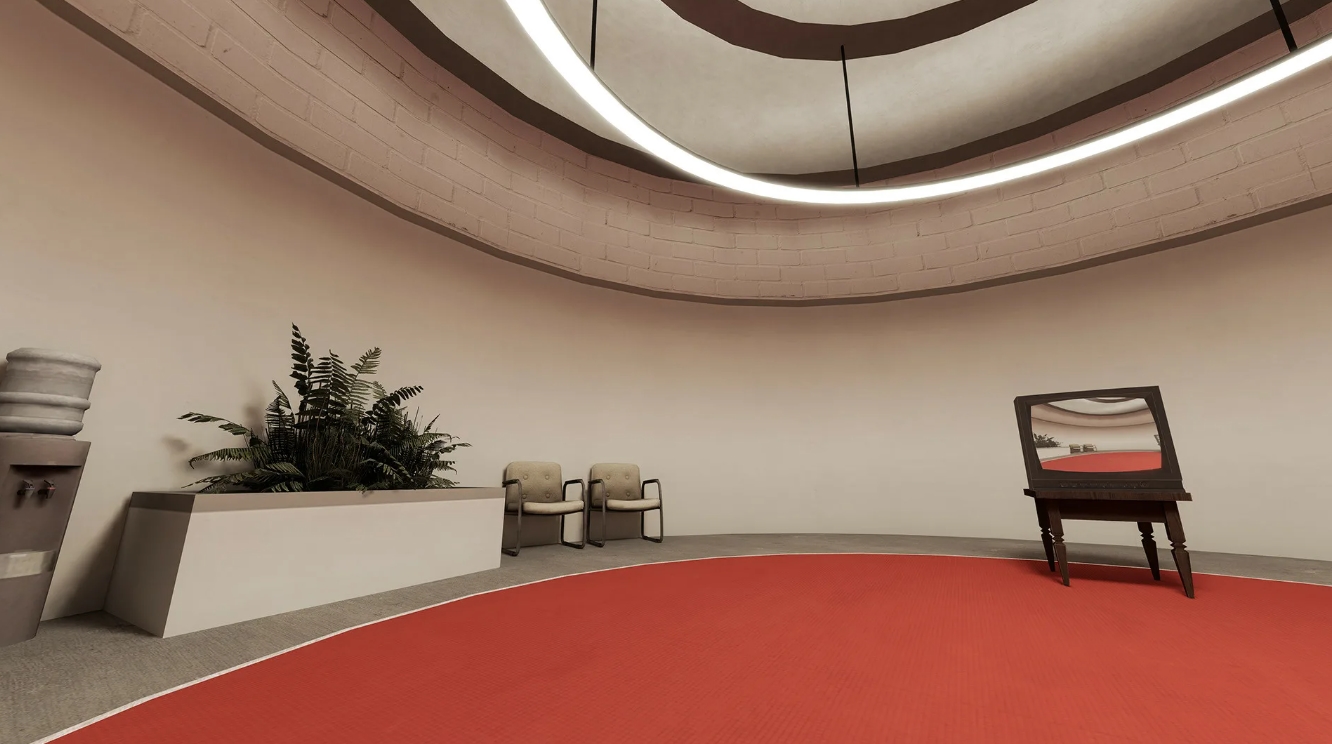
The developers once again confirm their status as visionaries of the industry: they are not afraid to laugh at themselves, at the players, and at the very principles of video game development. And, perhaps, it is really difficult to add anything at this point – any words risk being superfluous. All that remains is to accept the rules of the game, pick up that soothing bucket and allow yourself a rare feeling of comfort and tranquility in the midst of controlled chaos, which The Stanley Parable: Ultra Deluxe so masterfully transforms into an emotional experience.
Pros:
-
non-standard plot and multi-layered narrative;
-
subtle, self-mocking humor;
-
Bold and truly ingenious ideas that expand the gameplay;
-
additional materials and new mechanics working for the atmosphere;
-
current reflections on the development process and the perception of games by players;
-
outstanding voice acting and charismatic storyteller.
Cons:
-
No objective shortcomings could be found.
The Stanley Parable: Ultra Deluxe System Requirements
How to play The Stanley Parable: Ultra Deluxe for free on Steam via VpeSports
You open the door, take a step forward, and suddenly realize that the usual rules of the game don’t work here. The Stanley Parable: Ultra Deluxe does not try to entertain you with action or beautiful cutscenes. She calmly sits down next to me and starts asking uncomfortable questions: what if I don’t go where I was told? And who decides what’s right? An ordinary office becomes a stage for a strange, ironic performance, where you are both an actor, a spectator and the cause of the chaos.
This is that rare game that laughs with you and at you. The narrator reacts to stubbornness, praises you for your obedience, gets annoyed if you think too long, and creates a sense of lively dialogue every time. Ultra Deluxe expands this experience by adding new branches, absurd situations and moments when you want to stop and just smile at how unexpected it all is.
You can start exploring this world without too much stress. Registration on the site takes a minimum of time. After logging in to your account, just go back to the top of the page and click GET AN ACCOUNT. Everything is arranged in such a way that technical issues do not distract from the main thing — from the game, which likes to break the fourth wall and pretend that it knows more about you than you do.
If you want to keep up to date with news, updates and other non-standard projects, our Telegram channel is always open. They discuss strange endings, share their findings, and post fresh accounts. And if you suddenly get stuck in the corridor of your own doubts or don’t understand why the narrator is unhappy again, you can take a look at the detailed guide or write to the chat. We will respond in a human way – without moralizing and unnecessary instructions, because in this game the choice is still yours.