

Despite the fact that the BattleTech franchise is based on a truly powerful foundation — from iconic board games and an extensive line of novels to a whole gallery of video games from different eras — there are only two notable projects active in the universe today. This is a tactical turn-based strategy BattleTech, released in 2018, and an online MMO action game MechWarrior Online from Piranha Games studio.
Turn-based BattleTech turned out to be an extremely sophisticated project: thoughtful tactical gameplay, flexible progression, and regular updates helped the game retain the interest of the community. The developers continue to take care of their child, releasing patches, expansions and additional missions, which only strengthens the loyalty of fans to the franchise.
MechWarrior Online has a completely different fate. Despite the big name of the series and the extensive ENT, the MMO shooter did not meet the expectations of a wide audience. The game survives primarily thanks to a group of the most persistent fans of heavy mechs, who continue to support the project with enthusiasm and donations. It would seem that Piranha Games’ interest in the classics should have faded away, but the studio decided to bet on a much more ambitious move.
The developers have pulled a really weighty argument out of their sleeve — the revival of the main MechWarrior line. The last part of the series was released almost two decades ago, and therefore the announcement of MechWarrior 5: Mercenaries became a big event for fans. On the day of the release, the team gave an interview to the portal unrealengine.com where she confidently stated: their goal is to finally create the very game that fans have been dreaming of all these years. It sounds bold, especially considering how dubious such promises were implemented in MechWarrior Online. But who knows, maybe this time the developers really managed to take a step towards the community’s dream?
Table of Contents
MechWarrior 5: Mercenaries Free Steam Account
To talk about the large—scale and multi-layered BattleTech universe as part of a game review that covers only a small fragment of its rich chronicle is an almost utopian task. The lore of the franchise goes much deeper than just stories about giant combat robots. Real interstellar feudalism prevails here: noble houses, political intrigues, corporate wars and a strict system of titles. And the mech pilots — the very mechwarriors — look more like futuristic knights living by their own code of honor and carrying a set of rights and responsibilities that bear little resemblance to the role of ordinary soldiers.
It is this unique social structure and thoughtful world that has opened up a huge scope for creativity for the authors of books, games and scripts. For several decades, BattleTech has produced a variety of stories, from chamber dramas about politics and power to epic campaigns about the clan war. The world has grown, overgrown with details, new regions, characters and technologies, and today has hundreds of novels, dozens of games and even its own animated series.
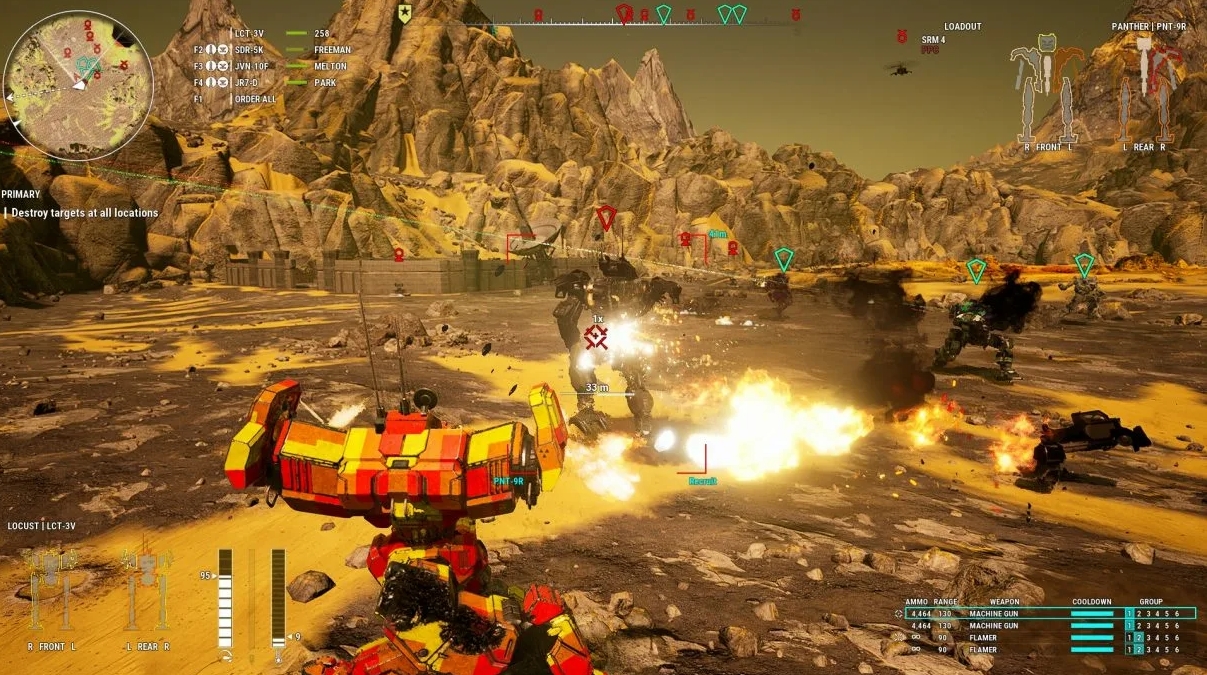
However, it may be difficult for newcomers to understand the intricacies of ent for the first time. And the plot of MechWarrior 5: Mercenaries is unlikely to be a lifeline for them. The story created by the developers is clearly intended for those who have long been familiar with the factions of the Great House, the differences between the models of combat mechs and the general military history of the Inner Sphere region. The game provides almost no explanations, as if hinting: “You’re fans of the series, right? You all know that.” This approach makes the narrative recognizable to veterans, but it can scare off players who are just beginning their acquaintance with the world of giant machines and their pilots.
Build your dream lineup with a free steam account with games.
MechWarrior 5: Mercenaries Plot
The game takes us to the year 3015, the height of the Third Succession War, when the Inner Sphere is split into many fronts. At the center of the story is the commander of a small band of mercenaries, whose life collapses at the moment: his father is killed by other “dogs of war”. They demanded to give the coordinates of a mysterious object, and the refusal cost the family leader his life. For the hero, this tragedy becomes not just a wound, but a long path of revenge that can stretch for many years — a classic dramatic plot for those who appreciate the depth of the plot and the emotional motivation of the characters.
Gradually, the player is immersed in a large-scale region known as the Inner Sphere. This is a huge part of the galaxy, divided between the five Great Houses — cosmic superpowers waging an endless struggle for power, resources and strategies of influence. There are hundreds of worlds here, grouped into industrial hubs and military zones. The first are islands of stability with developed infrastructure, markets for furs, spare parts, and the ability to hire new pilots. The latter are real meat grinders, where army clashes do not stop, and contracts for military operations are born faster than the armor has time to cool down. There is a trade here, but the assortment is poor, prices bite, and rare parts for furs need to be literally fished out. But it is in these areas that you can sign a particularly lucrative assignment that allows you to repair robots, pay the team and expand the arsenal, replenishing it with new, more powerful combat vehicles.
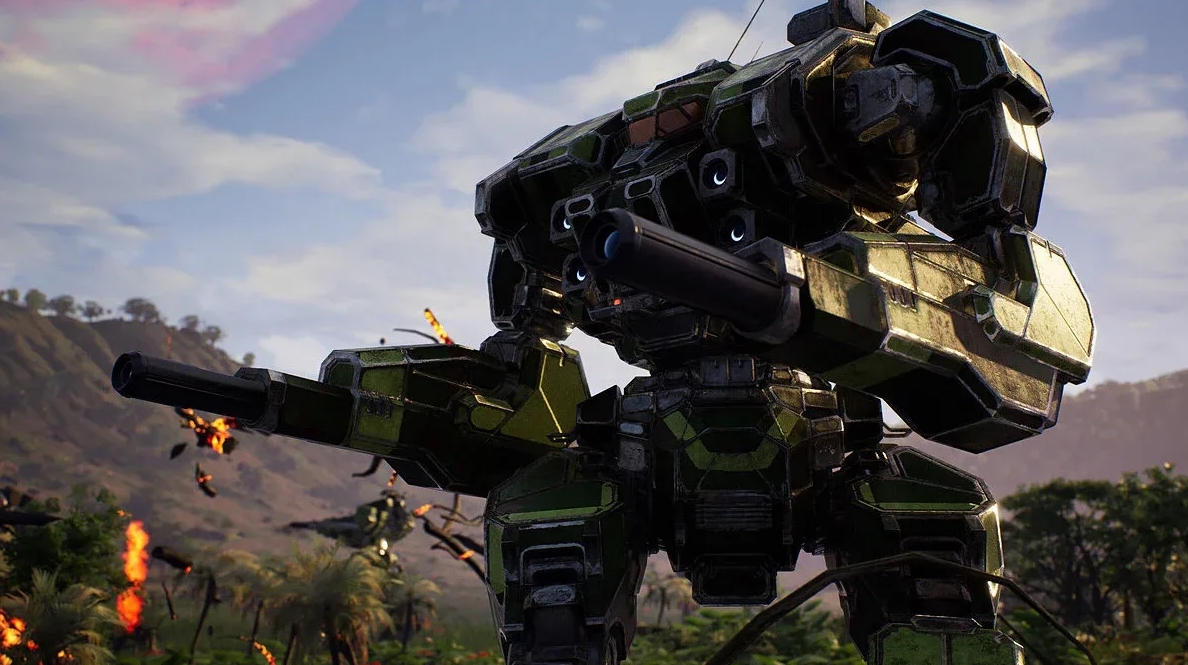
The life of mercenaries had long since become as commonplace as political conspiracies and corporate wars. It’s perfectly normal here to fight today for those you shot at a week ago. Everything is determined by contracts, not likes. However, experienced commanders prefer to maintain a relatively stable relationship with the employing faction, as trust grows and the set of “negotiating points” expands. These points allow you to improve the terms of the agreements: increase the reward, get better compensation for damage, or get more trophies. Reputation is also important: the higher the fame of the squad, the more prestigious tasks become available, which affects the dynamics of the passage and the economics of the team’s development.
Among the dozens of combat missions, there are also key story missions. But access to them is opened only when the level of fame reaches the required level. Therefore, the player has to regularly fulfill standard contracts — the only way to “boost” his reputation. The growth rate of this indicator is low, which turns the promotion of the campaign into a long marathon. You often have to complete five or six routine tasks and spend several months of game time on them just to get to the next storyline chapter.
The reason for this slowdown is simple and directly related to gameplay mechanics. Mechs almost always come out of combat with damage that requires repair. There is enough money: contract awards cover the cost of spare parts and the labor of engineers. The problem is time. Repairs can take weeks, and in the depths of the military zone, where markets are rare, you have to get to the nearest industrial hub. And even there, the necessary equipment or robot may not be available. Pilots are also not iron—clad – they need treatment after being injured. The player can only wait.
In order to survive in such conditions, it is important for a commander to consider several key factors.
What needs to be kept under control:
-
the condition of the mechs after each battle;
-
availability of spare parts and repair time;
-
pilots’ health and their readiness for departure;
-
the relationship with the factions that affects the quality of contracts;
-
the financial balance between the income and expenses of the unit.
Customization of combat robots
Waiting in the game is more of a formality. Time does not drag on for an excruciatingly long time, but simply rewinds to the desired date. If desired, during these intervals, you can start planning: save up money, purchase spare parts in advance, equip the barracks with pilots and go on a series of missions without long breaks. But even this approach does not save you from the inevitable routine that accompanies most of the gameplay and noticeably slows down the pace of passage.
This is especially acute in the mechlab, the main place where customization and maintenance of combat robots are carried out. The interface is made so heavy and inconvenient that every visit there turns into a test of patience. After each battle, you have to manually give orders to repair each damaged mech, replace destroyed modules, memorize a list of scarce equipment, and fly to the nearest market for the necessary parts. Moreover, it is not always possible to find the right product the first time, so it is often necessary to skip through several systems. And then manually install everything you purchased again. Small, similar operations drag on endlessly, and automation is not provided. For a game where mech maintenance plays an important role, such microcontrol looks like a serious miscalculation.
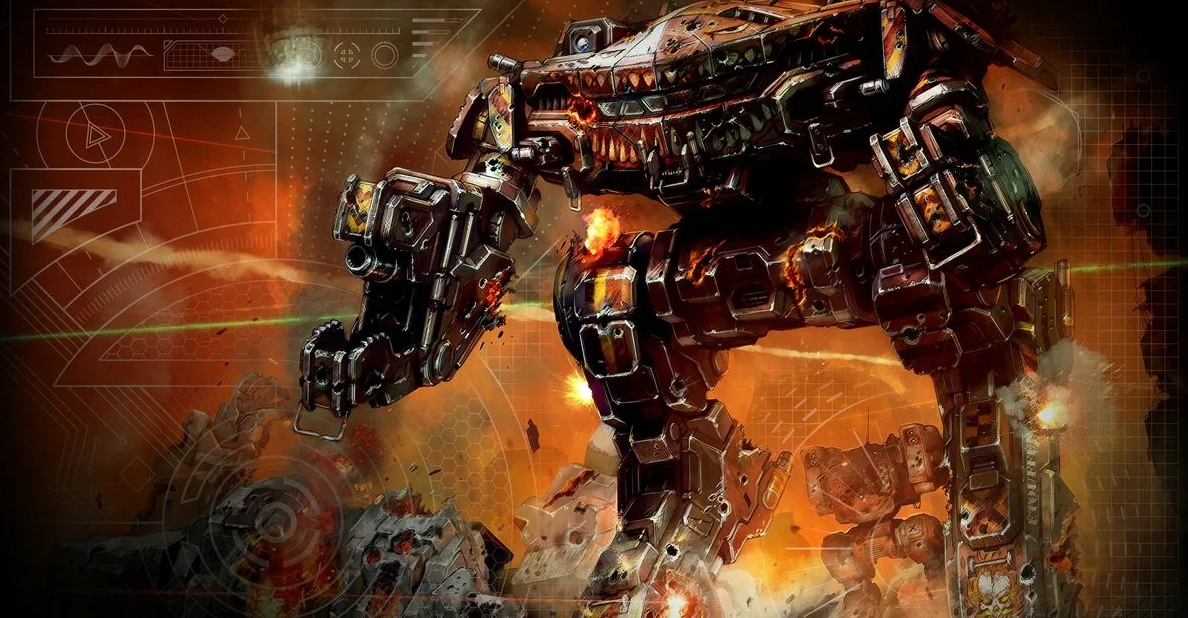
A simplified customization system adds an additional fly in the ointment. You have only three types of weapons at your disposal — energy, ballistic and missile — and a minimal set of additional equipment. There is almost no variability in builds, because the game focuses on different modifications of the same mech models instead of deep customization of their internal stuffing. Yes, this formally corresponds to the canons of the BattleTech universe, but this approach definitely does not help the variety of gameplay. Compared to the settings in MechWarrior Online, turn-based BattleTech, or the RogueTech modification, the mechlab in MW5 feels flat and limited, as if created using a simplified template.
But to be fair, it’s worth noting that the MW5 does have a lot of mech models in its arsenal — about fifty basic variants. If you take into account all the modifications, the number increases by a multiple. Light scouts, maneuverable medium—sized, massive heavy and destructive assault mechs – there is a car here for almost any style of play. Robots can be common and rare, vintage and top-end, and each adds tactical depth to Lance’s choice of gear. Mission restrictions are minimal: you only need to meet the required tonnage and take no more than four mechs with you — that’s how much a standard lance is.
Gameplay and combat system
The central goal of each mission depends on the terms of the contract, but no matter how the tasks change, collisions with the enemy are inevitable. The player has to fight not only with enemy mechs, but also with ground vehicles — tanks, turrets, helicopters. Alone, these armored vehicles do not pose a serious threat to Lance, but due to the numerical pressure, they can turn the battle into an annoying routine. Most of these targets are destroyed with one or two hits, turning the battle into an endless hunt for trivia that gets on your nerves rather than causing a sense of threat or tension.
The outdated design of meetings creates an additional problem. Game designers regularly resort to the anachronism of instantly “reviving” enemies right in front of the player’s eyes. There is no point in bypassing patrols, choosing a landing route, or looking for a weak point of defense: once you move towards the target, the enemy will materialize out of the void. The concepts of stealth, intelligence, or thoughtful tactics are undermined by the game itself, which inevitably reduces the depth of gameplay.
Battles with mechs look a little more interesting, although there are some oddities here. Enemies also often appear literally out of nowhere, and sometimes they arrive on landing ships. Each combat vehicle has many zones, damage to which disables certain equipment. Having lost a “hand” with MLRS, the enemy is no longer able to launch a rocket salvo — but such a weapon system will not appear among the trophies. The same rule works for the player: it is worth substituting the most protected areas of the case, and it is better to protect valuable modules. Overheating is just as important: when a critical temperature is reached, the fur temporarily turns into a helpless chest of metal. Sometimes it’s enough just to fire powerful weapons for too long — the effect is almost like being hit by an enemy flamethrower.
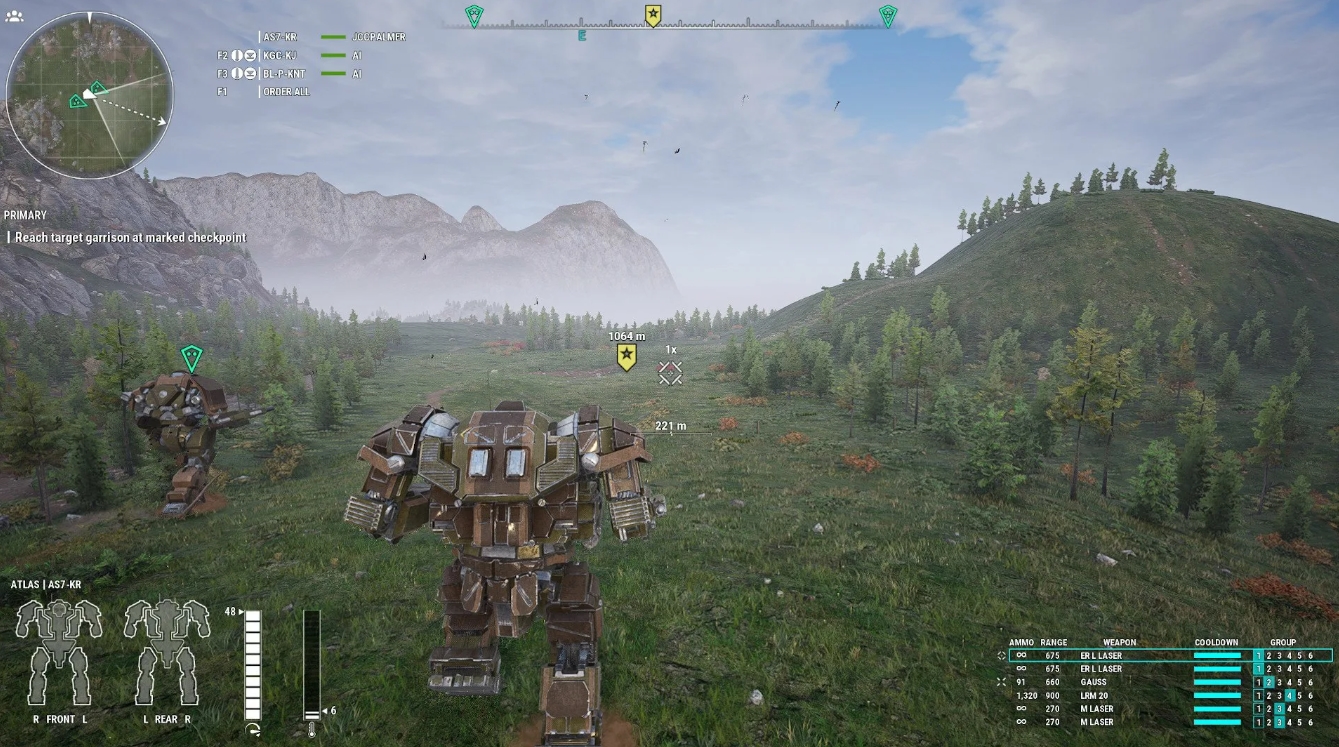
But the shooting feels convincing. Lasers leave jagged trails, heavy cannon shots shake the body of the mech, and the armor charred and falls off, showing the scale of the damage done. Thanks to these visual effects, it gradually feels like you’re really controlling a multi—ton combat robot, and each of the mechs has its own character, speed, mass, and sense of control, whether it’s the monstrous Atlas or the agile Locust.
But the environment, alas, does not stand comparison. The map and landscape generator looks outdated both visually and mechanically. Formally, there are several biomes in the game: winter, summer, autumn and lifeless. However, the differences mainly come down to the color palette and the presence of vegetation. Everywhere there are the same canyons, plateaus, and valleys that have to be bypassed or flown over using jump engines. Landscapes quickly begin to repeat themselves and lose their sense of scale.
Infrastructure elements are trying to bring diversity: industrial complexes, hangars, destroyed buildings, and civilian buildings. But most of the objects are made of monotonous low-poly models, which spoils the impression. The destruction system is also uninspiring: many elements of the environment either simply disappear or instantly change their texture to “broken”. For a game about giant war machines, this is frankly a weak solution.
To understand why the environment looks so monotonous, just look at the set of elements that it consists of:
-
typical environment objects in MW5;
-
recurring canyons and plateaus;
-
industrial structures of the same type;
-
low-poly residential buildings;
-
identical hangars and technical areas;
-
decorative technique that does not affect gameplay;
-
poor vegetation that distinguishes biomes only by color.
The types of missions seem to vary — destroying targets, clearing territories, protecting facilities, or destroying bases. But in fact, almost all tasks follow the same formula: landed → reached the point → destroyed a wave of opponents → encountered a lance of mechs → moved to the evacuation. The rare story missions are a little out of line, but they’re not enough to spice up the routine gameplay.
Artificial intelligence is also not encouraging. Both allies and enemies behave equally chaotically, constantly rushing into close combat, even if their weapons are designed for long distances. It is almost impossible to manage a team: the tools are left at the mercy of a primitive command system. As a result, you have to rely only on yourself, and the role of AI is reduced to extras. Dividing mechs by weight classes also makes no sense, because the behavior of the pilots almost does not change.
Against this background, the cooperative seems to be an attempt to breathe life into the combat system. Up to three friends can join your campaign and control Lance’s mechs. Indeed, with live pilots, battles become more dynamic, and tactics become more meaningful. But here, too, a problem is revealed: the monotony of missions does not disappear anywhere, and long flights between systems and the eternal fuss in the mechlab stretch the sessions. While the host is busy repairing and configuring, the rest of the players are forced to just wait, which makes co-op a useful, but far from ideal solution.
Pros and cons of MW5
Only modifications can save MechWarrior 5: Mercenaries — and even then, provided that the developers really bring to mind the tools for creating content. The game desperately needs deep changes in literally everything: from star map movement and economic management to graphics, mission balance, and enemy behavior in combat. In the meantime, the only real steps are the promise to release a full—fledged editor that will make life easier for mod builders and, perhaps, allow the community to do what the developers themselves could not.
Ironically, mods can become the very “dream of fans of the series” — a chance to build a game about mechs with their own hands, fashioning it the way the veterans of the franchise imagine it. We can only hope that the creative community will be able to breathe new life into the Mercenaries. After all, Piranha Games, unfortunately, has already demonstrated twice that it is not able to independently pull the game to the level of a cult series.
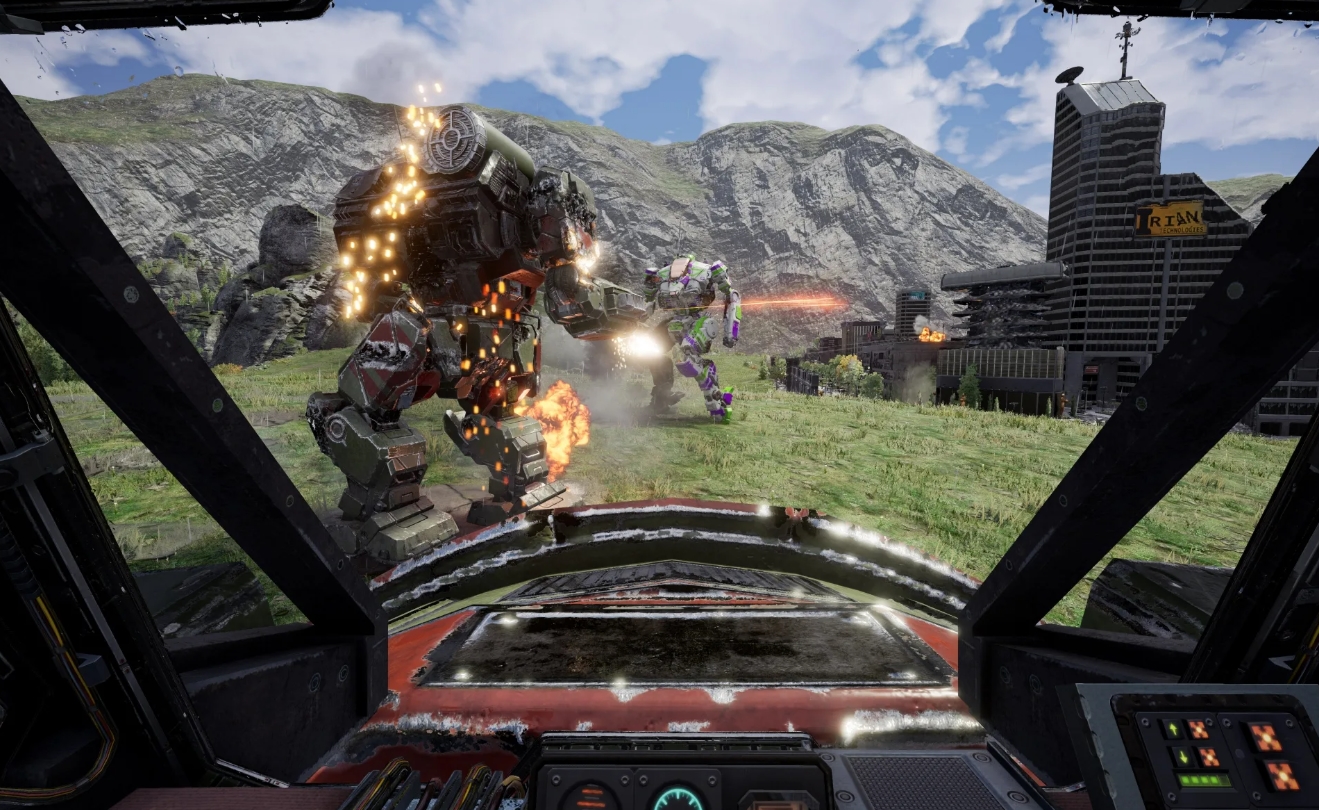
To summarize the impressions, we can highlight the strengths and weaknesses of the current version of MW5:
Pros
-
Impressive shooting effects and believable visual damage;
-
The feeling of piloting a massive combat mech;
-
A large number of robot models and modifications.
Cons
-
Monotonous gameplay on a global map, forcing you into a routine;
-
A primitive mechlab with limited customization options;
-
Repetitive battles and predictable missions;
-
Outdated graphics and template landscapes.
MechWarrior 5: Mercenaries System Requirements
How to play MechWarrior 5: Mercenaries for free on Steam via VpeSports
Try for a minute to imagine that you are sitting in a dark cabin, where there is a smell of hot wiring, and the only light source is the control panels, slowly coming to life one after another. Behind the thick armor, you can hear distant explosions, as if the planet itself reminded you: You’re not a tourist here, you’re a mercenary pilot. In MechWarrior 5: Mercenaries, this moment feels almost physical. No myths, no tales — just you, a huge machine and a galaxy that is never kind. And the fact that you can immerse yourself in this atmosphere for free makes the step into this world even easier and warmer.
We really wanted your first contact with the game to be not an attempt to figure out dozens of incomprehensible settings, but something intimate: as if an old mechanic handed you the keys to the mech and said, “It’s yours. Take care of him.” Therefore, everything has already been prepared in advance. You go to the website, register, log in to your profile — and at the same moment, MechWarrior 5 is already waiting. There are instructions, hints, and even a ready-made free Steam account, as if someone had put everything in drawers in your hangar so that you wouldn’t get lost.
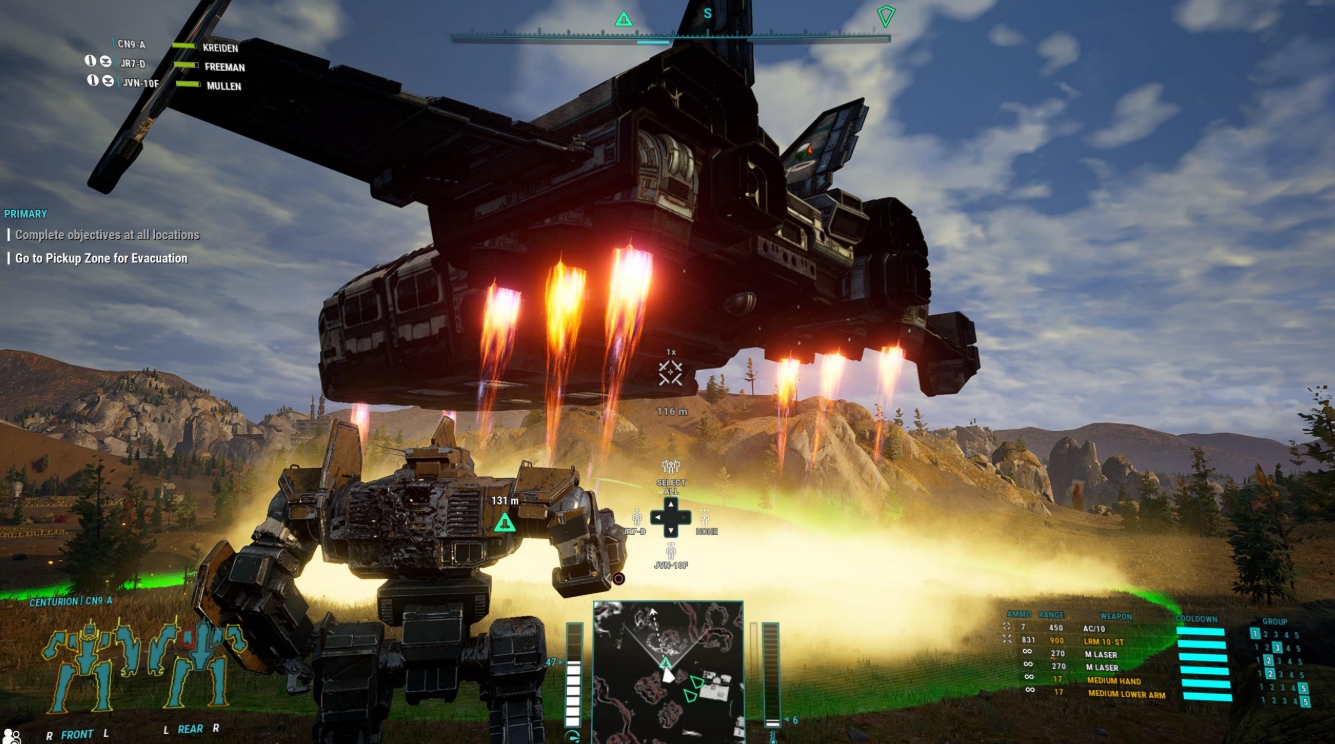
And when you go out on your first mission… maybe you’ll come back with a ruined mech, maybe with trophies, maybe with the feeling that you were almost blown to dust. In any case, it will be incredibly important for us to hear how you felt. We read every word — without formal unsubscriptions and without indifference. If a comment suddenly doesn’t appear, don’t worry: moderation only protects against accidental spam. Tweak the text a bit and we will definitely see and approve it. After that, the necessary data will be sent directly to your email.
And if you want to not just play, but become a part of a living mercenary community, take a look at our Telegram channel. There, people argue about builds, post cool moments, share experiences, and sometimes even discuss who’s fur looks scarier after a mission. And if something goes wrong, there’s our “How to Play for Free — The Complete Guide” section and an open chat. We’re always there, like we’re standing next to each other in a hangar, wiping our hands of engine oil and saying, “Well, pilot, is it time to go back into battle?”