

The Case of the Golden Idol is that very rare detective story that not only entertains, but makes you think, doubt and feel smarter after each revealed episode. This is a game that I got into almost by accident — and suddenly realized that it was my main gaming discovery before the New Year. And now that the DLC has been released, it’s simply impossible to ignore it: the story has grown, the riddles have become more sophisticated, and the overall sense of mystery is only getting thicker.
From the first minutes, the game takes not the speed, but the mood. Her visual style resembles revived antique engravings — rough, gloomy, but incredibly expressive. Combined with the lingering atmosphere and an almost tangible sense of anxiety, this creates an immersive effect, as if you are not launching the game, but opening a dusty volume with forbidden chronicles. There are no unnecessary words here, but every detail — whether it’s a character’s gesture or a strange phrase in a dialogue — works for the overall narrative.
DLCs only enhance this feeling. They don’t look like “content for content’s sake,” but rather feel like a continuation of a large investigation where family inheritance, greed, fear, and absurdity are intertwined in a complex tangle. The gameplay is still built around analyzing scenes, comparing clues and logical conclusions, but the new episodes play with the form more boldly. Here, more and more often you have to read between the lines, catch intonations and doubt even the obvious facts. And the strange existential gnome? He is here not for a joke, but as another touch to the general theme of the absurdity of human actions.
And here is the classic mise en scene. Lightning rips the sky, thunder rumbles in the distance, and the edge of a cliff on an abandoned island is underfoot. One person flies down, the other stays up. They’re screaming—from horror, rage, or the realization of what’s happened. The camera freezes, and the game asks its main question without a single word. What really happened? Was it an accident, a carefully planned murder, or a tragic chain of mistakes?
The game doesn’t throw up any answers. She trusts the player — his attentiveness, logic and patience. That’s why every solved case here feels like a small personal victory. The Case of the Golden Idol is not just a detective game, but an intellectual dialogue with the player, where the plot, atmosphere and mechanics work as a single organism. And, perhaps, it is precisely for this honesty and respect for thinking that it is so easy to love her.
Table of Contents
The Case of the Golden Idol Free Steam Account
If at first glance everything seems unnecessarily complicated and even deliberately theatrical, this feeling is deceptive. Let’s try to go from afar and imagine that The Case of the Golden Idol is not a video game, but a detective novel. And the kind that starts with an unsettling prologue that doesn’t explain so much as it intrigues. Here, the player is gradually introduced to the mechanics of the investigation, introduced to the controls and immediately set the rhythm of the narrative. This is not just a game screen, but a full-fledged stage where the action is played out almost according to the laws of the theater.

The player can interact with each participant of the event. Just click on the character and an additional mini-scene opens: we find out exactly what he is shouting, what lines he utters and, most importantly for gameplay, what items he carries with him. Pockets, notes, strange little things — everything is provided with a text description, and each highlighted word can be turned into evidence by adding it to the thesaurus. This “dictionary of words” becomes the central tool of the investigation and makes you read the screen as carefully as the pages of a book.
To make it easier to understand the logic of the process, the mechanics of the investigation can be reduced to a few key steps:
-
Scene exploration — the study of characters, objects, and surroundings;
-
Collecting words and concepts — forming a thesaurus of clues and cues;
-
Fact analysis — comparing data and finding logical connections;
-
Event reconstruction is the restoration of the scenario of what happened: who, how and why.
After the “Exploration” stage, the player switches to the “Thinking” mode. It is here that the game finally reveals itself as an intellectual detective. From the collected words, names and terms, it is necessary to independently recreate the chain of events: identify the victim, identify the suspect, understand the method of murder and the role of witnesses. The passage turns into a logical puzzle where there are no automatic clues — only attention, thinking and a sense of cause and effect.
The whole point of the game is built around the investigation, and it’s really addictive. At first, everything seems relatively simple: few characters, limited space, obvious conflict. But as the plot develops, the scenes become more complicated, the number of actors grows, and events begin to overlap. The game constantly surprises with its staging: for example, a decorous tea party in the house, while the groom is slowly burning down in the yard. This contrast enhances the atmosphere, adds dark humor and makes what is happening truly memorable.
The variety of tasks only fuels interest. In one episode, you’re looking for a murderer, in another, for a real heir, and in the third, you’re unraveling a cult intrigue or reconstructing long—ago events. The characters, motives, and goals are constantly changing, and the tension is growing. It is impossible to play “on the machine” here — analysis and attention to detail become an obligatory part of the experience.
More games, less hassle – with a free account in steam!
From the point of view of the genre, The Case of the Golden Idol is an unusual hybrid of a visual novel and Point & Click. Instead of the usual inventory, there is a dictionary of evidence, and instead of changing locations, there are carefully animated scenes. Each screen is slightly “alive”: someone is moving, something is smoldering, rain is dripping or flames are swaying. All this resembles a looped gif, creating a presence effect. And it is at this moment that it becomes clear that the visual style here is not an ornament, but the foundation on which the whole atmosphere of the investigation rests.
The Case of the Golden Idol’s visual style and graphics
The first impression is almost physical. The Case of the Golden Idol doesn’t just look unusual, it literally overwhelms the player with its visual character. Yes, even at the stage of the announcement, the game was actively compared with Return of the Obra Dinn, and the developers themselves did not hide that it was he who became a source of inspiration. But that’s where the similarities end. Golden Idol goes the other way — bright, deliberately colorful and at times absolutely grotesque.
The design of the characters balances on a fine line: they can simultaneously repel and make you laugh, cause awkwardness and sincere interest. The faces seem to be deliberately drawn “inconveniently”, the poses are theatrical, and what is happening on the screen turns into a visual carnival closer to the finale. These are no longer just crime scenes, but a real chaos of forms, emotions and absurdity. Colorful, noisy, audacious — and surprisingly complete in terms of atmosphere.
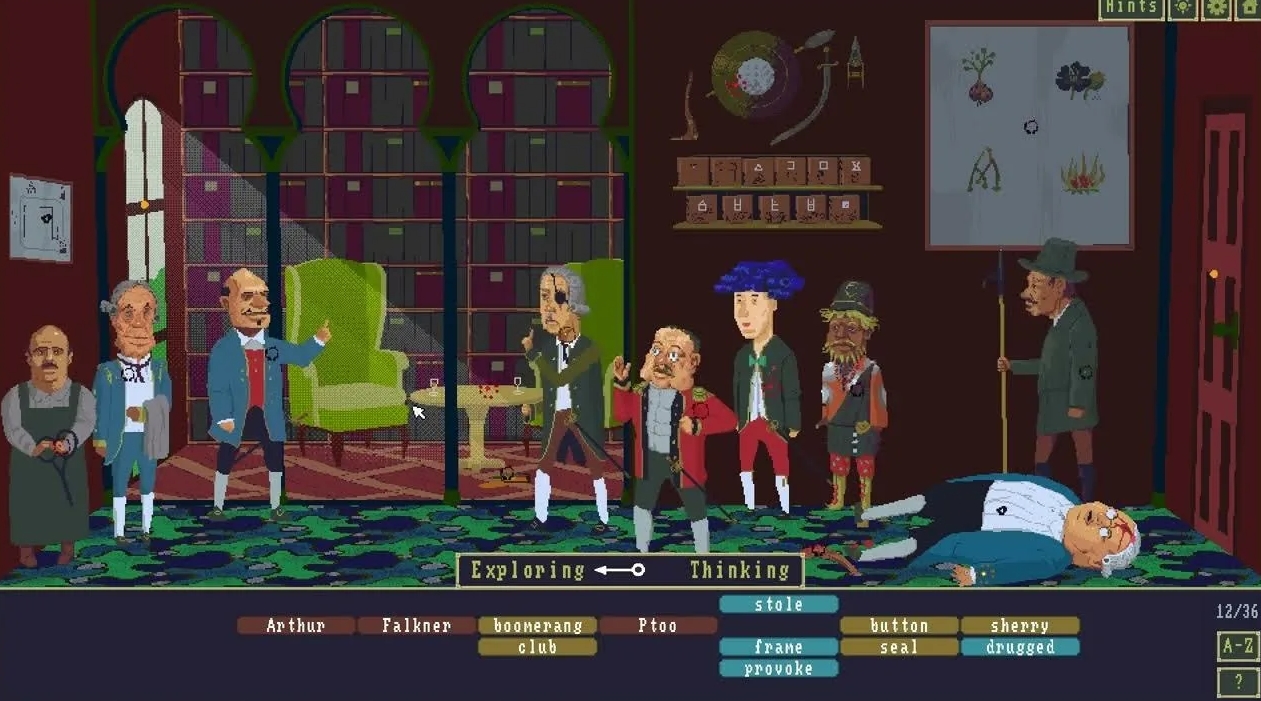
If you try to decompose the visual impression into its components, it is based on several strong solutions at once:
-
a rich color palette that highlights the grotesqueness and absurdity of what is happening;
-
deliberately strange character design that evokes mixed but memorable emotions;
-
theatrical staging of scenes that turns every screen into a small performance;
-
the contrast between tragedy and visual absurdity enhances the overall impression.
Plot and narrative structure of The Case of the Golden Idol
Talking about the plot is a dangerous task. It’s too easy to cross the line here and ruin the fun of the investigation. Therefore, we will limit ourselves to the most necessary. In the prologue, we meet the traveler Albert Cloudsley, who, not in the most honest way, takes possession of a mysterious Golden Idol and brings it to his homeland. This is the starting point of the story — and perhaps the last point, which can be called relatively simple.
Then the game does what it does best: it confuses. Albert dies, and the cursed Idol begins to wander from hand to hand, surfacing in the most unexpected places. Today it is found at the quarreling adventurers, tomorrow — on the table of a suddenly deceased scientist. At first, the plot seems like a collection of disparate tragedies, but as you progress, connections between characters, motives, and events become apparent. The story is gradually tightening into a tight knot.
The climax works flawlessly. At some point, a clear, almost painful understanding comes: all deaths are connected, all decisions have consequences, and the whole narrative has been a single whole from the very beginning. This is a rare, quiet catharsis — not an emotional explosion, but an intellectual satisfaction from realizing the path taken and the skill of the authors.
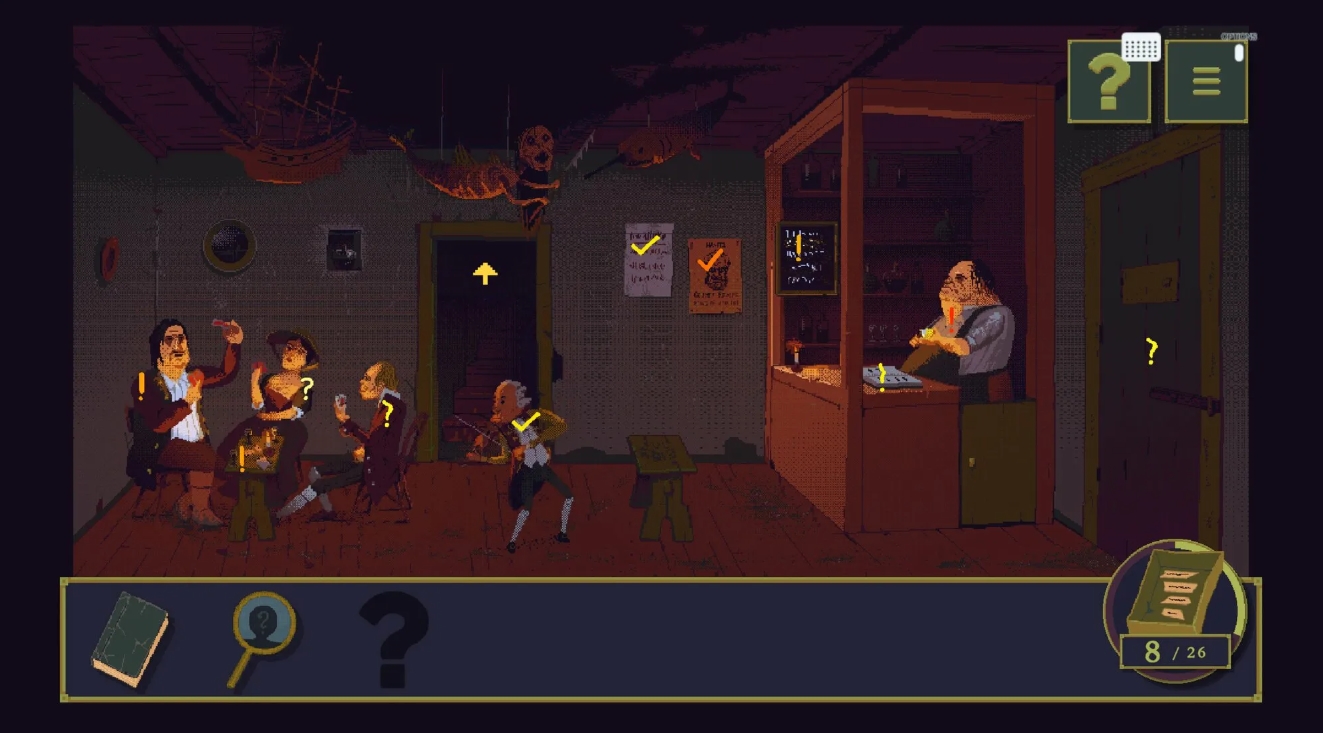
And yes, the same gnome on the pot. Technically, it has nothing to do with it. It’s just a painting, a visual recurring image that, like the Idol itself, will pop up throughout the game. But it is precisely such details that make the narrative come alive. For me, this gnome has become a kind of symbol of Golden Idol: strange, ridiculous and for some reason unforgettable.
As a result, The Case of the Golden Idol remains in memory as a rare example of a detective story where visual style and plot work in perfect union. It’s a game that isn’t afraid to be weird, rewards attentiveness, and leaves behind a sense of a complete, whole story.
The Case of the Golden Idol System Requirements
The Case of the Golden Idol
How to play The Case of the Golden Idol for free on Steam via VpeSports
There are games that don’t shout about themselves with loud effects, but quietly tighten up — so that you suddenly catch yourself thinking that you’ve been staring at a small detail on the screen for half an hour and making guesses. This is exactly the feeling that The Case of the Golden Idol captures. There is no usual dynamics and action here, but there is a rare feeling of intellectual curiosity, when you seem to be peeping into other people’s secrets and decide for yourself who to believe and who is lying. Dark scenes, strange characters and a cold atmosphere gradually add up to a complete story, which is pleasant to solve without haste, in its own rhythm. And what is especially pleasing is that you can try this unusual experience for free.
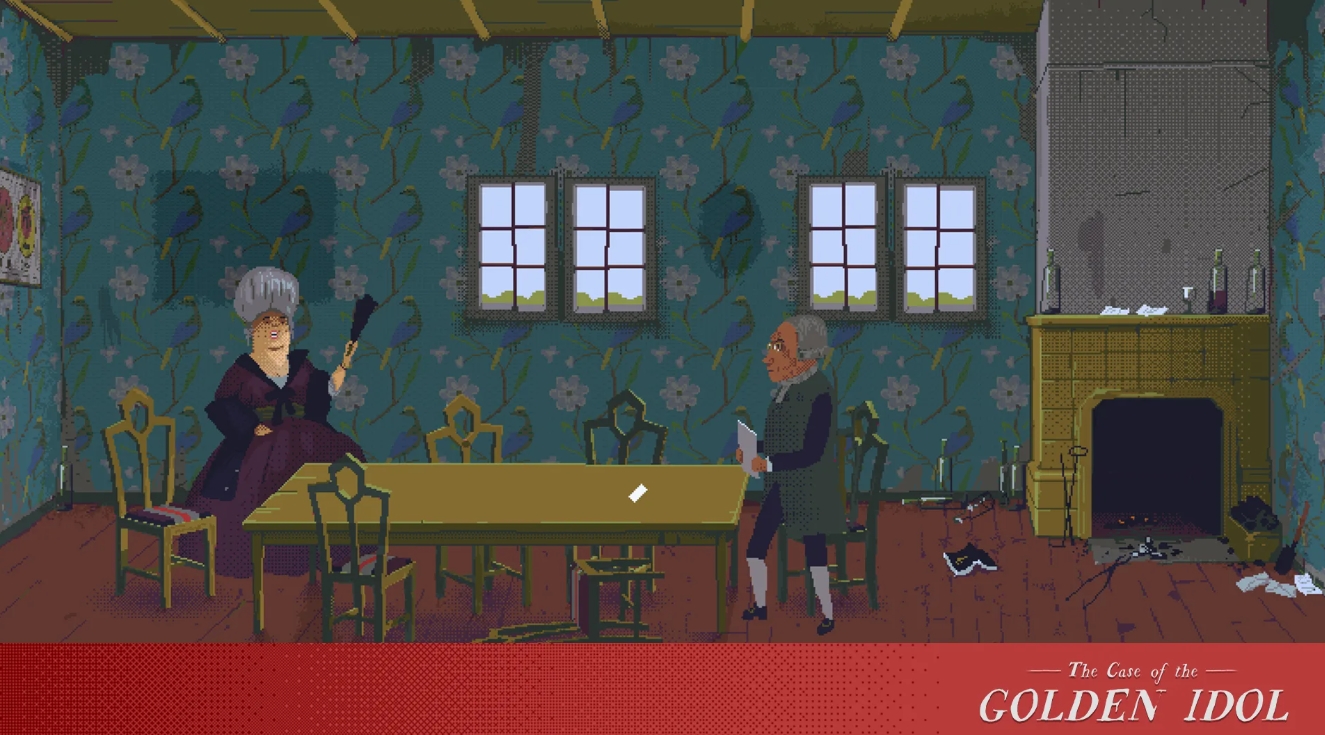
We are well aware that the desire to play is often broken down by complex instructions and unnecessary steps. Therefore, everything is arranged as humanly as possible. You register on the website, log in to your account, return to the beginning of the article and click GET AN ACCOUNT. Without too much noise and confusion, just a few simple actions, and you’re already inside the game, ready to figure out another mysterious scene.
If you want to be on the same wavelength with other players and not miss anything important, we recommend subscribing to our Telegram channel. There we share fresh accounts, news and updates, and sometimes just discuss strange and unexpected moments from the game. Questions will not go unanswered either: a detailed guide for free access and a live support chat are always nearby, so you will definitely feel that you are not playing alone.