

There’s nothing to hide anymore — you already know everything. Half-Life: Alyx wasn’t just a success, it brought Valve back into the big game in a big way. You’ve probably already seen the streams, read the rave reviews on Steam, or scrolled through the reviews of those who finished the game in the first 24 hours. Yes, this is exactly the case when expectations weren’t just met — they were exceeded.
So there’s no point in repeating banal phrases like “this is a great VR shooter.” Instead, I suggest taking a deeper look and understanding what exactly made Alyx so special. Why it works, what it’s praised for, and is there even one weak link in this picture. I counted seven such “whys”: six are positive, one is food for thought.
Table of Contents
Half-Life: Alyx Free Steam Account
Half-Life: Alyx is not just another game in the Half-Life universe. It is essentially a rethinking of the entire VR shooter genre. While most VR projects look like tech demos or unfinished prototypes, Alyx sets a new bar. And it does so confidently and without any concessions to the format. This is a full-fledged AAA product, in which every element – from graphics to gameplay – is executed with the utmost care. Visually, Alyx impresses from the first minutes. And not because “it’s good enough for VR”, but because the game is really beautiful – truly, like an adult. The picture here does not look cut or simplified for the sake of 90 frames per second or stable operation in a helmet. Everything is worked out to the smallest detail: textures, lighting, physics – everything works for immersion. In terms of graphics quality, Alyx can easily compete with other top games on regular platforms.
The plot here is not a set of random cutscenes for show. It is a full-fledged story, with a plot, development, climax. With living characters that you want to listen to. The characters are truly “written” – they have a character, a manner of speaking, their own role in the narrative. This is a game that is interesting to play not only for the sake of shooting, but also for the sake of finding out what happens next.
And now the most important thing – the controls. Alyx shows what VR is really capable of. Here you do not press a button to aim – you raise the gun to your eyes. You do not press “R” to reload – you yourself throw out the magazine, take out a new one and insert it. This is not just gameplay – it is a physical experience. Here the head, hands and even fingers become part of the interface. Everything that was previously done through buttons and HUD, you now do yourself, naturally, like in real life. The gameplay is built on this physics. You open boxes, move objects, rummage through trash in search of ammo – and all this with your hands, as if you were really in the room. The game makes you think in space, interact with the environment, and not just run forward. And because of this, it seems much more “alive” and rich.
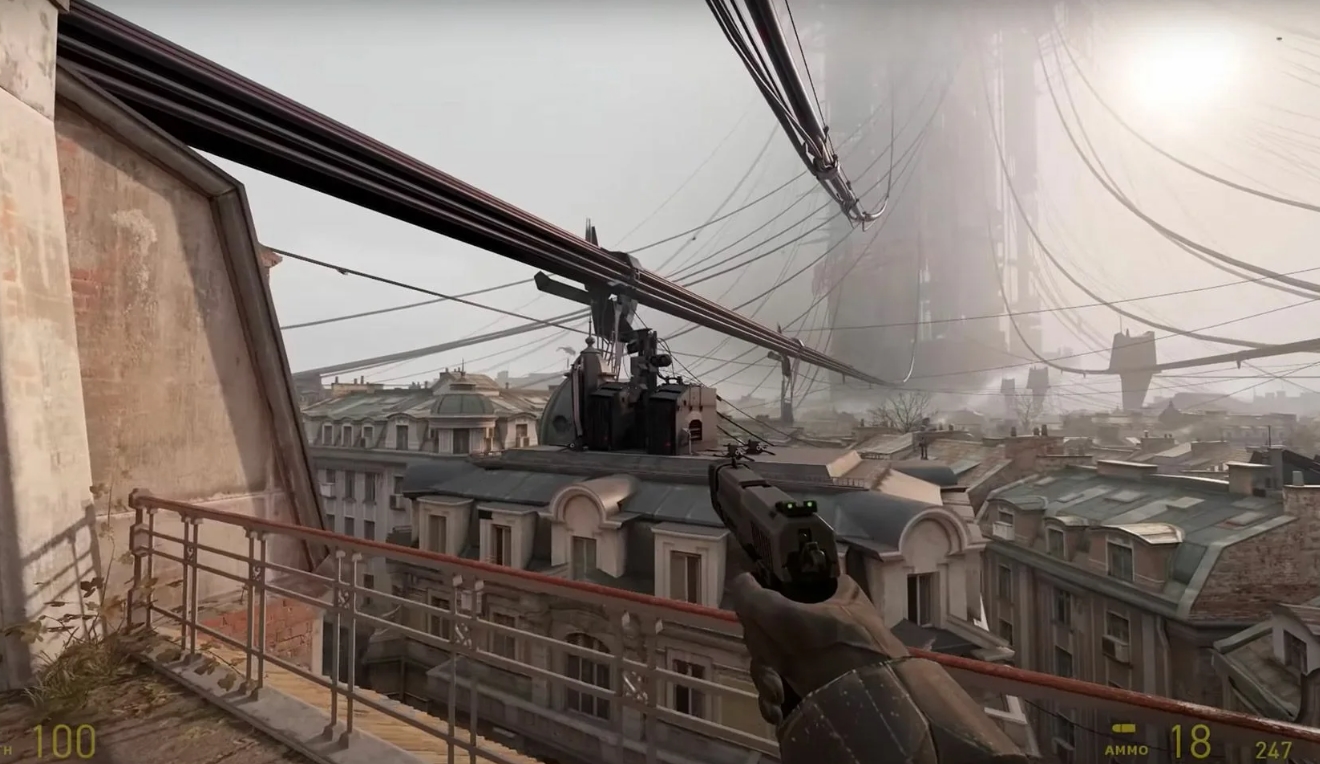
And, of course, one cannot fail to note the level of detail. In Alyx, literally everything wants to be touched, twisted, examined. An ordinary phone on the wall or a bottle in the corner look like real objects, and not just decorations. The level of elaboration of the environment is simply crazy. And when you are inside this world in VR, it seems three-dimensional and almost tangible. Such little things make the game incredibly convincing – you are really there.
What is even more striking is how everything works “simply”. You do not think about how to do something – you just do it. This apparent simplicity is the result of the finest design work. Many things that the player takes for granted actually require complex solutions. For example, in early VR games, regular stairs could make you dizzy or nauseous. But in Alyx, you calmly climb them and don’t notice the catch — everything is thought out, optimized, and carefully smoothed out. This is the real success of Alyx: it makes VR not just a technology, but a real environment for a full, exciting, and intuitive gaming experience. Valve didn’t just adapt the classic formula for virtual reality — they came up with a new one.
I am confident that Half-Life: Alyx will remain the benchmark for VR games for many years to come. Just as Half-Life 2 influenced the development of shooters in its time, Alyx has already begun to change the approach to designing virtual space. This is not just an outstanding VR shooter. This is an event.
This account steam free could change your entire game night.
How Gravity Gloves Work in Half-Life: Alyx — Core Mechanics Explained
From the very first minutes of Alyx, they become your main tool, a way to interact with the world and almost an extension of your body. In essence, this is the evolution of the legendary gravity gun from Half-Life 2, but in a much more tactile and intuitive form. Where before there was a simple button press, now it is almost a ritual: you stretch out your hand, squeeze your fingers, jerk the object and catch it in flight. This process not only looks cool, but also feels amazing – as if you really control gravity, and not just play a game. At first, this seems like a funny feature. But the further you go, the more you understand how cleverly the gameplay is built on it. Need to get the ammo lying behind the counter? Please. Is a grenade flying towards you? Grab it and throw it back. Each interaction forces you to improvise, feel the rhythm, get used to physics. And after a couple of hours, you catch objects on the fly without thinking. Almost like a freestyler with a sword – you don’t make any effort, but your hands do everything themselves.
Personally, it took me a while to get the hang of it. Maybe some of the old and pro gamers will call me a casual – so be it. But it is precisely because of this gradualness that real pleasure is born. Because at some point you realize: “I really learned.” And this is really cool.
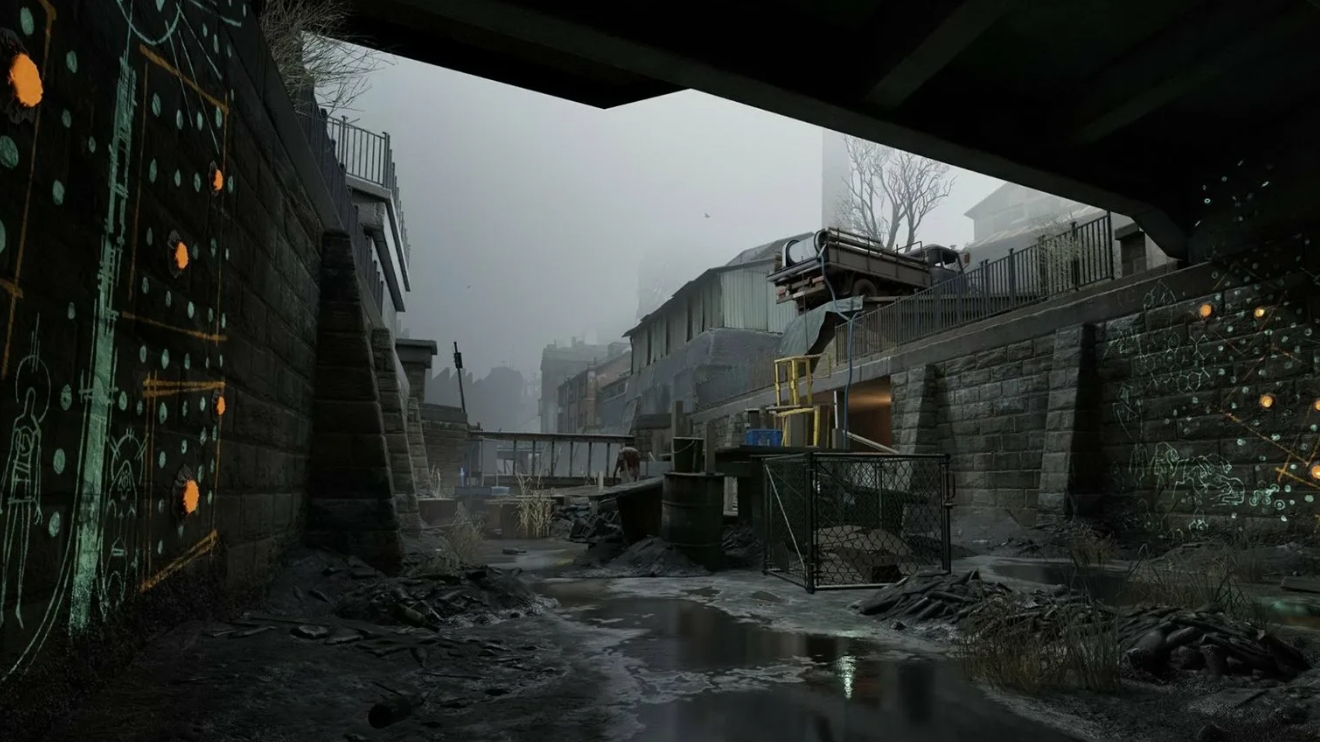
There are no annoying hints, pop-ups and “mandatory” tutorials. Instead, there are natural game situations in which you just try, make mistakes, and after a couple of attempts everything starts to work out. This gives a feeling of real progress, not imposed by numbers. Yes, there is weapon upgrades in Alyx, but it feels like an addition. The main thing is not how much your gun is improved, but how much more skilled you yourself have become. In a world where games increasingly force you to grind for +2 damage, Alyx offers you to grow through your own experience. And this is what makes it stand out from the rest.
At first, they are elementary, literally just to warm up. But then… new layers appear, additional rules, surprises. They are still mini-games – they do not overload your brain, do not require tables with formulas. But at the same time, you feel that you are not standing still. They are evolving. You are evolving. I would compare it to The Witness: it started with banal swipes and ended with puzzles that will make your head spin. Alyx does not reach such a level of complexity and does not put insurmountable barriers before you, but it does not allow you to get bored either. The level of challenge increases smoothly, and this makes the process exciting.
Why Half-Life: Alyx Is One of the Scariest VR Games
The Half-Life series has always been good at scaring people. Some people remember Ravenholm with its gloomy streets, howling zombies and tenacious claws of headcrabs. But what Alyx does is take anxiety and involvement to a whole new level. Here, horror no longer stays behind the glass of the monitor. It literally comes into the room you are in. All thanks to VR. A flat screen can’t convey the main thing – the feeling of presence. In Alyx, the world becomes tangible. Everything looks as if you are really standing in the middle of the destroyed City 17, you feel the dust in the air, hear the echo of your footsteps, and there may be something… alive nearby.
Earlier, when killing zombies in Half-Life 2, you most likely perceived them as conventional opponents – interfering, but not scary. In VR, that changes: zombies are now huge, rotting carcasses that loom over you, each one filled with suffering and menace. When a headcrab jumps on you, you don’t just see it — you recoil, instinctively, because its jaws are literally an arm’s length away. You see every tooth, every drop of mucus, and this isn’t a movie. This is almost reality. Death is not an abstract concept here. It’s a pulse in your temples, it’s your shaking hands when your ammo runs out, and there are two combines around the corner. Gordon Freeman once needed a shotgun to deal with an army of opponents. But Alyx is not a superhero. He’s a man. And you feel the fragility of this body.
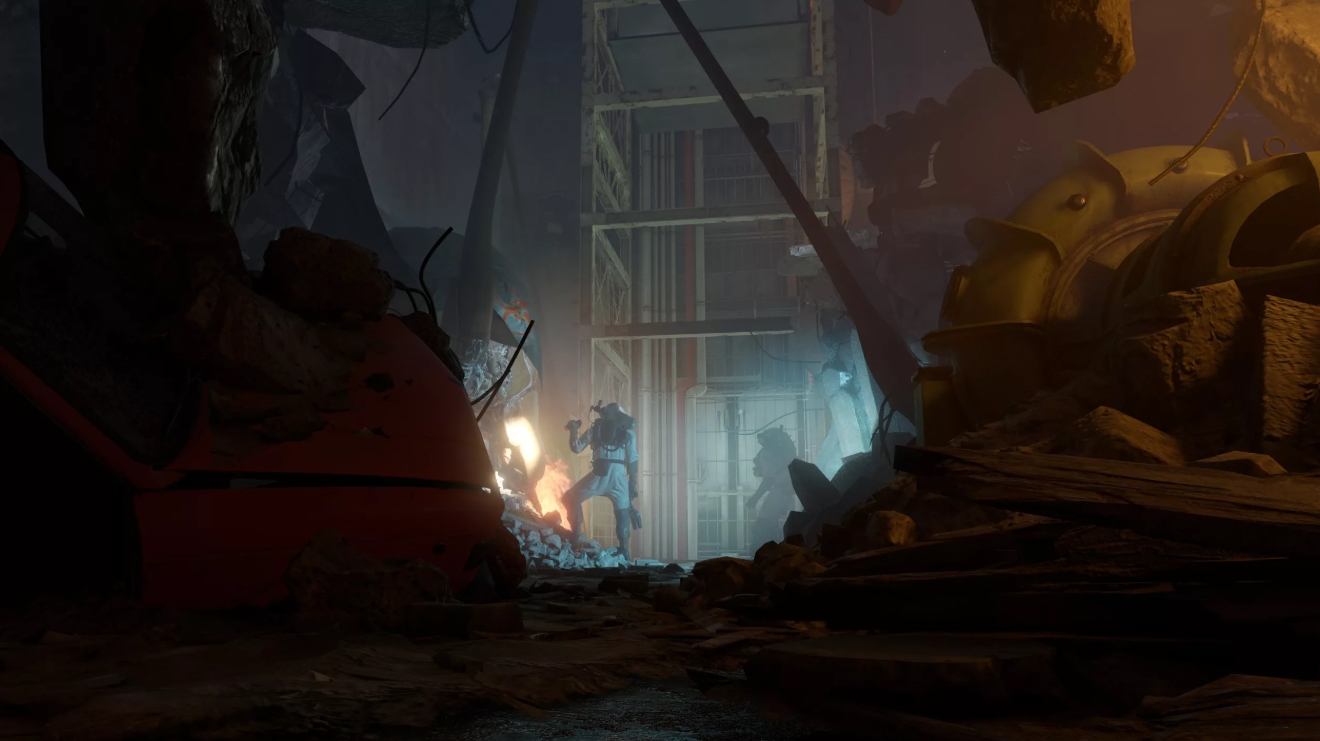
Every encounter with the Combine turns into a tense duel. If you give in to reflexes and stick your head out first, you risk getting a bullet. If you sit too long, a grenade will fly into your shelter or a Manhack will fly in. Combines are tenacious, accurate, and aggressive. Defeating two is already an achievement. But they are not the only threat. The most powerful thing, perhaps, is not even in the battles, but in how the game manipulates your body and instincts. To hide, you really need to bend down. If you want to look out, bend over yourself. You need to aim not with the mouse, but with a real movement of your hands, as if you were holding a weapon. All this creates the effect of complete fusion with the heroine. This is no longer character control – you are Alyx.
Thanks to VR, every action in the game feels natural:
-
to take cover from fire, you physically bend down;
-
to check the viewing angle, you turn your head, as in reality;
-
to reload a weapon, you move your hands as if you were holding a gun;
-
to pick up an object, you reach for it intuitively;
-
to aim, you use your vision and coordination, not your mouse aim.
This physicality makes Alyx not just a game, but an immersion into someone else’s life – with its fears, risks and struggle for survival.
Now let’s add horror. Narrow rooms, ominous rustlings, dim lights, the sounds of footsteps that shouldn’t be there. Zombies trudging heavily through dark corridors. Alien flora, grown into the walls and ceiling, like an infection. Broken lamps, blood on the floor, the grinding of metal… Alyx does not turn into a classic survival horror, but the constant tension does not let up for a minute. Even in silence, you feel that something is wrong. As if you are being watched.
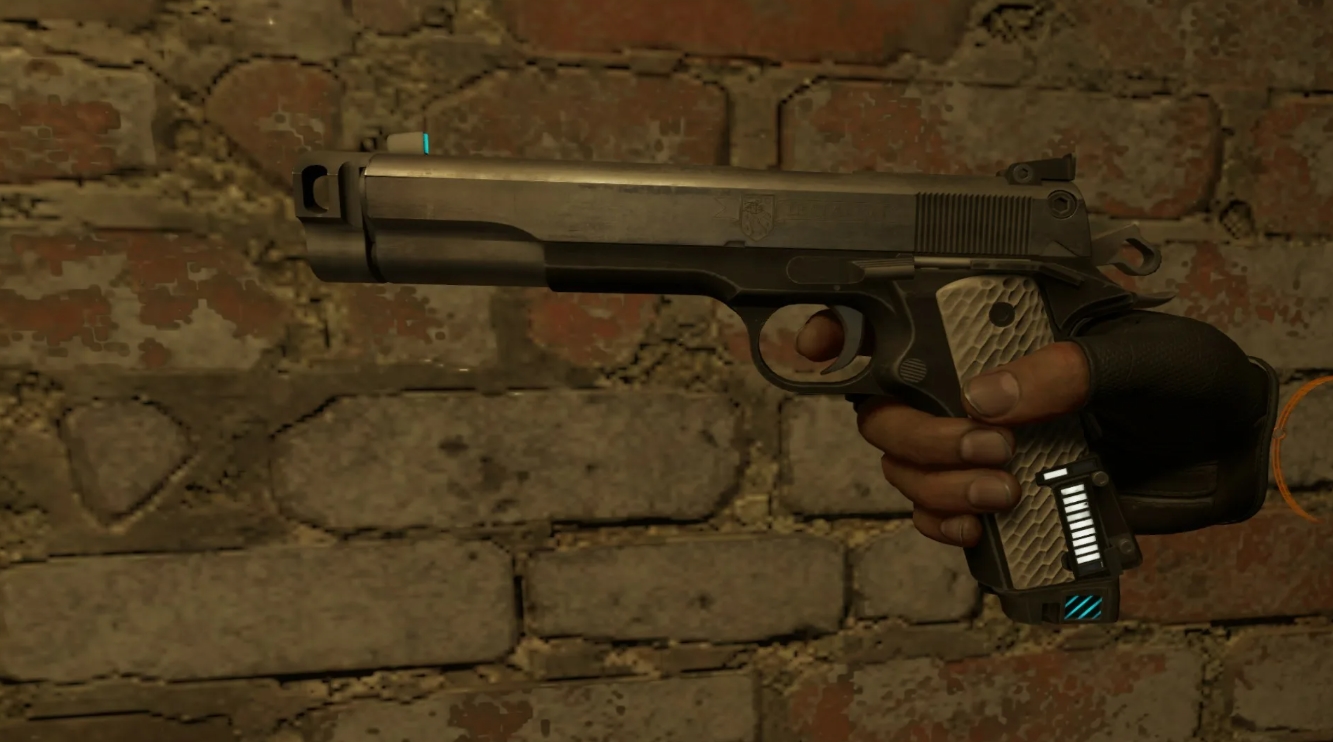
The density of this atmosphere in places reminds one of the first Resident Evil, where everything was slow, scary and with a minimum of resources. And in some episodes, you almost literally find yourself in a miniature version of Dead Space or Alien: Isolation, only now it is not through the monitor, but literally around you. Every turn of the head is a risk. Every movement is a fight against panic. In order not to drive the player crazy, Valve added Russell, a technician who talks to you on the radio. His humor is a breath of air, a necessary release between frightening scenes. Without him, Alyx could well seem too heavy, too tense. He is not just a character – he is your connection to normality. It is worth admitting: Alyx is not a horror in its purest form. But the feelings of fear, anxiety, helplessness here are much stronger than in many “official” horror games of recent years. The game scares not with screamers, but with the atmosphere, details, silence and the realization that you are not a hero, but a person. And you are truly scared.
Half-Life: Alyx Gameplay
From the very first seconds of the game, you feel like you’ve entered a familiar universe. But it’s not just the scenery and characters — everything here is imbued with that unmistakable spirit of Half-Life. It’s like meeting an old friend you haven’t seen in a long time — you recognize the intonations, facial expressions, and habits, even if they’ve changed a lot. And although this isn’t a familiar “flat” shooter, but a VR experience, Valve’s recognizable approach is in every little detail. The pace, the atmosphere, the storytelling — everything is collected into a single, coherent canvas.
Valve transferred the key principles of game design from the previous parts to virtual reality surprisingly neatly. There are no annoying markers that tell you where to go and what to do. There are no pop-up tutorials that break the immersion. The game simply creates a situation — and trusts you. You notice details, follow the world around you, and come to your own conclusions. Everything is built on organic interaction with space, and this makes every step truly conscious.
Remember Ravenholm from Half-Life 2. Remember that scene where you see a circular saw, a zombie corpse nearby, and all this is lying not far from a gravity gun? Nothing is explained to you, no arrow is pointed. You just look at the environment, compare the details and guess: aha, if you throw a saw with a gravity gun, it will work. And you try – and it works. This is exactly the approach that remained in Alyx. You are not led by the hand – you are made to feel smart. Every decision feels yours, personal. It is not following someone else’s idea – it is as if you are developing tactics yourself, adapting, improvising. And thanks to this, the feeling of triumph after a successful action is many times stronger.
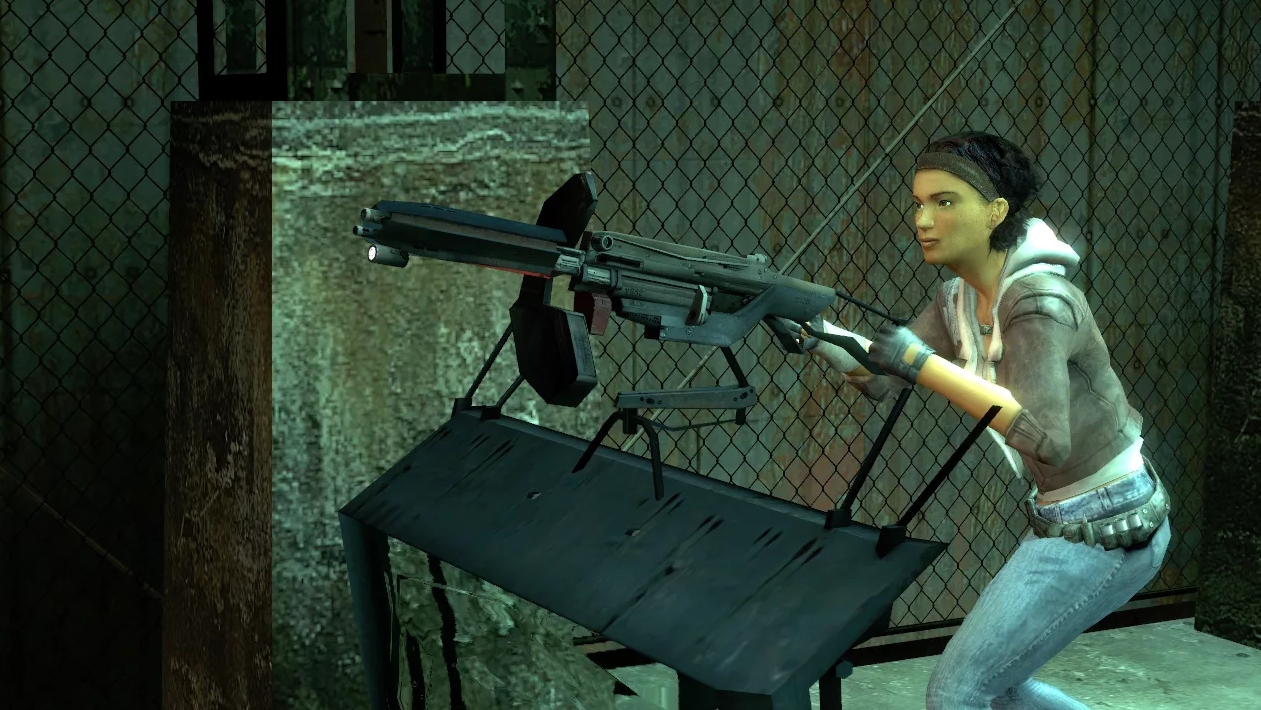
Valve didn’t just make a new game — they created a bridge between generations. For example, you gradually improve the gun, and at some point you notice that it becomes very similar to the very same “Alyx’s gun” from Half-Life 2. And then the heroine says the phrase: “I want to give it to Gordon.” A small line — but it contains a story that goes behind the scenes of the development of Half-Life 2. In the original, there was an idea that Freeman would receive this weapon from Alyx, but it was not possible to implement it then. And now — years later — the game quietly, almost intimately, sends us back to this idea. It’s a gentle nod to the fans. One that makes you want to applaud and hug the developers.
Sometimes, returning to old games, you catch yourself thinking: “But in my memory, everything looked somehow more beautiful.” So, Half-Life: Alyx is the version of Half-Life that you remember. It’s not just more technologically advanced and modern — it looks exactly as you’ve imagined it all along. It’s the magic of nostalgia, enhanced by attention to detail. One day, I noticed a simple wooden box — and I felt real joy. Because it reminded me of those very boxes that I smashed with a crowbar with delight more than ten years ago. It would seem like a trifle. But it’s moments like these that create a connection between games and players.
Sometimes, Alyx includes soundtracks from previous parts. Familiar motifs sound at unexpected moments — and this is not just a trick to bring on a tear of nostalgia. This is a continuation of tradition. Half-Life 2 already featured melodies from the first part, and now — years later — this continuity is maintained again. A small thing, but how it warms the soul.
Why Giving Alyx a Voice Changed Half-Life Forever
Valve has finally done something it hasn’t dared to do for years — it’s allowed the protagonist to speak. Before that, the company had a strict philosophy: if the protagonist has a voice, it means they have their own personality, which means there’s less room for the player to project themselves onto the character. Gordon Freeman’s silence wasn’t just a stylistic decision — it was a principle. But Half-Life: Alyx was an exception. And not just because the game’s format changed. Alyx had already spoken in previous installments, and making her suddenly close off would have meant betraying the very essence of her character. Valve went for an experiment — and hit the nail on the head. From the first scenes, it becomes clear: this is no longer a story in which the protagonist silently follows other people’s lines. This is a living dialogue in which Alyx is a full-fledged person. She reacts to what’s happening, doubts, is ironic, gets scared, makes decisions. Her voice is not just a sound, it’s emotions, intonations, moments when she literally drags the narrative forward. Thanks to this, the story becomes much more alive, richer and more human. The player no longer feels like a bystander – he empathizes, he is included.

Dialogues now sound natural. Characters do not just report on the mission or share exposition, they really communicate. Alyx argues, supports, jokes – and this infects others. There is genuine chemistry between her and secondary characters. What Half-Life previously lacked is now in abundance: feelings, impulses, reactions. This is a story not just about fighting invaders, but about a person who does not give up, no matter what. And this person is not an abstract avatar, but a living heroine, with a voice, with a past, with a character. This is what makes Alyx the most human episode of the series. Valve is no longer constrained by the protagonist’s muteness. The writers can finally write real scenes, with emotional peaks, with pauses, with expression. In comparison, the classic Half-Life games start to seem too restrained, almost dry. Freeman, no matter how legendary, is just a shadow. He reacts, but does not express; acts, but does not communicate. Alyx, on the contrary, lives every moment, and it is this feeling that makes the game truly new.
But it is not only the voice acting that has taken Alyx to a new level. The technical side also deserves praise. The new Source 2 engine has demonstrated an impressive level of execution. Visually, the game is really at its best, and this is especially noticeable in the following aspects:
-
realistic dynamic lighting that creates an atmosphere of presence;
-
high-quality materials and textures that work well in VR;
-
advanced facial expressions of characters that convey emotions even without words;
-
accurate physics of interactions, especially in small details;
-
organic combination of animation and “rag” physics in the movements of enemies.
Every scene is worked out to the smallest detail. The world is alive – objects react to touch, sounds create an atmosphere, visual details immerse you in what is happening with your head. The behavior of headcrabs is especially memorable. Their movements are like a mixture of pre-written animation and unpredictable physics. They don’t just jump – they crawl, bend, break away, as if they are really trying to catch up with the victim.
Half-Life: Alyx is not just a spin-off. This is a full-fledged, mature step forward for the entire series. And, perhaps, after it, it will be impossible to return to the silent Freeman. The contrast between the speechless “player symbol” and the living, real character who has a voice is too great. And this voice is the main innovation, for which it was worth waiting so many years.
Melee Combat in Half-Life: Alyx
Half-Life: Alyx is certainly an incredible achievement in the world of virtual reality. But even such ambitious projects have their rough edges. Valve initially emphasized that it was making the game not only for hardcore fans, but also for those who are trying on a VR headset for the first time. Therefore, many things here are designed as friendly as possible for beginners. However, even with this approach, some decisions raise questions – and quite justified ones.
One of the most noticeable omissions is the lack of normal melee combat. In a game where you can grab almost any object – from a bottle to a car battery – you intuitively expect that you can, for example, stun a headcrab with a brick or at least knock it down with a stick. But the melee mechanics are extremely limited here. In fact, they are practically absent: enemies react only to bullets, explosions and rare scripted interactions, such as getting into the mouth of a barnacle. Even if you really want to, killing a headcrab manually will only work after a couple of minutes of painful fiddling – and even then with dubious efficiency.
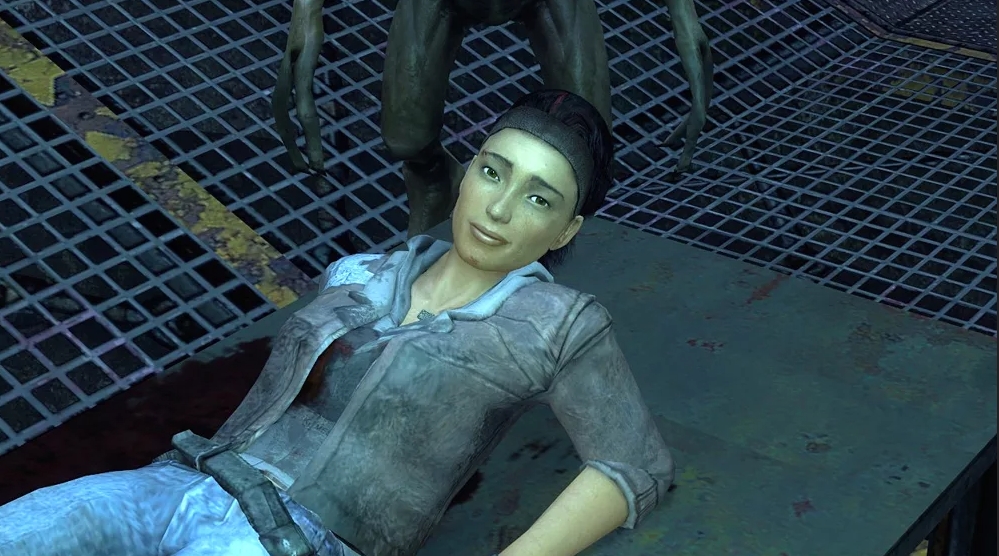
Later, Valve explained that they tried to implement a system of strikes, but they failed to achieve the necessary precision and responsiveness. Nevertheless, a comparison with BONEWORKS involuntarily arises – a project from a small indie studio that amazed players with its deep physical model. There you could literally grab a crowbar, swing it and crack the enemy’s skull with a crunch – and it felt absolutely natural. And here a reasonable question arises: how did it happen that a small team coped with the task, and a giant like Valve did not? Another point that personally seemed controversial to me is the weapon change system. In Alyx, it is implemented through simple mechanics: you hold down a button, move your hand in the right direction, and a new weapon appears in your hand. It works quickly, but it looks and feels like something old-fashioned, especially in the context of VR.
Other games built on immersive interaction often use a much more spectacular and intuitive approach. The main character has holsters on his body – behind his back, on his hip, on his chest. You just reach your hand to the right place – and you get the right weapon. This gives a sense of reality, physical participation in what is happening, and looks impressive. In Alyx, everything comes down to a virtual “wheel” – an almost exact copy of the circular menu familiar from regular gamepads. In VR, this feels not just unusual, but archaic.
I understand: behind each of these decisions, most likely, there are hundreds of hours of work, tests, iterations. I am sure that the Valve team did not just choose “simpler”, but accepted a compromise for the sake of stability and comfort for a wide audience. And yet … somewhere inside there remains a slight feeling of a missed opportunity. After all, Alyx is positioned as the flagship of a new era of VR. I want it to not just meet high standards, but to set new ones.
Why Half-Life: Alyx Is the Best VR Game to Date
Half-Life: Alyx isn’t the first game worth putting on a VR headset for, but it’s probably the first one that makes you forget you’re in a game. There are no revelations in mechanics here — everything you see and do has been seen in other VR projects in one way or another. But none of them felt so cohesive, large-scale, and polished to a shine. Valve managed to take familiar elements and combine them in such a way that it turned out to be not just a good game — but a real experience that grabs you and doesn’t let go until the very end. Once you dive into Alyx, you start looking at flat screens with a slight sadness. There, behind the monitor, everything suddenly seems less alive, less tangible. Even familiar genres — shooters, horror — no longer evoke the same delight after a few hours in VR. Alyx doesn’t just raise the bar — it changes perception. I wish more games looked and felt like this. So that beloved series are not adapted for VR “later”, but built from scratch for virtual reality – as they did here.
It is important to understand: VR is not just another platform. It is another world, with its own laws of physics, logic and sense of movement. Alyx understands this. It works not in spite of VR limitations, but because of them. There is no sense of compromise – only an exciting feeling of “I am really here”. But let’s be realistic. One, even a very cool game, is not capable of pulling out the entire virtual reality market on its own. Helmets are still expensive, require powerful hardware and enough space so as not to knock down furniture. And some models still work only through wires. All this holds back the growth of the audience and, accordingly, the desire of studios to invest in such projects.
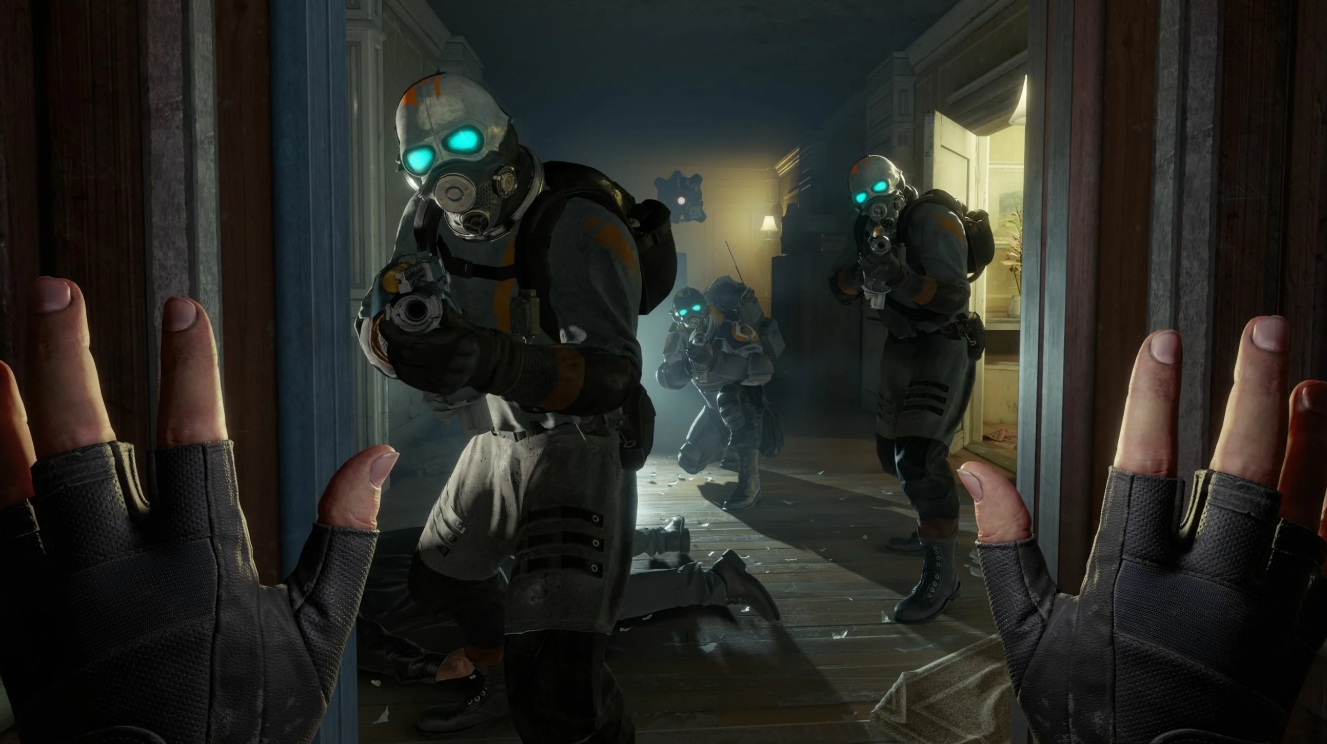
And yet, Half-Life: Alyx has already gone down in history. This is more than a continuation of the cult series after 13 years – it is a reminder of what Valve is capable of when it takes something seriously. This is proof that VR can be more than just a gimmick or a tech demo, but a real platform for big, important games. There were many good releases in 2020, but Alyx is, without exaggeration, an event. And even if VR remains a niche, this project will remain in the memory of gamers as one of those rare moments when the future of video games looked especially clear.
Pros:
-
Valve has triumphantly returned to single-player games, and this is good news.
-
The plot really develops the Half-Life universe, and does not stagnate.
-
The best that VR can offer today – technically, artistically and gameplay-wise.
Cons:
-
Some features are implemented a little simpler than competitors.
-
The game ends – and you immediately want a sequel.
Half-Life: Alyx System Requirements
Half-Life: Alyx PC Specs
How to play Half-Life: Alyx for free on Steam via VpeSports
What if the world was already lost, and all that stood between survival and extinction was you — armed with nothing but makeshift tools, shaky hope, and a stubborn refusal to give up? That’s the reality you step into in Half-Life: Alyx. This isn’t just another shooter. It’s a raw, deeply personal story set in the eerie silence of City 17, where each creaking pipe and flickering light could spell danger.
You play not as a soldier, but as Alyx Vance — scrappy, brilliant, and fiercely determined to fight back. The Combine’s grip tightens with every passing day, and it’s up to you to push back, room by room, alley by alley. This isn’t about explosions and glory — it’s about tension, clever thinking, and the quiet thrill of outsmarting an overwhelming enemy.
And here’s the unexpected twist — you don’t need to empty your wallet to experience it. We’ve made it possible to play Half-Life: Alyx through a free Steam account, already set up and ready to go. Just register on our site, log in, and follow our carefully crafted steps. No technical headaches, no confusing setup. You’ll be inside the game world before you know it — and yes, it works even if you’re new to VR.
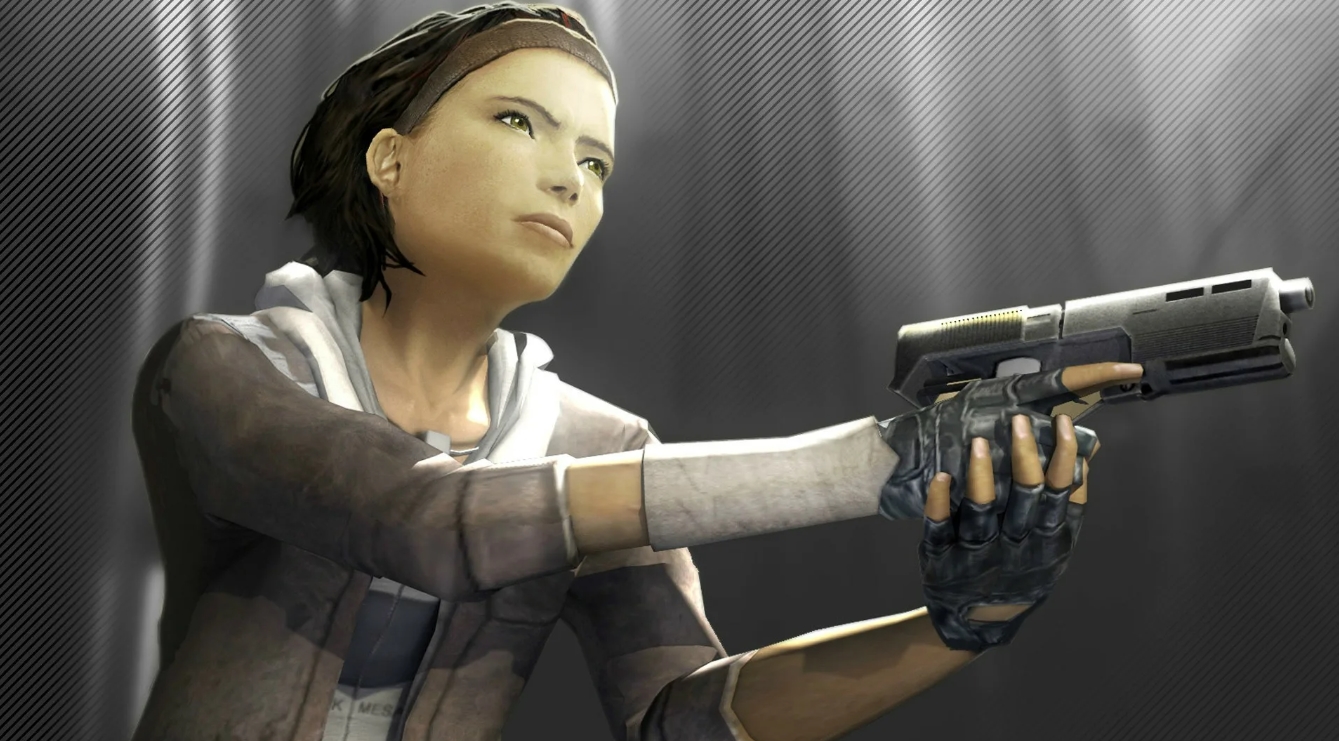
After you’ve explored the haunting beauty of abandoned labs and broken rooftops, don’t hesitate to share your thoughts. Every review matters to us. If your comment doesn’t show right away, give it a gentle rewrite and resubmit — once approved, your access details will be sent straight to your inbox.
Want to keep discovering more games like this? Our Telegram channel is where the real action happens — daily account drops, game updates, and a community of curious players just like you. Got questions? The “How to Play for Free” guide has everything laid out for beginners, and if you’re still unsure — our support chat is one message away.
You’re not just downloading a game. You’re stepping into a fight that feels real. And for a few unforgettable hours, you are Alyx Vance. Let’s see what you’re made of.