

Hakuoki is not just a series of Japanese visual novels. It is a whole world, supplemented by an anime adaptation and a manga of the same name, which is easy to immerse yourself in. At the center of the story is the legendary organization “Shinsengumi”. These samurai served as an elite squad of the capital’s police and reported directly to the shogun himself. But fate played a cruel joke on them: in the midst of a bloody civil war, they found themselves in the thick of it. The country was split in two. Some stood for the shogunate, others for the emperor, dreaming of returning him to real power. Behind both sides stood influential feudal lords, and the European powers only added fuel to the fire, pursuing their own interests. For the warriors of the “Shinsengumi”, everything turned into a tragedy – they had to raise their sword against the very people that they defended only yesterday. This alone sounds like a drama, and about the end of the war… let’s just say it’s known, but it’s better to find out for yourself if you don’t want spoilers.
It’s important to remember: Hakuoki is not a history textbook. The further you progress through the story, the more real events and fantastic elements are intertwined in the narrative. And the genre adds surprises: this is also an otome novel, where the main character must win the heart of one of the charismatic characters.
But don’t rush to dismiss it if you think that everything will come down to banal romance. Everything here is much deeper and more dramatic than it seems at first glance. And this is said by a person who usually avoids otome stories.
Table of Contents
Hakuoki: Edo Blossoms Free Steam Account
When Idea Factory decided to release an updated version of Hakuoki on PlayStation Vita, they unexpectedly split the Shinsengumi story into two separate projects. Honestly, the only explanation I can think of is money. Otherwise, why split the plot like that? Hakuoki: Kyoto Winds and Hakuoki: Edo Blossoms were released just ten months apart, and by the time the sequel was released, I had already forgotten a lot of small details and character traits of some of the characters. For me personally, this became a problem: in order to truly enjoy Edo Blossoms, I had to play through Kyoto Winds again. And not just once, but several times – because you want to see all the storylines, meet every character and read every line. After all, the main thing here is the story. So if you didn’t buy Kyoto Winds right away, but calmly waited for the full set – you are a real strategist.
But even leaving aside the loss of context, without the events of the prequel, Edo Blossoms simply does not play. The sequel literally picks up where Kyoto Winds left off. Moreover, these two games feel like completely different works, almost different genres. The first is a measured drama with light comedic notes, which only at the end unobtrusively reminds us that this is an otome. But Edo Blossoms is all romance, suffering for the sake of a loved one, kisses, demons, blood and death.
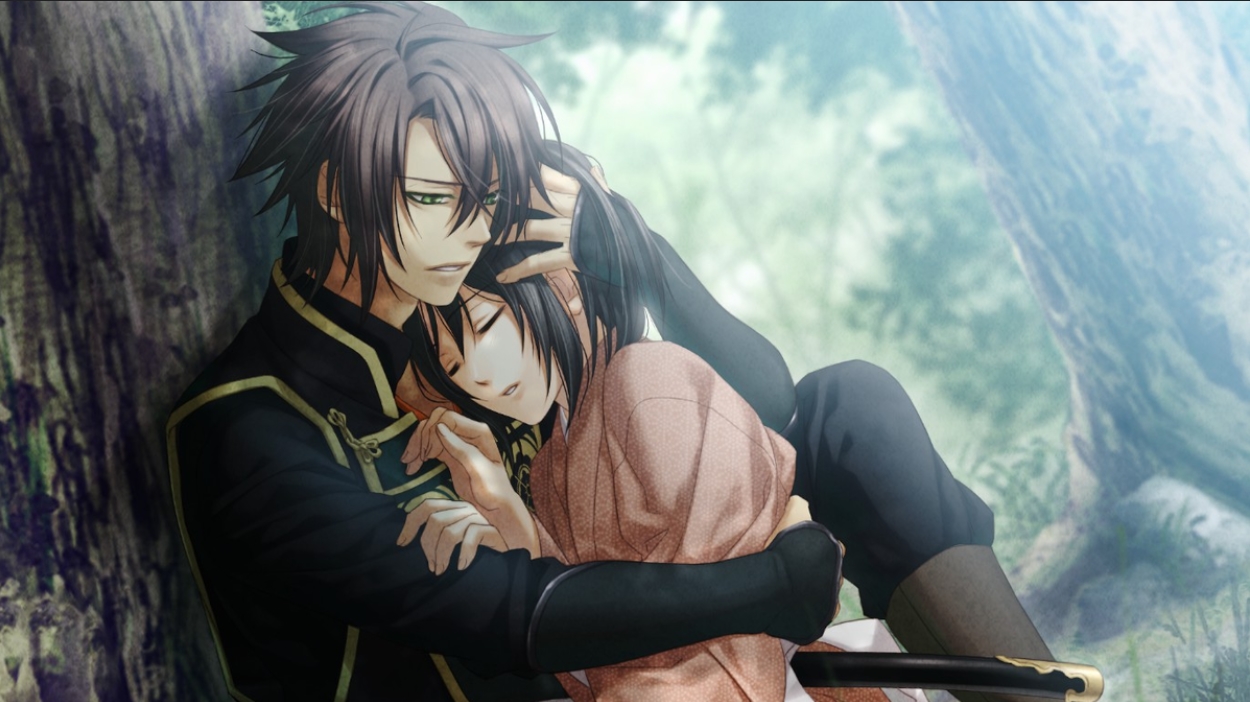
Now, there are no spoilers. The Shogunate has fallen, and the entire second part is the retreat of the Shinsengumi under the onslaught of superior forces. The characters beloved by fans leave one after another. Someone dies right before the eyes of the main character Chizuru Yukimura, someone – in a neighboring location, and some – somewhere far off-screen, leaving only a bitter feeling of irreparable loss. And it is this – the inability to say goodbye – that hits the hardest.
Choose from hundreds of titles inside your steam account free.
Comparison of Edo Blossoms and Kyoto Winds
The increased drama and self-sacrifice in the sequel is understandable — the context is conducive to it. But the sharp turn towards romance can catch you off guard. In Kyoto Winds, you could easily complete the game without getting involved in love stories, simply choosing lines and decisions that ignore the formal genre framework. But in Edo Blossoms, from the very first minutes you need to decide which of the dozen key characters is head over heels in love with the heroine and has already managed to give his life for her, to some extent. Why couldn’t they have built a coherent narrative and given us the whole story instead of dividing it into parts? Personally, in this format, Edo Blossoms does not feel like a continuation of my “personal” story lived in Kyoto Winds. At least, not every one of them.
For those who have completed Kyoto Winds, a spoiler: in the new plot, one of the Shinsengumi is madly in love with Chizuru, but has already become a half-demon – a fury. Who exactly – depends on the scenario you choose. From this point on, the entire narrative is built around your couple. If the first game had a single powerful plot with common scenes and only slight branches, now the lines of different heroes intersect only occasionally, and even then sometimes unexpectedly. Secondary events remain the same for everyone. Each playthrough of Edo Blossoms is on average about a quarter shorter than Kyoto Winds, but the motivation to go through all the routes is now much greater – at least to find out what awaits each hero next.
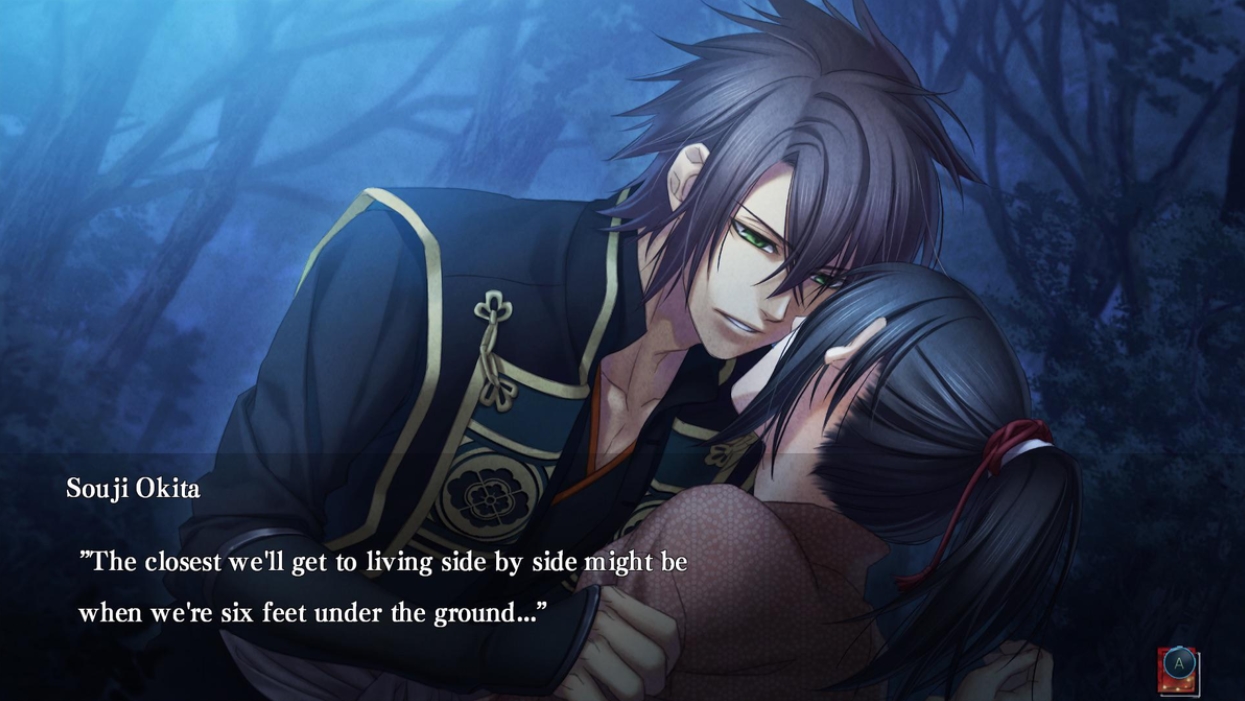
The mechanics of interaction with the plot have also changed. There are fewer choices, but they are collected in a clear scheme. The problem is that the consequences of these decisions are sometimes vague. It is not always clear which actions will really affect the development of events. In one of my playthroughs, Chizuru died very early. I loaded the choice moment, trying to prevent it, but the result was the same: the script stubbornly sent her to certain death, without any logic or even a hint of a reason. I know that this line can end well, but the fatal fork was somewhere at the very beginning – an hour or two before the tragedy. And for such cruel liberties, the authors from Idea Factory, frankly, want to “scold” a little. There are other oddities. Depending on the chosen couple, new characters may appear in the story, which you would not meet at all with another choice – although logically they should be there in any case. After all, Chizuru is not a shogun or the head of the Shinsengumi, and her personal decisions are unlikely to be able to radically change the course of the war or politics. Because of this, the excessive differences between the plot lines sometimes seem far-fetched and inexplicable.
Why Hakuoki: Edo Blossoms is Worth Playing
Overall, the scenario of Hakuoki: Edo Blossoms leaves a very strong impression. Yes, it may seem to someone that the game has gone even deeper into the mystical-fantasy side, but this line is woven into the plot so organically that in some moments it only enhances its emotional impact. The main advantage is the feelings that the player experiences throughout the game. Here, heroes die. On the battlefield, from illness, on the chopping block – characters to whom you have already become attached leave. And with each new playthrough, the weight of loss is felt more and more strongly, each death is like a personal wound. Sometimes, depending on the chosen path, Chizuru has a chance to escape with her lover on a tour of Europe, but even her personal happiness is not able to extinguish the bitterness of the Shinsengumi tragedy and the horrors of the civil war.
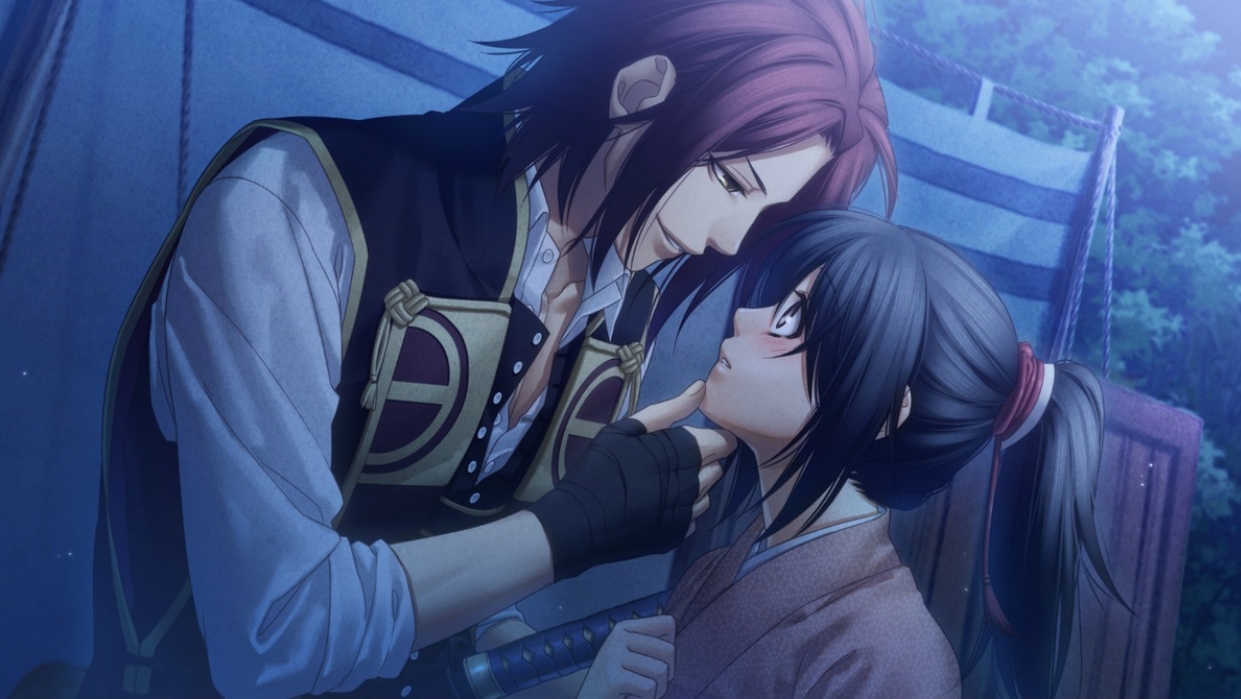
This game makes you experience a whole range of emotions:
-
pain and bitterness from the loss of characters dear to your heart;
-
trembling from rare moments of warmth and mutual support;
-
pride in the heroes’ resilience in the face of inevitable fate.
Surprisingly, the story, full of demons and mysticism, in Edo Blossoms turned out to be much more poignant, touching and convincing than the real memoirs of a participant in the Russian Civil War of 1917-1922, which I am reading in parallel. Perhaps the secret is that the scriptwriters do not impose an assessment of the parties to the conflict – they do not demonize or idealize anyone. Instead, the focus is shifted to the personal connections and feelings of the heroes. It does not matter who was right – the loss of a loved one is always painful, regardless of the political context.
In terms of presentation, Hakuoki: Edo Blossoms is mainly a series of static backgrounds against which the text unfolds. There are not many pictures, given the length of the game, but their quality is impressive: both the characters and the scenery are executed with expressive detail. The controls are designed so that even a person with large palms and long fingers can comfortably play with one hand — convenient, for example, in transport. This is logical, because the gameplay here is more reminiscent of reading an interactive novel than a regular video game. For a PlayStation Vita exclusive, this approach is a real plus: the platform’s features always affect perception, and in this case they only play into the hands of the project.
Hakuoki: Edo Blossoms System Requirements
System Specs – Hakuoki: Edo Blossoms
How to play Hakuoki: Edo Blossoms for free on Steam via VpeSports
In Hakuoki: Edo Blossoms, every moment feels alive — the faint rustle of silk, the glint of a blade under the moonlight, the scent of spring blossoms drifting through the air. You are Chizuru Yukimura, a young woman thrust into the heart of the Shinsengumi’s turbulent world. These men are more than warriors — they are friends, rivals, and sometimes the keepers of your heart, each carrying burdens you can only begin to understand. With every choice, you shape not only your own fate but theirs as well, and the consequences can be as bittersweet as the falling petals that mark the passing of time.
We’ve made entering this story effortless. No technical struggles, no waiting — simply create an account on our site, log in, and Hakuoki: Edo Blossoms will be waiting, complete with clear instructions. Even if you’re using a free steam account, the world of romance, honor, and quiet tragedy will open to you in just a few clicks. All you need is the will to follow the story wherever it leads — to joy, heartbreak, or a love worth risking everything for.
Your journey doesn’t end when the credits roll. Share your thoughts, your favorite moments, and the choices that stayed with you. Every review is personally checked, and if it doesn’t appear right away, a small edit can bring it to life — with your account updates sent directly to your inbox afterward.
And if you want to stay connected to the pulse of Hakuoki, join our Telegram and chat channel. There, you’ll find not just news and updates, but also free account opportunities, passionate discussions, and tips from other fans who have walked these same paths. And should you need help, our “How to play for free – Complete guide” will be your map through every step, ensuring your story begins without a hitch.