

At first glance, it may seem strange: why did I suddenly decide to talk about Fallout 4 in 2025? It all started with the desire to write a text about mods that add or rework the plot – but, as often happens, along the way I got carried away with the game itself. And, before delving into the mods, I just wanted to take a fresh look at the plot of “The Four”. As a result, something like an independent review came out.
So yes, today it will be Fallout 4. Do not expect a deep analysis of the entire series – otherwise we will be stuck here for a long time. The first parts are certainly worth attention, but we will leave them aside. A little later, I may briefly touch on Fallout 3 and New Vegas, but I will not linger on them for long.
Now to the point. Fallout 4 is certainly a good game. But with nuances. It is like a dish where each ingredient individually seems tasty, but something is missing for the perfect balance. Almost every element – be it shooting, crafting, plot or world development – has its strengths, but at the same time, there is a “but” behind each of them. Either a flaw, or a simplification, or a questionable design decision. And I want to talk about all this in more detail – to break the game down and figure out what turned out to be really successful, and what let us down a little.
Table of Contents
Fallout 4 Free Steam Account
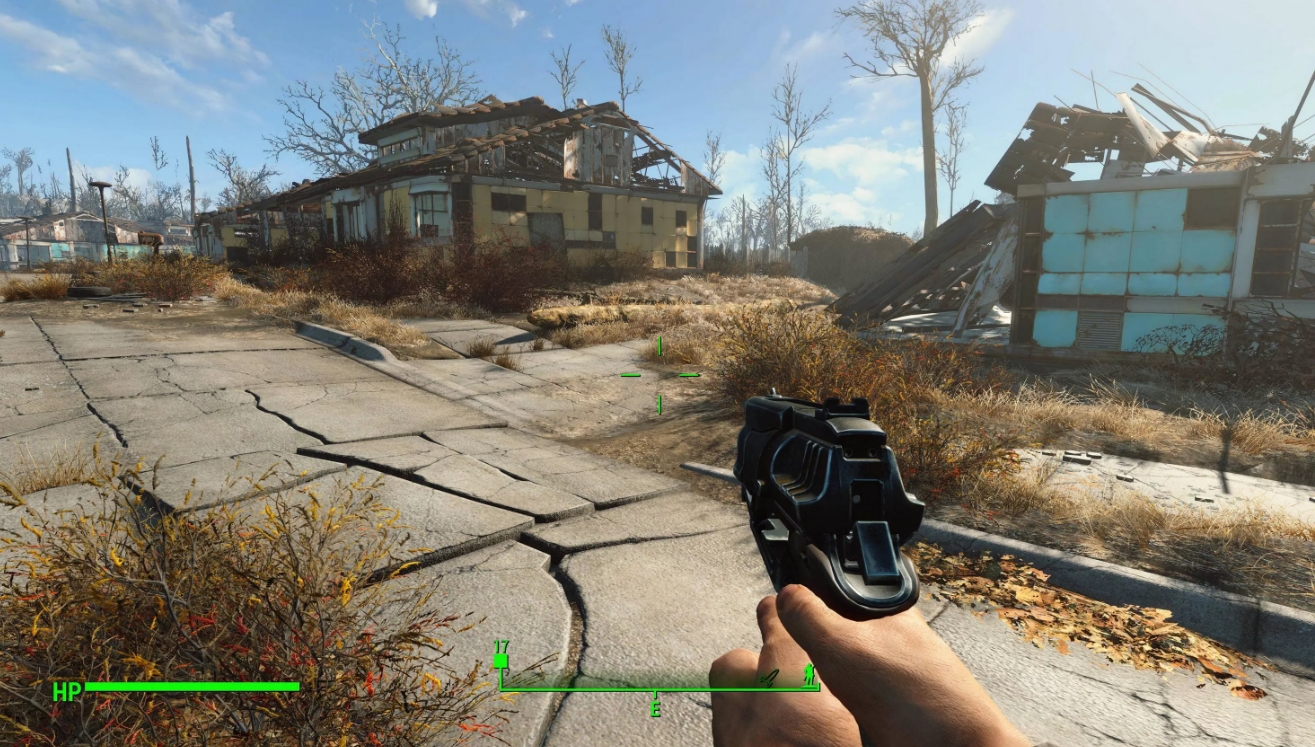
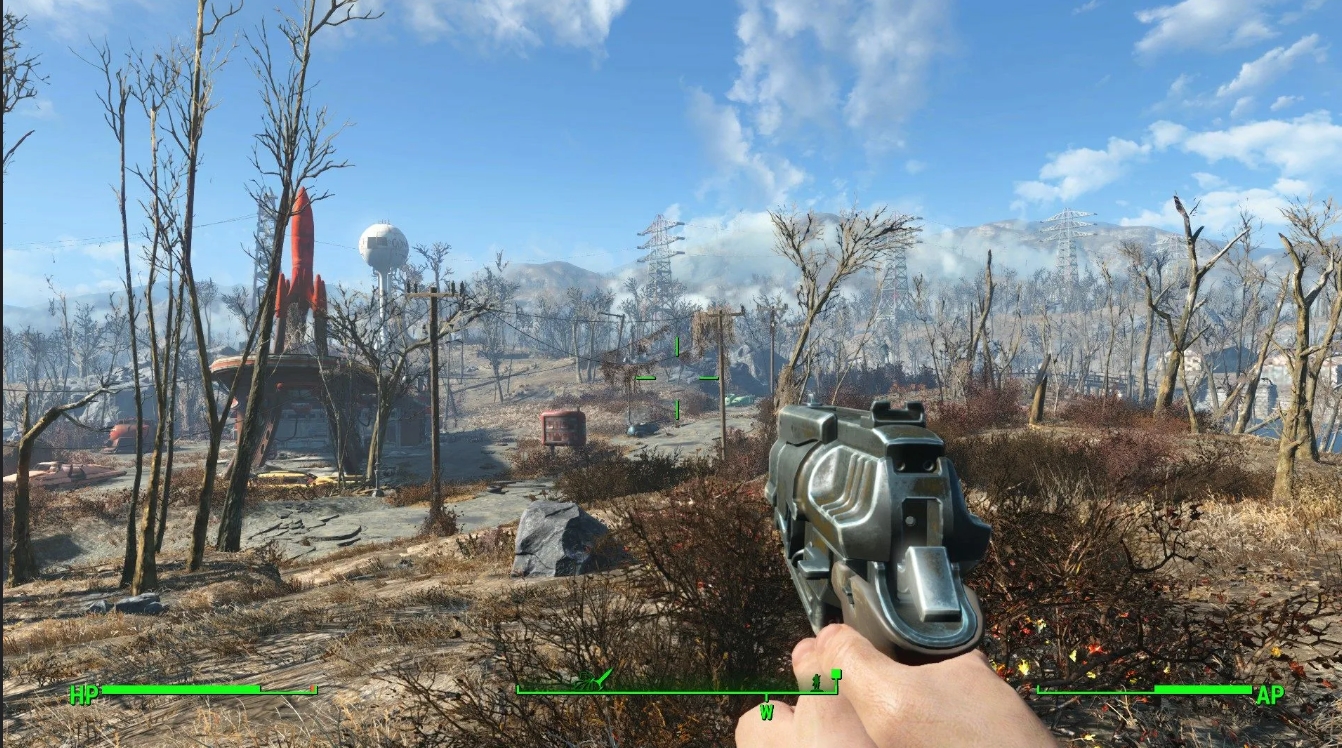
If we talk about what really turned out powerful in Fallout 4, it is, without a doubt, the shooting. Not the plot, not the leveling up, not the moral choices – it is the shooting. This is one of those rare RPGs where the shooting does not feel like a secondary element, but as a full-fledged, exciting basis of the gameplay. Especially if you, like me, prefer to play in the first person. This time, Bethesda, it seems, decided not to waste their efforts and simply turned for help to those who know how to make shooting juicy and powerful – to the id Software studio. Yes, yes, the same authors of DOOM. Someone may skeptically say: “What, you couldn’t do it yourself?” – but for me, on the contrary, this is a smart management decision. Instead of inventing something dubious, they bet on quality. As a result, the shooting turned out to be so dynamic, responsive and lively that even after hundreds of hours in the game it does not become boring.
It would seem that what could spoil such a great combat mechanic? The answer is auto-leveling. This old disease of Bethesda games makes itself felt again. The point is that enemies grow in level along with you. While you are leveling up, they also become stronger – and not just a little stronger, but downright impenetrable. At first, this does not bother much, but as soon as you approach level 40-50, a real circus begins. Enemy super mutants turn into armored sponges for damage – you have to put two or even three clips of the most powerful weapon into them. And this is despite the fact that ammunition is limited on high difficulties, and you will not be able to carry a lot of extra stuff with you. All this is especially evident in the “Survival” mode. Here, every decision has weight: how much ammo to take, what weapon to choose, whether you will drag the trophies to the base. In such conditions, playing with heavy weapons like the Fat Man or the rocket launcher is simply pointless – the weight is large, the cartridges are heavy, and the exhaust is questionable. In fact, these guns are only good for disassembling on a workbench.
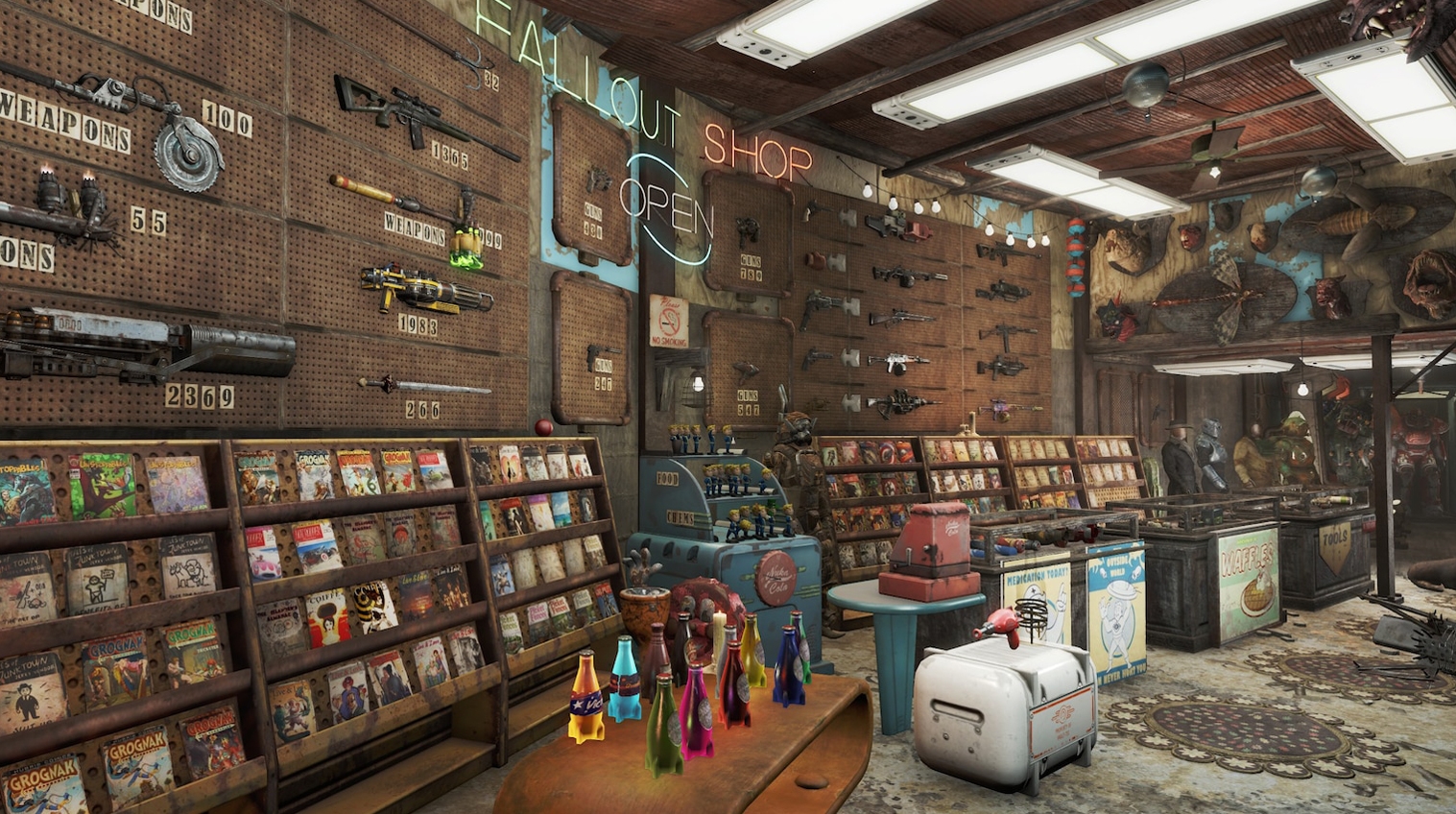
On paper, Fallout 4 offers a wide selection of weapons: lasers, shotguns, plasma rifles, pistols, grenades. But in practice, especially closer to the late game, everything comes down to a few convenient and effective guns. One of these is, of course, the AK-style assault rifle (officially it’s called something else, but you get the idea). It’s funny that you still need to find it — it’s just not in the game, it only appears in the DLC. Without it, high-level enemies turn into a quest for patience. Of course, you can find a good legendary weapon and run through the entire story with it. But even here, the game shows a strange obsession. It seems like there are plenty of builds, a ton of possibilities. If you want, play in close combat, if you want, pump up charisma or persuasion. But the further you go, the more you understand: freedom of choice here is more of an illusion. Fallout 4 likes to push you towards pre-calculated “working” options.
By the way, there is hand-to-hand combat in the game. But talking about it seriously… is strange. It exists, formally, but in terms of feel, it is more of an archaic atavism. The animations are simple, the combat is imperceptible, the gameplay is crude. The best strategy in hand-to-hand combat is to switch back to firearms. Despite the criticism, it is worth acknowledging: shooting is what keeps Fallout 4 afloat. It is thanks to it that you want to return to the game again and again. A good gun, a couple of pumped-up perks – and even auto-leveling becomes not so scary. And if you also decide to go stealth – you can forget about half the mechanics altogether. Correctly built stealth turns the hero into a machine of destruction, invisible and deadly. And yet, deep down, I want to believe that in the next game, Bethesda will learn not only to make a great shooter, but also get rid of auto-leveling, which turns even the most exciting combat into a race for survival with a leveling system.
Be a part of the free gaming movement with a free steam account!
Gameplay and game mechanics
At the very beginning of Fallout 4, it may seem that we have a spiritual successor to the classic parts of the series. There are familiar elements, a recognizable atmosphere, and, of course, the notorious distribution of S.P.E.C.I.A.L. points — everything as it should be. But about five minutes pass, and it becomes clear: we are not so much waiting for a return to the roots, but a typical Bethesda product — in the spirit of Skyrim, with its almost complete freedom of action and the ability to develop the character as you like. Is this good or bad? Here everyone decides for themselves. Freedom is, of course, a pleasant thing, especially when you choose who to be: a quiet sniper, a heavyweight with a minigun, or a charismatic leader who resolves conflicts with words. But still, in Skyrim, a similar system worked somehow more naturally: you did something — it was pumped up. Use a bow — you become an accurate archer. Open locks — you get the skill of thievery. And this had its own logic, its own immersion.
Fallout 4 offers a more old-fashioned leveling and points system. And here questions arise. For example, you play the entire battle as a shooter, use a rifle – and then for some reason you take and invest points in hand-to-hand combat. Not because you need it, but simply because you wanted to open a certain perk. This breaks the immersion. Character development no longer reflects your play style, but becomes something external, imposed. For some, this approach gives more flexibility, but personally, I prefer the path where the character grows with the player, and not just by points in a table. And now let’s talk about the legacy. Fallout 4 inherited from TES not only the general philosophy of game design, but also… an old engine. It is familiar to many from Oblivion and Skyrim, and its roots go back almost to Morrowind. The problem is not in the visual component – it is quite decent. But some bugs migrate from game to game with enviable consistency. For example, the ability to jump on the surface of water, like a hero from a movie about Chinese martial arts, is not an Easter egg, but simply a failure of the engine, left over from the time of Daggerfall.
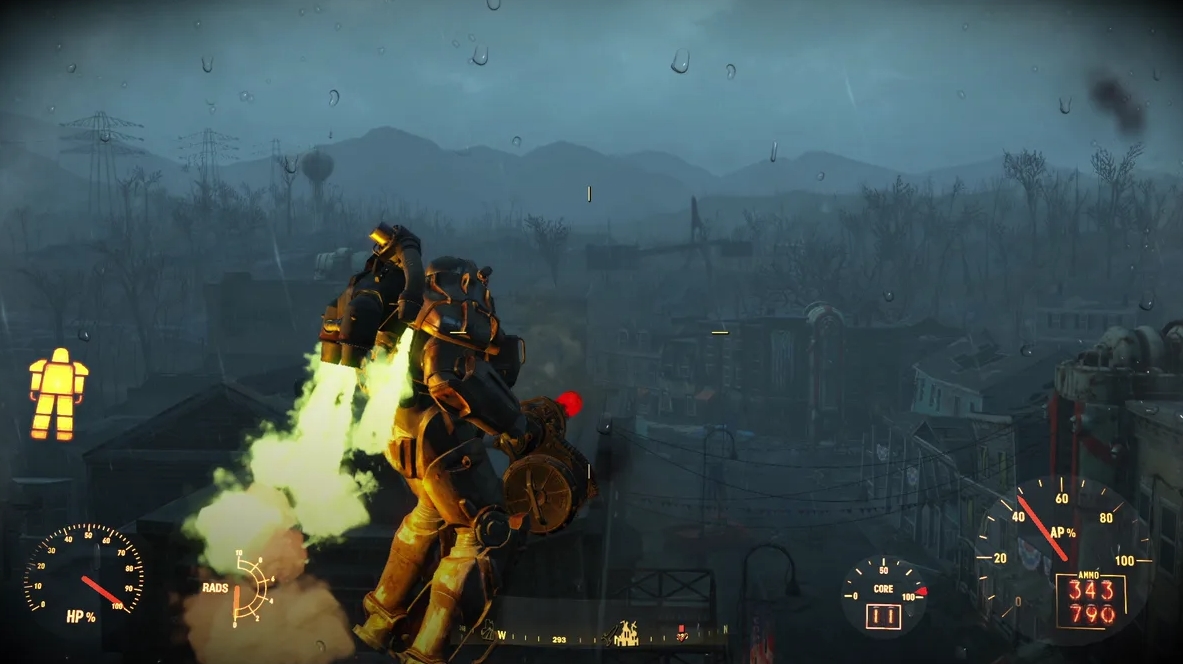
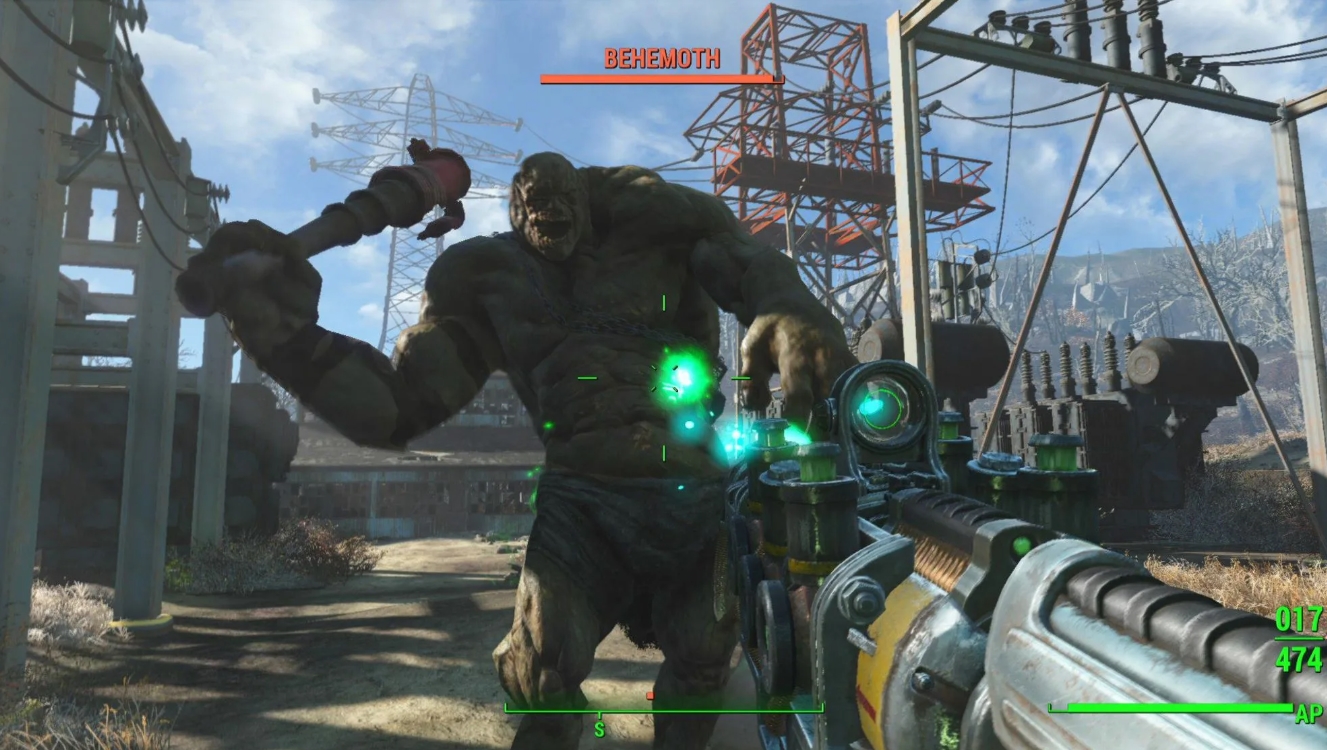
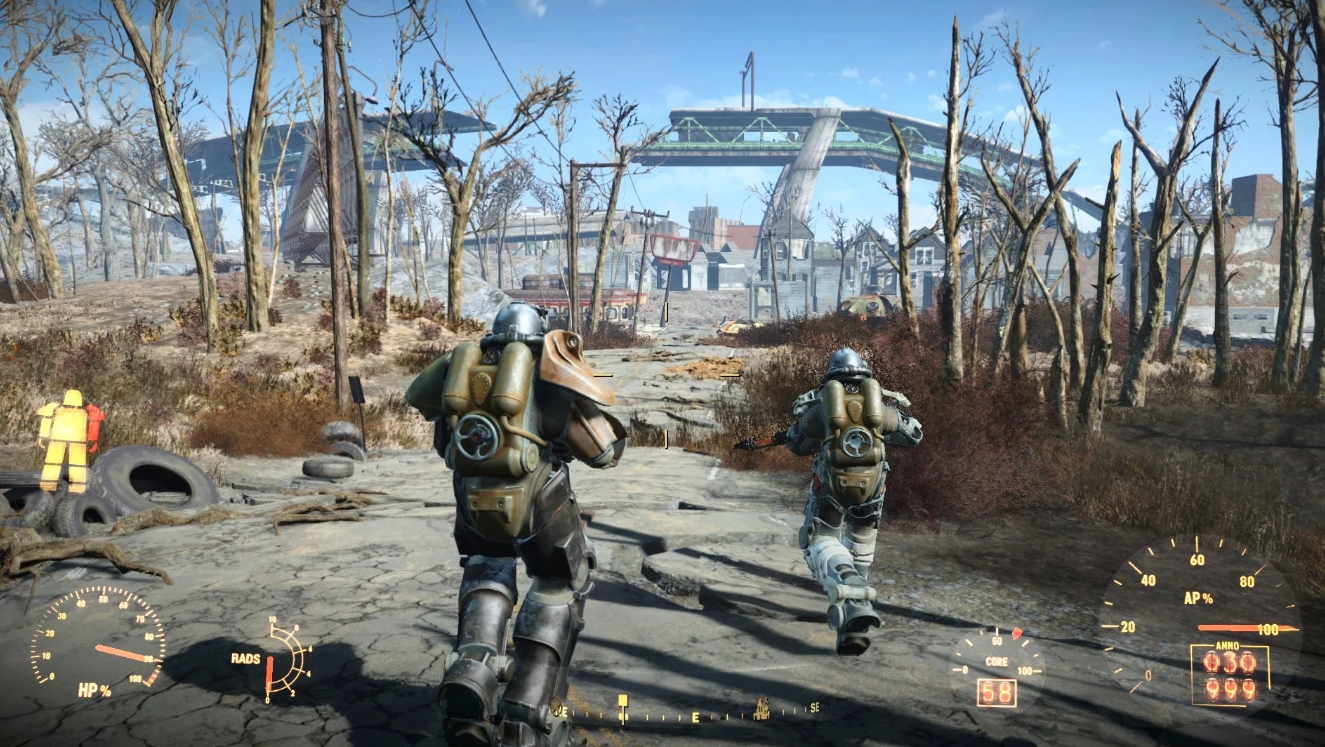
One of the most noticeable and controversial innovations of Fallout 4 is the redesigned power armor system. On paper, the idea is great: to make the armor not just a piece of clothing, but a full-fledged machine that you climb into. And it really works – the armor feels massive, weighty, powerful. Not just a leather jacket with armor plates, but a whole exoskeleton, with a nuclear power unit that needs to be serviced, modified, charged. The jetpack is generally one of the best features: it literally opens up new horizons, allowing you to overcome vertical obstacles and climb where before you had to climb long and tediously. But the feeling of a tank collapses immediately as soon as you enter battle. In fact, it turns out that this armored colossus suffers from everything. A raider with a rusty sawed-off shotgun is a threat. A mutant dog is a serious problem. A small swamp dweller – well, goodbye, leg. Even if you pumped up all possible bonuses for armor, the plates literally crumble from a light blow. And it would be okay if these were deathclaws or super mutants – no, ordinary small mobs can turn your exoskeleton into a pile of garbage in a couple of minutes.
All this looks especially sad against the background of the fact that ordinary armor does not break at all now. Neither the jacket, nor the army uniform, nor even the underarmor clothes suffer from wear. It turns out to be a paradox: you poured a lot of resources into power armor, monitor the nuclear blocks, repair it – and it is weaker than an ordinary bulletproof vest with a piece of fabric underneath. The idea itself was strong. The mechanics are interesting. But the implementation is poor. And here, as always, the community comes to the rescue. A single mod that reduces the armor wear rate already makes the gameplay more enjoyable and logical. As sad as it may sound, Bethesda once again releases a game with good ideas that are revealed only after the fans intervene. And since we’re talking about the difficulties of surviving in power armor, it’s probably worth talking about the complexity of the game itself.
One of the advantages that has always distinguished The Elder Scrolls series is the fine-tuning of the difficulty level. In Oblivion and Morrowind, you could adjust the game to suit yourself – whether you want to travel relaxed or fight for every step. Even in Skyrim, despite the cut-down options, flexibility was still felt. And when Bethesda decided to transfer a similar approach to Fallout, it seemed right. Until a mode called “Survival” appeared.
At first glance, it sounds tempting: hardcore, a real fight for life, realism. But the reality turned out to be much harsher – and not in a good way. Yes, I know, there will be those who will say: “If you haven’t completed Fallout 4 on survival, you haven’t played at all!” But the question is: who is this mode for? It does not make the game impossible, no. It makes it gruelingly slow. You have to watch your thirst, hunger, sleep. Your character may get sick, which requires medicine, which is not so easy to find. It would seem that it is not so bad. But at the same time:
-
Fast travel is disabled.
-
Markers on the compass disappear.
-
The maximum weight of the carried inventory is reduced.
-
You can only save in a dream.
All this turns Fallout not into a difficult, but into a painful game. Imagine: you survived a long shootout, were left without stimulants and dragged yourself to a new area … and then – a minefield. Exploded. And, of course, the last save was a couple of hours ago – when you slept on a dirty bed in a dilapidated hut. You have to start all over again.
Don’t get me wrong – I’m not against hardcore. And some people enjoy this experience. But why not give the player more freedom? Why can’t you turn on hunger and disease separately, but still have saves and fast travel? Why can’t you, like in Silent Hill, choose separate difficulties for battles and conventions? It feels like the “Survival” mode was added at the last moment – as if it was not fully tested or balanced. Some characteristics become useless. Some skills are completely unplayable. But everything could have been done much simpler: three or four survival levels with flexible settings. So that each player could choose exactly what makes their passage interesting, and not a punishment.
By the way, since I mentioned the raider with the “Fat Man”, I’ll share one observation. It would seem that this moment is more suitable for discussing shooting, but let’s dwell on it right now – it’s too graphic. In general, enemies in Fallout 4 are one of the strong points. Even taking into account auto-leveling, which sometimes ruins the logic of what is happening, the behavior of opponents deserves praise. Here’s a classic: ghouls. They behave like zombies should – they rush at you in a crowd, without thinking. Small creatures like mole rats or mosquitoes try to set up an ambush – they fly out of the ground, from the bushes, strike and run away at the first sign of danger. Super mutants and deathclaws are a separate conversation. Here you feel weight, power, threat. Get hit by their blow – and you’re finished. They don’t give up, don’t run away, go to the end. Scary? Yes. Interesting? Definitely.

I would like to highlight the robots. Now they are not just metal blocks – they really fall apart. You can knock out a weapon, damage legs, smash the body – and all this affects the behavior of the machine. Almost like in Dead Space, where enemies could be dismembered for a tactical advantage. But the main star is, of course, a person. Ordinary human enemies in Fallout 4 sometimes bring the most emotions. Raiders, gangsters, shooters – they know how to fight. Sometimes they hide, use cover, come from the flanks, try to surround. They may not give you a chance to breathe – and this is cool. Of course, there are funny things – an enemy flies into a mine or gets stuck in the door. But in general, you feel that these are not just meat for two shots, but organized gangs with tactics. This adds spice and brings the world to life.
But, alas, there is a fly in the ointment here too. All those compliments that you want to give to the behavior of enemies evaporate without a trace as soon as they have something explosive in their hands. From cautious tacticians, capable of lying in wait in cover or outflanking, they suddenly turn into suicide bombers with a berserker complex. Don’t believe me? Take a look at YouTube – there are plenty of clips where NPCs with a serious look shoot rockets at their feet or, without blinking, launch a nuclear warhead literally at point-blank range. Funny, ridiculous… and a little offensive for the potential of artificial intelligence.
And now – ghouls. I praised them a little higher for their behavior, and in their own way they are really good. But if you dig deeper, especially in how they feel in the gameplay, then before us are, perhaps, the most “broken” enemies in the game. In most games, mobs are usually divided into two types: fast and fragile, or slow but armored. Of course, there are a lot of variations, but the gist is something like this.
And now let’s take a look at the feral ghouls from Fallout 4. At early levels, they don’t really bother you – well, yes, they run, well, yes, they squeal. But because of auto-leveling, closer to the middle of the game, you no longer encounter pathetic zombies, but some kind of hellish mixture of mad tanks. They are incredibly tenacious, infect you with diseases, wave their rotten limbs like super mutants with their hammers, and run at the same time… well, too fast, considering that these are, excuse me, corpses. And although outwardly it looks rather cartoonish, when such a crowd rushes at you, spreading radiation and adrenaline panic, it becomes no laughing matter.
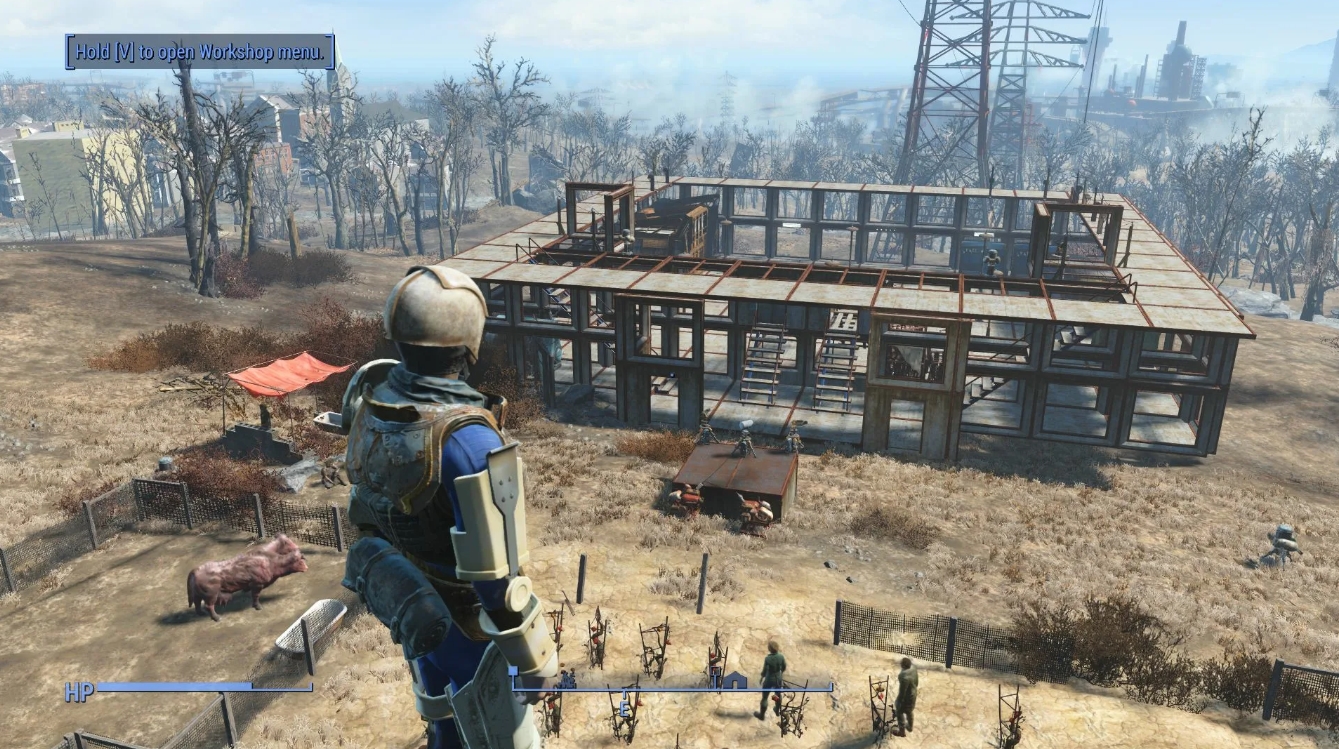
And, of course, how can we not mention one of the main features of Fallout 4 – construction. This is really a reason for praise. Personally, I prefer the implementation from Conan Exiles, everything is somehow more streamlined and flexible there. But in Fallout, the mechanics of base building turned out to be surprisingly well-developed and exciting. Developing your own settlements, building logistics, laying trade routes – all this fits organically into the post-apocalyptic world, creating the feeling that you are really restoring at least some semblance of civilization on the ruins of the old world.
But, as you probably already understood, not everything is perfect here either. Despite my praise, I must admit: the problem lies not so much in the construction system itself, but in what it is closely connected with… But more on that later.
What Fallout 4 Gets Wrong About Post-Apocalyptic Survival
If we consider the construction system in Fallout 4 solely from the gameplay side, everything works quite well. The mechanics are simple, accessible, even exciting: you find a suitable place, place walls, beds, generators – and now you have a full-fledged outpost. Within the framework of the game, this is certainly a plus. But as soon as you begin to delve into what is happening not as a player, but as a person trying to believe in the world around you, many things begin to grate on the eye. At first, this seems like a trifle. Well, yes, you came to an old abandoned building and organized a base there. There is logic in this – there are plenty of such objects in the open world, and nothing prevents the survivor from settling down. But then comes the moment when you are assigned to take care of already inhabited settlements, like Oberland Station or Somerville Place. And then everything begins to fall apart.
You see these people – they have roofs over their heads, vegetable gardens, weapons, fires. They survived in these conditions for many years. But only after your arrival do they have the opportunity to build a banal barn? Hang a light bulb? Build a water pump? Before you, this was unavailable to them? It seems that all these settlements were in stasis – just waiting for the “savior” from the refrigerator to appear to solve all their everyday problems. Absurd. This looks especially comical when we talk about places located literally a step away from the most dangerous zones – for example, not far from the Glowing Sea. This is a cursed land, teeming with terrible mutants and radioactive nightmares. How did the settlers even survive next to this hell, without any protection, walls, turrets and basic logistics? It turns out that 200 years ago the apocalypse happened, and all this time they sat, were afraid and did nothing?
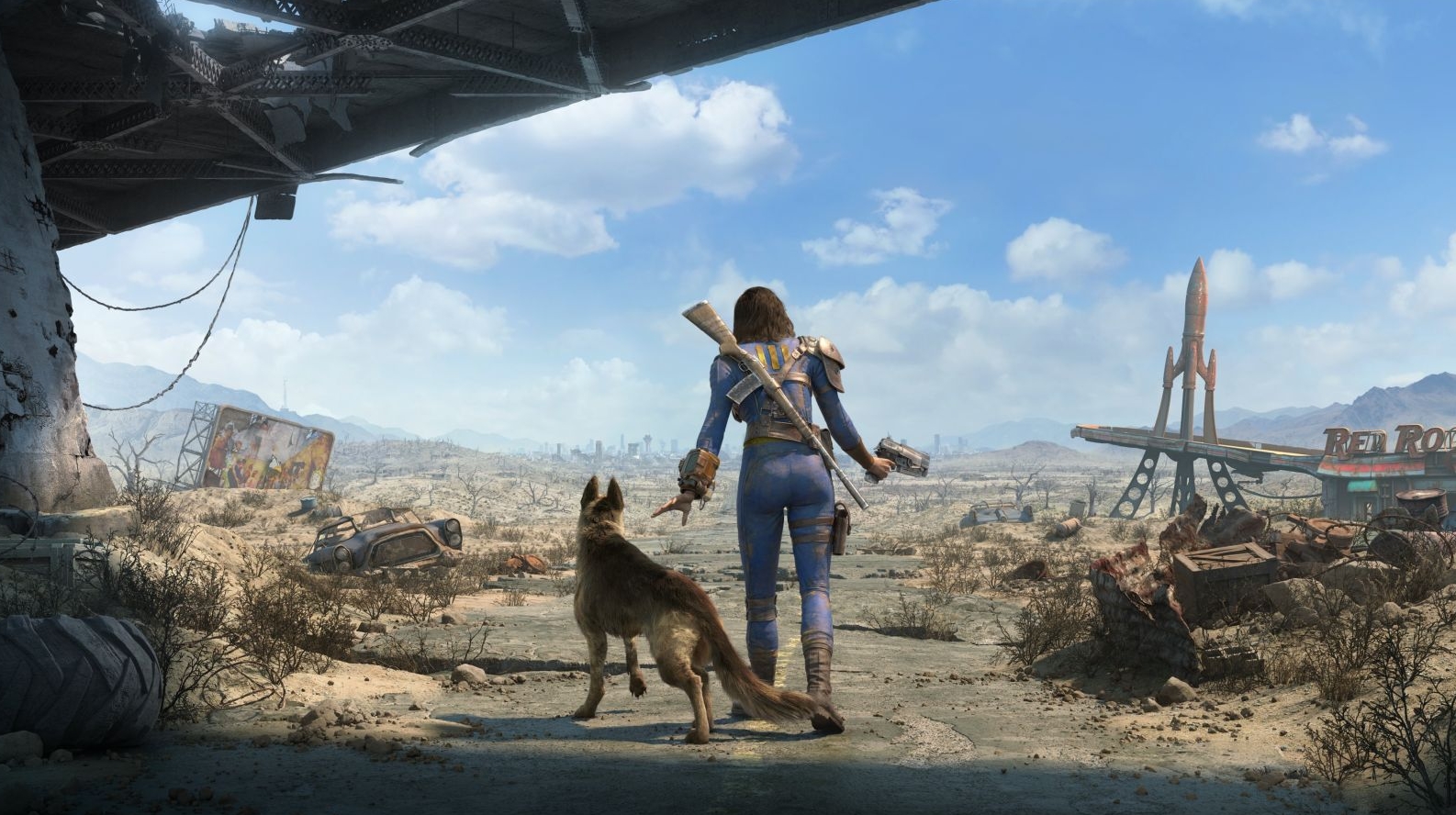
Now let’s take a look at Diamond City, the “heart” of post-apocalyptic Boston, the largest and most developed settlement in the region. At first glance, it makes an impression: the city is alive, noisy, atmospheric. Everything is in the spirit of gloomy slums, assembled from garbage and scrap metal. It is clear that the artists tried. But then you look around more closely and think: two centuries have passed since the disaster. 200 years. During this time, people have not been able to build anything except rusty booths and pallet sheds? The city is located inside a baseball stadium – a strong, protected facility in the center of the metropolis. Around are the ruins of Boston, which literally consist of brick, concrete, glass and steel. Tools, equipment, everything needed for development must be at hand. And all that was smart enough – a few sheds and a leaky fence?
Fallout 4 suffers from a strange visual paradox. On the one hand, the atmosphere of a ruined world is conveyed beautifully. Abandoned houses, broken shop windows, peeling walls, metro stations covered in dust and debris. But at the same time, it feels like the nuclear bombs fell very recently – a year, well, ten years ago at most. 200 years? I can’t believe it. Visually and logically, the world does not pull off two centuries of decline. Even if we imagine that the survivors tried to save something, after so much time either restoration or final decomposition should have begun. Here – neither one nor the other. Everything is frozen in a strange point between a fresh catastrophe and a deep, protracted apocalypse.
Another thing that ruins the immersion is the details of the environment. You go into an abandoned cafe, and there are… cups on the tables, newspapers, some signs, as if the visitors just went out for a smoke. But, come on, two centuries have passed. Yes, theoretically, paper can be stored for centuries, if you’re lucky – say, it was buried in the earth in damp clay. There were such finds in reality. But these are isolated, exceptional cases that require almost ideal conditions. And in Fallout 4, the paper is just lying on the table, in an open room, two centuries later? And no one took it away, ate it, burned it, or blew it away? The same with furniture, equipment, signs – everything looks like it was just very dusty, but did not survive two hundred years without care.
I don’t expect scientific accuracy from the game. It is, after all, a fictional world. But when you work with such a powerful concept as a nuclear apocalypse, you want a little more imagination. Imagine what everyday life might look like two centuries from now: corroded equipment, decaying objects, mutated forms, perhaps some new materials found or invented in the course of survival. Instead, everything is stuck in a “dirty version of 2077.” No development, no degradation – just stagnation.
Sometimes it seems as if the inhabitants of the Commonwealth appeared here quite recently – as if they had lived in this world for no more than five years. Neither the architecture nor the atmosphere create the feeling that people have been living here for generations, surviving, building, settling down. Everything around looks more like temporary shacks, hastily knocked together shelters than full-fledged, inhabited settlements. Of course, we are accustomed to this image of the post-apocalypse – devastation, chaos, the desire to survive at any cost. But it is worth thinking at least a little about the logic of what is happening, and questions come to mind.
Let’s talk a little about Boston. Not only about its appearance, but also about how it is arranged – and how this affects the gameplay. After all, by and large, Boston in Fallout 4 is a huge step forward for Bethesda. Yes, someone will say that this studio has always been able to build cities (well, if you do not take into account the very old parts of Elder Scrolls). But here everything is different: the development of the environment is truly amazing. For the first time, it seems that the city is not just wide in plan, but also goes up — vertical gameplay essentially appears before our eyes. The same streets can be crossed by completely different routes, you can climb on roofs, climb onto balconies, find bypasses. Sometimes you walk through half the city, almost without touching the ground — and this is amazing.
And I haven’t even mentioned the power armor with a jetpack. With its help, the surrounding world opens up in a completely new way. You fly up to the roofs, explore places that are inaccessible by ordinary means — all this literally turns the perception of the city upside down. But… how many players actually took advantage of this opportunity? Seriously, almost the entire main playthrough keeps us in the suburbs or in the vastness of the Wasteland. Exploring Boston itself from above, feeling its verticality — such moments are almost never given. Yes, there are side quests from the Underground — those very same radiant tasks, which we will also discuss a little later — they can accidentally lead higher. There are a couple of separate missions where you have to climb. But in general, it turns out that a huge, detailed city, which took a lot of resources, remains in the shadows. And this is a shame. After all, imagine how impressive, say, the Silver Shroud quest chain would look if it were played out entirely somewhere among the roofs and attics.
In general, the deeper you look into the Commonwealth, the more questions arise. Let’s take, for example, the same proximity to the Glowing Sea. There are dead trees, contaminated water, radioactive fallout in the area — but people somehow continue to live here. How? What is their life based on? And most importantly — why can’t they cope without the intervention of a Survivor? And we haven’t even touched on the impact of radiation on the surrounding nature. There are plenty of detailed analyses on this topic on the Internet, so we won’t focus on it here. But from a logical point of view, there are many things that raise doubts. By the way, we should talk about this in more detail in the next section.
Characters in Fallout 4
To be honest, I have no particular complaints about the NPCs in Fallout 4. Yes, of course, this is not the level of GTA, where every secondary character can outshine the main character from another game with charisma. But here too, one cannot say that the inhabitants of the Wasteland are completely faceless or irritatingly stupid. They are in their place – they do not amaze the imagination, but do not cause rejection either. Of course, we are not talking about random settlers, but about truly developed characters with whom we have the opportunity to conduct full-fledged dialogues. And with dialogues, by the way, everything is not so bad. On the contrary, there are quite bright and memorable phrases, which, for example, in the same Skyrim is often lacking. Technician Tom with his paranoid speeches is wonderful, but he is not the only one who stands out. Let’s take at least the arrogant robot waiter, sensual Magnolia or gloomy Kellogg – they all leave a mark in the memory, although not always immediately.
I’d especially like to highlight the voice acting of Elder Maxson. It’s understandable that many players perceive him as a cliched military fanatic. But if you’ve gone far enough along the Brotherhood of Steel line, you’ve probably seen one of the most powerful scenes in the game – his speech during (spoiler!) the expulsion of Danse. It was a moment when a reserved, cold-blooded leader suddenly gives free rein to emotions, and you no longer just hear a soldier, but see a living person, convinced to the depths of his soul of his rightness. Yes, Fallout 4 has enough strong plot episodes, but this moment is remembered thanks to the outstanding acting. Maxson’s speech does not sound like a memorized monologue, but like a last attempt to hold on to the world as he understands it. It’s powerful. But since I’m praising the characters so much, I should also note something that spoils the overall impression a little. And this is more due to the logic of the world than to specific characters.
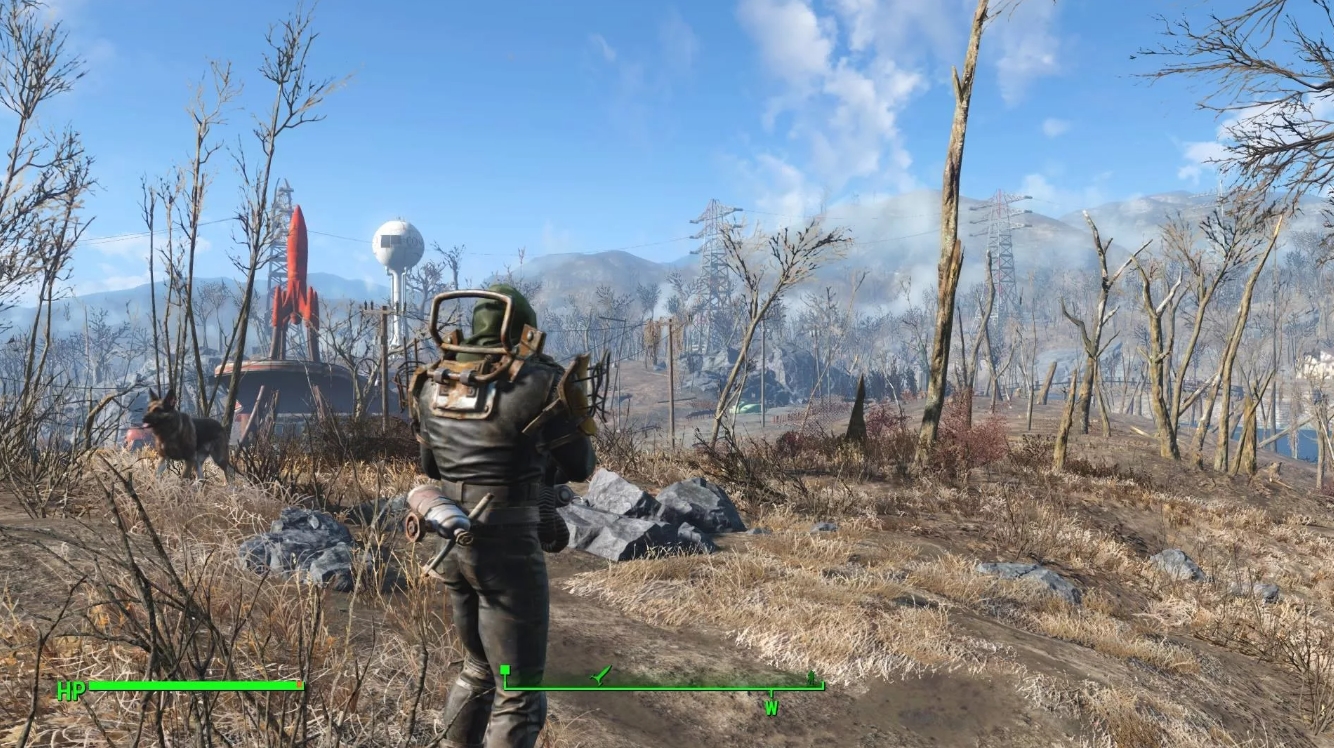
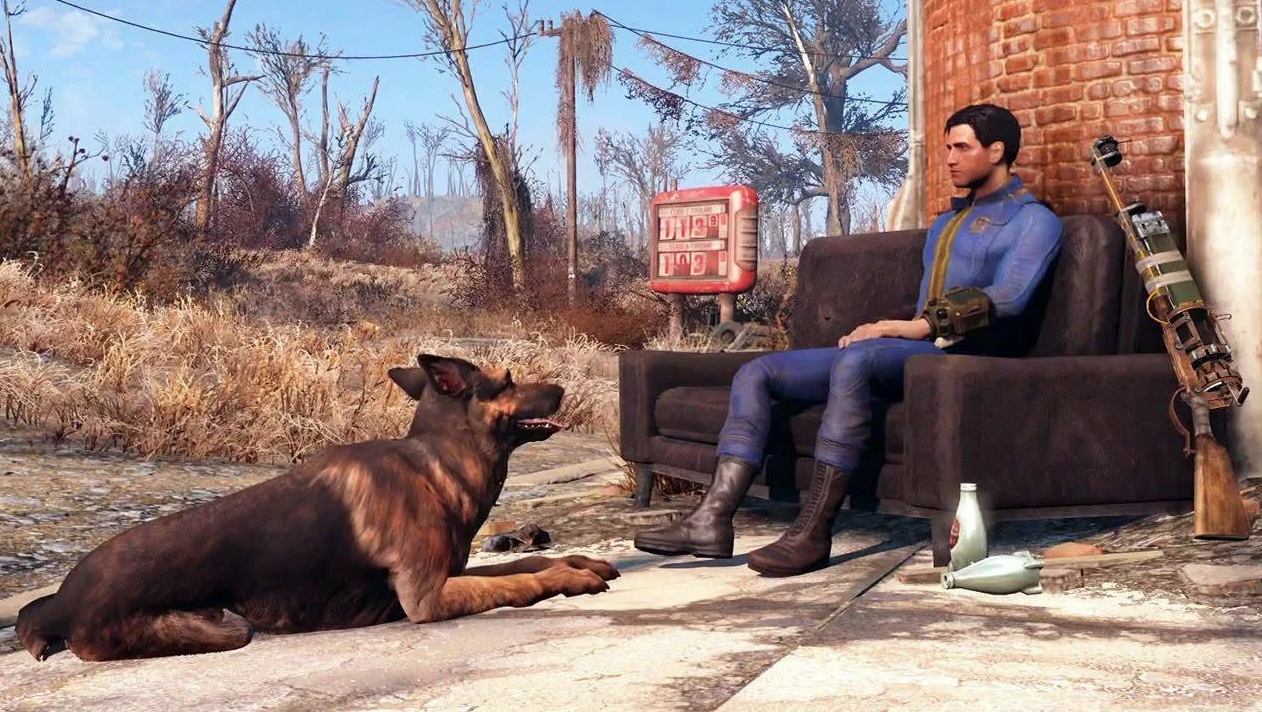
Here’s a simple question: what do Kate, the Bobrov brothers, and the Nakano family have in common? It’s simple – accents. And so specific that you start to wonder: how did they survive at all? After all, according to the Fallout lore, more than two hundred years have passed since the Great War, and all these people were born and raised in more or less the same society. And an accent is not something innate, but acquired. So where did it come from, and such a stable one at that? Yes, this is a small thing, and in the general context of the game such moments are rare. But when you stumble upon them, something inside you clicks – the feeling of plausibility is lost, you fly out of the atmosphere. True, there are exceptions. Take Curie, for example – her accent is programmed, and in her case it even adds charm. Unlike others, she has a logical explanation for her manner of speaking. By the way, since we’re talking about Curie, let’s talk a little later about satellites in general – there’s something to discuss there too.
If we talk about a real step forward for Bethesda, then it is in the development of companions that they have made the most noticeable progress. Sure, the Skyrim expansion had, in my opinion, the best waifu in the history of video games, but most companions of that time were more like walking backpacks with a couple of witty phrases in their arsenal. In general, if you look at the entire Fallout series and compare it to many other RPGs, it becomes obvious: Bethesda has always given its companions a slightly more secondary role than Obsidian did in New Vegas or BioWare in Mass Effect. But Fallout 4 was a turning point – in this part, you can feel the desire for a deeper approach. Companions are no longer just silent shooters and loaders. They have individuality, reactions to events, personal quests, and often a significant influence on the main plot. Moreover, many of them are full-fledged participants in key missions and even potential romantic partners.
And most importantly, their participation really affects the game. Take Far Haven as an example: if you decide not to take Nick Valentine with you, you’ll miss out on a significant part of the expansion’s narrative. Nick himself is a character who has become a true community favorite. His personal story, moral ambiguity, and noir charisma have done their job. His quest is one of the best in the game, and the synth detective himself is a strong emotional anchor for the entire narrative. But the other companions weren’t left out either. Many were delighted with how they continued the McCready storyline from Fallout 3. Ghoul Hancock quickly became a crowd favorite thanks to his charm and anarchic outlook on life. And the trio of potential companions sparked heated debates among fans – each was memorable in their own way and left a mark on the hearts of players. Even Mr. Cogsworth, a seemingly ordinary robot butler, received his own grain of individuality. However, if we take into account the updated lore that robots can now have consciousness, the question of the moral side of such “slavery” hangs in the air… but this is already philosophy, which we will not go into now.
However, everything is not so cloudless. Let’s take, for example, Strongman – a super mutant companion. It would seem to be an interesting concept: a monster inspired by Shakespeare, striving for greatness and spiritual growth. It all starts intriguingly: he hears a phrase of the great playwright on the radio, interprets it literally and decides to find a “source of strength”. But in fact, all this teaser does not lead to anything. At one point, he simply declares: “You are strong, I am strong, let’s be friends” – and that’s it. No development, no climax. It is as if he was added to the game at the last moment to “check the box” – like, there is a super mutant on the team.
In addition, his interaction mechanics are annoying. He resents even neutral locks being hacked, which creates a lot of problems in a game where looting is the core of the entire gameplay. And the inability to really develop a relationship with him because of these strange restrictions only makes things worse. The result is no full-fledged quest, no useful benefit, no emotional response. Just a potentially cool idea that was left without due attention. I admit, perhaps I am paying too much attention to a character that many players probably didn’t even take with them or forgot about after a couple of hours. But that’s the point: Fallout 4 was the first game in the series where almost every partner is truly memorable — albeit not always for good reasons. Speaking of memorable. As you’ve probably already guessed, it’s time to talk about Preston Garvey. Yes, that same Garvey who is always pushing new settlements under his guardianship and persistently knocking on your door with the words “another place needs your help.”
But it’s important to distinguish: as a quest giver, he’s, to put it mildly, tiresome. But as a character, Preston is well-written. He has his own backstory, principles, and personal drama. He’s not a one-note hero, but he’s definitely not a dud. If you put aside his reputation as a “walking meme generator,” you’ll see a well-developed character with convictions and internal conflicts. It’s just that, alas, the mechanics of his quests themselves negate this depth. And yet, despite its flaws, Fallout 4’s companions are truly one of the game’s strongest points. Perhaps for the first time in the history of Bethesda games, the player becomes truly attached to their companions. And that’s an achievement worth recognizing.
Fallout 4 Quest Types Explained: From Radiant Grind to Story Depth
If you look at it more simply, the entire quest system in Fallout 4 is divided into three main groups: story missions, side quests, and radiant content, aka “repeat”. And let’s start, perhaps, with the most painful. Repeatable quests are a real scourge of the Four. Yes, among them there are also relatively pleasant ones – for example, missions to explore radio towers, which are at least a little compensated by the view of the picturesque corners of the Commonwealth. But for the most part, this is soulless, monotonous and terribly meaningless content, which can be called an automatic system for littering the quest log. It’s not for nothing that the phrase “attack on another settlement” has become a meme among players.
And if only it were boring. No, the game also manages to annoy you. The reward is ridiculous. And often radiant quests choose locations from the DLC as the location of the action, even if you haven’t stuck your nose into the add-ons. As a result, they just hang like ballast in the quest log, and if you are a perfectionist, then such a neighborhood will only irritate. You seem to want to close all the icons on the map, and then you get the task “help another village in trouble” again. But in fairness – not everything is so gloomy. The side storylines, written by hand, turned out to be surprisingly strong. Yes, there are also classics of the genre like “bring ten flowers”, but there are also really worthwhile stories. For example, the line with crazy superhero cosplay, adventures with the Cabbot family, or a completely crazy quest about the crew of a sailing ship, which somehow became a missile frigate, and the captains there are … robots. Sometimes the missions impress not with the gameplay, but with the atmosphere – like, say, in the episode with the abandoned bunker, where you need to make your way through gloomy tunnels teeming with infected mole rats. You sit with shaking hands and think: “Well, at least this jumping creature doesn’t crawl out now!”

Of course, there were some controversial moments. Just think about the quest with the boy who sat in the refrigerator for two hundred years – it makes you laugh and facepalm at the same time. Because how did he even survive? Is this some kind of super ghoul? Fallout and logic, as they say, are not always friends. But in general, side quests are exactly the element that makes Fallout 4 lively and multifaceted. And now, as they say, let’s move on to the main course. The main plot. It… is. And this is probably where its strongest points end. No, I’m exaggerating, of course. But only a little.
It all starts with the character editor. And here’s the warning bell – we are kind of asked who we want to play, but in fact they give us not a choice, but an illusion of choice. The character is already set – either a military man or a female lawyer. It seems to be variable, but in fact – everything is already written. We do not mold our hero from scratch, as in the first parts or in the same New Vegas, where even the “Courier” was an absolutely clean slate. Here – that’s it, you are already built into the story.
And even if you want to play some wandering philosopher who is not very familiar with weapons – the game will immediately remind you that you are an elite soldier with the skills to control power armor and shoot from everything. Is this logical? In the case of a man – somehow yes, he is a veteran. But a female lawyer, suddenly controlling an exoskeleton and shooting with the accuracy of a sniper … raises questions. Seriously, what do they teach at law school? Maybe it was a very harsh law school? In addition, the entire narrative seems to push you to the idea that the “right” choice is Nate. Even the mechanics of the game reinforce this: he immediately knows how to use armor, as if he had been trained before the apocalypse. This, of course, does not make the game bad, but it does make it less flexible – and flexibility has always been in the DNA of Fallout.
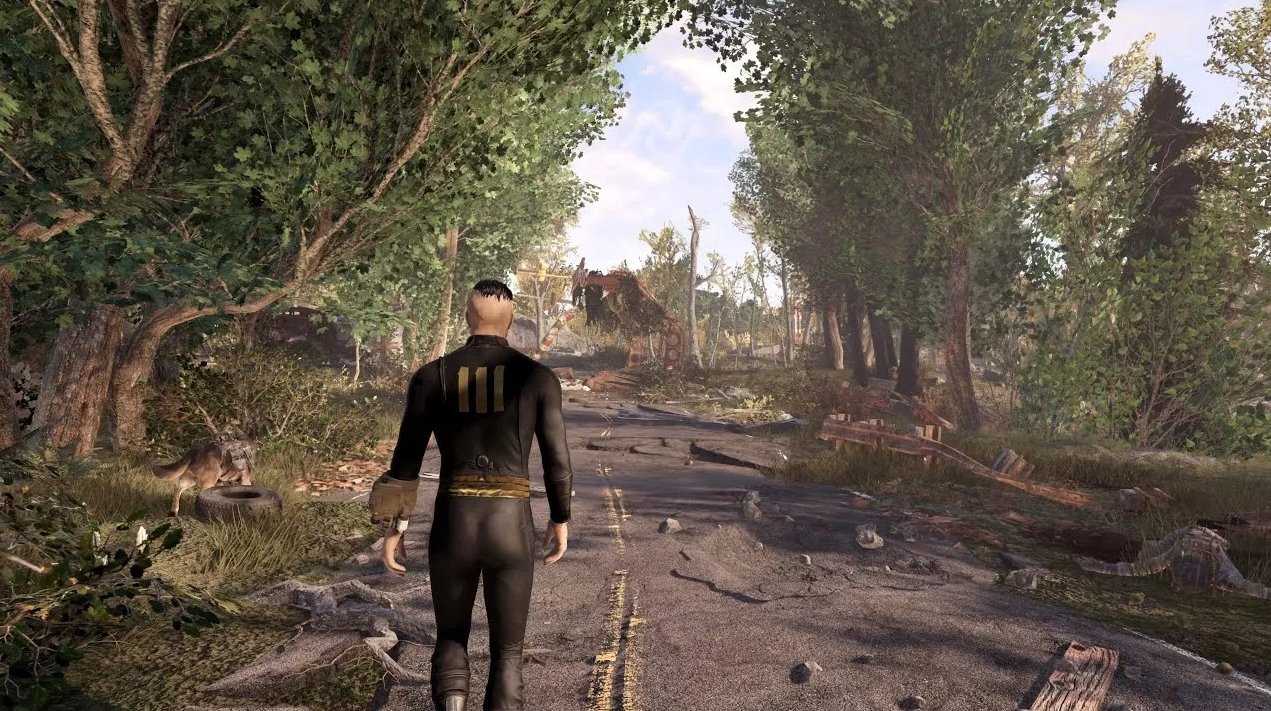
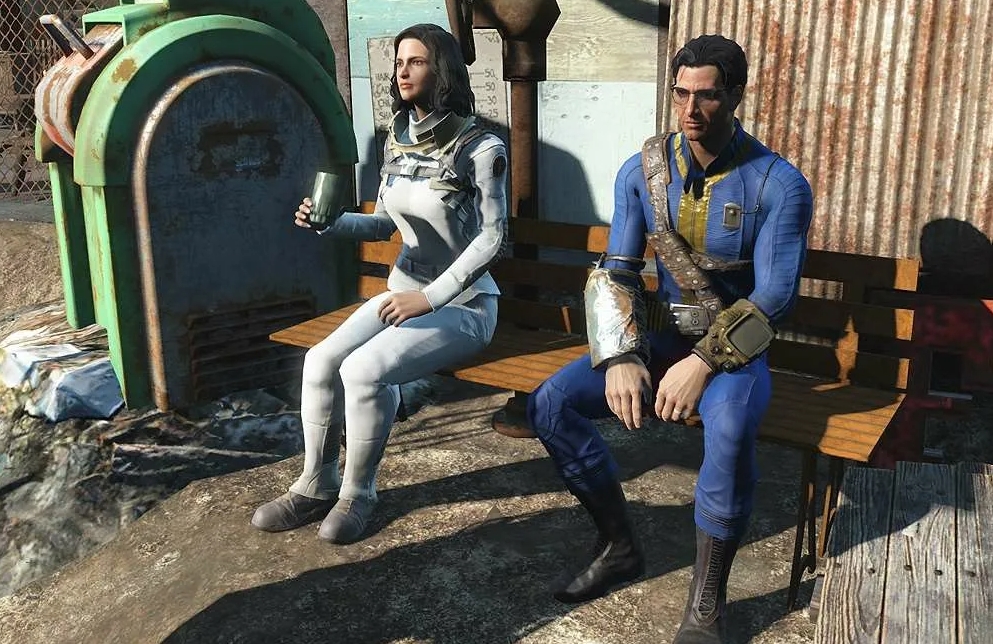
But you know, the female character in Fallout 4 has one significant advantage over the male one – and no, I’m not talking about nude mods, although I’m sure you’re thinking about them right now. I’m talking about the voice. If the male protagonist sometimes sounds like he was not just wounded in the war, but also hit on the head with something heavy (and quite accurately), then the female voice acting is a separate thrill. The heroine’s voice is pleasant, with a slight hoarseness, and the intonations are much livelier and more natural. In general, listening to her is a pleasure, and if you have to choose between “he” and “she”, then at least it’s worth taking care of your ears.
But okay, let’s move on to the plot itself. As soon as you choose who will be your hero, the game lets you bask a little in the cozy atmosphere of the retro-futuristic American dream. Everything is orderly, smooth, calm… but, as one philosopher said: “If something looks too good, it means it’s going to go to hell soon.” And it’s true: an explosion, panic, an underground shelter, cryosleep, a kidnapped child – and now you’re in hand-to-hand combat with cockroaches, getting out into a new, ruthless world. The first steps under the gray sky are one of the few truly gripping moments in the narrative. Not stunningly epic, but definitely impressive.
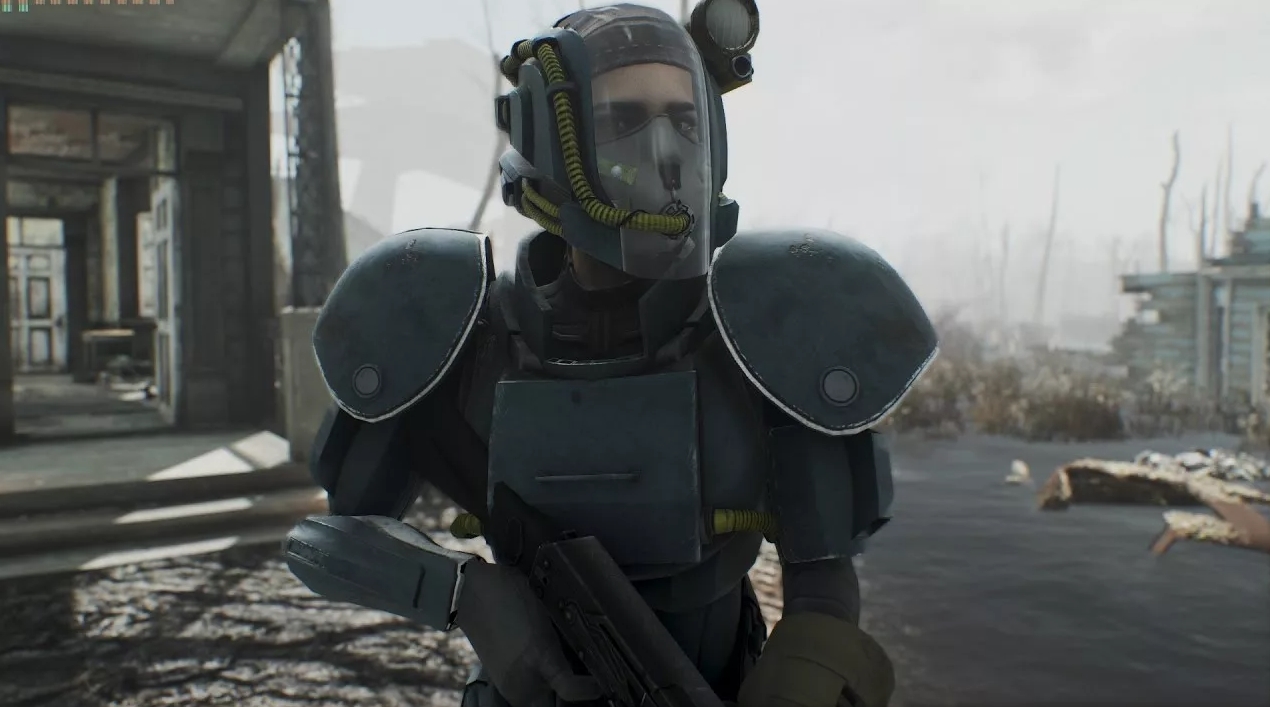
In general, Bethesda knows how to stage big scenes. The same Prydwen, which majestically breaks through the clouds, the arrival of the Brotherhood of Steel, the explosion of the Institute – all this is done with scope and taste. These moments are memorable. They work. They set the tone. Since we’re talking about Prydwen and its owners, let’s talk a little about the Brotherhood of Steel. How many times have I heard from fans: “What happened to them?!” Once upon a time, it was a mysterious, closed organization with a sectarian flair, then in the third part they became some kind of knights of good in shining armor, and in Fallout 4 they turned into militaristic fanatics on an airship. But honestly? I consider this a plus, not a minus. Organizations, especially large and old ones, do not remain the same forever. As soon as they grow or become isolated from the center, they begin to change. People, culture, priorities – everything can change under the pressure of the environment. Especially in the world of Fallout, where there is no stable communication, centralized power, and generally no normal Internet. So the fact that the Brotherhood in different regions is essentially different organizations with the same name is absolutely logical.
If you prefer examples from history – please. Let’s remember the Templar order. These knights began by guarding pilgrims going to the Holy Land. But pilgrims, as usual, brought not only holy intentions, but also good sums of money. And now the knights have accounts, castles, politics and their own network of influence. The same order, but over time – a completely different face. So the claims about the “unrecognizability” of the Brotherhood in the Four are beside the point. This is not a bug, but, one might say, a feature. And quite realistic. Over time, the Templar leadership, as they would say now, “caught the wave” and realized: why carry bags of gold across half a continent when you can simplify the process? For example, in Paris, a pilgrim gives money to the local branch of the order, gets a receipt – and calmly goes to Jerusalem. And there, on the same piece of paper, he gets his savings back. Sound familiar? This is essentially how the banking system was born, only in knightly armor. It’s funny that even then the order was still officially called the “Order of the Poor Knights of Christ.” True, by the end of their history, they were already, rather, rich bankers of God. Well, who are the Templars considered today, you can clarify with your closest fan of conspiracy theories … or your psychiatrist.
But if you want an example closer to us – please. Let’s take the skinhead movement. Now this word evokes very specific associations for most people, but initially everything was almost the opposite: skinheads emerged as a subculture with left-wing internationalist views. Their style is a mixture of English dockers’ clothes and black immigrants. And, by the way, the music they listened to was exclusively black – ska, reggae, soul. And then… well, you know what all this turned into pretty quickly. So if the Brotherhood of Steel in Fallout 4 changed its appearance beyond recognition – this is not even a surprise, but a pattern. The world is changing. And people are changing with it. For this – for such a logical, albeit not obvious evolution of the faction – Bethesda should only be praised.
And in general, if we consider the structure of the plot of Fallout 4, it is quite functional. The main line competently leads the player through the most interesting places of the Commonwealth, introduces the key factions and does not let you get bored. Even if you complain about the repetitiveness of the side-stories, there is almost none in the main plot. Instead, you are given powerful scenes: be it a dive into someone else’s memory, a journey into the heart of the radioactive zone, or the already mentioned spectacular productions like the arrival of the Prydwen or the final assault on the Institute. But here’s where the questions begin. Sometimes, for the sake of a beautiful scene, the developers are ready to easily sacrifice logic. Let’s remember the endings of most storylines. Everywhere – the destruction of the Institute. Epic? Of course. But why?
I’m not talking about the faction as such, but about the place – an underground city full of advanced technology, huge resources and scientific archives. Okay, let’s say the Brotherhood of Steel is more important than ideology, and they simply cannot allow the existence of synth production. But the Minutemen? For them, the Institute’s technology would be like the Holy Grail! Even the Underground would be enough to free the synths and stop producing new ones. But no – in any ending, except the one where we stay with the Institute, the city is destroyed after you have captured it. And if it were just for the sake of spectacle – well, it happens to everyone. But here we lose potential content. Potential variability. Fallout is an RPG at its core, and such decisions always implied alternatives. And what options are really missing? For example:
-
For the Brotherhood of Steel: confiscate the technology, disperse the staff, but leave the Institute as a scientific base under their control.
-
For the Underground: free the synths, shut down production, and then use the remains of the base as a shelter.
-
For the Minutemen: take the Institute archives under protection and organize the first independent scientific settlement in the Commonwealth on their basis.
But alas, we are not given any of these scenarios. Instead, everything explodes anyway. As if there is no other way out.
Is Fallout 4 Worth Playing in 2025? Pros and Cons
Well, it’s time to sum it up. I’ve had to dwell on the negatives more than once in the course of the story – not out of a desire to diminish the game’s merits, but because Fallout 4 really does evoke a lot of controversial feelings. It’s one of those games where the shortcomings stand in stark contrast to the strong points. However, despite all the rough edges, Fallout 4 is a good game. Just with nuances. If I try to express the essence briefly, Fallout 4 is dialectics in action. Hegel would probably appreciate it. Seriously: almost every element in the game is a “thesis”, which is immediately followed by an “antithesis” in the form of some flaws. But their collision gives birth to a “synthesis” – namely, modifications that fans create to make the game truly integral.
To avoid being unfounded, here is an approximate distribution of pros and cons:
Pros:
-
The atmosphere of the post-apocalypse is dark, but fascinating, with a living world and a recognizable style;
-
A variety of content – side quests, factions, crafting, collecting items and building;
-
Companions have become more interesting – many have their own story, reactions to the player’s actions and even personal quests;
-
Shooting and combat – unlike the previous parts, it has become more dynamic and closer to shooters;
-
Mod support – Bethesda almost officially hands over the game to the community, and this saves it.
Cons:
-
Flat dialogue system – lines are reduced to keywords, the choice is often illusory;
-
Weak plot – the main line is lost against the background of side quests, and the hero’s motivation seems strained;
-
Superficial role-playing system – S.P.E.C.I.A.L. it seems like there is, but the impact of decisions is minimal;
-
Mediocre AI of enemies and allies – often hinders more than helps;
-
Building settlements is a good idea, but the implementation is cumbersome and inconvenient without mods.
So, in the spirit of Hegel, we have an idea – Fallout 4, its internal contradiction – all these shortcomings, and, finally, synthesis – community mods that turn potential into results. So, perhaps, the fourth “Folly” is not just a game, but a philosophical experiment. Even with bugs.
Fallout 4 System Requirements
Fallout 4 System Requirements
| Minimum Specs | Recommended Specs |
|---|---|
| OS: Windows 7/8/10 (64-bit) | OS: Windows 10 (64-bit) |
| CPU: Intel Core i5-2300 / AMD Phenom II X4 945 | CPU: Intel Core i7 4790 / AMD FX-9590 |
| RAM: 8 GB | RAM: 8 GB |
| GPU: NVIDIA GTX 550 Ti / AMD Radeon HD 7870 | GPU: NVIDIA GTX 780 / AMD Radeon R9 290X |
| DirectX: Version 11 | DirectX: Version 11 |
| Storage: 30 GB available space | Storage: SSD recommended |
How to play Fallout 4 for free on Steam via VpeSports
Ever wondered what it really means to start over after the end of the world? Fallout 4 gives you that chance — not in some abstract way, but right there, with dirt under your boots and the ruins of civilization stretching far beyond the horizon. You’re not just playing a game — you’re waking up in a vault, stepping into the unknown, and trying to rebuild something meaningful in the ashes of the past. It’s raw, atmospheric, sometimes heartbreaking — and it’s completely free to experience if you know where to look.
No tech headaches here. We’ve stripped away all the friction to get you into the Wasteland fast. A quick registration, a login, and boom — you’re in. Fallout 4 will be ready with everything you need, including detailed instructions on how to get started with your free Steam account. No strings, no hidden steps. Just you, a world in ruins, and all the choices you’re about to make.
And hey — don’t keep it all to yourself. After you’ve roamed the Commonwealth, made friends, enemies, and maybe even changed a few fates, we’d really love to hear your thoughts. Every review helps us make the experience better. If your comment doesn’t show up right away, no worries — a tiny tweak is usually all it takes. Once it goes through, your login info will land right in your inbox.
Want to stay connected? Our Telegram channel is buzzing with life — from new accounts and fresh updates to patch news and real community conversations. Got questions? Feeling stuck? We’ve got a full step-by-step guide titled “How to play for free” that walks you through the entire process. Or just shoot us a message in the chat — we’re real people here, and we’re happy to help you hit the ground running in a world where nothing comes easy… except this.