

There are plenty of simulators in the gaming world – you can control a train, fly a fighter jet or harvest wheat to upbeat music. There are even games where you are a surgeon with trembling hands. There are plenty of options, for any taste and mood.
But today we have something special on the agenda – a cooking simulator. There are not so many such games, especially if we talk about those that do not require a VR headset. So the opportunity to immerse yourself in culinary chores is a real rarity. And that is why this virtual “delicacy” definitely deserves the attention of every gamer.
Table of Contents
Cooking Simulator Free Steam Account
Cooking Simulator may seem like a simple cooking game, but behind the scenes there is a real mini-economy. To prevent the kitchen from turning into chaos and the restaurant from going into the red, you need to be able to manage finances and resources: monitor food supplies, maintain equipment, buy tools on time and update the interior.
Every action you take – from cutting vegetables to serving a dish – directly affects the balance. In career mode, where the main goal is to build a successful culinary empire, it is especially important to count every penny. Here is an in-game currency called Cookbucks (you will recognize it by the “C” icon next to the prices). And you can earn these “cookbucks” only through honest work – or more precisely, by serving perfectly cooked dishes.
Here is what you can (or will have to) spend your savings on:
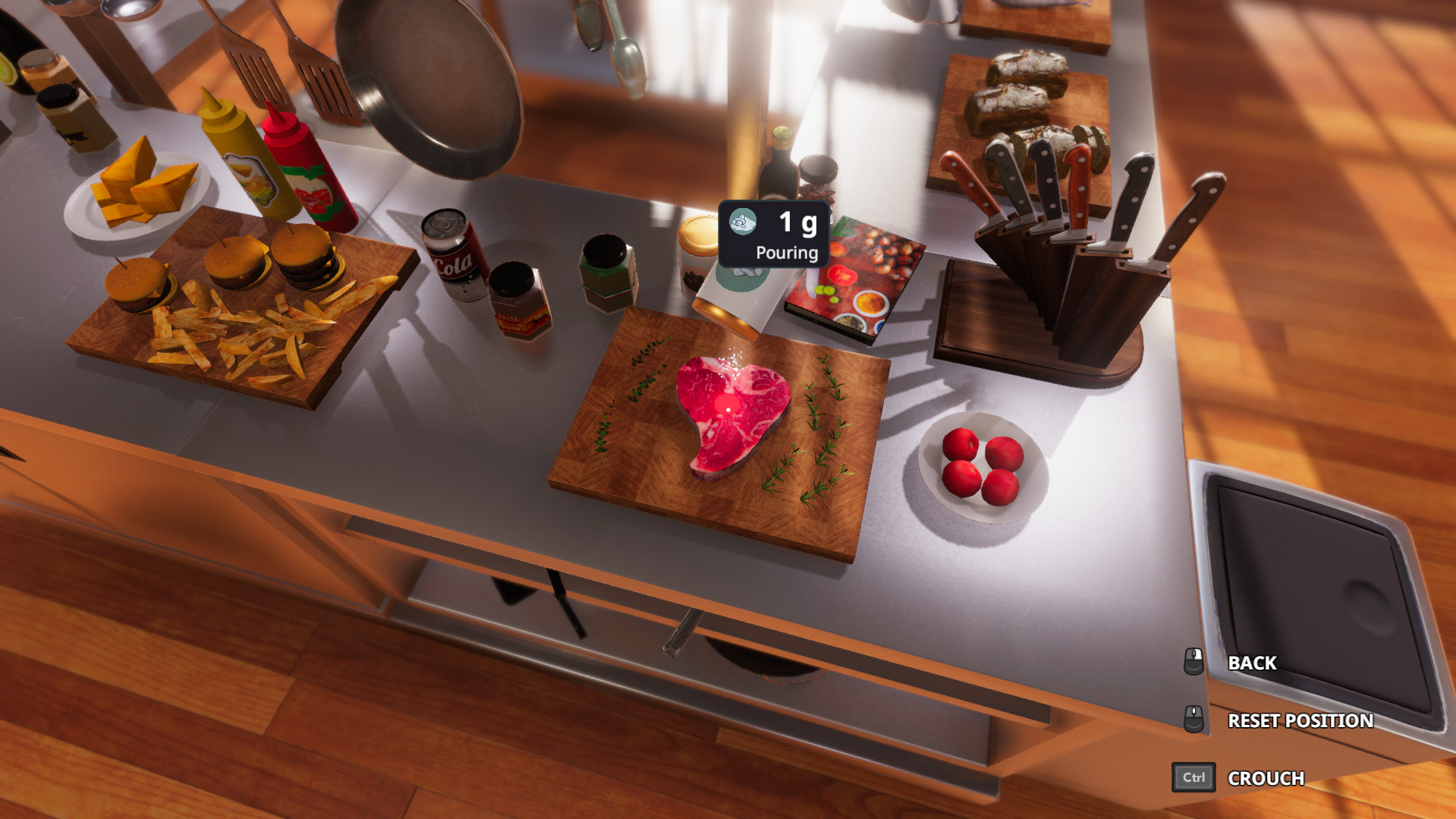
-
Ingredients. Want more vegetables, fresh meat or exotic spices? All of this can be bought for money. Yes, access is available at any time, but financial possibilities are limited, especially at the beginning.
-
Tools and utensils. You won’t make the perfect steak without a good frying pan or sharp knives. Everything costs money, and often a lot of it.
-
Repairing equipment. Kitchen equipment, just like in real life, breaks down. Is your oven or mixer broken? You’ll have to pay for repairs, otherwise it will be difficult to work.
-
Improving the interior. A beautiful and modern look of the kitchen lifts your mood and adds motivation. Renovating the walls, replacing the furniture — everything is available if you don’t mind spending money.
-
Spoiled dishes. Made a mistake with an ingredient, oversalted it or dropped the soup on the floor? You’ll have to not only throw it away, but also return the money — the game punishes for carelessness.
The economy in Cooking Simulator is simple, but merciless to those who don’t know how to plan. If you want to succeed, track every expense and think ahead. In the following sections of the guide, we will tell you in more detail how to deal with breakdowns, optimize expenses, and develop the kitchen effectively.
Play uninterrupted with your new steam free account!
Cooking Simulator Gameplay Breakdown
In Cooking Simulator, you take on the role of a chef who builds a career from scratch, turning an ordinary kitchen into a place of culinary wonders. It’s not just cooking that’s important here — you develop as a professional, learn to manage time, equipment, guests’ emotions, and reputation. The main goal is to earn money, get high marks, and make a name for yourself in the restaurant business.
Every dish you serve is a test of your attentiveness and skill. The game doesn’t forgive sloppy work: guests immediately react to mistakes, and their feedback becomes your feedback. These aren’t just ratings for the sake of numbers — they show what exactly went wrong so that you can improve and become better.
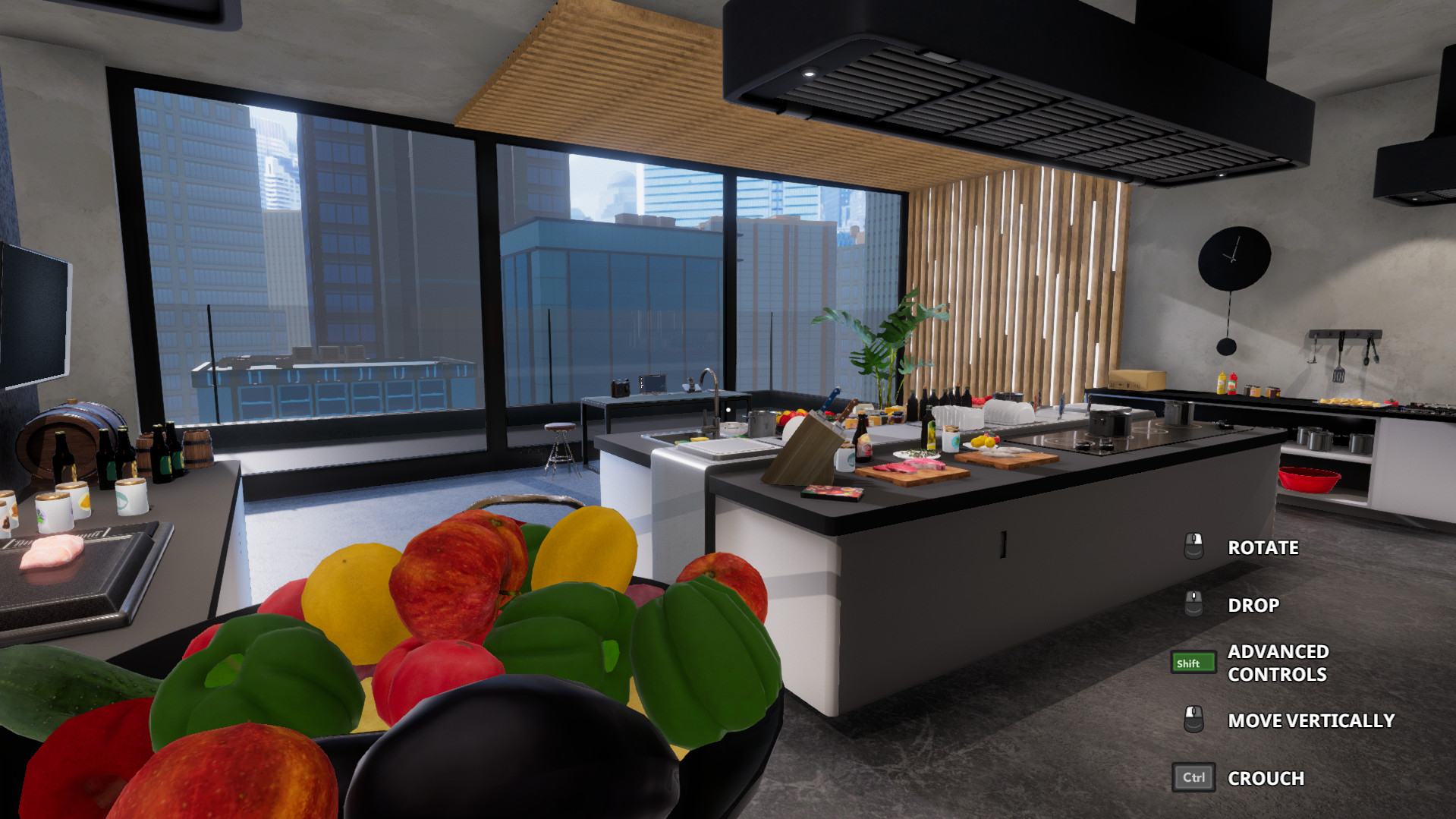
Guests evaluate your work based on several key criteria:
-
Taste. This is the basis of everything. Even if you serve everything perfectly, but the dish is bland or overcooked, the customer will be dissatisfied.
-
Serving time. Speed plays a huge role. Delay even a little, and the food will lose its relevance, and part of your reputation with it.
-
Recipe accuracy. The slightest deviation from the original – and you will receive complaints. The game will show them on the right side of the screen: you will see where you made a mistake – be it an extra spice or the wrong order of actions.
-
Serving temperature. A hot dish should be hot, not lukewarm. Cold appetizers – the opposite. Temperature directly affects the final rating.
All these parameters affect the final reaction of the guests: a satisfied customer will leave more money, and a dissatisfied one will demand a refund. Sometimes one gross mistake is enough to lose not only money, but also reputation points.
But if you give it your all, work accurately and quickly, you will get the most important thing – high ratings, extra tips, as well as “Cooking Points” and “Fame Points”. Thanks to them, new recipes are opened, unique dishes are available and your place in the overall rating is improved. Cooking Simulator is not just a cooking game, it is the path of a chef from the first steps to a gastronomic star. And everything depends on you – on your decisions, taste, patience and passion for cooking.
How to Unlock New Recipes and Abilities in Cooking Simulator
The development of a chef in Cooking Simulator is based on a system of experience and levels. These are not just numbers in the profile – each level brings tangible benefits, affects the gameplay and opens up new opportunities that directly affect your success in your career.
Experience points are awarded for each successfully completed order, good serving, accuracy, speed and adherence to recipes. However, they are not counted immediately – progress is updated only at the end of the day. This means that you need to not only cook, but do it consistently and without serious mistakes throughout the shift.
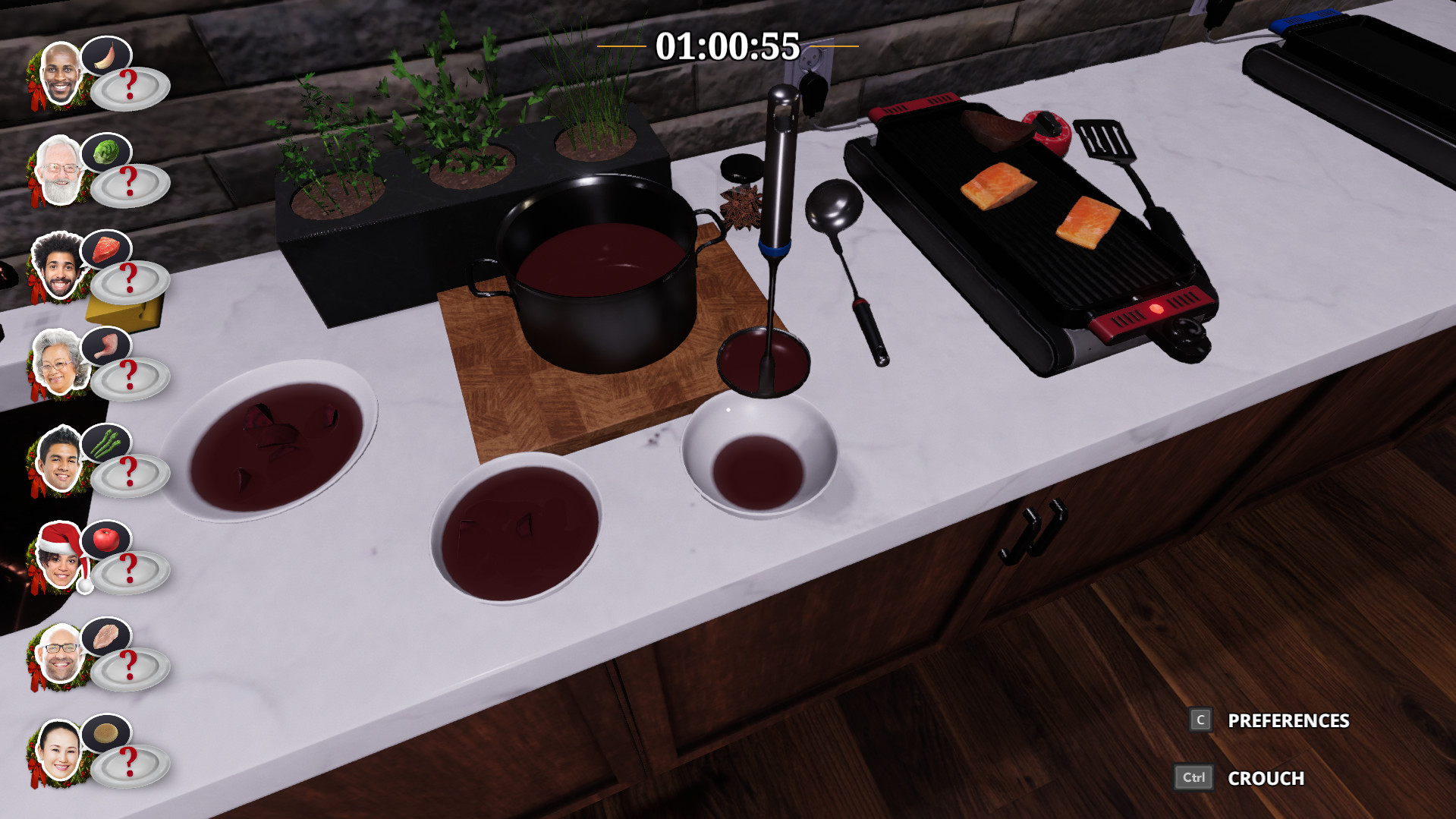
With each new level, you get:
-
Skill points – these can be distributed among various passive improvements. For example, increasing the cooking speed, reducing the risk of food spoilage, or speeding up cleaning. These improvements make everyday work easier and help cope with the growing flow of orders.
-
New abilities – every three levels, you can choose one active ability. This could be, say, instant cooling of a dish, accelerated cooking, or instant cleaning. Such abilities are especially useful in tense moments when chaos begins in the kitchen.
-
New kitchen design styles – variety in the interior is not only pleasing to the eye, but can also be associated with improving the image of your restaurant. Sometimes style is also part of the impression of the establishment.
Without a good menu, you won’t get far. To interest guests, especially culinary critics, and increase income, you need to regularly add new dishes. You can do this through the laptop that is in your kitchen – this is a kind of recipe control center.
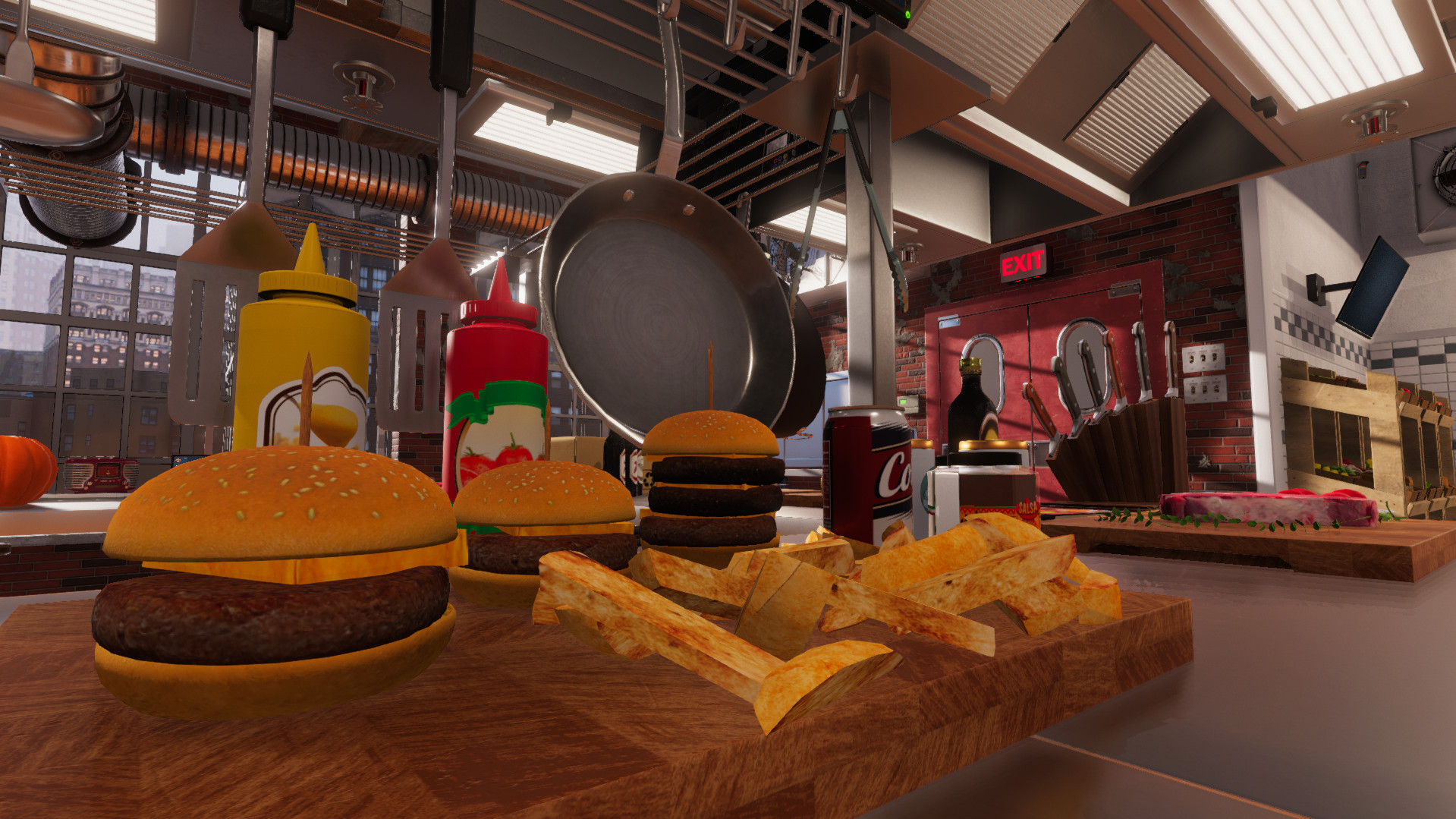
There you can:
-
Buy new recipes – each dish costs a certain amount and requires certain conditions: a sufficient level of prestige and the availability of a free slot for the recipe.
-
Improve already unlocked recipes – sometimes it makes sense not to chase a new one, but to upgrade an old dish to a higher version with an improved taste and a higher price.
Before buying, you can carefully study each recipe:
-
Difficulty of preparation
-
Serving time
-
Profitability assessment (selling price)
-
Ingredients
Tip: first focus on those dishes that are easy to prepare and that bring in more profit. This will help you recoup your investment faster and reach new levels of development faster.
Repair and maintenance of equipment in Cooking Simulator
No matter how hard the simulator tries to convey the atmosphere of a real kitchen, it still has compromises. Some of the limitations are caused by technical reasons – so that the game works stably on most devices. And some are game design decisions designed to simplify processes and not overload the player with trifles. This is worth considering when you start to master your virtual culinary career.
One of the most noticeable limitations is the slicing system. Despite the fact that it looks visually convincing, its capabilities are quite limited. For example, you will not be able to make perfect slices of French fries: the game allows you to cut any product only a certain number of times. In the case of potatoes – a maximum of six times. Want to achieve thinner slices? Alas, this is simply impossible within the engine.
Most likely, the developers did this for a reason. Under the hood, the game does not have a complex shape recognition system, like in 3D modeling. Instead, simpler logic is used, where everything comes down to calculating the weight and number of servings. This solution helps avoid lags and FPS drops, especially when the kitchen is overwhelmed with dozens of ingredients. This logic can be confirmed in the training tips and in a message from the “chef” in one of the tutorials – it says that the game calculates proportions by weight, not by shape.
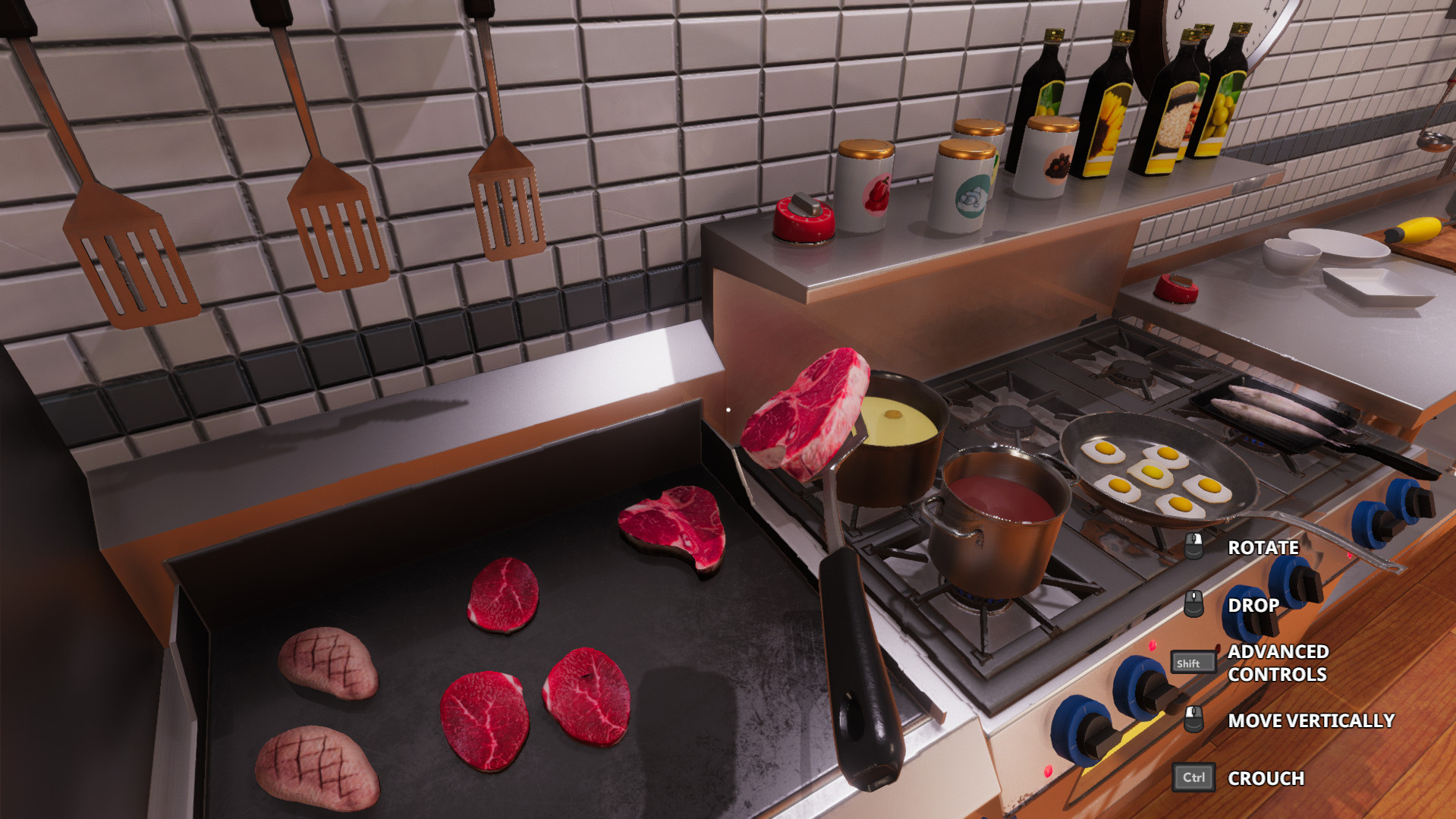
Therefore, when working with ingredients, it is important to remember: you will not be able to make millimeter cuts or precisely adjust the shape of each piece. In most cases, it is enough to cut the product into 5-6 parts to get the desired weight. For example, if the recipe requires 20 gram pieces, focus on the total amount and divide it to get an approximate value. An error of 1-2 grams does not matter – such inaccuracies will not spoil the dish and will not cause complaints.
Kitchen appliances, just like in real life, can break down. To avoid downtime, you will have to repair the equipment periodically. Fortunately, this process is simplified and automated as much as possible in the game, so there is nothing complicated.
When the equipment breaks down, you need to approach it with a phone in your hands. This is a universal tool with which you call for service. Hover the cursor over the broken equipment, and a selection menu will open. Use the mouse wheel to select one of the available repair companies. Each of them shows the cost of work and the approximate repair time – everything is clearly indicated next to the logo. After confirming the payment (by pressing LMB), the repair will begin immediately. A wrench icon and a timer will appear on the screen – they will tell you how much longer you have to wait. When the icon disappears, it means the equipment is back in working order.
It is worth noting: do not skimp on repairs. If you ignore malfunctions or try to “drag out” until the last, there is a risk that the breakdown will become more serious and cost more. In addition, damaged equipment operates unstably, which affects cooking time and can lead to customer dissatisfaction. Regular maintenance is the key to stable operation of the kitchen. In the long run, this saves not only money, but also your nerves.
How Cleaning and Shopping Work in Cooking Simulators
To return the phone stand to its place, you don’t need anything extra — just press it once and give it a little time. It will gently return to its original position on its own. It’s a small thing, but it’s nice when everything works smoothly and without any hassle.
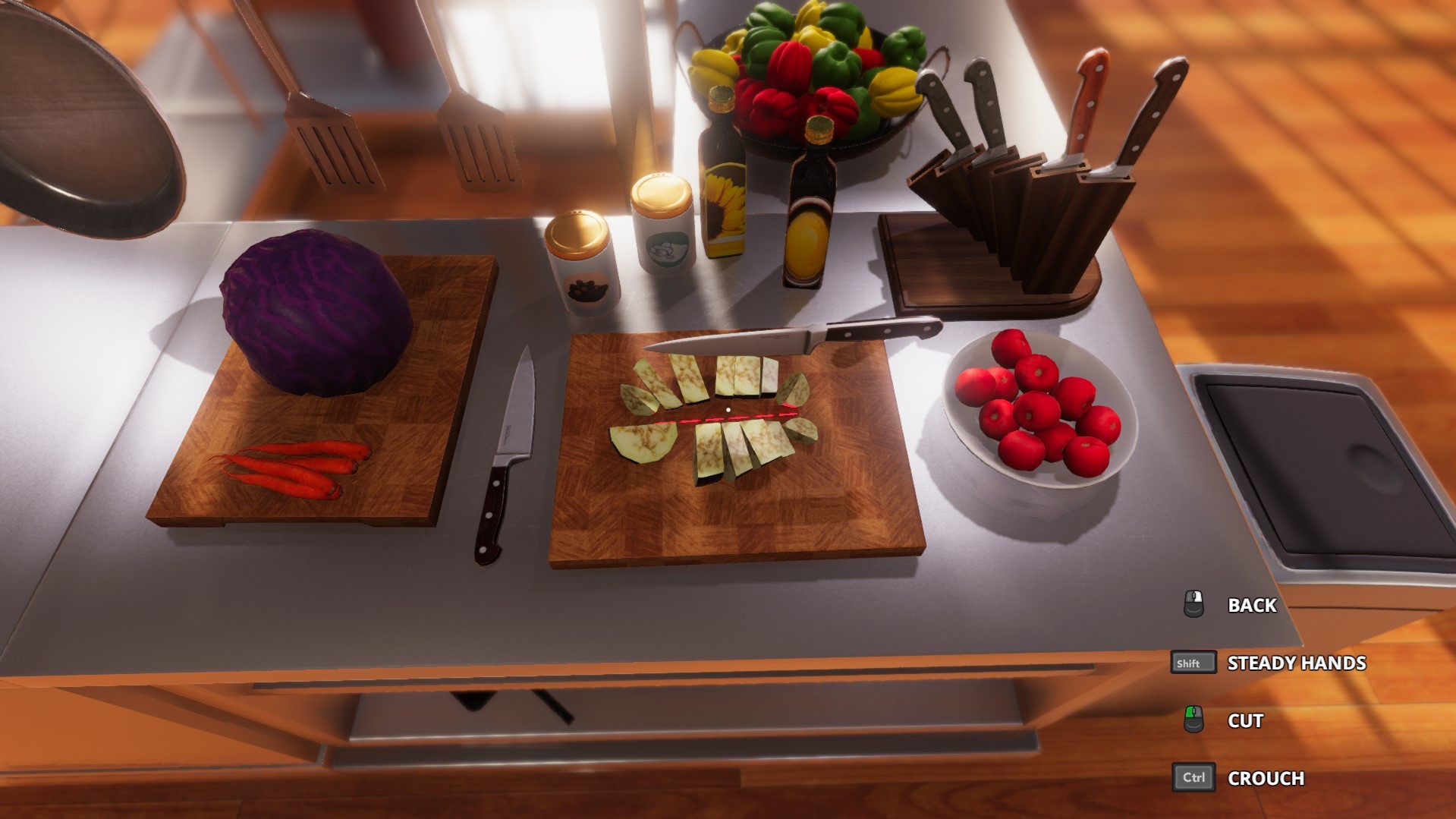
The entire cleaning system in the game is implemented with clear logic. The space is conditionally divided into two zones:
-
everything that is above the floor — walls, sink, work surfaces, shelves — is wiped with a regular sponge.
-
the floor can only be washed with a mop — no other tool will do.
An interesting nuance: even the most stubborn stains can be removed with regular water. Simply pour water on the dirty spot — and the stains disappear as if they were never there. Moreover, you can pour even a bucket of water — the character will not slip or fall. This solution, of course, is not realistic, but it adds convenience and saves time without distracting from the gameplay.
Shopping is also organized in the simplest way. Forget about virtual stores or menus — you don’t need to go anywhere. All products and goods are already within the kitchen: you can take everything you need right from the shelves or get it from endless boxes. The system will automatically write off the cost of each item at the moment you take it.
This approach is a deliberate simplification that works great in a simulator. It eliminates unnecessary fuss and allows you to concentrate on the main thing — cooking, planning, developing and managing the kitchen. All this makes the process more dynamic and enjoyable.
Cooking Simulator System Requirements
System Specs — Cooking Simulator
How to play Cooking Simulator for free on Steam via VpeSports
Imagine: you are standing at the stove, the frying pan is hot, order after order comes in, and the kitchen is a battlefield. In Cooking Simulator, every move you make matters. You flip the steak a split second too late — and instead of a perfectly fried piece, you get charcoal. But it is in this chaos that the true art of cooking is born. Everything is like in a real restaurant: control over the ingredients, strict adherence to the recipe, time pressure — and, of course, delight when the dish turns out exactly as you intended.
So that you don’t waste time looking for settings and complicated instructions, we have everything prepared. A couple of clicks — and the game will be with you, completely ready to launch. And if you are looking for where to try yourself without extra costs, we have a solution — a free Steam account, with which you can immediately immerse yourself in the simulation of culinary madness.
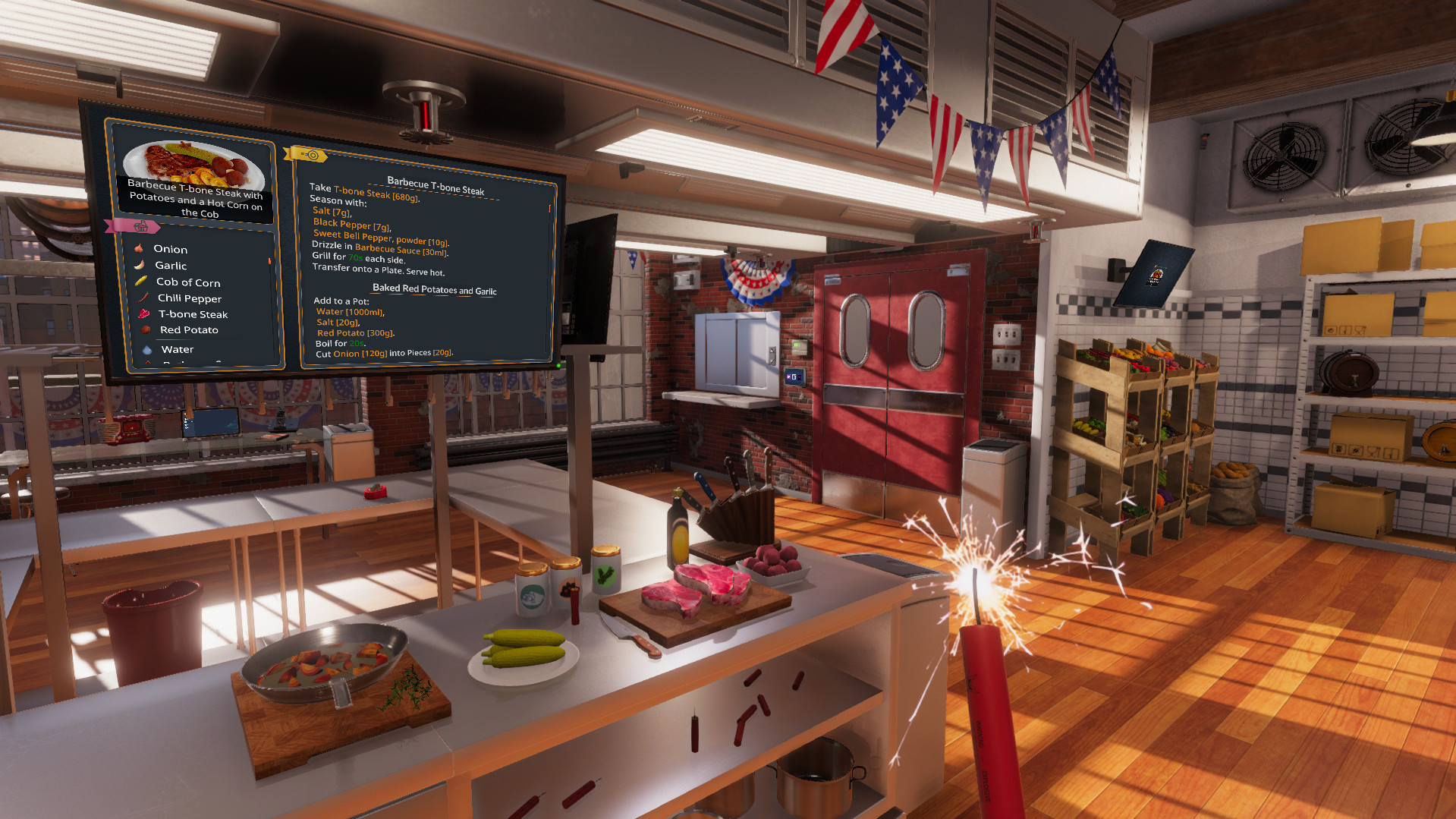
After everything is cooked, baked and beautifully served — share your impressions. It is important for us to hear honest reviews, because they help others make a choice. Once your comment has been moderated, we will send all the necessary data to your email — quickly, conveniently, without unnecessary fuss.
Don’t want to miss a single update? Check out our Telegram channel. There we publish fresh accounts, patches, tips for enthusiastic chefs, and even hold discussions of recipes and game mechanics. If something doesn’t go according to plan, you can always check out our detailed guide “How to play for free” or just write in the chat. We will help, give advice, and even cheer you up if your first virtual pizza suddenly burns.