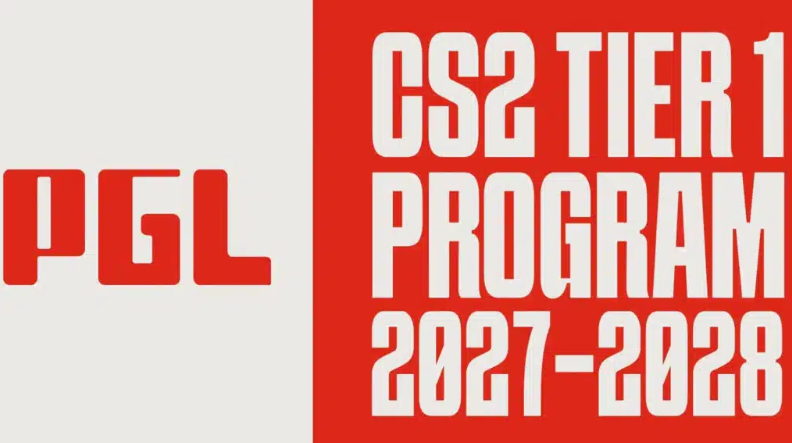
Tournament operator PGL has released a large-scale plan to capture the Counter—Strike 2 ecosystem – the company will invest at least $22 million (about 16.5 million pounds) in the development of the discipline over the next two years. This is a serious step, which, by the way, should completely reshape the landscape of the professional scene in 2027 and 2028.
Table of Contents
Prize pool and bonuses for CS2 teams from PGL
The publisher intends to hold 6 big events of the first shooting range annually — such a dense schedule will provide the teams with long-awaited stability. Silviu Stroye, who holds the post of CEO of PGL, stated bluntly on social media: “This is our biggest investment in Counter-Strike ever.”
That’s where the fun begins — the organizers are implementing a clever motivation system:
-
Turnout rewards: About $2.2 million will be distributed among the invited teams simply for participation.
-
Media bonuses: Another $2.8 million annually will go to those who gather the largest audience at the screens — a great incentive to work on a personal brand.
-
Net prize money: The top participants of the PGL tournaments will take the lion’s share — $6 million in total.
It cannot be denied that PGL relies on comfort — the operator takes care of all transportation costs for 8 people from each roaster. Plus, modern training areas with top—end hardware are deployed on the grounds – players will not have to complain about lags or poor peripherals.
PGL CS2 tournament schedule for 2027 and 2028
Investments for 2027-2028 definitively consolidate PGL’s status as a global titan, especially against the background of their recent agreement with the city of Cluj-Napoca until 2029. By the way, in 2026 they are already being helped by partners from ASUS ROG, so the technical base will be at its best.
The dates of the tournaments are already known, although the cities are still being kept secret — the Schengen area will definitely host three events.
Calendar of events for 2027:
-
The first launch is from January 17th to January 24th (Schengen).
-
February stage — from the 13th to the 21st (Schengen).
-
Spring Battle — from March 19th to March 28th.
-
April tournament — from April 16 to April 25.
-
Autumn comeback — from September 3 to September 12.
-
The final chord of the year is from October 8th to 17th.
In 2028, the series will begin on the same dates — from January 14 to January 24 in Schengen — but information on the remaining stages will be rolled out later. The teams will also have the right to sell their merch directly in the arenas — this is another big plus to the economy of the clubs. Personally, it seems to me that such an aggressive strategy will make competitors from ESL and BLAST seriously nervous — the rules of the game are changing before our eyes.
PGL’s history in Counter-Strike: why the organizer is trusted by top teams and Valve
PGL has been holding positions among the leading organizers of Counter-Strike competitions for almost ten years and is considered one of Valve’s key partners. This reputation has been built consistently — through a series of major majors, high-quality production and systemic investments in the ecosystem of the game. Today, teams and fans perceive PGL not just as a commercial structure that earns money from events, but as an organizer who really invests in the development of the scene.
How PGL went from the first majors to the CS2 era
The countdown of confidence in PGL begins with the very first major tournaments — PGL Major Krakow 2017 became one of the early starting points. It was followed by Stockholm, Antwerp, and then Copenhagen in the CS2 era, where PGL won the right to host the first major of the updated version of the game. Valve’s decision spoke for itself: choosing an organizer for CS2’s debut major is a serious signal of confidence in production, logistics, and top—level risk management.
Every year the company’s presence on the stage expanded. Tournaments followed one after another, the audience grew, and the organization of broadcasts and infrastructure were brought to ever higher standards.
Long-term strategy: tournaments 2025-2028
PGL has long since moved away from the one-time event format. The organizer has already announced a busy calendar for 2025-2026 and is simultaneously preparing a large-scale program for 2027-2028 with serious financial obligations.
It’s about building a consistent Tier-1 competition lineup that creates a clear and predictable environment for all market participants — teams, sponsors, and viewers. A minimum of downtime, healthy competition, and a stable structure — all this distinguishes this approach from point-to-point one-time events without long-term logic.
PGL outside CS: Dota 2, PUBG, and the Versatility of the Studio Model
The organizer’s experience is not limited to Counter-Strike. PGL is regularly involved in the production of major Dota 2 events, including The International, the most prestigious tournament in this discipline. In addition, the company has worked with PUBG and a number of other major titles, which confirms the ability to scale the studio model to different audiences and formats.
For the CS2 scene, this means the following: the organizer understands the publisher’s requirements from the inside, knows how to build a global reach, and year after year keeps the broadcast bar at a level that raises no questions.
View statistics and media returns for clubs
The majors and major CS events of PGL are consistently among the record-breaking in terms of the number of views in the entire history of the discipline. For professional clubs, this is a direct benefit — high media coverage ensures a return on sponsorship contracts and builds an audience. The conditions are clear for the players: the production, schedule and infrastructure have been working according to well—established standards for a long time, without unpleasant surprises.
Today, PGL is perceived along with ESL and BLAST as one of the three pillars of the global CS2 scene. At the same time, the organizer retains its independence, which provides additional flexibility and space for new formats and solutions that are more difficult to implement within large media groups.