The long-awaited announcement has been released. The betting industry company Kambi Group has decided to finally gain a foothold in the esports sector by signing a multi-year deal with the ComeOn Group operator. The main feature of the deal is the introduction of quotes from Abios (which, by the way, is a specialized division of Kambi) into the partner’s betting platform. Financial details, along the way, were decided to be classified as “secret”, but the scale of cooperation is already clear.
Table of Contents
Kambi’s expansion into the markets of Sweden Denmark and the Netherlands
Kambi plans not just to supply numbers, but to really adapt the markets to the local desires of the players. This is logical. ComeOn Group has been on the market since 2010 and is firmly located in Sweden, Denmark and the Netherlands. Moreover, in 2025, they have already managed to close with the legendary Astralis through their flagship brand. Apparently, the expansion into esports is underway on all fronts. The operator will now have access to the Odds Feed+ service, which will allow users to have a good betting experience.
Comparison of Kambi and Betradar quotes for Dota 2 and CS2
It is worth recalling that back in 2021, Kambi was taken over by Abios — the deal then pulled in almost 270 million Swedish kronor. From that moment on, to be honest, Abios became their main weapon in working with data, collaborating with heavyweights such as GRID and Kindred Group. Right now, the technology provider is clearly on the lookout — profitable reports for the second and third quarters of 2025 confirm this.
The purchase of Abios itself allowed Kambi not only to expand the list of partners, but also to rewrite the rules of the game in quotes for quality disciplines. And compared to competitors, their strength in Dota 2 and CS2 looks like a cheat code.
The depth of the Kambi pre-match lines and the margin for the 2026 tournaments
Kambi is now setting the gold standard in esports betting, offering tools that competitors can only dream of. While the same Betradar are trying to find the ground, Kambi is already exploiting the detail of the lines, which is simply impossible to ignore.
Prematch markets and the insane depth of the lines
In the Dota 2 pre-match, Kambi makes an expanded painting — from classic fragments to the time of the murder of the first Roshan. At the same time, the margin is kept around 5-6%, which is a real gift for top markets. Competitors like Betradar, apparently, do not take out such a pace at all: their CS2 line is often limited to maps and banal backgrounds. There is no detail on peaks or specific game moments.
By the way, professional cappers note that Kambi’s market depth allows you to collect wild combos. Do you want to bet on winning with a handicap plus total dragons in Dota? You are welcome. You won’t find this at Betradar — their pre-match often “loses weight” to 50-70 markets, while Kambi consistently holds the bar at 100+. Take, for example, the recent release of Team Spirit vs Gaimin Gladiators — Kambi rolled out 120+ options there, including even the duration of the leaning stage.
Update rate of live coefficients in CS2 and Dota 2
In live, the gap becomes even more obvious. In CS2, Kambi coefficients are updated almost instantly after each round, because the data is transmitted from the supplier in real time. In fact, Betradar is shamefully late here: their live margin often flies into space (up to 8-10%), and the painting collapses immediately after the first blood.
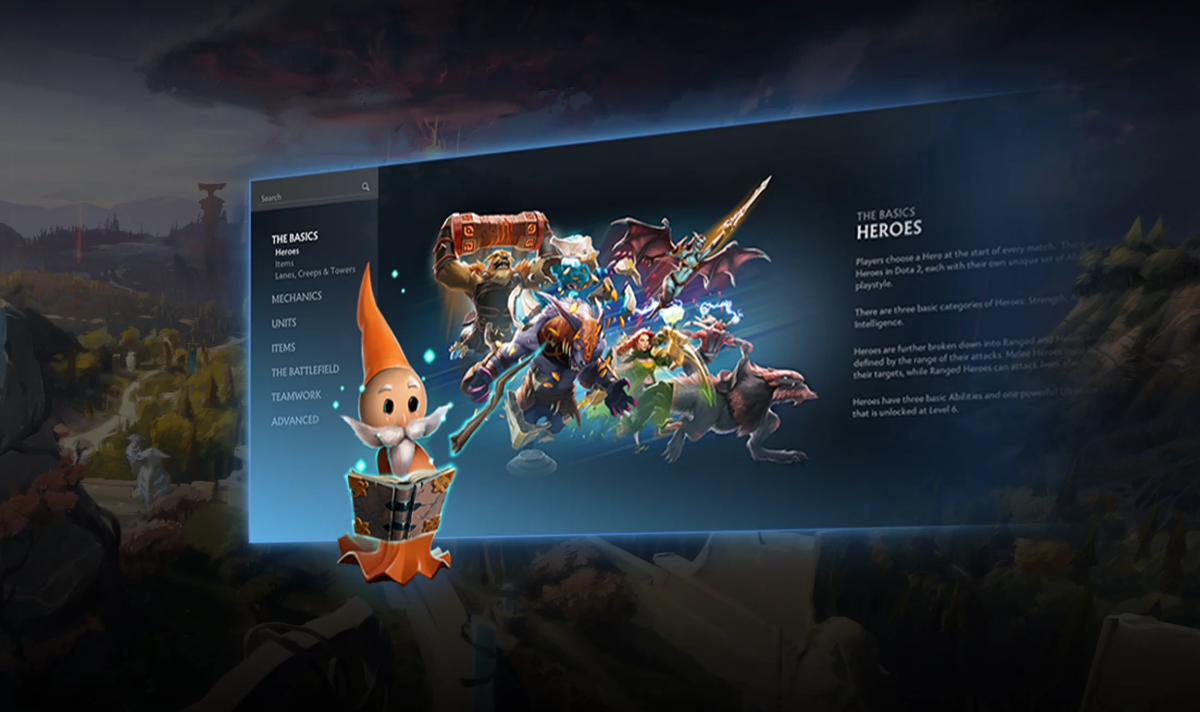
In Dota 2, the situation is similar — Kambi confidently holds 80+ markets right along the course of the map. You can bet on which tower will fall next or which of the heroes will go to the tavern. While competitors are focusing on basic numbers, Kambi is giving action. Below is a clear difference in numbers, which should be taken into account without further ado.
Live margin comparison table (average values at the top tournaments in 2026):
-
Kambi: 6.2% (Dota 2) / 5.8% (CS2) — The leadership is obvious.
-
Betradar: 8.4% (Dota 2) / 9.1% (CS2) — Significantly more expensive for the player.
Abios and Odds Feed technologies for esports betting
The secret to Kambi’s success lies in their own data provider. They integrate statistics directly from HLTV for Contra and Dotabuff for Dota directly into the interface. This gives them carte blanche to create unique markets – for example, betting on KAST or ADR of a specific player in CS2, or GPM in Dota 2. Abios’ own ecosystem pays off 100%.
Betradar is still sitting on external feeds. The result is logical: quotes are lagging, and the margin is consistently higher by a couple of points.
-
In CS2: Kambi gives a detailed layout of the maps (Ancient, Mirage), while the rest get off with general totals.
-
In Dota 2: You can catch First Blood to the minute. It is logical that the pros choose this level of study.
Kambi ROI and Margin Analysis at the PGL 2026 Championship
If you look at the numbers, Kambi in Dota 2 often gives out about 1.90 for favorites with a margin of 5.5%. For Betradar, you will see 1.82-1.85 with 7% margin for the same outcomes. The difference seems small, but at the grand finals distance it’s a chasm.
Bettors actually benefit from the so-called Value Bets. Thanks to the deep painting, you can catch unappreciated moments like “over kills on Mirage”. By the way, at PGL 2026, Kambi’s coefficients for NaVi wins in CS2 yielded 12% more ROI than competitors’ offers. This, in principle, explains why the largest operators are so eager to partner with this group.
All this smoothly leads us to why Kambi’s expansion into new markets looks so convincing.
Kambi Group’s Development Strategy and CEO’s comments
In addition to ComeOn, this month Kambi managed to become official partners of the Ontario Lottery Corporation and signed up with Holland Gaming Technology. It’s powerful. Werner Becher, head of the Kambi Group, expressed his joy at the arrival of a new partner, emphasizing that their Odds Feed+ service is based on trust and quality. In short, ComeOn will now be able to flexibly scale their coefficient packages. This is, in fact, a serious boost for their positions in regulated markets. It looks like the competitors will have to make room.