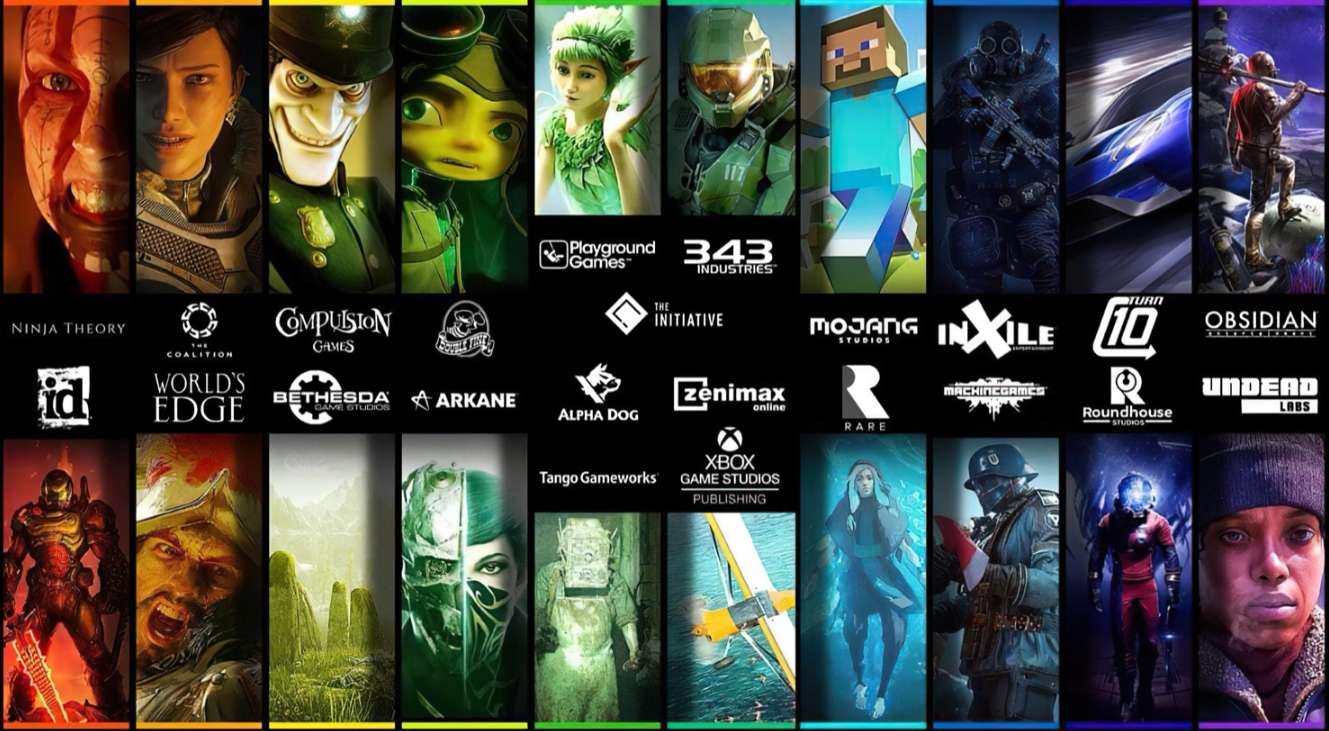
South of Midnight won a BAFTA for Best New IP less than two months ago. Now the studio that made it is apparently on the chopping block. Welcome to 2026.
Something is happening around Xbox that the industry hasn’t seen since the mass layoff waves of 2024 — except this time it’s not about cutting headcount inside studios. It’s about wiping entire teams off the map, teams with decades of history and beloved franchises behind them.
Table of Contents
What Is Happening to Xbox Game Studios Right Now
The restructuring at Xbox has been building quietly for months. Xbox CEO Asha Sharma spoke publicly about “reprioritizing” and doubling down on major franchises. Then the head of Xbox Game Studios and the division’s chief of staff both stepped down. That was already a warning sign.
But everything spilled into the open when Bloomberg, Kotaku, and The Verge published near-simultaneous reports on the same thing: multiple Microsoft-owned studios are in emergency talks with company leadership about their own survival. Not about working conditions — about whether they’ll exist at all come August.
Insider NateTheHate called what’s coming a “bloodbath.” Bloomberg journalist Jason Schreier was equally blunt: Xbox in July will look very different from Xbox in June.
Which Xbox Studios Are at Risk of Closure — Full List Based on Insider Reports
Here’s what we know as of June 16, 2026:
| Studio | Known Games | Current Status (per press reports) |
|---|---|---|
| Ninja Theory | Hellblade: Senua’s Sacrifice, Senua’s Saga | Closure confirmed — The Verge |
| Compulsion Games | We Happy Few, South of Midnight | Seeking buyout funding — Kotaku |
| Double Fine | Psychonauts, Psychonauts 2 | In active negotiations with Microsoft — Bloomberg |
| Arkane Lyon | Prey, Deathloop, Dishonored | High risk of closure — Insider Gaming |
| Other Xbox Studios | — | Schreier mentions “several more teams” at risk |
French journalist Sylvain Trinel went further, claiming Arkane Lyon’s closure is no longer a possibility — it’s a done deal. His words were unambiguous: “Remember the date: 01/07/26. That’s when the circus begins.”
Ninja Theory: The End of the Hellblade Era
The Ninja Theory situation is perhaps the hardest to swallow. The studio just shipped Senua’s Saga: Hellblade II — a game that received wide acclaim for its visual artistry and psychological depth. According to The Verge, none of that was enough. The closure decision has been made. The studio is now desperately looking for a buyer, and the clock is running.
This is a paradox that defies conventional business logic: critical success and commercial viability are not the same thing. Hellblade was never a mass-market franchise. Xbox, apparently, is now exclusively interested in mass-market franchises.
Why Compulsion, Double Fine, and Arkane Are on the List
Look at the studios under threat and a clear pattern emerges. These are teams built around strong authorial visions — but none of them own a megafranchise on the level of Halo, Forza, or Call of Duty. South of Midnight was a bold creative swing. Psychonauts 2 was a passion-project platformer. Prey and Deathloop are beloved — but not blockbusters.
Microsoft appears to be shifting away from a diversified studio portfolio toward a model built around guaranteed-audience brands. Mid-tier and niche studios don’t fit that equation, regardless of how many awards their games win.
According to Bloomberg, some studio staff have been told their teams are in an uncertain situation and given clearance to look for new jobs elsewhere — which says more than any official press release ever could.
What Does a Studio Buyout Actually Mean — and Can It Work?
The only real alternative to shutdown is a self-buyout: studio leadership finds investors or an acquisition partner, negotiates asset terms with Microsoft, and continues operating as an independent company. It sounds clean on paper.
There’s a working precedent. Toys for Bob successfully separated from Activision and retained its independence rather than facing shutdown — and that’s now the model Compulsion and Double Fine are trying to replicate. But even if the buyout goes through, massive staff reductions are still almost certain to follow.
The harder truth is that independence without a financial safety net is just a delayed crisis. Without a publisher or a major investor lined up, life after Xbox could be very short-lived.

It’s Not Just Xbox — What Trinel’s Warning Actually Implies
The French insider added something that reframes the whole story: in his view, this wave won’t stop at Xbox. His list of studios at risk includes Bethesda Game Studios, id Software, Quantic Dream, Dontnod, and even certain PlayStation Studios teams. “This is only the beginning,” he wrote on X.
If even partially accurate, that’s not a corporate reshuffle — that’s a systemic signal. Skyrocketing development costs, a string of high-profile AAA failures, the ongoing pressure of subscription gaming models — all of it is hitting mid-size studios hardest. The creative middle ground of the industry is shrinking fast.
What This Means for Players — and What to Watch for in July
If the insiders are right, July 2026 will go down as one of the most damaging months in Xbox history. Multiple studios with decades of experience and genuinely original work could cease to exist — or survive only in a stripped-down form that bears little resemblance to what they once were.
For fans of Hellblade, Prey, and Psychonauts, the immediate concern is the future of those franchises. If the studios close, Microsoft retains the IP — but who develops those series next, and when, is entirely unclear.
Watch for official statements from Microsoft after July 1st. That’s the date insiders have circled. Whatever happens, the industry will look different on the other side of it.