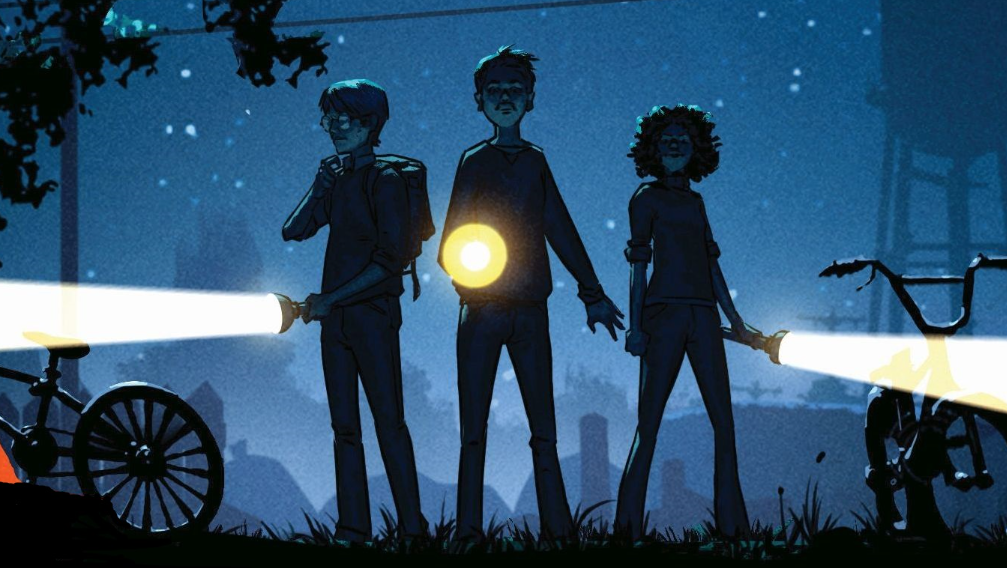
Naughty Dog is apparently working on three major titles simultaneously. The latest rumor concerns The Last of Us Part III—it’s said to be the third project in the pipeline. Meanwhile, the studio is reportedly finishing Intergalactic: The Heretic Prophet, after which it may move on to Uncharted 5.
Table of Contents
Rumors about The Last of Us Part 3 from a former Naughty Dog employee
An idea that was being discussed internally was revealed by former Naughty Dog developer Gabriel Bettencourt. He recalled that Neil Druckmann considered a concept where “multiple people have immunity”—perhaps even an entire group. Sounds unusual, right? After all, Ellie’s uniqueness used to be the cornerstone of the entire story. If such a scenario were to come to fruition, the rules of the series would change dramatically.
Druckmann then stated: “I want to tell a more complex story”—one involving multiple characters and expanding on the theme of immunity. What would that entail? New conflicts, a more expansive narrative, moral dilemmas that never existed before.

However, Betancourt emphasizes that this is just one of the early ideas. The concept could have changed significantly over the years of development, and the final script for The Last of Us Part III (if it even exists) could look completely different. Rumors are just rumors, and Naughty Dog hasn’t officially confirmed anything.
Cordyceps mutation in TLOU 3: where does the immune group come from?
If Druckmann is truly pushing the plot toward the immune group, scripted will alone won’t suffice—a biological foundation is needed. And The Last of Us lore provides it. The Cordyceps Brain Infection in the world of TLOU is a living mechanism, not a frozen strain from a test tube. In the quarter century since the 2013 Outbreak, the fungus has evolved from the twitchy Runners to the collective monster nicknamed the Rat King in Part II. As CBI changes hosts, the way the host responds also changes. Immunity shifts along with the pathogen.
Cordyceps Evolution: From Runners to the Rat King

Each stage of the infected in TLOU is a new stage of adaptation. Runners still see and rush toward sounds like berserkers, Stalkers are already cunning and waiting in ambush, and Clickers are completely blind, but in exchange, they gain echolocation. The fungus literally reshapes the host’s sensory system to suit its needs. Cool and creepy at the same time.
Infection Stages: The Last of Us
Part II introduced two truly radical upgrades. Shamblers are enormous carcasses that mutate in dampness and spit acidic clouds. The Rat King is a whole other story: the fungus stitches together several Clicker and Runner bodies into a single biological unit. Naughty Dog isn’t taking this unprecedented step just for show. The studio is clearly hinting: CBI isn’t stuck in 2013; it’s confidently moving forward.
It’s logical to expect the next form in Part III—one that will fill the empty ecological niche. The community on Reddit and in DTF threads is throwing around one darker theory after another: flying spore carriers (hello, “zombie mosquito” jokes), symbiotic infected with the rudiments of primitive communication, underwater mutations after the Seattle floods. Any such scenario would tip the balance of “fungus versus immunity.” The selection process would begin anew.
Immunity in The Last of Us: 3 Fan Theories
Ellie’s immunity story hinges on one subtle assumption: Anna was bitten literally seconds before the midwife cut the umbilical cord. There is an explanation—but it’s about one person. If the writers are moving the plot toward multiple immune systems, there’s a price to pay. Biological logic, for example. The fan community has broken down this topic into three working theories, each with clues in the game itself:
-
Vertical transfer. Children born in closed settlements—Jackson, the WLF, the Seraphite community—acquire partial resistance through maternal antibodies. The more the epidemic presses on the population, the higher the chance of such passive immunity in the next generation.
-
Strain diversification. Over 25 years, the CBI has inevitably split into subspecies. Survivors have a broader immunity to the new strains of the fungus than to the original strain of the 2013 Outbreak. Essentially, it’s the same story as with the coronavirus and its variants, only in a fungal universe.
-
HLA hypothesis. Resistance is tied to a specific set of histocompatibility genes (HLA – human leukocyte antigen). The Fireflies tried to map this in their lab in Salt Lake City, but they weren’t successful. The organization collapsed before scientists could obtain a stable sample.
What’s interesting is something else. Naughty Dog carefully laid out new clues for a second scenario back in Part II. Notes from the Fireflies’ hospital, fragments of Anna’s diary, Marlene’s remarks about “a few samples” that never reached the research team. There’s plenty of material, but the studio deliberately sidelined biology for the sake of a story about revenge and forgiveness. Abby and Ellie had too much on their shoulders.
Part III could unlock that box and transform immunity from one girl’s miracle into a concrete phenomenon that people have already learned to track in the post-apocalyptic world. This won’t negate the tragedy of the story; it will simply give it a different scope.