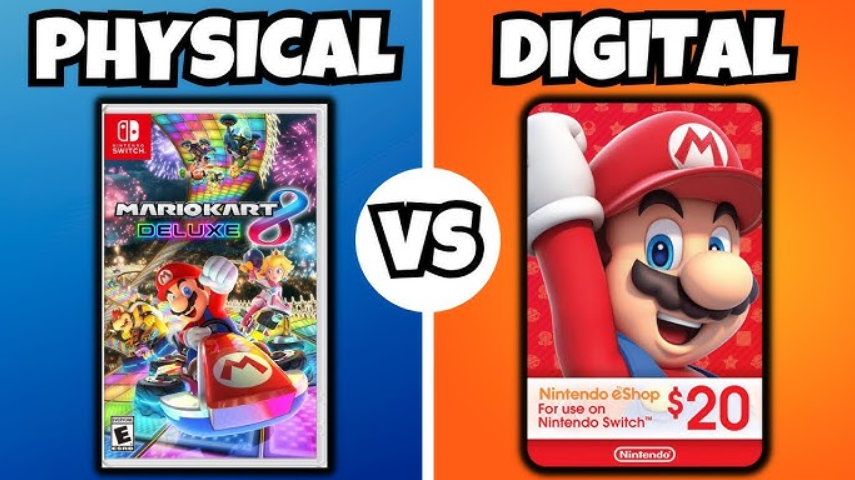
Alinea Analytics published detailed data on the six biggest releases of the year, and the picture turned out to be more complex than “discs are dying.” Here’s a summary table for each hit—and an analysis of why Sony’s statistics don’t tell the whole story. Next, why Ghost of Yotei holds up better than any other game, and what players are missing out on when discs become a thing of the past.
Table of Contents
Alinea Analytics Data: Which Games Have the Highest Share of Physical PS5 Sales in 2026
According to an Alinea report based on PlayStation Network telemetry and retail receipts in the US, Europe, and Japan, the distribution of physical titles among 2026 blockbusters looks like this:
The figures are from the original Alinea source. The discrepancy with Crimson Desert (some media reported “less than 20%”) is resolved in favor of the exact figure of 19.9%, as cited by the analytical report itself.

The 2026 Paradox: Sony’s Overall Digital Statistics vs. Actual Sales of AAA Hits
How did Sony calculate 78% digital sales?
On July 1, 2026, Sony officially announced that the digital share of PlayStation sales had reached 78%—a new record. The company is betting on digital distribution and will release a console without a disc drive by default starting in 2028. However, if you look at Alinea’s data for individual games, the 78% figure seems inflated. Most recent AAA releases have physics-based distribution at 20-35%. Where does this 78% figure come from?
What’s behind the numbers: indie games, DLC, and the back catalog?
Critics, including analysts at 360game, point to a methodological flaw: Sony includes all digital transactions in its statistics—indie games without physical releases (for example, Meccha Chameleon, with 13 million copies on Steam, is also digital-only on the PS5), add-ons, season passes, microtransactions, and games from previous years that are no longer available on disc. If we consider only releases that were released simultaneously on disc and digitally, the share of physical games is significantly higher.
For example, according to Insomniac Games data (leaked last year), Spider-Man 2 had a 54% physical share in its first few months. GSD (a retail sales aggregator) records that in the UK, 35.4% of Ghost of Yotei sales in its first week were on disc—that’s almost every third copy. So the overall figure of 78% is not “physics is dead,” but “Sony’s math is convenient for investor reporting.”
Why Physical Copies Still Matter: Billions in the Billion and Collector’s Value
$1.6 Billion Physics Market in the US
According to NPD Group (now Circana), physical game sales in the US totaled $1.6 billion in the first half of 2026 – almost a third of all retail sales in the gaming industry. No one is willing to give up such a slice of the pie, not even Sony. That’s why Capcom continues to release disc editions of Resident Evil, and why Korean developer Pearl Abyss created a special physical deluxe box with an artbook for Crimson Desert – and it sold over 300,000 copies in pre-orders.
Ghost of Yotei – Physics Champion: 35.4%
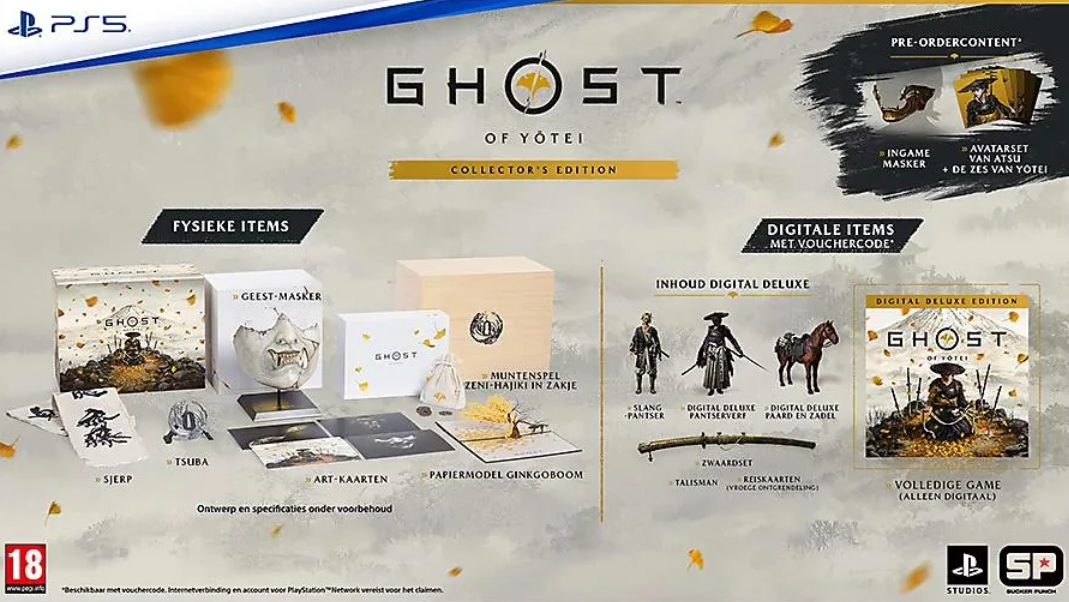
Why does Ghost of Yotei have the highest physics share? It’s Sony’s first-party title, a strong brand, and the successor to the legendary Ghost of Tsushima. Its audience consists of mature fans who value collector’s editions, steelbook editions, and a world map. For them, a disc isn’t just a storage medium, but an artifact. And Sony understands this: even with the demise of discs in 2028, collector’s editions will still contain physical items, but without the disc—in the form of a code. But as long as discs sit on store shelves, people will buy them.
What do players lose with the demise of discs?
Alinea’s report includes a noteworthy fact: 25% of Resident Evil Requiem players completed the game in less than 10 hours and immediately put their discs on the secondary market. That’s nearly 900,000 people. A digital copy doesn’t offer this option—you can’t sell or give away a digital copy. This isn’t profitable for Sony and Capcom, but for gamers, it’s a loss of freedom. Not to mention that discs allow you to play even when license verification servers are down—and in 2026, that’s still relevant, especially in regions with unstable internet.
Why Sony is ditching discs starting in 2028—and what analysts are saying
Sony’s decision on July 1, 2026, to release a new console without a disc drive is no surprise. Alinea analysts and other experts agree: this is a business move, not a technical necessity. Digital distribution gives Sony and publishers control over pricing, eliminates the secondary market, and reduces logistics costs. But for players, this means the end of the era when games were physical. However, as the table above shows, the total is still a long way off—even in 2026, a third of top hit sales will still be on plastic.