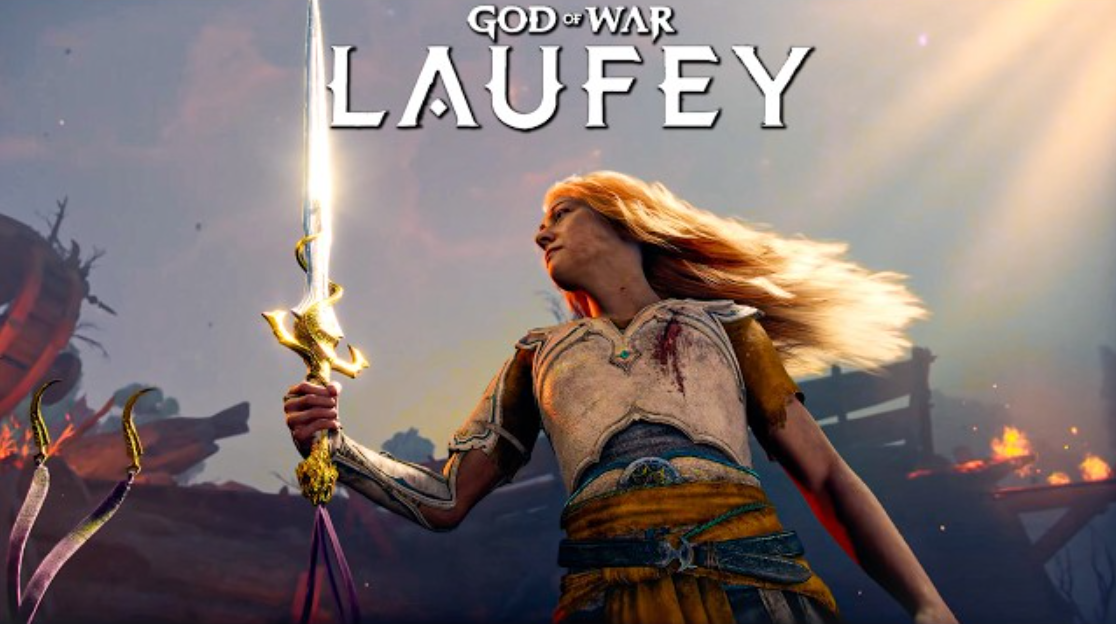
Santa Monica Studio is preparing an unexpected move. Instead of Kratos’ new adventure, there is a spin—off. The main character is Laufey, aka Faye. Events unfold in parallel with God of War (2018) and Ragnarok. The trailer showed a fierce warrior rushing back to her husband and son. And this is the main motivation.
But there is a caveat. Kratos is not in the main role, although his story is still in the center. The game is dedicated to his late wife. Faye awakens in the Omnipresent afterlife, which unites all the pantheons. Not only Scandinavian. Does that sound crazy? Maybe. But we’ve sorted out the main thing.: who is she, when everything happens, and what kind of war gods meet along the way.
Table of Contents
The story of the giantess Faye in the mythology of God of War
Laufey is a Jotnar from Jotunheim. Mother of Atreus (Loki) and wife of Kratos. In the worlds, she is more often called Faye. And she was treated with great respect, both in Midgard and beyond. Why? She was not afraid of the gods of Asgard. Odin, Thor— all of them. She stood up for the oppressed when others were silent.
By the way, Faye even fought Thor. Think of the frozen lightning in the ruins of Vanaheim in Ragnarok. This is her trail.
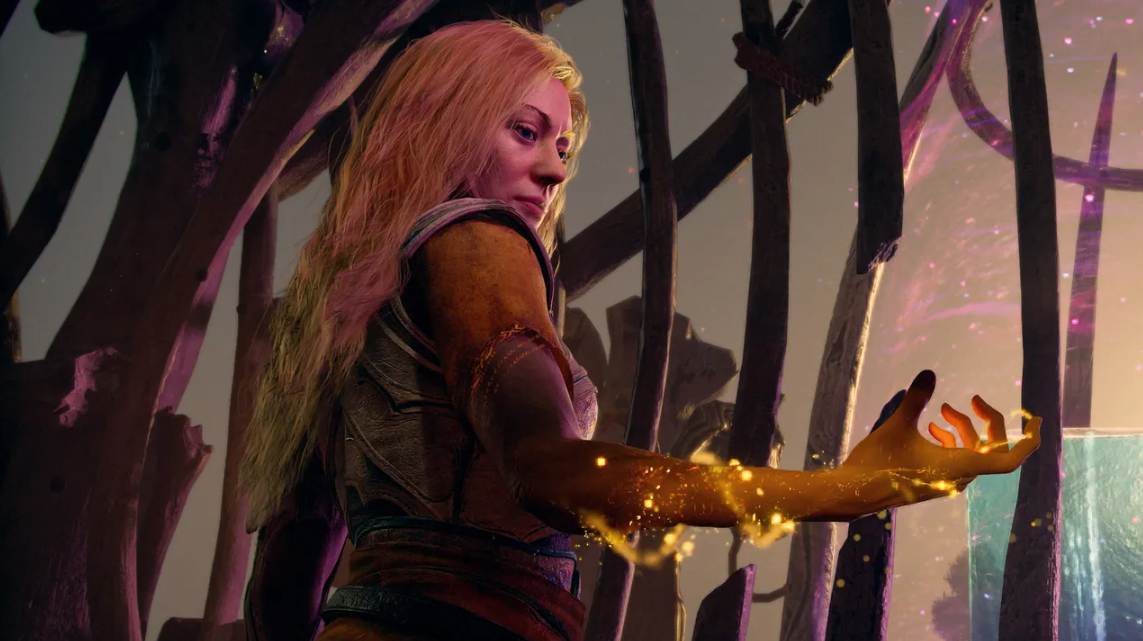
The paradox is that the first time we meet Faye is at a funeral. Kratos and Atreus burn her body — this is the beginning of the 2018 journey. But death turned out to be not a point, but, apparently, a starting point. Her past is revealed through those whom our characters meet. Everyone responds warmly: compassion, fighting skills, the legendary Leviathan axe (forged especially for her).
What did we not know? Faye’s ambitions, her true goals, the reasons for her silence. Kratos tries to put the puzzle together after she leaves. And now — God of War Laufey. Therefore, it will give answers to almost everything.
Scandinavian Myths and the Prose Edda of Lauway
In the original Scandinavian epic, including the Poetic Edda and the famous Prose Edda by Snorri Sturluson (written around 1220), Loki’s mother is practically a ghost character. We only know her middle name, Nal (meaning “needle”), and that’s it. No epic battles or legendary weapons. However, the scriptwriters of Santa Monica masterfully turned this historical gap into the main trump card of the plot.
The main oddity of the ancient legends lies in the very name of the god of deception. Everywhere he appears as Laufeyjarson. Scandinavians traditionally used patronymics, but here is a direct reference to the mother. Scientists like John Lindow (author of Norse Mythology, 2001) and Rudolf Simek (Dictionary of Northern Mythology, 1993) agree on one thing: such a matronym was issued only with an incredibly high social status. In the myths, she was apparently a powerful asinya, while her father, Jotun Farbauti, remained on the sidelines. The developers seized on this detail. As a result, Lauveia became a formidable warrior from the Jotnar race, whose reputation boomed even in Midgard.
Another powerful layer of lore is tied to hidden meanings. The Scandinavian skalds literally encoded the destructive essence of Loki in his genealogy:
-
Laufey translates as “foliage” or “wooded island”.
-
Farbauti means “fierce blow”, which directly symbolizes lightning.
-
Loki is inextricably linked to fire.
The formula is completely simplified. A lightning strike on dry foliage generates an uncontrollable flame. In God of War: Ragnarok, Atreus also acts as a catalyst — he becomes a harbinger of grand cosmic chaos.
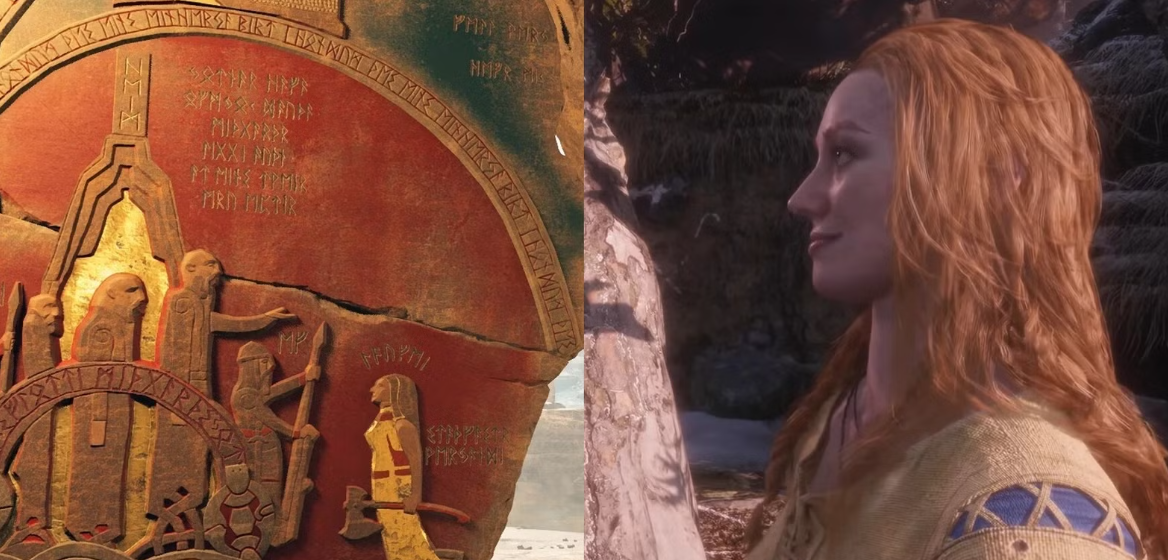
Tellingly, the original Farbaugh doesn’t appear in the God of War universe at all. But the replacement here is filigree. Kratos fits perfectly into the semantics of the “crushing blow.” The creators crossed two pantheons, sewing this explosive mix into the DNA of Atreus. This approach is called mythopoeia in the literature. The Santa Monica team took only basic variables from the real sagas, like the name and the mysterious disappearance of the heroine, and wrote the whole journey through Nine Worlds from scratch. That’s why the local plot looks monolithic — even the most meticulous Scandinavians won’t bother with it.
The Chronology of God of War Laufey and the Mystery of Faye’s Death
Faye’s death is still a mystery. The game begins with a cremation, a moment that coincides with the beginning of the original God of War (2018). While Kratos and Atreus travel through the worlds of the living to scatter the ashes, Faye herself wakes up in the Omnipresent. This is the Scandinavian afterlife. And the dead from all the pantheons come here.
Right after waking up, she is greeted by two people. Begce is the Buddhist god of war. And Sekhmet is the Egyptian goddess of war. Both are dead. They’re both up to something. What exactly is still a mystery.
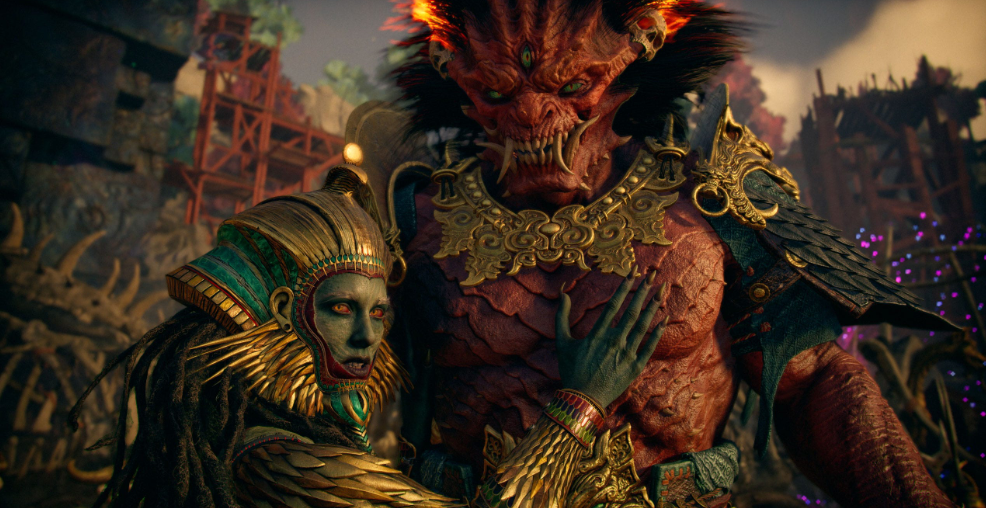
There are more questions than answers. How did Faye meet Kratos? How did she know the prophecy about a god who would be loved and not feared? How did she die? Where will her story take her to Laufey?
The spin-off is clearly going to close these gaps. And judging by the trailer, he’ll do it tough.
The main secrets and analysis of the trailer of God of War Laufey
The trailer threw up a question wagon. And a small cart. Santa Monica Studio is clearly in no hurry to reveal all the cards. But we’ve rounded up the hottest spots where fans are waiting for clarity.
Who called Ermungand in God of War 2018
Do you remember the scene from God of War (2018)? While Kratos and Mimir are trying to save Atreus, an unknown blows a horn. The snake reacts. The identity of this man has not yet been named. One of the versions is Faye. Who may have briefly returned to Midgard from the Omnipresent. Does it sound wild? But in a world where dead gods roam the underworld, why not?
The Connection between the Mask of Creation from Ragnarok and the Omnipresent
In God of War Ragnarok, Odin is possessed by the Mask of Creation. He climbs into it to learn the secrets of death and the universe. In the Ubiquitous Faye, judging by the trailer, she fears something similar. And she really wants to return to her family. The creators hint: “another” mask exists. And it can turn everything around.
Kratos’ Role in the Afterlife is Omnipresent
It’s interesting here. The Greek god of war is shown twice. In the beginning, the mourners at the campfire. Later— in the Omnipresent, where he helps Faye up, but quickly disappears. Question: Is this a colorful memory? Or will Kratos really make his way to the world of the dead? Given his background, nothing can be ruled out.
New gods of war Sekhmet and Begce in the new game
The trailer has already shown Begce (the Buddhist god of war) and Sekhmet (the Egyptian goddess). But the Omnipresent is the melting pot of all pantheons. It is logical to assume that we will also see old acquaintances. Those whom Kratos mowed down in the Greek saga. Can you imagine Faye meeting with one of them? The intrigue.
The character Jack Quaid and Frank’s mysterious sword
Frank is played by Jack Quaid. He’s Faye’s new ally. And he carries a sword that scares even a Fugitive. Weapons of this level may be associated with Abrahamic religions — or something completely different. We’re still guessing. But it looks powerful.
There is no official release date for God of War Laufey yet. We are waiting for news in 2027. As soon as they appear, let’s say right away.