Naoki Hamaguchi, co—head of development of the hit Final Fantasy VII Rebirth, recently talked to the guys from GameSpot and, frankly, rolled out some really powerful insiders. According to him, the final third chapter of the saga will be based on the good old Unreal Engine 4. It’s interesting, though, because many people were waiting for the transition to the “five”, but Square Enix decided not to risk the stability of the workflow.
Table of Contents
Comparing Unreal Engine 4 features with next-generation graphics
The Unreal Engine 4 engine has long jumped over its head, but now the industry is asking a tough question — whether its architecture will pull a picture of the level of the conditional PS6 or the monstrous RTX 60 series. Developers, of course, use crutches with all their might in the form of clever manipulations with shaders and complex LOD models, but fundamental barriers like the lack of native Nanite or Lumen just can’t be bypassed.
Visual effects and lighting
UE4 still relies on classic deferred rendering and shadow baking, which, by the way, provides excellent stability in action scenes, but clearly loses out to modern requirements for realism. For example, the effects of subsurface scattering for the skin or volumetric fog work here only through custom add-ons. In the same Final Fantasy VII Rebirth, if you look closely, divine rays and fog are combined with screen reflections, which allows you to squeeze 60 frames per second on the PS5 due to the temporary accumulation of frames. The lighting in UE4, apparently, is not able to produce an honest Global Illumination without third-party solutions, so Square Enix adds hybrid ray tracing only for boyars on PC, sacrificing the quality of console versions for the sake of smoothness of the picture.
Custom plugins and graphics upgrade
Using Niagara for special effects and self-made HLSL shaders allows, in principle, to bring up the UE4 visual to the level of early demos of the fifth version of the engine. In Rebirth, the creators have implemented a special plugin for rendering vegetation with wind animation on a video card — this, by the way, accelerated the simulation of grass by almost 40%. Such an upgrade through modules from the marketplace is the absolute norm these days. Instead of DLSS, Temporal Super Resolution is often screwed in, which makes the image clear in 4K even in open worlds with billions of polygons packed into hierarchical levels of detail.
Optimizing rendering for consoles
Console rendering in the fourth “anrial” is now fashionable to optimize through pipelines controlled by a video card — the PS5 and Xbox Series X use mesh shaders with might and main to reduce processor load by about 20%. In Remake Rebirth, the team fine-tuned the Variable Rate Shading (VRS) technology. The meaning is simple: less important areas of the screen, like distant mountains, are rendered in low resolution, which helps to maintain a stable 120 FPS in performance mode. Look at the numbers below, everything is clear there, in fact.
| Optimization Parameter | Effect on PS5 / Xbox | CPU / GPU Benefit |
|---|---|---|
| Mesh Shaders | Reduced draw calls | ~20% lower CPU load |
| VRS (Variable Rate Shading) | Dynamic resolution scaling | +15% FPS stability |
| Temporal Super Resolution | Upscaling to 4K | Preservation of fine details |
The main metric is expressed in the following table:
| Parameter | UE4 Stock (PS5) | Optimized (Rebirth) | FPS Gain |
|---|---|---|---|
| Draw Calls per Frame | 1500+ | 800–1000 | +35% |
| Shadow Cascades | 4 | 6 (with denoising) | +25% |
| Texture Streaming | 2 GB | 1.5 GB with mip bias | +18% |
Square Enix strategy and technical development of the Final Fantasy series

The Japanese publisher Square Enix holds the fourth engine as a kind of golden mean for the release of games at the junction of generations. The Final Fantasy series has made a strong leap here — from the graphics level of the PS3 era to the modern nextgen hybrid.
Square Enix Strategy
The company chose UE4 because of its maturity and a huge number of ready-made tools, which apparently minimizes development risks. Investments in our own software have paid off in full — Rebirth sales have exceeded 5 million copies, which is very cool, you must agree. The main focus is on gradual updates: from version 4.27 with ray tracing to patched builds that mimic UE5 features without completely moving to new code.
The Evolution of the Final Fantasy Series
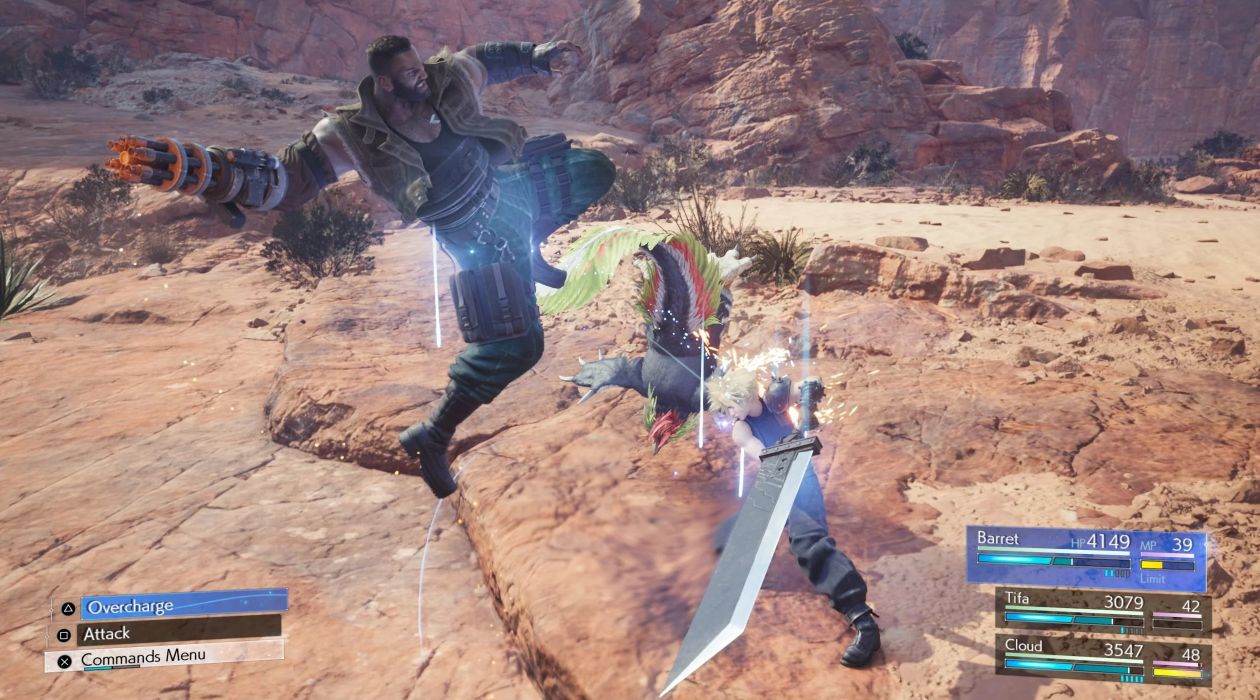
The transition to the rails of Epic Games happened in 2020 with the release of Remake, and since then the detail of the picture has increased significantly. We’ve gone from murky 900p on the old PS4 to full-fledged 4K with HDR pipelines. Rebirth has added dynamic weather and advanced particles, turning the visual into real photorealism — Cloud’s hairstyle, by the way, now consists of two million individual strands that are calculated on the GPU in real time.
Switching to UE5 in future projects
Square is already racing the fifth Anrial in the Kingdom Hearts 4 tests, but Rebirth was left at the old base due to burning deadlines. However, future patches may well add Nanite-like geometry to the game so that the picture doesn’t seem outdated.
The future of the series: Will Part 3 be the last game on this engine?
The final third part is likely to be released in 2027 on a heavily modified version of UE4.27+. Rumors on the web are trumpeting some kind of hybrid with UE5 specifically for the PC version. The full and final transition to new technologies will happen, apparently, in the next projects in the FFVII universe, if Epic Games finally makes Lumen stable on consoles. In general, we are waiting and hoping for the best — the potential of the team is great without any nuances.
Trilogy finale development and optimization for new platforms
Last year, Square Enix bosses were seriously considering moving to more recent technologies. As a result, apparently, the team left the engine the same — just shoveled it to fit their needs to complete the trilogy. Hamaguchi confirmed that the title for the last part has already been approved together with Tetsuya Nomura, the creative director of the project. At the same time, the developers are polishing the Rebirth optimization for the future Switch 2. The publisher wants to squeeze a stable frame rate out of the new Nintendo console — and this is logical, in fact.
Meanwhile, while some are engaged in graphics, others are pushing up the price tags — and this is sad. Gamers have noticed that pre-orders of Forza Horizon 6 on Steam have suddenly risen in price for Turkey and the CIS. The cost of different editions of the race, by the way, jumped more than one and a half times. In fact, such price swings in Turkey and neighboring regions have already become some kind of norm, unfortunately.