

Imagine a story where romance intertwines with danger, and tender feelings collide with cruel reality. In Hakuoki: Kyoto Winds, you meet twelve charismatic warriors and a brave samurai from the legendary Shinsengumi squad. Behind their outward nobility lie dark secrets that you will have to uncover, while fighting your own inner demons.
Every decision you make here matters — the plot branches into dozens of options, and at the end, you can expect one of 30 unique endings. This is not just a visual novel — it is a historical fantasy with adventure elements, filled with emotions, intrigue, and drama.
The project was created by Idea Factory and is available on PC. The game combines the genres of visual novel, adventure, otome and contains scenes of violence, so it is designed for a more mature audience. There are no multiplayer modes here — this is a story that you will live alone, immersing yourself in the atmosphere of Kyoto of the last century. The game is distributed as a one-time purchase and is published by Idea Factory International.
Table of Contents
Hakuoki: Kyoto Winds Free Steam Account
How much do you really know about Japan? Sure, you’ve heard of its brilliant video games, its rich pork broth, and its hilarious TV shows that can make you laugh until you cry. But gastronomy and entertainment aside, what do you know about its politics and history? For example, did you know that one of the most technologically advanced and progressive countries in the world still has a monarchy?
The Emperor of Japan today is not a ruler in the traditional sense, but rather a national symbol. The constitution strictly limits his powers, and he himself, as a rule, does not seek to argue with parliament or the prime minister. This symbolic role of the monarch is found in other countries, but the Japanese case is special. Here, the title of Emperor was more of an honorary title for almost the entire last millennium. And while the reins of power are now in the hands of the prime minister, power once belonged to the shogun.
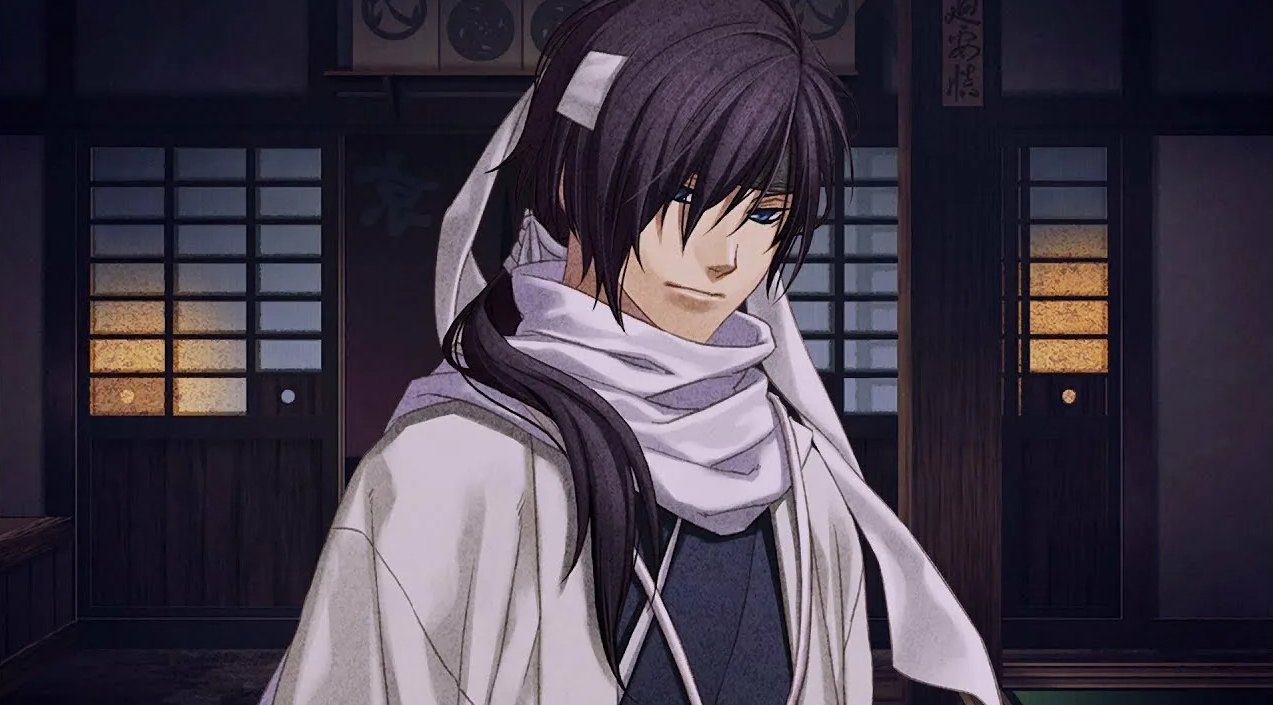
During the famous Sengoku period, familiar to gamers from series like Samurai Warriors, the figure of the Emperor practically lost its meaning. His name could only be used as a beautiful signboard to attract allies. But everything changed when the Tokugawa clan won the feudal wars and took control of the country. Gradually, the shoguns began to treat the Emperor with greater respect, and the people followed their example.
The situation worsened in the 19th century, when Japan found itself under serious military and economic pressure from the United States and European powers. More and more people dissatisfied with the shogunate’s policies began to see the solution in returning power to the legitimate monarch. It seemed that all that was needed was to hand over control to the Emperor – and he would be able to put foreigners in their place, restore the country’s independence and improve the lives of the people.
Why pay when you can play with steam free accounts?
Hakuoki: Kyoto Winds Plot
Why this historical digression at all? It’s simple: the plot of Hakuoki: Kyoto Winds – as well as the entire series, because we have a visual novel before us – is built around the Shinsengumi, a special military police unit created by order of the shogun in 1863. It was an anxious, turbulent time: the people trusted the authorities less and less, and the country was threatened by internal conflicts. One can only imagine how difficult and contradictory the mission of these new guardians of order was. Even a century and a half later, it is impossible to say for sure which of the political forces of that time was the “right” side. The Shinsengumi could be both a noble brotherhood, true to its ideals, and a ruthless gang, using its official status as a cover. And sometimes – both at the same time, depending on whose eyes you look through.
And young Chizuru Yukimura, the daughter of a respected doctor, who was brought together by fate with the Shinsengumi officers, finds herself drawn into this storm. In real history, such a girl most likely never existed, but in the world of Hakuoki, as well as in the manga and anime based on it, she is given the main role. At first, Chizuru is afraid of the stern samurai in blue hakama: the people call them “Wolves of Mibu” – bloodthirsty fanatics, drunk with power. Historical sources do mention the struggle for influence, betrayal of commanders and bloody showdowns on the way to forming a detachment. But the scenario of Kyoto Winds begins in the period when Kondo Isami is at the helm – a charismatic leader, whom the game depicts as an honest, noble and caring commander devoted to his people.
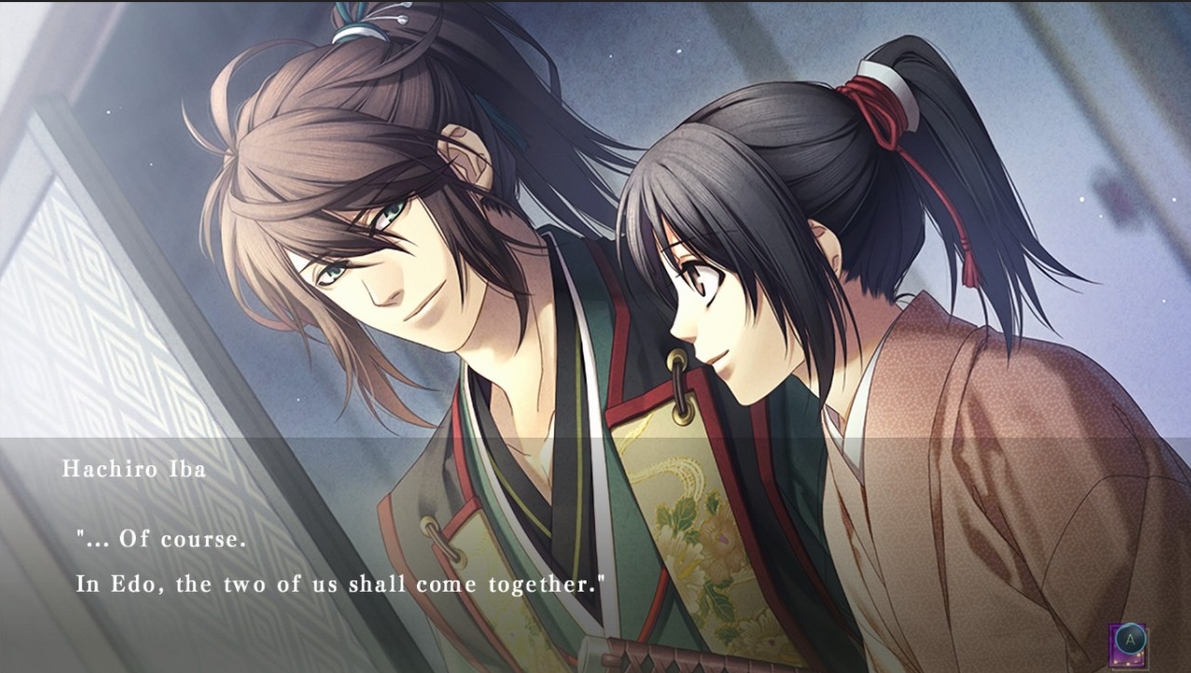
The authors are in no hurry to immerse the player in the real political divisions of that era. The events are presented through the eyes of a girl far from politics, who hears only that part of the truth that the officers decide to tell. For her, the shogunate is the only worthy authority, and the Shinsengumi shed blood for the sake of an ungrateful people, without thinking about how their actions look from the outside.
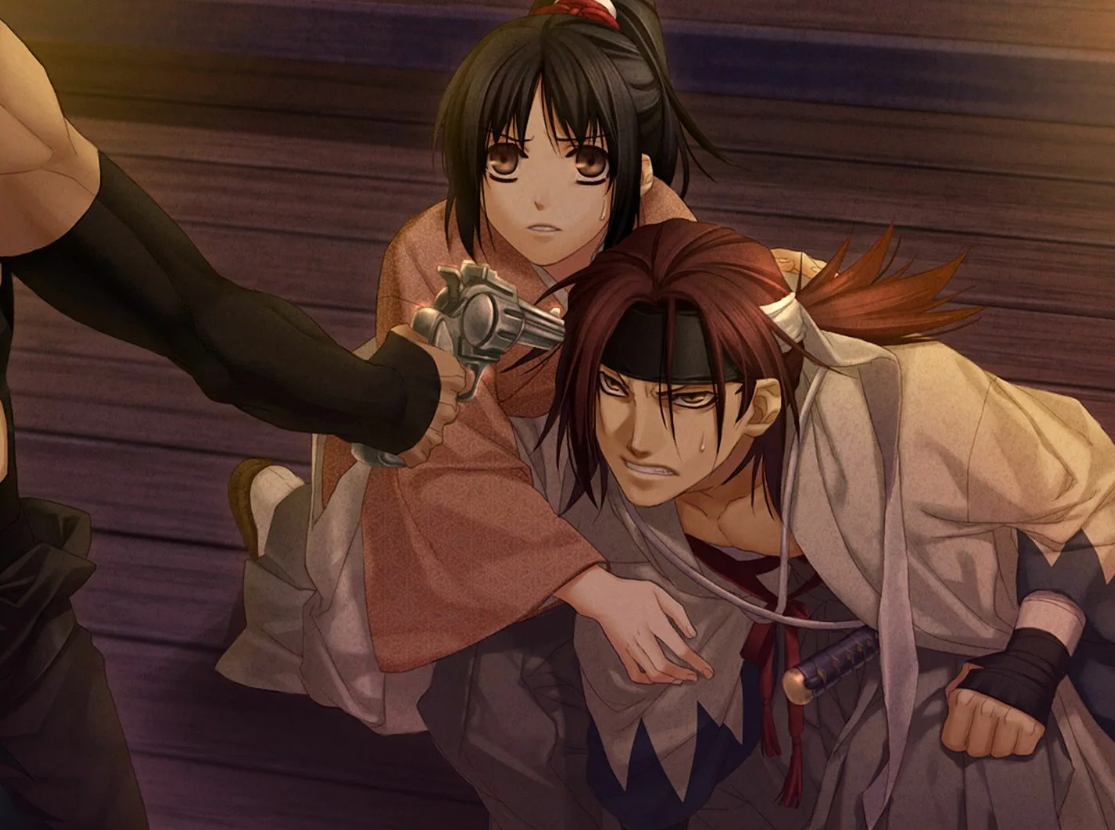
Since the entire plot revolves around the Shinsengumi, it is natural that the game tends to show them as heroes. Samurai, although harsh, protect Yukimura from any danger – be it a street robber or an entire army of enemies. Duty is more important to them than public opinion. But the scriptwriters still leave room for doubt: not every member of the squad is a paragon of honor. The more people join the ranks of the military police, the harder it is to maintain the former unity and friendship, which is especially difficult for those who stood at the origins. In life, as in the game, many have faced such disappointment.
In Hakuoki: Kyoto Winds, the topic of abuse of power is raised: the player can witness an officer demanding a bribe from an innocent person. Yes, even among the “wolves” there are those who disgrace their name. But even the most noble fighters sooner or later wonder what is more important – duty to the shogun or their own conscience. And perhaps it is this moral ambiguity that makes the story so lively and gripping.
How Elections Change History in Hakuoki: Kyoto Winds
Hakuoki: Kyoto Winds is based on real historical events, albeit with noticeable artistic embellishments. These liberties are quite forgivable – the authors did not strive for dry documentary, but to create a gripping, emotionally rich story. It is not so important here who Kondo Isami really was – an intriguer, a hero or a criminal. Over time, views on his personality changed, and the game uses this uncertainty to convey its ideas, emotions and the atmosphere of the era to the player.
The fictional heroine Yukimura is a kind of reflection of the player himself. She is at the center of events, but often remains only an observer who sincerely cares about the fate of the Shinsengumi. These warriors treat her warmly, but do not consider her an equal: brotherhood and its secrets are always above personal sympathies for them. The game emphasizes that nothing is given for free here. Trouble is inevitable, and, as in real life, no one knows what awaits around the corner – loyalty, revelation, or a heavy loss. All this creates a strong immersion effect, due to which each success of the Shinsengumi is perceived as a personal victory.
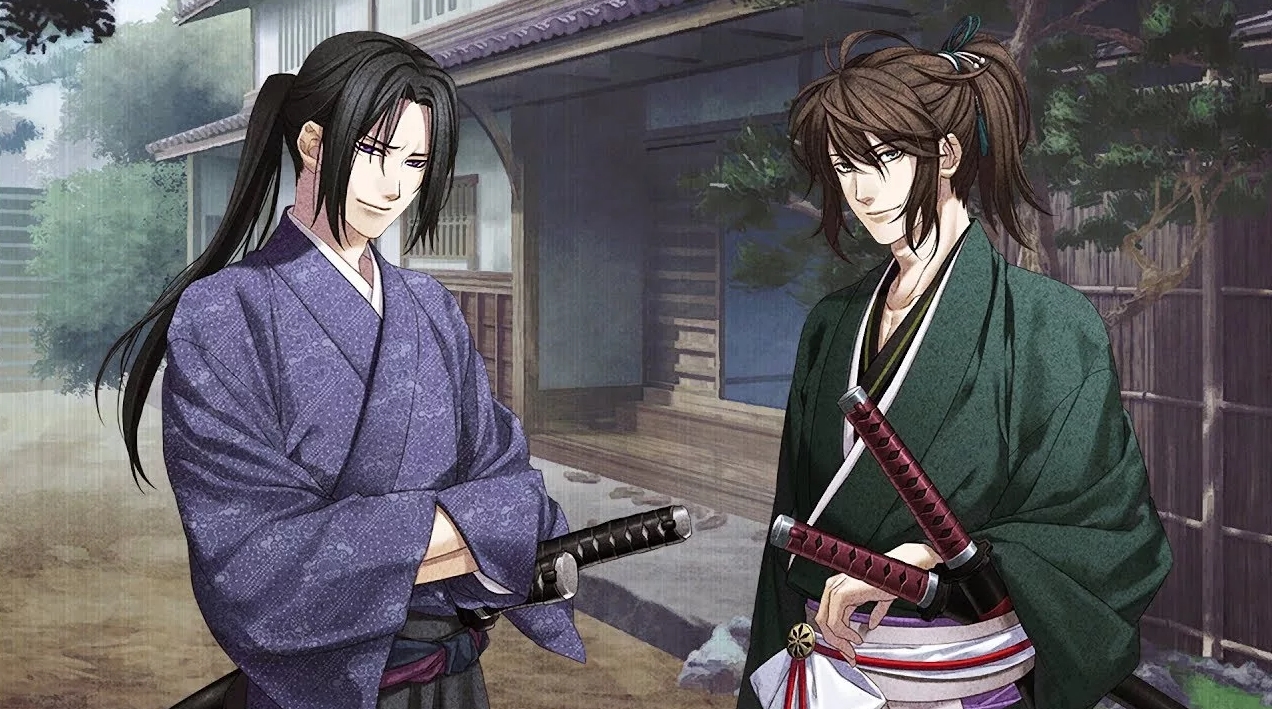
The storyline takes about six hours on average to complete, although much depends on your reading speed and knowledge of English. During this time, the player will make several dozen choices. Sometimes they only create the illusion of influence, but often future events depend on them – sometimes with a delay of a couple of hours of game time. The ending is predetermined by historical facts, but the details that Yukimura touches on change depending on your decisions. At the same time, the game does not feel rigidly linear – certain courses of action can lead to meetings with new characters or, conversely, deprive you of these scenes.
When you first go through Hakuoki: Kyoto Winds without hints, it is impossible to predict where the consequences of your decisions end and the script “magic” begins. This works to its full potential, creating a sense of unpredictability and increasing emotional impact. This is why the first playthrough leaves a particularly strong impression: you don’t know what to expect, and you live the story along with its characters. As with any good visual novel with a branching plot, there is a temptation to play again. Repeated playthroughs allow you to understand the characters’ motives more deeply and see scenes that were previously hidden. At the same time, the second and third playthroughs are especially valuable because they give you:
-
The opportunity to meet new characters and see unique scenes.
-
Understanding the motivations of characters that seemed mysterious.
-
Clarification of events that seemed random or strange the first time.
However, repeated attempts have a downside – the magic of surprise gradually wears off. Over time, you can see the writers’ attempts to save effort by replacing unique lines with universal ones. Sometimes the plot forks seem illogical: one insignificant word can lead to a meeting with a new character, while another choice in the same circumstances leads to nothing.
Nevertheless, Hakuoki: Kyoto Winds is a story that you want to return to in order to relive the drama, intrigue, and personal victories in the company of the noble Shinsengumi warriors, even knowing that fate cannot be changed.
Gameplay and Features of Hakuoki: Kyoto Winds
What awaits the player during the passage of Hakuoki: Kyoto Winds? It is based on leisurely reading of dialogues, which is occasionally interrupted by moments of choice. Most often, you will have to press the “X” button, leafing through the lines one after another – the automatic mode is unlikely to become a favorite of Russian-speaking players. There is also fast forward, but you should use it carefully: it is easy to miss important consequences of your decision. This function is more useful for those who are purposefully going for the “platinum”.
A generous number of save slots helps to navigate the numerous plot forks. It is a pity that the developers did not think through more detailed descriptions for the files – one chapter number is not enough. The visual series is mostly static: there are a couple of dozen background locations and only two prepared poses for each character. However, in dramatic moments, the game comes to life – the camera moves slowly, and the picture is replaced by specially drawn, detailed art. These special illustrations, whether individual frames or scenes collected into mini-videos, can be reviewed in the menu, provided that they are already open. There is also an encyclopedia hidden there with short notes on the events and characters encountered during the plot.
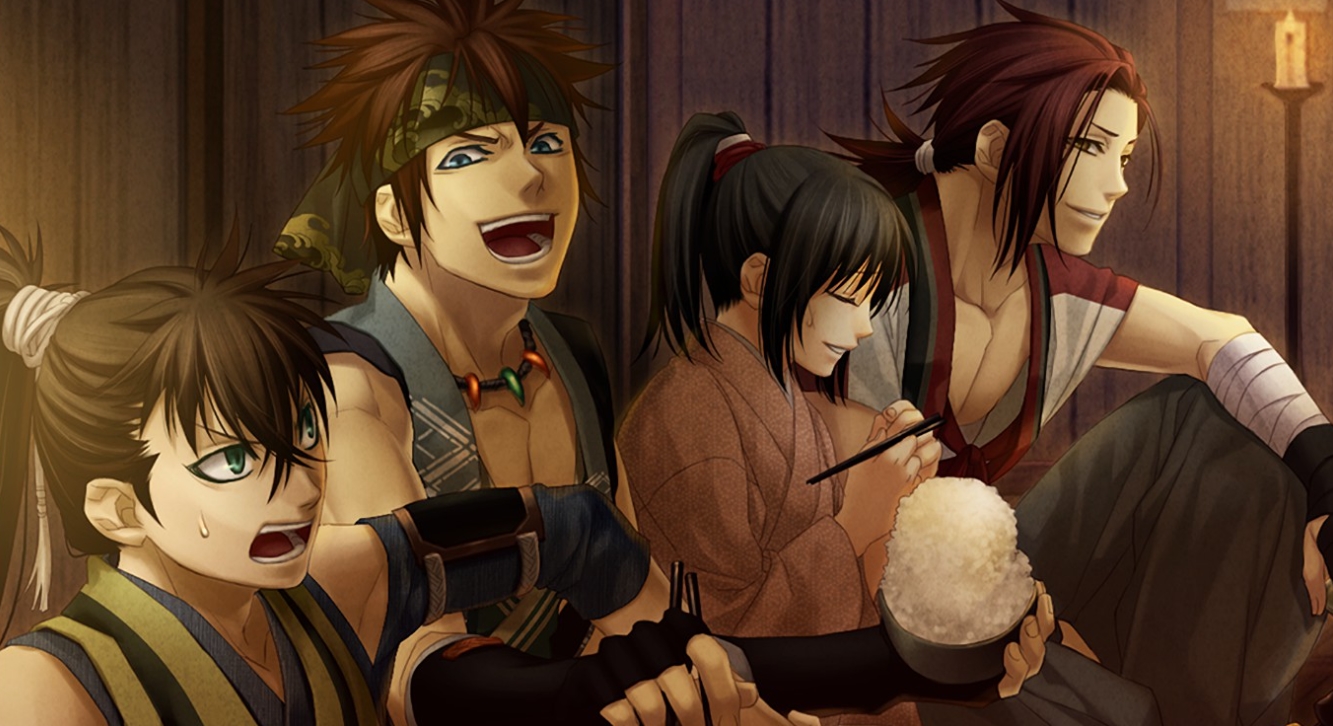
The graphics, although not outstanding by the standards of modern games, look decent for an interactive novel. As for the music and voice acting, everything is at a good level. Personally, I sometimes preferred to read without sound, but overall there are no complaints about the quality of the recording. I would only like a little more emotion in the voices of some of the characters – the plot clearly encourages this.
The story itself in Hakuoki: Kyoto Winds is a weave of real historical events and carefully woven fantasy motifs. There is mysticism here, but it does not overshadow the historical basis and is unlikely to irritate those who are tired of “demons at every step.” These fantastic inclusions only add brightness to the plot, although even without them the history of Shinsengumi would be fascinating. The main storyline gets a relatively logical conclusion, but the secondary, fantasy one, clearly hints that there is still a continuation ahead.
Hakuoki: Kyoto Winds System Requirements
Hakuoki: Kyoto Winds – Detailed PC Specs
How to play Hakuoki: Kyoto Winds for free on Steam via VpeSports
Close your eyes and imagine Kyoto at the turn of the 19th century — narrow lantern-lit streets winding through a city on the edge of change, the soft whisper of silk kimonos blending with the distant clang of a sword.
Hakuoki: Kyoto Winds invites you into a living painting of that era, where honor and danger are constant companions, and every choice you make shapes not only your destiny, but the lives of those around you. You step into the shoes of a young woman whose path crosses with the legendary Shinsengumi — warriors with unshakable resolve, yet burdened by secrets and sacrifice.
From the first scene, the game pulls you into a delicate balance of romance and peril. A single glance can spark trust or suspicion. A brief conversation may open the way to love… or seal someone’s tragic fate. The painted backdrops, the gentle strains of traditional music, and the expressive character portraits work together to create a world that feels both distant in time and deeply personal.
We’ve made sure your journey begins with ease — no technical hurdles, no wasted time. Simply register on our website, log in, and Hakuoki: Kyoto Winds will be ready to launch, complete with clear guidance on getting started, even through a free steam account. From there, the streets of Kyoto are yours to explore, step by step, heart by heart.
Once you’ve walked this path, we’d love to hear your story. Which character stayed in your thoughts long after you closed the game? Which moment made you smile, and which one left your chest tight with emotion? Every review you send is read with care — and if it doesn’t appear immediately, a small adjustment will help it pass moderation, after which your login details will arrive directly in your inbox.
For those who wish to remain close to the world of Hakuoki, our Telegram channel and chat is a gathering place of kindred spirits. There you’ll find not only new accounts and game updates, but also heartfelt discussions, tips for unlocking every route, and shared excitement over each revelation. And should you ever feel lost, our “How to play for free – Complete guide” is ready to lead you back onto the right path.
In this story, you’re more than a reader — you’re a heartbeat in the middle of Kyoto’s storm, a witness to love, loyalty, and the quiet strength it takes to change fate.