

Dead Rising 2 promises complete freedom to slaughter zombies, then puts a clock in front of you and refuses to let you waste time. That is the game’s central paradox: its enormous entertainment complex is packed with weapons, outfits, vehicles, and thousands of undead, yet it rarely allows you to explore everything at your own pace. While Chuck Greene tries on a ridiculous hat or builds an electrified wheelchair, a survivor is dying somewhere, a story case is about to begin, and his infected daughter will soon need another dose of Zombrex.
Most modern action games would treat this kind of pressure as an inconvenience. In Dead Rising 2, it is the foundation of the entire experience. The game constantly forces you to choose between having fun, rescuing people, and advancing the story. As a result, it can deliver a wonderfully unpredictable adventure or several deeply frustrating hours.
Even after all these years, Fortune City remains one of the best amusement parks ever created for a zombie game. You just need to enter it with a clear understanding of the rules: Dead Rising 2 will not complete everything on your behalf, and it is never afraid to punish mistakes.
Table of Contents
Dead Rising 2 Story: Chuck Greene Has a Personal Reason to Survive
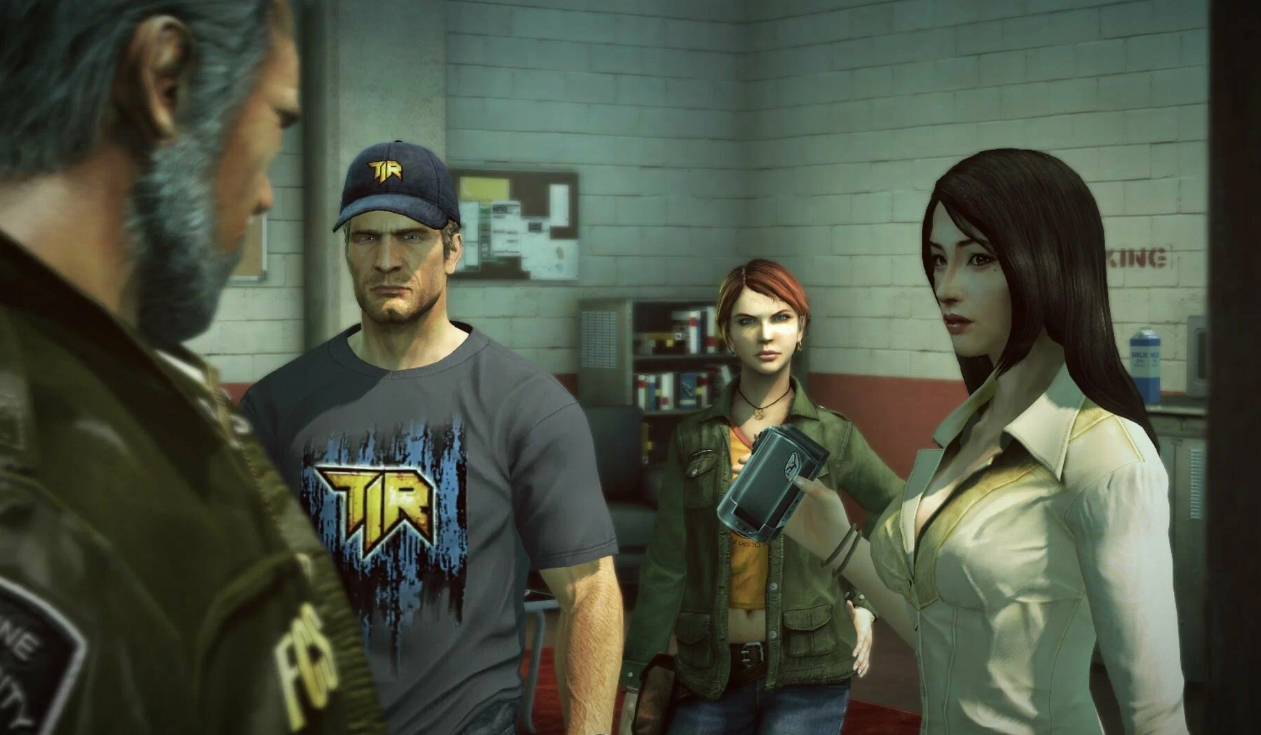
The story takes place in Fortune City, a grotesque mixture of Las Vegas, a shopping mall, and a theme park. Following another zombie outbreak, former motocross champion Chuck Greene becomes trapped in the city with his daughter Katey. The girl is infected, but a daily injection of a drug called Zombrex prevents her from turning.
At the same time, Chuck is framed for causing the outbreak. With only 72 hours remaining before the military arrives, he must find medicine for Katey, prove his innocence, and help other survivors whenever possible. These three objectives form the foundation of the campaign: save his daughter, clear his name, and survive three days inside a city overrun by zombies.
The plot is not especially subtle. The conspiracy is easy to predict, the villains are deliberately exaggerated, and serious moments regularly collide with outright comedy. Chuck’s personal motivation, however, works better than another generic story about saving the world. Zombrex is not merely an abstract quest item: the player must find or purchase the drug and return to the safe house in time.
This is where a gameplay mechanic becomes part of the story. When only a few in-game hours remain before Katey’s next injection, even a short trip for supplies becomes a risk. You can stop to rescue a stranger, but doing so may place Chuck’s daughter in danger. Dead Rising 2 does not always deliver convincing dialogue, but it creates situations in which responsibility is felt without the need for lengthy cutscenes.
How Dead Rising 2 Gameplay Works and Why the Timer Matters
Fortune City is technically an open world, but it is not a sandbox in the modern sense. The location is divided into casinos, shopping areas, restaurants, service corridors, and outdoor plazas. Hordes of zombies move freely between these areas, while story cases, side missions, and reports about survivors appear according to a fixed schedule.
Time is always moving. If you fail to reach a story mission before its deadline, the main questline may end. A survivor you ignore will probably die, while a missed opportunity will not return during the current playthrough.
At first, the system can feel like an unfair restriction. The player does not know the map, Chuck moves slowly, inventory space is limited, and every detour threatens the schedule. Eventually, it becomes clear that the timer exists for more than artificial difficulty. It forces you to plan routes and turns ordinary movement through a shopping complex into a logistical challenge.
Before leaving the safe house, you need to decide:
-
which missions can realistically be completed on the same route;
-
where to find Zombrex and whether to keep a spare dose;
-
whether fighting a psychopath is worth the risk right now;
-
how many inventory slots to reserve for food and weapons;
-
whether a group of survivors can be escorted back safely.
Completing absolutely everything during a first playthrough is difficult without extensive knowledge of the map. The game expects players to restart the campaign after failure while retaining Chuck’s level and unlocked abilities. It resembles an early form of cyclical progression in which acquired knowledge is just as valuable as character statistics.
Combo Weapons Are Dead Rising 2’s Best Idea
Almost every object in Fortune City can be used against the undead. Chuck fights with baseball bats, benches, guitars, kitchen knives, cash registers, and sports equipment. Most items break quickly, so attempting to preserve a favorite weapon only gets in the way. The game constantly encourages you to pick up something new.
The sequel’s defining addition is its weapon-combination system. At special maintenance benches, Chuck can connect two ordinary objects and create a fully functional instrument of mass destruction. A spiked bat is simple and practical, knife gloves are effective against bosses, and attaching chainsaws to a paddle turns a path through the horde into a corridor of blood.
Combo cards are unlocked through progression and reveal new recipes. Crafted weapons are not only more powerful than ordinary items but also award additional Prestige Points, accelerating Chuck’s development. This connection makes crafting an essential system rather than an optional distraction.
Some creations clearly exist for comedy and are less effective than the more practical options. Even the impractical recipes, however, support one of Dead Rising 2’s greatest strengths: its constant sense of discovery. Whenever players see an unfamiliar object, they start thinking not about its intended purpose but about what could be attached to it with duct tape.
| Gameplay Element | How It Works | What It Adds |
|---|---|---|
| Ordinary items | Used as weapons and break relatively quickly | Forces players to change their fighting style |
| Combo weapons | Created by combining two compatible components | Provides higher damage and additional experience |
| Combo cards | Unlock new recipes as the campaign progresses | Encourages exploration and mission completion |
| Chuck’s levels | Improve health, movement, and inventory capacity | Makes repeated playthroughs considerably easier |
| Food and drinks | Restore health and can provide temporary effects | Adds preparation and resource management |
Rescuing Survivors Turns Chaos Into a Manageable Disaster
On paper, escorting survivors is simply a matter of guiding them back to the safe house. In practice, every rescued person can create a separate problem. Some move slowly, others refuse to leave without a relative, certain survivors need weapons, and injured characters may have to be carried.
The artificial intelligence is more manageable than it was in the original Dead Rising, but it is far from perfect. Companions can become stuck in doorways, wander into a crowd, or suddenly decide to fight. When only a few minutes remain before a story deadline, one small delay can destroy a carefully planned route.
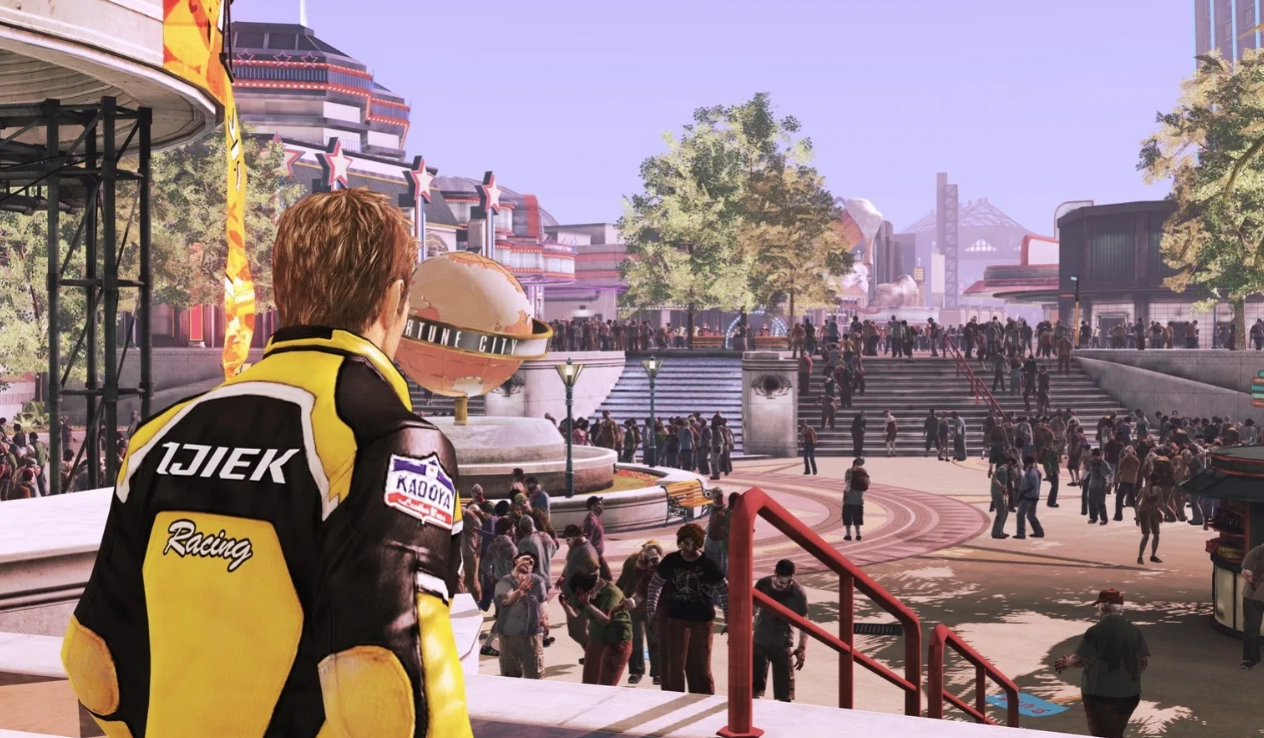
Ignoring survivors is difficult because successful rescues award large amounts of Prestige Points. Certain characters also unlock additional opportunities or rewards. A group of armed survivors can be useful in combat, meaning that escort missions do not always involve protecting a completely helpless crowd.
The best moments occur when several systems collide. Chuck is leading four people through a casino when he receives a message about another mission, notices components for a useful weapon, and realizes that Katey will soon need her medicine. No writer scripts this exact scene in advance, but it captures the character of Dead Rising 2 better than any cutscene.
Psychopaths and Bosses: Humans Are More Dangerous Than Zombies
Ordinary zombies rarely pose a serious threat on their own. The most dangerous enemies are psychopaths—people who survived the disaster but completely lost touch with reality. The group includes deranged performers, hunters, chefs, guards, and other residents of Fortune City who have turned the crisis into their own private show.
Each encounter takes place in a distinct arena and revolves around a specific set of attacks. These battles are memorable because of their characters and absurd presentation, but they are not always mechanically balanced. Some enemies have excessive amounts of health, recover too quickly, or knock Chuck down with combinations that leave little opportunity to respond.
These encounters are especially punishing at a low level. The game does not warn players when Chuck is poorly prepared for a particular opponent. A tactical retreat is often more useful than stubbornness: you can gain levels, build stronger combo weapons, stock up on healing items, and return later—if the schedule allows it.
Dead Rising 2 Co-Op: More Entertainment and Less Pressure
The campaign supports two-player online co-op. A second player can join the host’s story and help complete missions, rescue survivors, and clear large groups of zombies. Character progression and earned experience can then be saved for use in the guest’s own game. Dead Rising 2 also includes Terror Is Reality, a separate competitive mode designed for four participants.
Many of the game’s rough edges are easier to tolerate in co-op. One player can escort survivors while the other clears a path or searches for transportation. Bosses become less exhausting, while otherwise pointless experiments with weapons become part of the shared entertainment.
There is an obvious trade-off: Dead Rising 2 loses some of its tension when played with a friend. A solo player measures every minute and worries about losing a group of survivors, while two players are more likely to compete over zombie kills. It is not necessarily worse—just a different interpretation of the same game.
The age of the network infrastructure should also be considered. The PC version of Dead Rising 2 was designed around technologies that are now outdated, so the safest reason to purchase it today is still the single-player campaign. Anyone interested primarily in co-op should check the current condition of the servers, connection process, and compatibility with modern systems before buying.
How Badly Has Dead Rising 2 Aged?
Visually, Dead Rising 2 clearly belongs to an earlier generation. Character models are angular, animations can feel stiff, cutscenes are directed without much subtlety, and many locations are built from repeated environmental pieces. Yet the crowds remain impressive. Shopping areas are genuinely packed with hundreds of zombies rather than a handful of conveniently placed enemy groups.
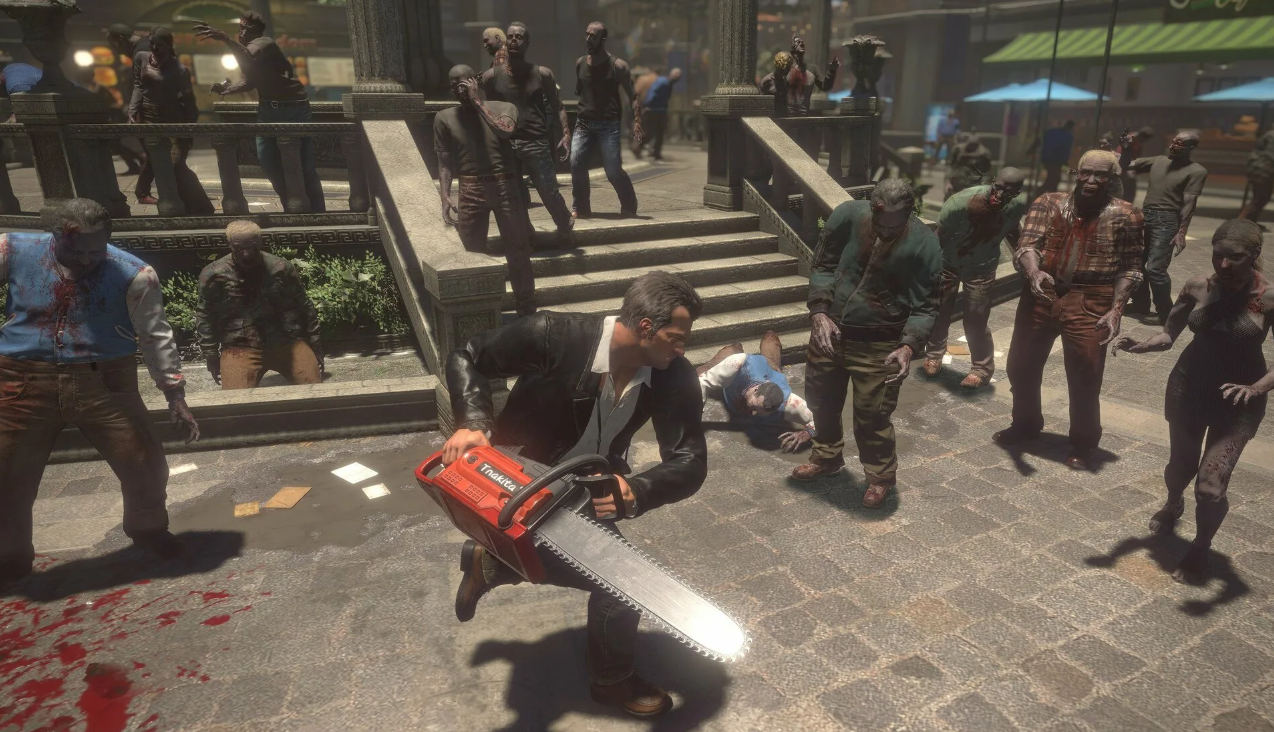
The controls also feel heavy by modern standards. Chuck does not always turn quickly, melee attacks require careful positioning, and trying to pick up an item in the middle of a horde can cost valuable health. Saving is tied to specific locations, so forgetting to record your progress carries harsher consequences than it would in most contemporary action games.
On the other hand, the Dead Rising 2 system requirements are minimal by current standards. The PC version requires a dual-core processor, 2 GB of RAM, a graphics card comparable to the GeForce 8800 GTS or Radeon HD 3850, and approximately 8.5 GB of free storage. Performance should not be a concern on a modern computer, although the game’s age may still cause compatibility, control, or networking issues.
Dead Rising 2 vs. the Original: A Sequel or More of the Same?
Dead Rising 2 does not attempt to reinvent the structure of the original game. The shopping mall has been replaced by an entertainment city, Frank West has given way to Chuck Greene, and photography has been exchanged for weapon crafting. The foundation remains familiar: a 72-hour deadline, scheduled story cases, survivor rescues, psychopaths, and gradual character progression.
Because of this, the sequel was sometimes seen as an overly cautious evolution of the original. Improved shooting, additional save locations, and a much larger selection of interactive objects refined the familiar formula without changing its foundations. That sense of repetition matters less today, as both games now feel like distinct representatives of a type of action game that has almost disappeared.
Dead Rising 2 is more approachable than its predecessor, while the combo-weapon system gives it a clear identity of its own. It does not, however, abandon the series’ defining features in the name of convenience. The timer, limited saving, and possibility of failing the story all remain in place.
Dead Rising 2 Strengths and Weaknesses
Strengths
-
a huge selection of weapons and an expressive crafting system;
-
dense zombie crowds and a varied Fortune City environment;
-
tense route planning shaped by meaningful deadlines;
-
memorable psychopaths and entertaining side stories;
-
character progression that benefits future playthroughs;
-
a complete two-player co-op campaign.
Weaknesses
-
heavy controls and an outdated interface;
-
a timer system that will not appeal to everyone;
-
survivor AI that can interfere with carefully planned routes;
-
several bosses with excessive health and frustrating attacks;
-
a story that is less interesting than the gameplay systems;
-
online features in the old PC version may require additional checks.
Is Dead Rising 2 Worth Playing in 2026?
Dead Rising 2 is worth trying if you enjoy games that allow mistakes and do not simply reload the latest checkpoint after every poor decision. You can miss a mission, lose a survivor, or even fail the main story, yet retain valuable experience and begin another cycle better prepared.
The game still works remarkably well as a simulator of controlled chaos. Combo weapons provide room for experimentation, Fortune City remains enjoyable to explore, and the limited time makes every trip meaningful. Few zombie action games can create laughter over a ridiculous outfit and genuine anxiety over several lost minutes within the same sequence.

However, Dead Rising 2 is not the right purchase for anyone looking for a completely unrestricted sandbox. The timer is not a minor feature—it defines the entire structure of the campaign. Players must also accept dated controls, manual saving, and the occasionally unpredictable behavior of escorted survivors.
This is an uneven, stubborn, and sometimes openly inconvenient game. Yet its refusal to smooth away every rough edge makes a return to Fortune City more interesting than another safe walk through a conventional open world. Dead Rising 2 has visibly aged, but its central idea—freedom that must be paid for with time—still feels unusual today.