

Remember that carefree time when every major movie release — be it a cartoon or a blockbuster — was always accompanied by a video game of dubious quality. Somewhere on the shelves of stores next to chips and cheap magazines, disks with Shreks, Ice Ages, Bolts, Harry Potters and, of course, Spider-Man were already waiting for their finest hour. No one really bothered with quality: it was enough to put a familiar hero on the cover — and young fans were already pulling their parents by the hand to the nearest kiosk. Is it for sale? That means everything works.
This scheme served as a good way to make money on children’s devotion to characters for a long time. Even Sony once went down the same path, handing over their Spider-Man to Activision. And they, in turn, entrusted the matter to the Beenox studio — a team that knew how to both surprise and disappoint. Their track record included both solid projects about the superhero in a red and blue suit, and those that are better left unmentioned.
Now, there is a new attempt on the horizon. Another game based on Spider-Man, timed to coincide with the release of the film of the same name. So what is it this time? Was it a worthy addition to the superhero collection or did it again end up in the piggy bank of throwaway projects? Let’s find out.
Table of Contents
The Amazing Spider-Man Free Steam Account
The Amazing Spider-Man’s plot is one of those cases where the story doesn’t just let you down, it seems to hinder the game itself. From the very first minutes, you get the feeling that the script was written in a hurry, just to “be there,” and not to captivate, touch, or surprise. And this is especially sad, considering that such an iconic franchise with great potential was taken as a basis. Sure, most superhero stories are built on cliches – that’s fine. Viewers and players are used to classic twists: the hero loses his powers, his loved one gets into trouble, the villain hatches a devious plan. But how it’s presented is important. A good script knows how to use cliches to evoke emotion, create tension, make you empathize. Here, there’s a complete lack of any contact with the reality of the characters. When Peter’s powers are taken away, you don’t care. He keeps running, jumping, and fighting as if nothing happened. Where is the vulnerability? Where is the moment when the hero, left without powers, must rely on his wits and ingenuity? There is none of that. You just don’t get the feeling that he’s lost anything. The same thing with Gwen’s death scene. In a moment that should tear your soul apart, you feel nothing – no pain, no fear, no tears. Why? Because the staging and dialogue don’t give you a chance to immerse yourself. It all looks like a theatre rehearsal where the actors haven’t learned their lines yet. Formally, everything is in place, but nothing really works.
One of the main problems is the absolute emptiness of the characters. Not a single character feels alive. They are not characters, but simply models with voice acting. The game tries to seem like part of the movie universe, but the characters in the game are not the same people we saw on screen. They have no motivation, no emotions, no clear development arc. For example, Dr. Connors. He seems to be remorseful and wants to fix everything – and this almost resembles an arc. He admits his mistakes, asks to return him to the hospital … But even this is done in passing, without the necessary depth. The rest? Absolutely static. No one learns, changes, draws conclusions from what is happening. Gwen is angry at Peter at first for working with Connors (her father’s killer in the film) again, and then – suddenly – she is already helping the lizard, and the conflict is gone. No internal logic. Alistair Smythe is a particularly vivid example. He is just “evil”. No reason, no story, no motivation. First he lies about hybrids. Then he acts like a maniac. Then he plans to kill Peter. Then… take over the city? It all seems like it was made up overnight. He doesn’t act because he’s driven by any internal motivation, but simply because the script says, “You’re the bad guy.”
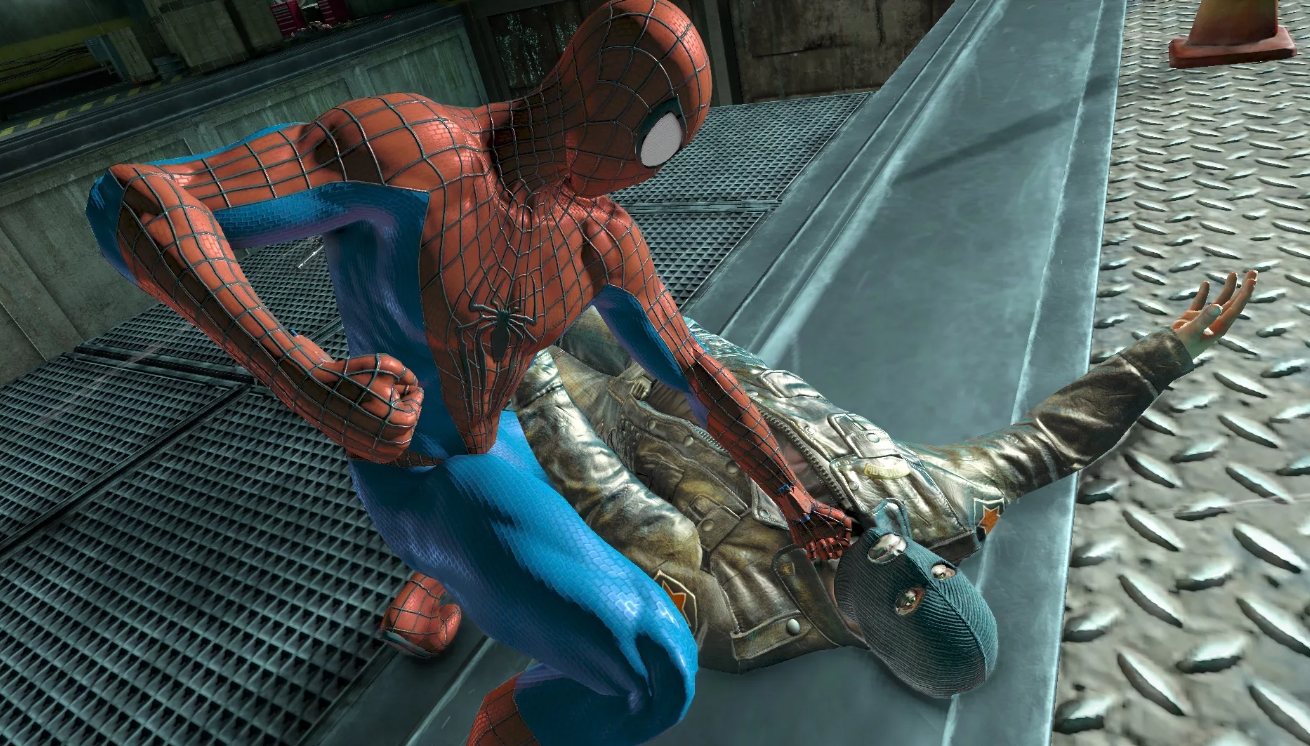
I want to believe that at least the dialogues will save the situation. But no — they finish it off. Most of the lines are screaming pathos and cheap accusations. The characters are constantly arguing, exchanging phrases at the level of “You’re bad!” — “No, you’re bad!” — and all this is repeated ad nauseam. These dialogues do not reveal the characters, do not develop the conflict and certainly do not bring the player closer to them. It’s especially offensive for Peter. In comics and films, he was always witty, light, lively. Here — as if someone tried to copy the style, but forgot how good jokes work. Spider-Man’s lines are either inappropriate or just stupid. Jokes about how he “fell on a girl”, presented with an obvious hint, or ridiculous references to characters from other universes — all this looks strange and irritating. Especially in a game that should be accessible to teenagers and fans of the original film. And perhaps most importantly, there is no sense of consequence in the game. The characters perform actions, but nothing follows from them. No one is held accountable. No one suffers, no one grows up, no one changes. The city where disasters occur does not react to them in any way. The plot events simply happen and disappear into thin air. That is why eight hours of playthrough seem not just boring, but meaningless. The game ends, and you are left with nothing – no empathy for the characters, no interest in what happened, no desire to return.
Get instant downloads through our free steam accounts with games!
Gameplay The Amazing Spider-Man
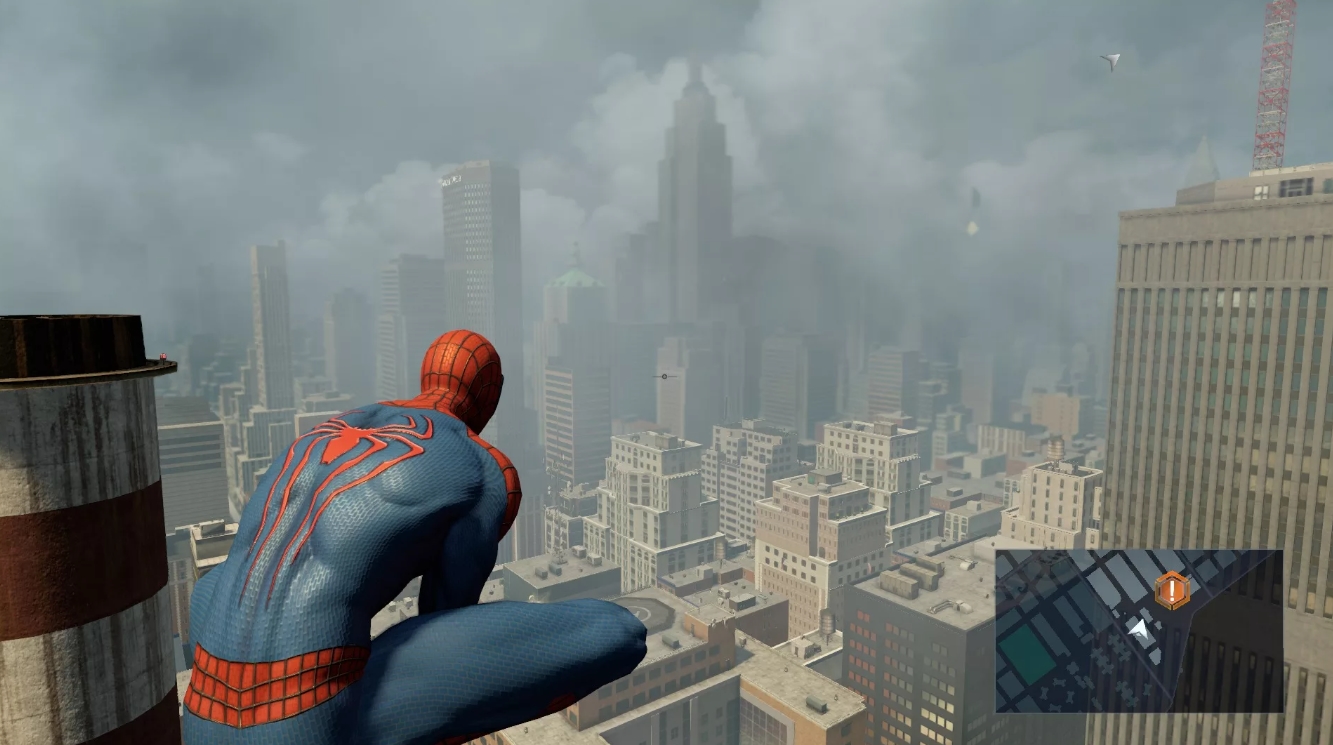
To be honest, I didn’t expect anything great from this game at first. Seriously, how many times have we turned on a “game based on” to get cloned gameplay, a flat plot and hackneyed mechanics? And so, launching another Spider-Man project, what I was most looking forward to was not the story, but the feeling of flight. That same “fizz-fizz” over the streets of New York, when you almost physically feel the speed, wind and freedom. Unfortunately, these feelings here are somehow… forced. Yes, the web works. Yes, you can fly. But on what? Here’s the problem: Spidey does not cling to buildings, bridges or poles. He literally glues himself to the sky with his web. To the clouds. To the clean air. This kills all sense of physics. There is no need to look for points of support, choose trajectories between skyscrapers or guess the moment so as not to fall down. The spider will fly over a central park, and over an open highway – it will still fly, as if there is an air hook. At first it is even convenient, but very quickly you understand: there is no magic. Where is the effort? Where is the risk? Where is the feeling that you are really holding on to the thread, and not just levitating?
And that’s not the worst of it. The animations are where the real pain is. Instead of flexible and lively acrobatics – clumsy movements, as if the animators decided to get by with one template for all occasions. It’s as if Spidey is not a hero, but a toy mannequin that is being pulled by a rope. No weight, no inertia, no grace. He does not hover, does not slide – he dangles. And unnaturally, as if his joints are jammed. But you know, despite all this, you still somehow get drawn in. There is something pleasant in this chaos. Primitive, but nostalgic. Yes, the movements are clumsy, but you still fly over the city. You still hear the whistle of the wind, catch the rhythm, and the brain starts to invent emotions on its own. This is not delight – this is an indulgence that you make to the game for your old love for the genre.
The combat system here is, to put it mildly, unpretentious. If you’ve played at least one action game with parry elements, you already know how it works. Here, the formula is a bit simplified: strike, dodge, repeat. That’s it. Literally. Enemies swing their fists, you wait for the spider-sense indicator to light up — and press the right button in time to dodge and continue the combo. It’s hard to make a mistake. Reactions are not particularly required, everything is done with a margin. Don’t fight, but watch — and everything will be fine. As for the variety of enemies — there is almost none. Throughout the entire game, only two types were memorable, which stood out at least a little. Shielders. Just press forward + jump, and Spider himself will go around them from behind, opening access to a strike. Repeat until victory — that’s the whole fight. Armored drones. Those who need to be first neutralized with a web to knock down the shield, and then beaten in hand-to-hand combat. Not a tactical genius either. The rest of the enemies are cardboard cutouts whose job is to die beautifully. Or rather, ugly. Because the animations here, as in the flights, leave much to be desired. The fights lack dynamics, there is no sense of impact or recoil. Everything looks like two dolls crashing into each other in slow motion. Where is the tension? Where is the sense of power? Where is even the slightest spark to believe that we are facing a superhero?
But if you still decide that fights are too stressful, the developers left you with a couple of backup options. Each arena has interactive objects. Trash cans, cylinders, even refrigerators. You slow down time, aim, and… Spidey does everything himself. Jumps, grabs, throws. One move – minus half the room. The rest are simply tied up with webs. You don’t even have to think. And if this is too difficult – just press the “run” button. The spider immediately releases a web, clings to the nearest wall, pushes off from it to another, then to a third – and disappears from the enemy’s field of vision. That’s it. You are lost. You can calmly restore health, breathe, sneak up from the other side, or just wait it out. Game design is so afraid of stressing the player that at some point you stop playing – you just press buttons and watch the game do everything for you.
The web works, but it’s not fun. There are fights, but they’re not engaging. There are animations, but they’re from another century. It all looks like the skeleton of a Spider-Man game – a shell without a soul. It seems to give you what you came for – but it does it with such a lazy expression that you catch yourself thinking: “Why did I even come here?” If you do get pleasure, it’s not from the mechanics, but from your own imagination, which clings to images, music, the city. The rest is as if it was made according to a textbook for the lazy.
Well, yes, of course. A Spider-Man game without stealth is not a game, but a misunderstanding. True, here it is implemented, let’s say, for show. If you were expecting cunning stealth, tension or at least some kind of challenge – forget it. Everything is arranged as simply as possible: Spider-Man hangs from the ceiling, and on the floor under him is a purple spot, as if someone spilled neon paint. As soon as the enemy enters this spot – you press one button, and he is already powerlessly dangling upside down, like a Christmas tree decoration. There are no difficulties in this at all. Even if the enemies formally “patrol the territory”, they do it like schoolchildren at a matinee – strictly along a given trajectory and one at a time. They may be standing in pairs, but when they need to walk – the script literally separates them in different directions, as if especially for you. And the funniest thing is that if one does not return, the second does not even blink an eye. Well, yeah, you never know — suddenly your partner went out to have a snack or has an urgent meeting in the other corner of the room. Logic? AI? Forget it. No one will even twitch if your partner disappears five meters away.
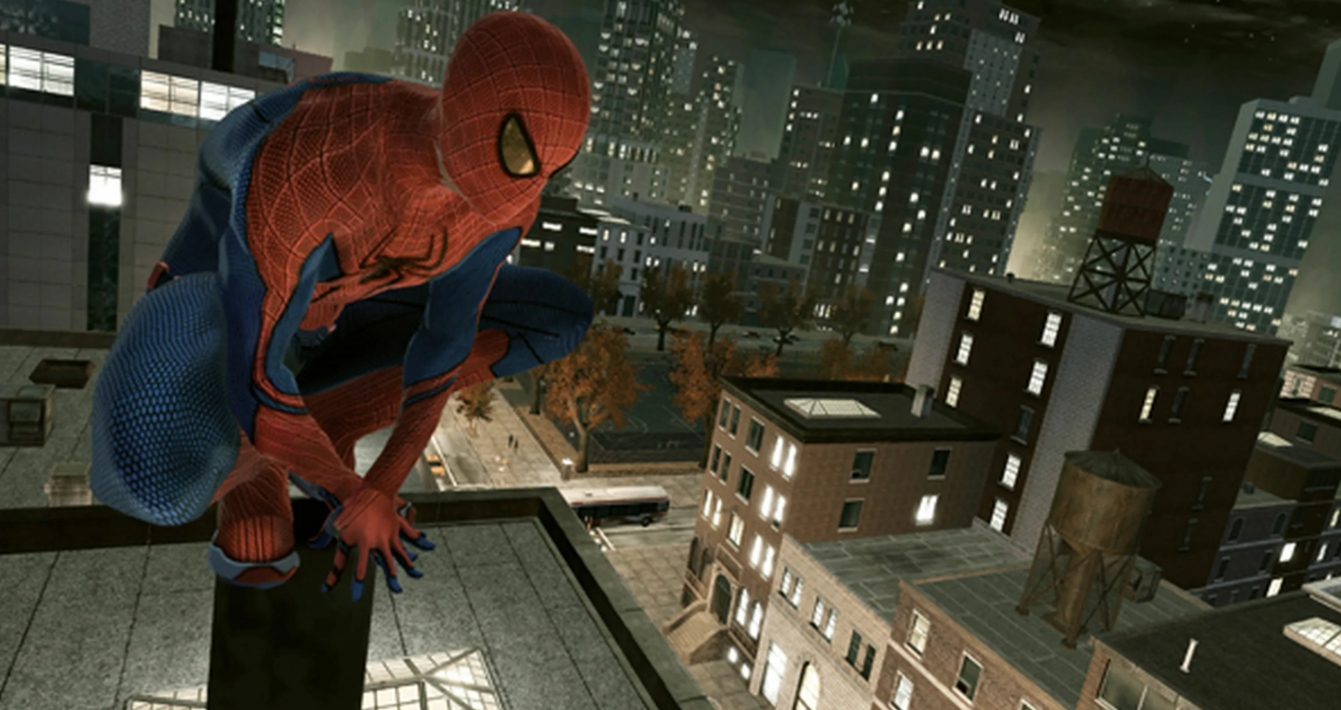
And when you upgrade the ability to neutralize two at once — everything completely loses its meaning. In almost every room, enemies are placed in pairs. They stand in the corners, then disperse, then come together again. And this pattern is repeated over and over again. You just methodically take out one pair after another — and that’s it, the level is cleared. This is not stealth, this is a conveyor belt. Made a mistake? No big deal. Even if you are noticed — just press the dodge button, and Spider disappears from sight in a jump. After a couple of seconds, everything returns to normal, you can hide again and arrange hanging installations from the villains. Yes, you can go the way of strength and challenge enemies to a direct confrontation. But the combat here is as sluggish as stealth. You don’t feel the blows, the moves quickly become boring, the enemies are like clones of each other. So you want to quickly run through the arena and forget about it, like a bad dream. The less time you spend on battles, the more pleasant the game feels.
To somehow diversify the gameplay, the game has a pumping system. And, frankly speaking, it also raises more questions than interest. Conventionally, everything is divided into two categories: “skills” and “technologies”. The first are pumped for experience points, the second – for some strange boxes scattered around the locations, and parts that fall out of robots. It would seem logical. But in fact, there is almost no difference between these branches. Both are a mixture of passive bonuses and active skills. Somewhere you are given the opportunity to inflict more damage after a dash, somewhere – to reduce the number of hits in a combo. In general, everything is mixed up, and it is unclear on what principle it is divided. If all these skills were simply combined into one common tree, nothing would have changed. But the developers decided to complicate the appearance that the game really has depth. In fact, it is a superficial set of improvements, of which only a third can be called really useful. For example, the ability to remove a turret with one click is really convenient. But the bonus that reduces the consumption of web when gluing an enemy to a wall sounds like a joke, but they are listed next to each other. As if they are equally important things. In the end, the leveling gives the feeling that it was done on a residual basis. Yes, some skills make the passage easier, but you can’t say that they really affect the style of play. And many are complete garbage. But you shouldn’t worry too much. Points – both skills and technologies – are given in abundance. Even if you don’t read the descriptions at all, but just click “unlock everything” – by the end you will have an almost complete build. But it doesn’t bring any joy.
The Amazing Spider-Man Open World
In addition to the experience you get for story missions, in The Amazing Spider-Man you can earn upgrade points through side missions. It’s not that there are few of them here – on the contrary, there’s even more than enough. But the quality is more complicated. Most of the side missions are more of a way to diversify the gameplay between story episodes than something truly exciting. It all starts with collectible comics. There are 700 issues of Spider-Man scattered throughout New York, and each of them gives 25 experience points. They can be found in a variety of places: from the roofs of skyscrapers to the roadway. Some of them just lie there and wait for you to pick them up, while others are carried away by the wind – and you have to literally “catch” them in the air, flying on a web. The mechanics themselves seem simple, but when you’ve already collected a hundred and realize that there are still 600 to go… the enthusiasm quickly fades. Although for perfectionists, this is a real challenge.
The next activity is saving citizens from street thugs. A fist icon appears on the map – you go there, beat a couple of bandits, get a portion of experience. Everything is as simple as three times two. Sometimes even too simple: the enemies do not pose much of a threat, and the missions themselves begin to repeat themselves very quickly. At some point, you start to get confused: “Has this already happened, or is it just my imagination?” There is also helping mentally unstable citizens and transferring patients – two almost identical tasks, they just slightly changed the names and design. You grab the desired character and drag him to the specified point – a quarantine camp or a police helicopter. Repeat this a couple of times and understand: behind all this “variability” lies the same mechanics.
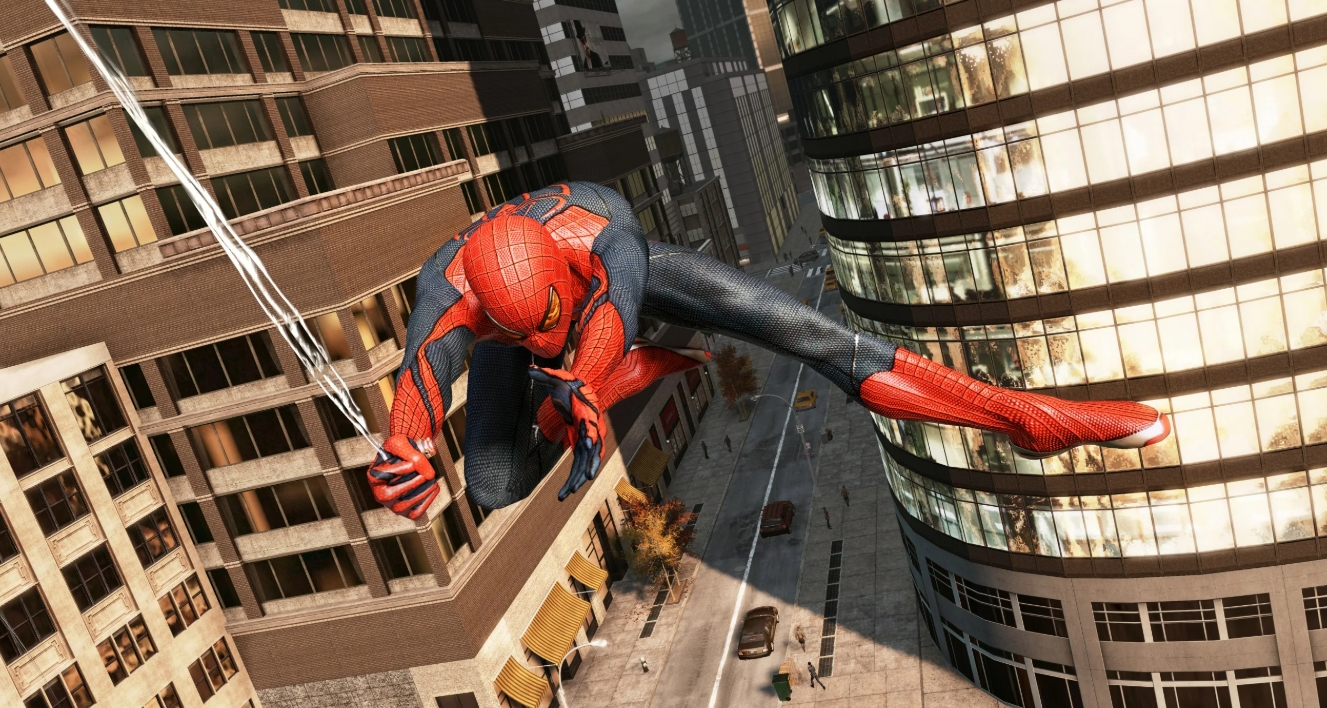
Now – chases. And here I would like to say: “Oh, this is at least something new!” But no. You see a car running away — you jump on it, climb onto the roof, then onto the hood, spit webs into the windshield, dodge a couple of shots… and that’s it. The script thinks you’ve won. It was supposed to be an adrenaline-pumping action game, but in reality it’s more like a “wash the dishes and get a medal” routine. Sometimes Spider can join police operations. You get into a helicopter, it takes you to the shooting site, where the bandits are having a showdown with the cops. You land, take out the criminals, get experience. It sounds cheerful, but there’s nothing new here either: typical shootouts with cloned enemies. They don’t even try to surprise. The special “decoration” of the open world is the airship, which is always hanging in the sky and broadcasting the voice of the announcer, who every now and then praises Spider-Man and offers to pass some tests: either fly for a while, or stay in the camera lens. At first, it’s even funny, but after a few tasks, the announcer starts to irritate, and the tasks themselves – repeat. With the exception of a couple of more or less non-standard challenges, everything else is a one-time thing. And yet, there are two types of tasks that somehow stand out from the general swamp – secret laboratories and photo hunts.
In the laboratories, you will find small stealth arenas with hostile machine gunners and three consoles that need to be activated. Moreover, there is a choice of how to complete the mission: you can quietly knock out opponents, you can sneak between their routes unnoticed, or you can go head-on and start a fight. This tiny element of freedom is a drop of lively game design in a sea of templates. For the first time, you feel like you’re making a decision, not just pressing the “do” button. Photo Hunt is another little gem. Journalist Whitney Cheng gives you three abstract clues about places or events that need to be photographed. The game doesn’t lead you by the hand: you have to figure out what exactly is in the frame. No markers, no arrows – just your intellect and observation skills. Simple, but enjoyable. And most importantly, you don’t feel like you’re being fed the same template again. Now, to be honest: if you’re not hunting for 100% completion, you can safely ignore all this side madness. It doesn’t affect the plot, doesn’t give anything unique, and the experience from the main playthrough is more than enough. By the middle of the game, you’ll have so many points that you won’t need any side quests. You tried it once, appreciated it, and with a clear conscience went on with the plot. There’s no point in repeating it. Unless you’re crazy about collecting collectibles… or want to experience first-hand how frustrating a police chase can be.
Bosses in The Amazing Spider-Man
When it comes to bosses in a superhero game, you expect spectacular battles, different tactics, tension… But The Amazing Spider-Man seems to want to deprive the player of even a hint of excitement. There are indeed a lot of bosses here – in terms of number, on paper, everything is fine. But if you dig deeper, it becomes clear: quantity does not mean quality. And the further you go, the more you feel it.
Half of the so-called “bosses” are faceless, uniform robots. They don’t even have names, only functions. Flying around the body, shooting webs at the blades, destroying weak points, flying again, pressing the button again… then – “eye”, rip it out (thanks for the QTE), and the cycle repeats twice. That’s it. The fight is over. Like a textbook: boring, predictable, and most importantly – the same. And there are three such robots in the game, just with different models. Variety? No, we haven’t heard of it. But that’s not the bottom. There are robots that fly. All the game requires of you is to simply stay close until the “attack” prompt appears and press the button. A few presses and you’re the winner. No challenge, no originality.
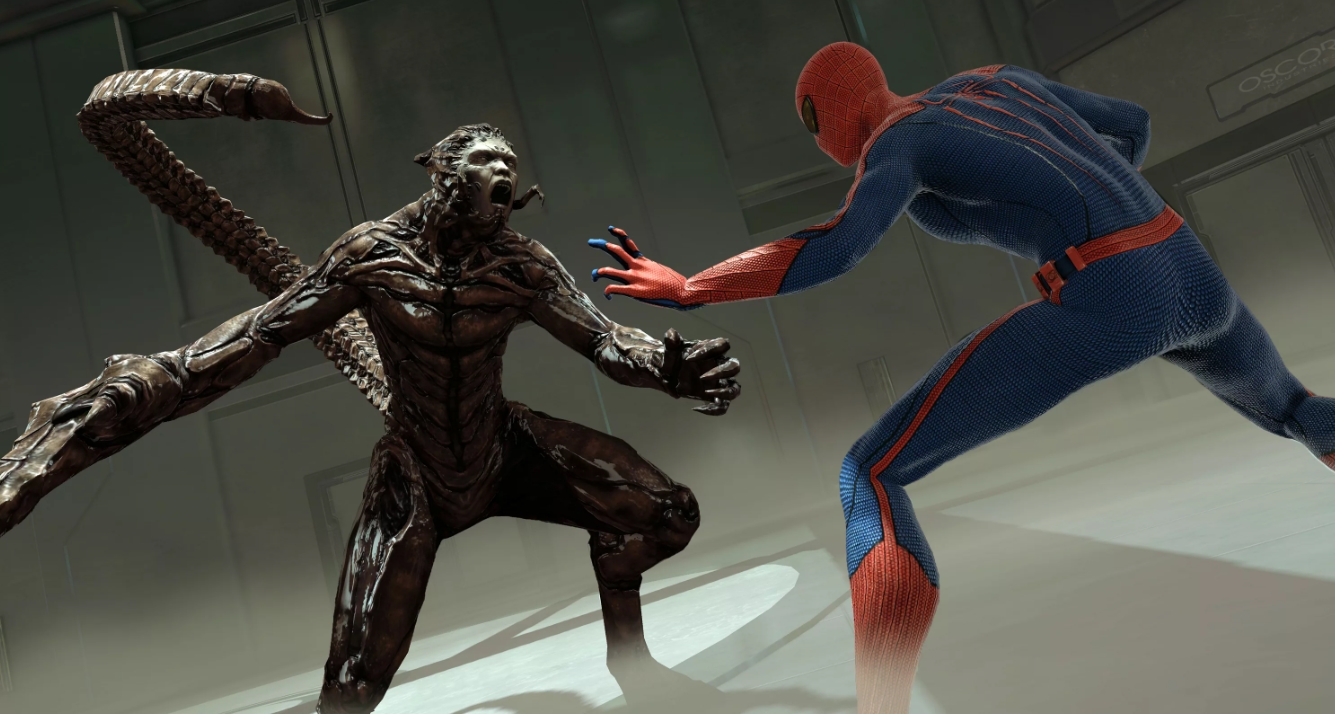
Okay, an optimist might think, surely at least classic villains like Scorpion or Lizard will fix the situation? Alas, here too there is sheer formalism. Each fight with them is a template that can be turned into a one-line guide.
-
Rhino: dodge, put a wall under him – he will crash. Repeat.
-
Scorpion: hit close, dodge when the red sense is on the screen. Repeat.
-
Rat: almost the same fight, but now it spits poison or a virus. What exactly – it doesn’t matter, there is almost no effect.
-
Piranha, Lizard and Iguana: they look impressive, but the mechanics are still monosyllabic. For example, you don’t even need to hit the Lizard – you just lure him, stick him, and then go to the drone to look for a cure.
Of the entire galaxy of mutants, only Black Cat stands out. At least there’s a sense of life in the battle. She dodges, throws shock grenades, requires the player to keep their distance and think. And then – bam, the second phase! And now you’re flying around the level, looking for where she’s hiding, sneaking up carefully. It’s unexpected. It’s nice. It’s… normal game design. Why is there only one battle like this in the entire game? It’s a mystery.
The game’s biggest problem is that it doesn’t hesitate to repeat itself. And without the slightest attempt to disguise it. Here’s an example that’s downright annoying: Peter gets bugs to eavesdrop on police radio frequencies. You go to three antennas, plant the devices – everything’s fine. A little time passes, and you’re given a new function: now you need to eavesdrop on Smythe. And what do you do? Again, you go to the same antennas, plant the same bugs, only now they’re guarded by robots. And if only that were all… Half an hour later, you’re running to those antennas again because “the signal is gone.” You need to go around them again, defeat the enemies again, and smash the jammers. The same task, three times, with minimal changes. The animations are the same, the actions are the same. Only the irritation grows.
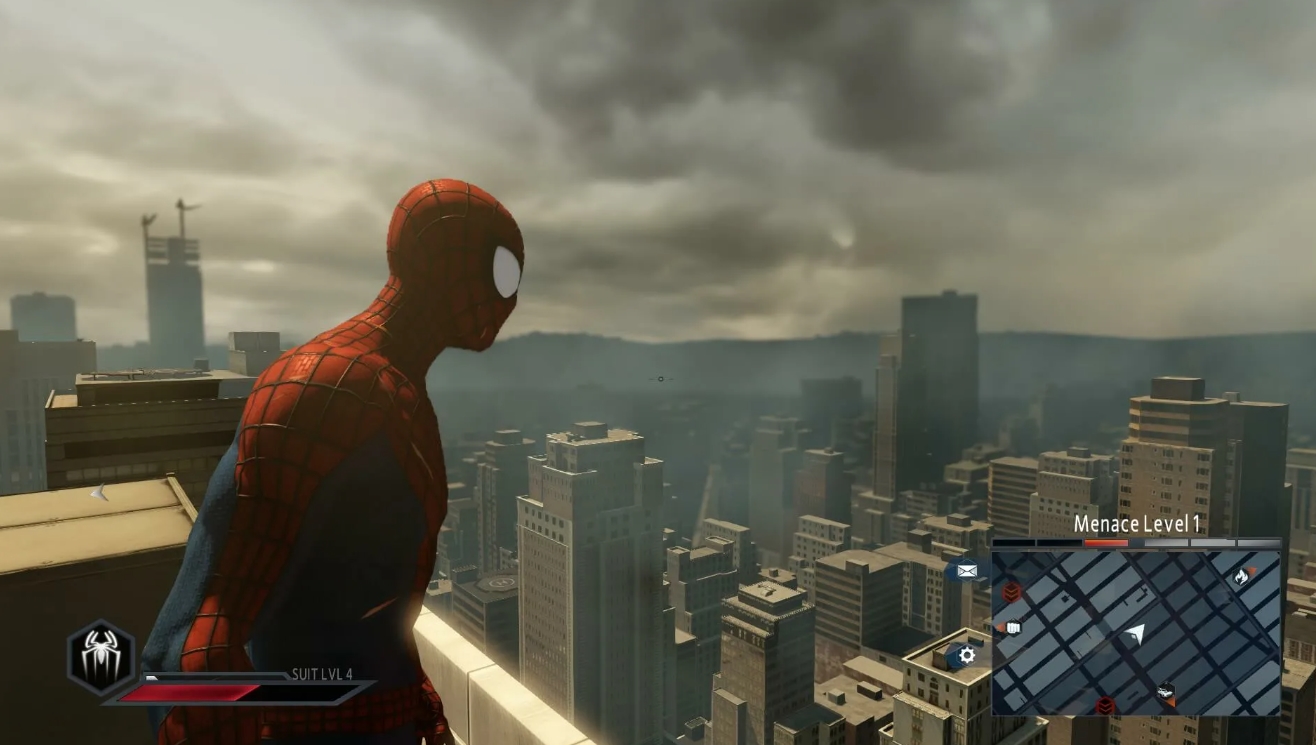
The leveling mechanics are formally there, but it feels like they were added out of obligation, not inspiration. Points pour in for everything, even for collecting comics, so there’s little motivation to complete side quests. Especially since the bonuses from leveling up in battle are weakly felt – you can easily cope without them. The flights around the city themselves are mechanically functional, but without emotions. The spider clings to the air with its web (literally), so there’s no sense of trajectory or realistic parkour. And the battles are monotonous, primitive, tailored for spamming one button.
It seems that The Amazing Spider-Man is not a game, but a set of repeating mini-scenes, glued together into one long canvas, which should somehow coincide with the release of the film. Everything is done according to a template, with a minimum of effort. The same enemies, the same bosses, the same missions. Game design, where for every little mechanic there is not one, not two, but three repetitions – just to stretch out the time. And so you sit, squeezed between clone robot #2 and another antenna, and think: “Couldn’t they have just made a good game about Spider-Man?” It seems that it is impossible. Or they just didn’t want to.
Visual style of the game
“Visual style” usually means a whole bunch of things: crisp textures, quality animations, atmospheric lighting, clever color work, and the overall artistic design of the world. Unfortunately, there’s hardly a single point to praise the game for — and that’s no exaggeration. Let’s start with the animations. Already in the battle and flight scenes, it becomes clear: Peter’s movements feel strained, unnatural, as if he lacks joints. It’s as if the spider isn’t flying on a web, but is suspended on an invisible thread and is simply dangling in the air. Moving around the city feels more like gliding than flying. But that’s not the worst part. Pay attention to how Peter runs. This raises the question: did the developers really watch the final animation before the release? Because it seems as if the hero was either very ill, or someone recorded his movements from a person in an extremely uncomfortable situation. Everything looks strained, awkward and absolutely not heroic.
And now — to the faces. The problem is that they seem to be non-existent. Peter’s own face is almost always hidden under a mask, and perhaps there is logic in this. But when the camera does look under it, the sight is frankly sad. The characters in cutscenes seem to come to life for a split second only to open their mouths and voice their lines. No facial expressions, no emotion, no “life” in their eyes. As soon as they speak, you see not people in front of you, but poorly rendered mannequins. Familiar images? Forget it. None of the actors from the films lent their appearance to the game. Instead of charismatic heroes, there are anonymous substitutes with empty faces. For example, instead of the recognizable and beloved Gwen, there is an abstract girl without character. And the appearance would be fine, but they also move like dolls: one turn of the head, one movement of the hands — and then into “sleep mode”. The visual scenery is no better. The interior locations — laboratories, sewers, basements — are all carbon copies. Only the colors of the walls or the position of the chairs change. But overall, it feels like the player is thrown into the same room every time, with the props slightly rearranged. This knocks you out of the immersion and quickly becomes boring.
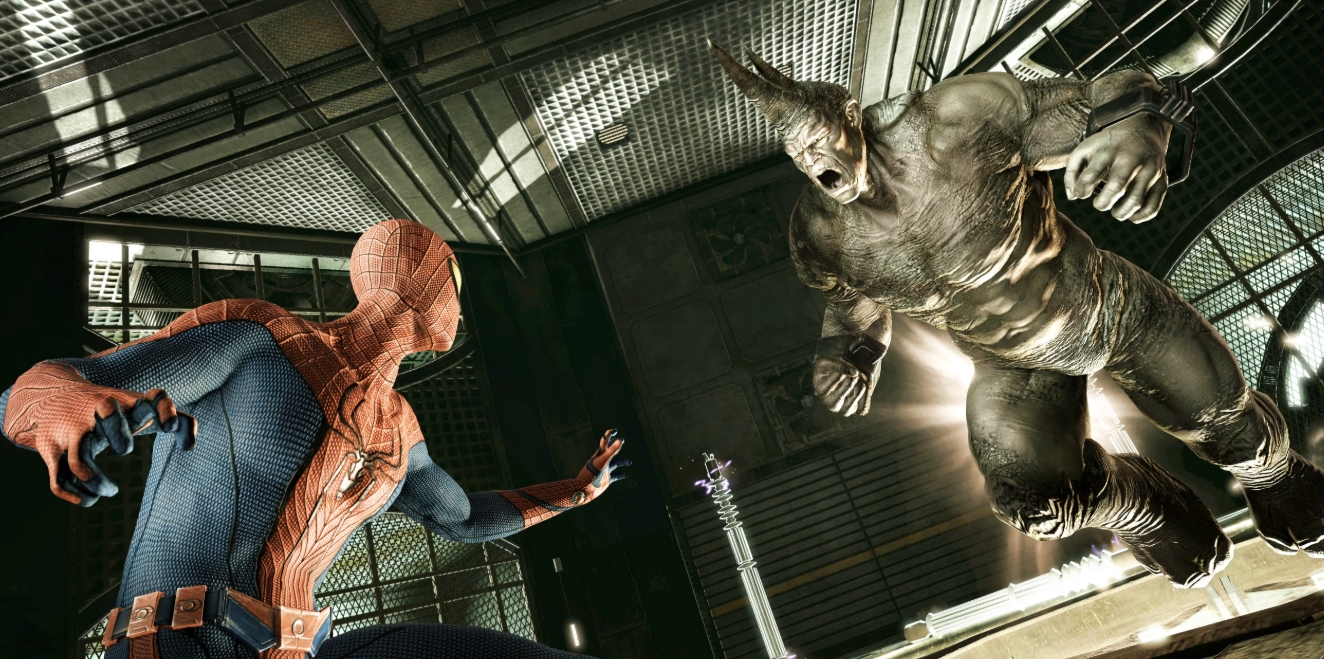
And the textures? They seem to have been left somewhere in the PlayStation 3 era. The surfaces are smeared, there is not enough depth, the lighting does not emphasize the volume, and most objects seem to be covered with a gray filter that deprives them of any detail. It looks faded, cheap and tired. The color palette is especially sad: the entire game is drowning in swampy green and dull brown shades. There is simply nothing to catch the eye — everything seems dirty and gray, as if you are not in a metropolis, but in a gloomy post-apocalypse setting. The city in which the action takes place is supposedly New York, but visually it is some kind of average “soulless development”. There is not a single recognizable architectural accent here. There is no Empire State Building, no normal Central Park, no big city atmosphere for which open worlds are usually praised. Instead, there are boring boxes, identical streets and copy-pasted houses. Even flying around this world is not enjoyable – because you just don’t want to look at the surroundings. It is empty. It is not alive.
The only glimmer in the visual part is Peter’s suit, which gradually wears out. This is an interesting idea: the plot develops quickly, the hero has no time to recover, and the suit clearly reflects his exhausted struggle. The seams come apart, the fabric tears – sounds cool, right? But in reality it looks strange. The suit has no physical density, and therefore the torn areas seem like just “a different skin color”. There is no visual sense that it is fabric. And that means the idea loses its meaning. Instead of symbolism, there is bewilderment. The bottom line? The visual style in this game does not work. It does not support the atmosphere, does not help to immerse, does not grab. Everything that should have been beautiful and expressive turns out to be either outdated or simply poorly implemented. And this is a missed opportunity that cannot be justified by either the genre or the budget.
Voice acting, music and combat sounds in The Amazing Spider-Man
Now let’s talk about what finally finishes off the whole impression of the game – the soundtrack. And here everything literally falls apart piece by piece. Firstly, the voice acting. It’s something else. The characters speak as if their lines were voiced hastily and without any understanding of the context. No emotion, no character, no liveliness. Only strange, feigned intonations, as if the actors were trying to add drama to every word, but in the end it turned out to be some kind of ridiculous grimace. Sometimes it’s saccharine and squeaky, sometimes it’s overly pathetic, like in a school play. Instead of sympathy or tension, you catch yourself laughing – and this is in scenes where, in theory, there should be no time for laughter. It feels like no one worked on emotions – they just “drummed it out” and moved on.
Secondly, the sounds during battles. And here begins the real journey through time – straight to 1996, when a blow to the enemy sounded like you dropped a saucepan on the floor. Each blow is the same, flat and without the slightest hint of realism. You can punch a person or a metal monster – the sound will be the same, as if the developers simply forgot to add variability. No mass, no recoil – the blows are not felt at all. They do not bring satisfaction, do not create the feeling that you are really participating in a fight. All this turns the fights into a senseless fuss, where instead of tension – a sound parody.
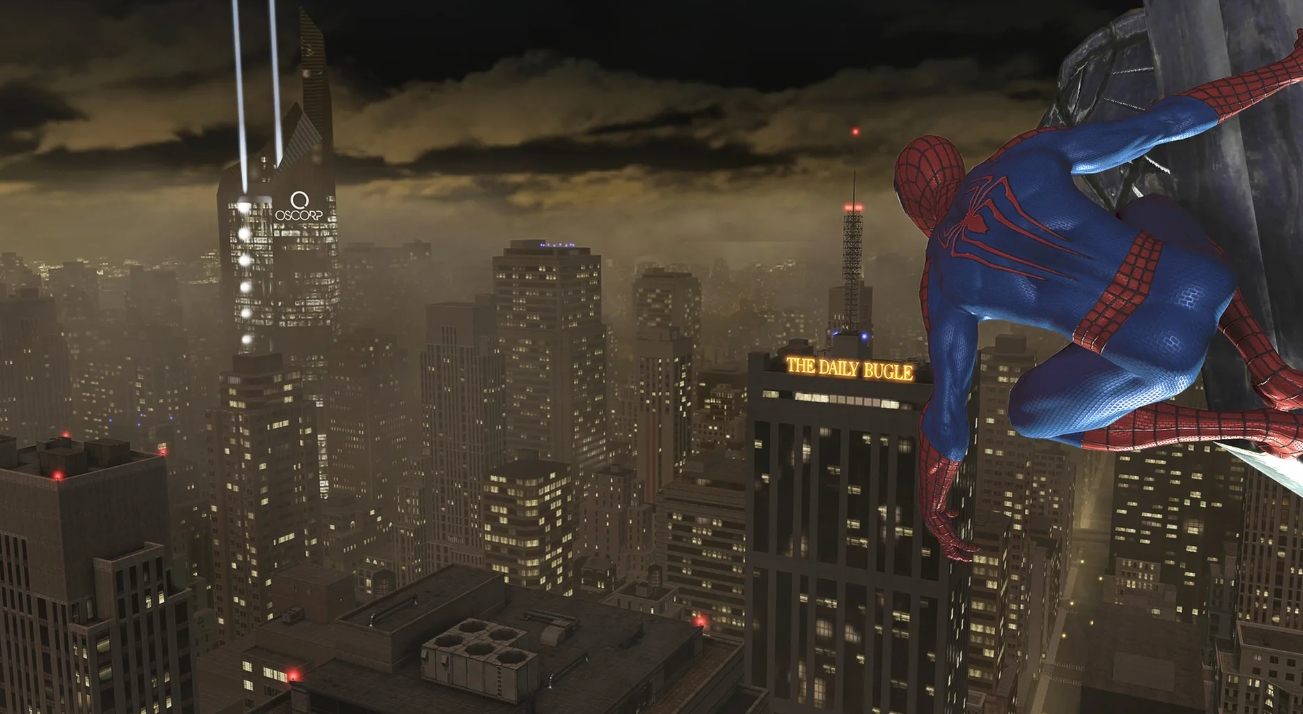
And finally, the music. Oh, the music … Here it is so inexpressive that at first you do not even understand whether it is there at all. During the entire process of passing, it is difficult to remember even one memorable track. The musical background just rattles somewhere on the periphery of perception, not affecting either the atmosphere or the emotional mood. The only thing that somehow gets stuck in your head is the light, almost silent melody on the loading screen. And that’s only because you had to look at this screen too often. If it weren’t for the constant loading, you wouldn’t remember it either.
In the end, the sound part of the game is not just a flaw. It’s a blatant omission that drags everything else down. But it’s the sound that should enhance the atmosphere, immerse the player in the world, add emotions… Here it does the opposite – it throws you out of the game with every line, with every blow, with every dull background rattle.
Is The Amazing Spider-Man worth playing?
In short, no. But in more detail, we have a project that had all the necessary potential: a strong character, a popular film, the attention of fans. All that was left for the developers was to carefully assemble it into a decent game. But instead, we got a frankly botched product.
The game offers neither an interesting plot nor exciting gameplay. It seems like you are playing as one of the most dynamic superheroes in history, but there is no sense of drive at all. Flying on the web quickly loses its magic, fights look like they were done “for show”, and the leveling system gives absolutely nothing – just a set of formalities.
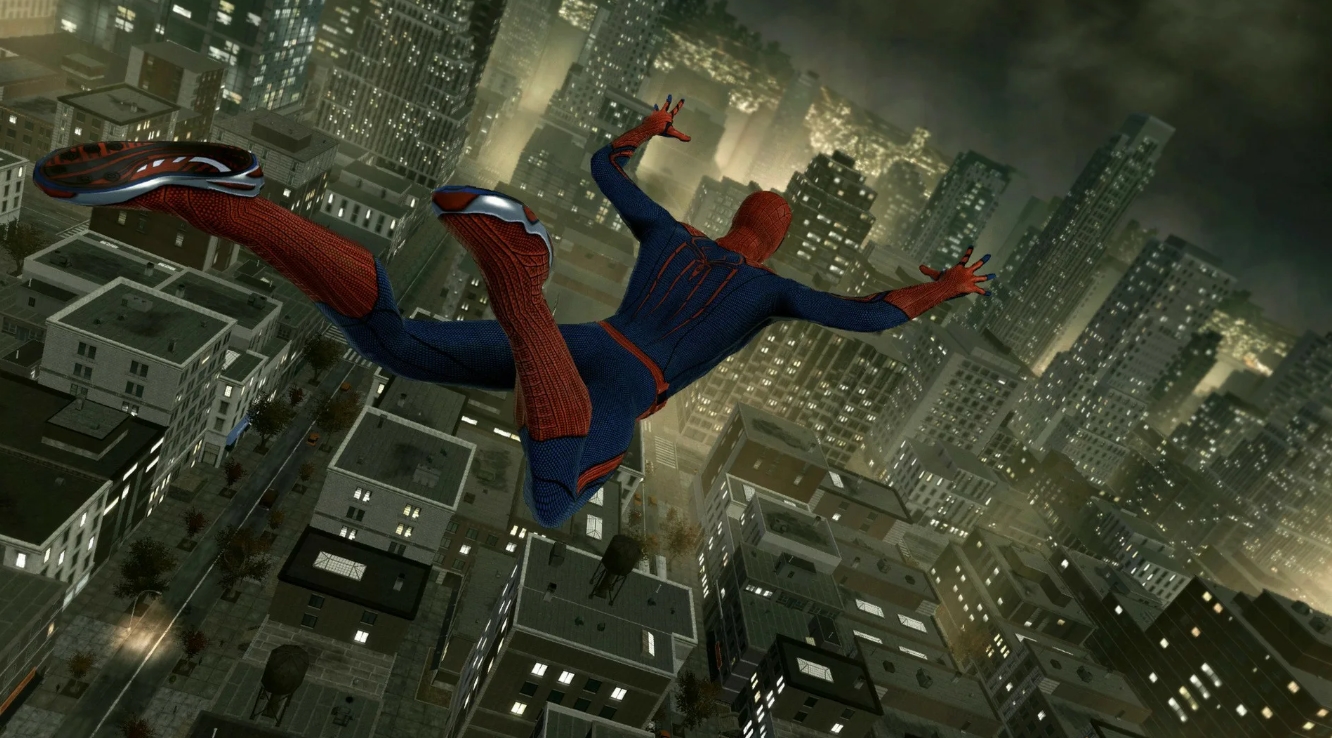
Even the world, which should make you want to explore every corner of New York, turned out to be somehow dead and empty. It is boring to wander around it, and you don’t want to return to the game after a break. Visually, the project is also not pleasing: the animations look sloppy in places, and the effects are outdated.
Pros:
-
Presence of a favorite hero – you still play as Spider-Man, and this gives a short burst of nostalgia.
-
A good idea with an open world (albeit poorly implemented).
-
The soundtrack in some moments creates a suitable atmosphere.
Cons:
-
The plot is banal and does not grab at all.
-
The combat system is boring, without depth and interesting mechanics.
-
Flying on the web quickly gets boring due to bad physics.
-
The pumping is absolutely useless – you can ignore it altogether.
-
The world is empty and does not inspire a desire to explore it.
-
The animations are outdated, the visuals are at the level of previous generations.
-
No replayability – you finish it once and forget about it.
The Amazing Spider-Man System Requirements
System Requirements for The Amazing Spider-Man
| Specs – Minimum | Specs – Recommended |
|---|---|
| Operating System: XP Windows (SP3) or 7 / Vista | Operating System: 7 Windows / 8 / 10 |
| Processor: 2.6 GHz Core 2 Duo Intel / X2 3800+ AMD Athlon | Processor: 2.4 GHz Core 2 Quad Intel / Phenom X4 9850 AMD |
| RAM Memory: 3 GB minimum | RAM Memory: 4 GB or higher |
| Video Card: GeForce 8800 GT NVIDIA / HD 4770 Radeon ATI | Video Card: Radeon HD 6950 AMD / GTX 560 NVIDIA |
| Version of DirectX: 9.0c | Version of DirectX: 11 |
| Available Storage: At least 9 GB | Storage: SSD drive is preferred |
How to play The Amazing Spider-Man for free on Steam via VpeSports
Imagine: you are hovering over Manhattan at night, the wind whistling in your ears, and below you can see the bustle of the streets and endless challenges. The Amazing Spider-Man is not just a game. It is a chance to personally put on the iconic suit and experience what it is like to be the hero that millions dream of. Jumping between skyscrapers, fighting dangerous enemies, saving lives and making moral choices – here you are not a spectator, but the main participant in the events.
And we have done everything to make the path to this world as simple as possible. No hassle with settings and installations. Just register on our website, log in – and the game is ready to launch. Moreover, you can start playing for free using a free Steam account, which is provided with full instructions and support. Everything works on the principle of “log in – and fly along the web.”
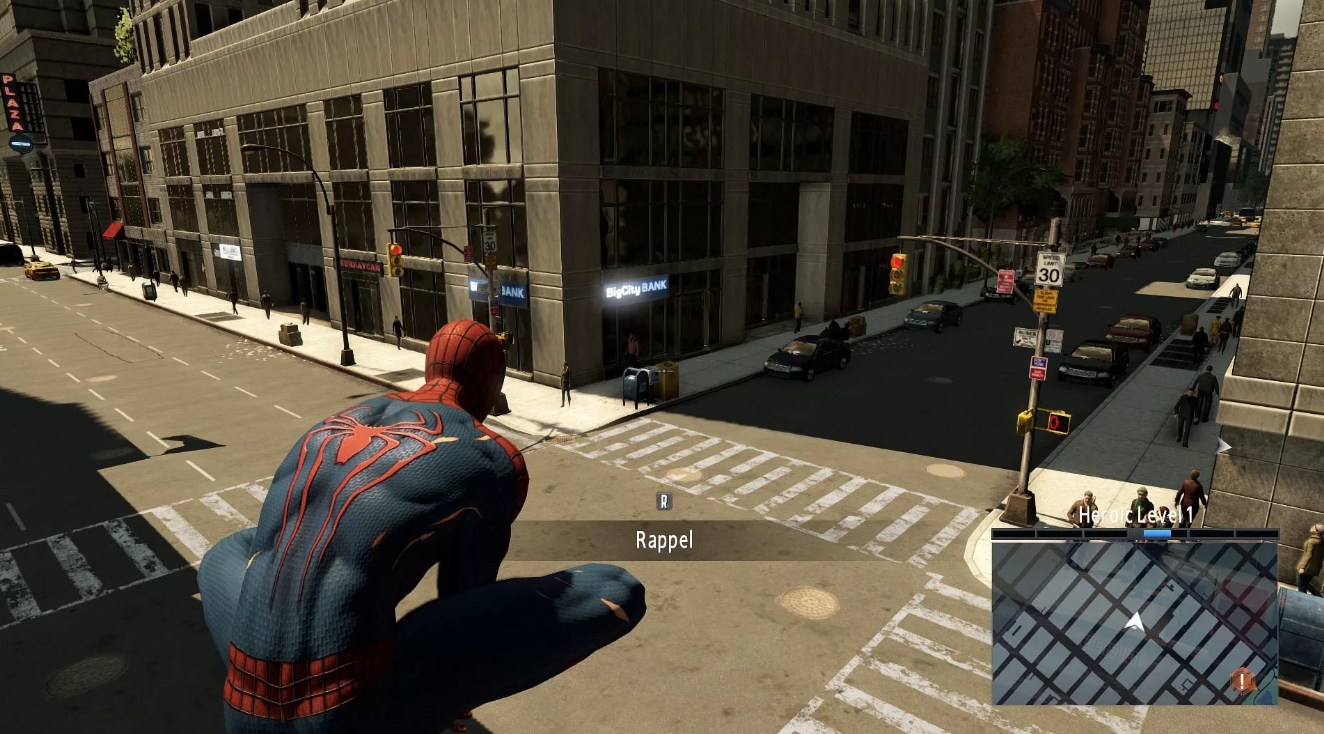
Your opinion is really important to us. Tell us how you felt rushing between buildings, fighting robots or collecting comics scattered around the city. Even if your review doesn’t appear right away, edit it a little, and we’ll definitely publish it. And we’ll send you all the login information by email.
To always stay up to date with the latest updates, news, and new accounts, check out our Telegram channel. We actively publish the most relevant stuff: from mini-guides and patches to discussions of Easter eggs and bugs. If something doesn’t launch, no problem – we have a section called “How to Play for Free – Complete Guide.” It contains step-by-step tips, and, of course, you can just write to us in the chat – we’ll answer, help, and give you advice.