

Haydee has an almost perfect disguise: it looks like cheap provocation until it takes away your last save disk and forces you to repeat a ten-minute route because of one misplaced step. The heroine’s exaggerated design made the game famous as a meme, but it also damaged its reputation. Behind that deliberately provocative exterior, many players never noticed a compact, vicious, and surprisingly coherent Metroidvania that demands discipline rather than lightning-fast reactions.
That distinction matters in any honest Haydee review. This is not an erotic action game that happens to contain a few puzzles, nor is it a fast-paced shooter interrupted by occasional jumps. It is a game about learning a hostile environment. You must remember doors, plan routes, count ammunition, and decide in advance which items deserve a place in your inventory. Shooting and platforming exist largely to make navigational mistakes carry a real cost.
Table of Contents
What Kind of Game Is Haydee, and How Does Exploration Work?
Haydee Interactive describes the game as a hardcore Metroidvania with modern platforming and third-person shooter mechanics. The protagonist, a half-woman, half-robot being, is trying to escape from an artificial complex divided into six sections. There are no extended conversations, conventional quest logs, or objective markers. The game explains almost nothing directly: its story must be inferred from the laboratory’s layout, abandoned bodies, technical rooms, and the apparent existence of numerous versions of the heroine.
The structure recalls older adventure games and survival horror. A locked door initially looks like a dead end, but a newly discovered tool or keycard may later turn it into a fresh route. Revisiting familiar rooms is unavoidable, yet the backtracking rarely feels like simple padding. New knowledge constantly changes the meaning of the environment. A harmless corridor can become a valuable shortcut to storage, while an easily overlooked ledge may lead into an entire chain of previously inaccessible rooms.
The map does not do the player’s thinking. Haydee is best approached slowly and attentively: notice color-coded landmarks, inspect suspicious surfaces, and remember obstacles that cannot yet be crossed. At its best, this creates a genuine sense of discovery. At its worst, it turns into aimless wandering, especially when an essential item has been hidden somewhere that is difficult to read visually.
Haydee Gameplay: Why Inventory and Saving Matter More Than Weapons
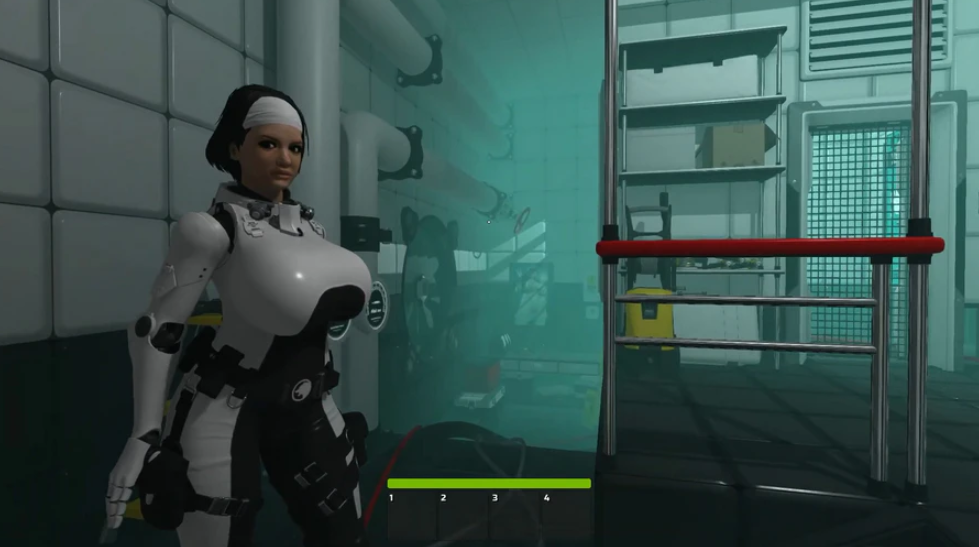
The central system in Haydee is an economy of risk. Health does not regenerate, so damage requires a medkit. Ammunition is scarce. There are no automatic checkpoints, and recording progress at a save station consumes a floppy disk. Even an empty inventory slot becomes a resource: a key, tool, or extra box of ammunition may be more useful than another healing item.
Every expedition therefore begins with a small plan. Where are you going? Which tool will the route require? Is it worth spending a disk now, or can you safely reach another save station? A successful attempt in Haydee is not necessarily one in which every enemy dies. It is one that leaves the player’s overall position more secure than before.
The disk system turns an ordinary Save command into a strategic decision. Players determine the value of their own progress and gradually learn when taking another risk is no longer worthwhile. The downside is equally clear: one failed jump can force you to repeat a sequence you already understand, replacing tension with irritation. Haydee is poorly suited to five-minute sessions because its routes and unresolved obstacles need to remain fresh in your memory.
Several habits make a first playthrough considerably more manageable:
-
Do not waste ammunition on an enemy that can be bypassed safely.
-
Leave situational tools in storage and take them only when a route requires them.
-
Save before an unfamiliar platforming section instead of after every minor discovery.
-
Remember or write down doors and obstacles that cannot yet be opened.
-
Inspect vertical space carefully, because routes are often above or below eye level.
Platforming and Controls in Haydee: Difficulty or Awkward Design?
Movement is the game’s most controversial element. Jumping, grabbing a ledge, pulling yourself up, and carefully dropping down are separate actions. Animations are not immediately readable, the heroine occupies a substantial portion of the screen, and the camera does not always communicate distance clearly in cramped rooms. Until the controls become muscle memory, even a low platform can feel more threatening than an armed enemy.
There is a consistent idea behind this approach. Haydee builds platforming around positioning rather than flowing acrobatics. The player must place the character correctly, choose a useful camera angle, and complete each sequence without rushing. After several hours, movement that initially felt clumsy begins to reveal a strict internal logic. A mastered route can be completed quickly, and improvement is measured not through higher statistics but through confidence and precision.
Not every death can be defended, however. The camera, uncertain ledge-grab range, and limited feedback sometimes make outcomes less predictable than they should be in a fair hardcore platformer. The game demands precision without always providing an equally precise tool. Players who strongly dislike repeating completed sections may find that conflict impossible to overlook.
Shooting, Enemies, and Traps: Survival Horror Without a Power Fantasy
A handgun does not turn Haydee into a hunter. Aiming is slow, ammunition is limited, and enemies are particularly dangerous inside narrow corridors. A missed shot is not merely a wasted bullet; it weakens your position on every later route. Combat therefore works like another puzzle. You choose a position, lure the target, identify an escape path, and only then pull the trigger.
This is where Haydee shows its connection to classic Resident Evil. Fear comes less from the appearance of a monster than from calculation: can you survive another hit, and will those bullets be needed in the next sector? Traps operate in a similar way. Many are simple once their rules are understood, but the first lesson is often paid for with the character’s life.
The combat system remains functional rather than deep. There is no extensive move set, especially expressive enemy feedback, or gunplay satisfying enough to carry the game by itself. Its strength comes from context and scarcity. If you expect a full third-person shooter, Haydee will feel stiff. If weapons are treated as one more exploration tool, the design makes considerably more sense.
Atmosphere, Story, and the Sexualized Design of the Heroine
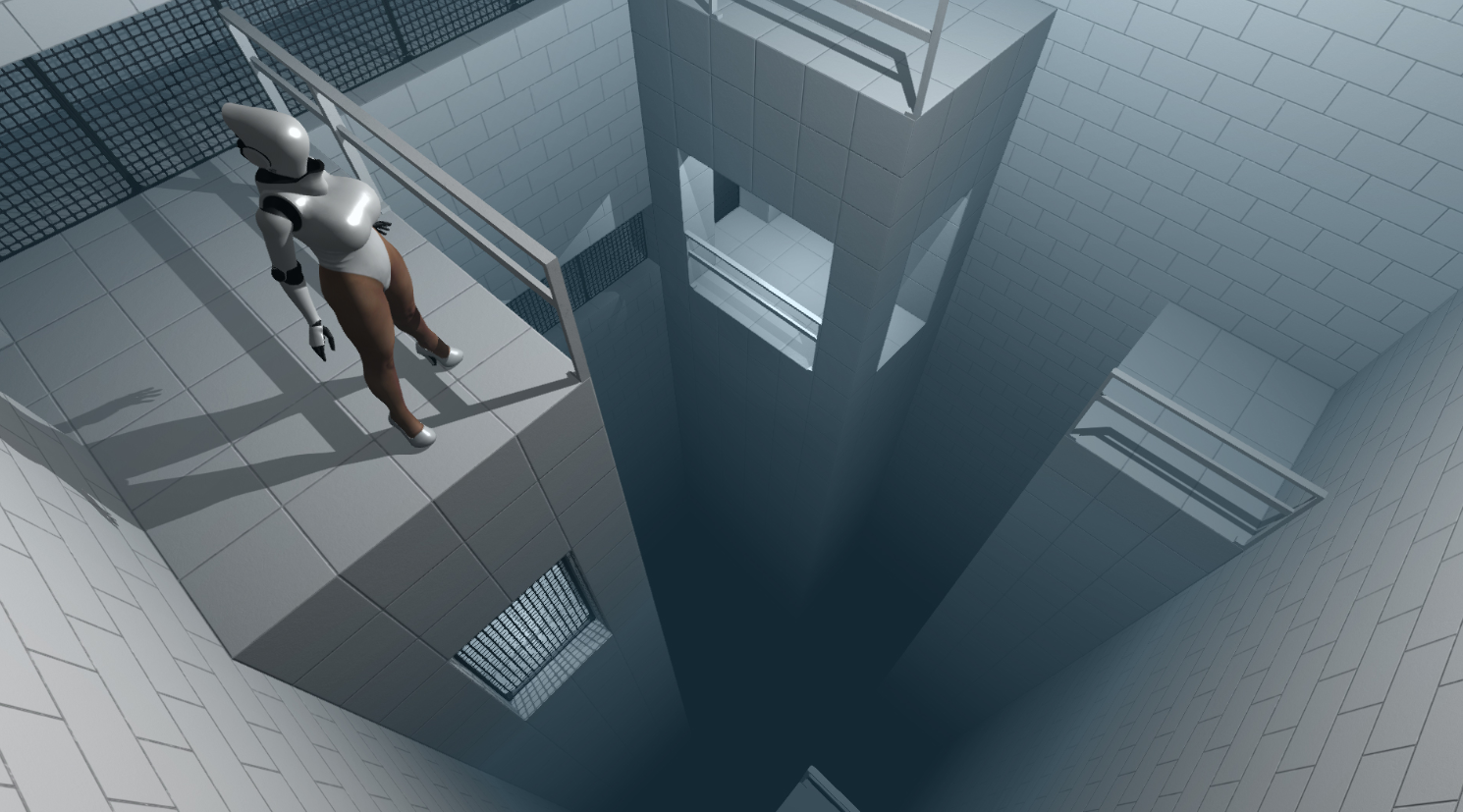
Ignoring Haydee’s appearance would be pointless. It is intentionally provocative and even affects the composition of the camera frame. Some players will accept it as part of the game’s unusual aesthetic; others will consider it reason enough to stay away. What matters is that fan service does not define the entire tone. The facility itself is cold, impersonal, and unsettling. White panels, color-coded sectors, mechanical noise, and the bodies of similar beings create the impression of an experiment that has already been repeated many times.
The minimalist story operates through questions rather than answers. Who built the complex? Why are there so many identical bodies? Is the escape an accident, a test, or simply another stage in a production cycle? Haydee refuses to assemble its clues into a convenient exposition dump. This strengthens the feeling of isolation, although players looking for clear character arcs and conventional drama may conclude that the story is barely present.
The limited budget is visible in angular rooms and frequently reused materials. Nevertheless, the strict visual design supports navigation and gives the game a recognizable identity. It is a case where technical simplicity does not destroy the atmosphere, even if it cannot always conceal environmental repetition.
Haydee’s Strengths and Weaknesses
| Element | What Works | What May Put Players Off |
|---|---|---|
| Exploration | An interconnected complex, secrets, and meaningful backtracking | An essential item can be overlooked, leaving the player stuck for a long time |
| Resources | Ammo, medkits, inventory slots, and saving form one coherent system | One mistake can require replaying a substantial section |
| Platforming | Mastering movement creates a tangible sense of improvement | The camera and ledge detection are not always predictable |
| Combat | Scarce ammunition gives every enemy significance | Gunplay lacks depth and impactful feedback |
| Atmosphere | The cold laboratory and lack of explanations create unease | Environments repeat and the story is extremely understated |
| Community content | A level editor and Steam Workshop expand the experience | The quality of community-made modifications varies |
Haydee System Requirements and PC Features
By modern standards, Haydee is not demanding. The official minimum specifications list a 64-bit version of Windows, a 2.3 GHz dual-core processor, 2 GB of RAM, a GeForce GTS 450 or Radeon HD 6770, and 1 GB of available storage. The recommended configuration calls for a 2.2 GHz quad-core processor, 4 GB of RAM, and a GeForce GTX 960 or Radeon RX 480.
| Component | Minimum Requirements | Recommended Requirements |
|---|---|---|
| Operating system | 64-bit Windows Vista/7/8/10 | 64-bit Windows Vista/7/8/10 |
| Processor | Dual-core 2.3 GHz | Quad-core 2.2 GHz |
| Memory | 2 GB RAM | 4 GB RAM |
| Graphics | GeForce GTS 450 / Radeon HD 6770 | GeForce GTX 960 / Radeon RX 480 |
| Storage | 1 GB | 1 GB |
For a current installation, remember that the Steam client itself now supports Windows 10 and newer operating systems. Haydee includes an English interface and relies very little on dialogue. Steam Workshop support and the built-in level editor also extend the game’s lifespan, allowing players to explore community maps and modifications after finishing the original campaign.
Is Haydee Worth Playing Today?
Haydee is worth trying if you enjoy deciphering a game world on your own and view resource scarcity as an interesting problem rather than an inconvenience. It is particularly well suited to fans of classic Resident Evil, unforgiving Metroidvanias, and games in which knowledge of the route matters more than character upgrades. Its modest system requirements and small installation size also make it technically easy to revisit today.
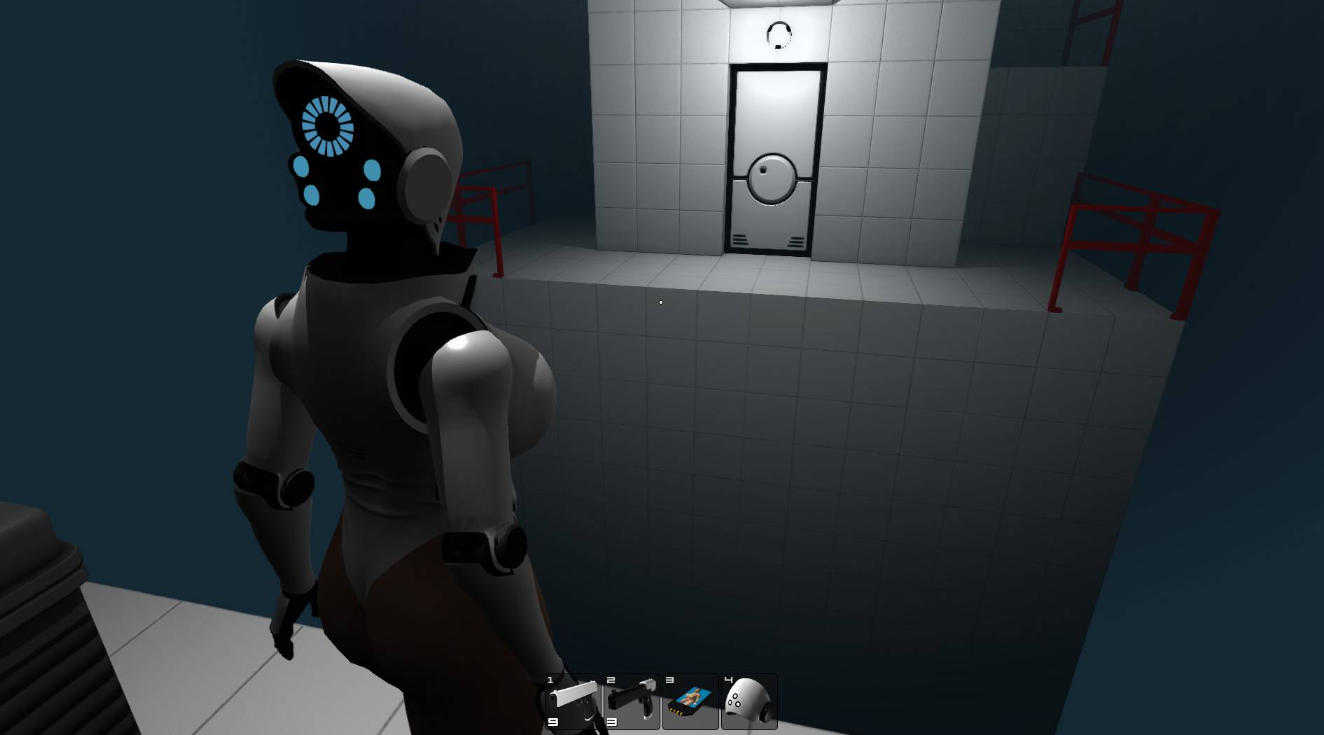
Buying Haydee for conventional action or for the meme surrounding its heroine is a poor idea. Beneath the striking cover is a slow game that demands patience, memorization, and a willingness to repeat completed actions. It does not try to be comfortable for everyone, and at times it genuinely crosses the line between deliberate challenge and dated design.
That is why the conclusion of this Haydee review cannot be reduced to a universal recommendation. It is uneven and extremely niche, but also carefully and honestly constructed. Its best moments arrive when a confusing sector finally becomes a clear route and a seemingly impossible jump turns into routine. If that feeling of discovery matters more to you than cinematic storytelling and generous checkpoints, the strange facility can remain compelling for a long time. If games must respect your time through frequent saves, forgiving controls, and clear directions, Haydee will almost certainly become frustrating.