In a recent interview with Edge Magazine (August 2026), quest designer Philipp Weber revealed how women in villages were dropping babies due to a bug in the panic system. We gathered the details of this story, dissected the local life simulation, and recalled other absurd fails that the developers cleaned up before release.
Table of Contents
“Women were dropping babies left and right” – how the bug appeared
It turns out that early builds of The Witcher 3: Wild Hunt were distinguished by their peculiar cruelty due to a silly coding error. When monsters attacked a settlement or Geralt drew his sword, villagers were supposed to panic and drop everything they could. The developers simply didn’t provide a separate status for babies.
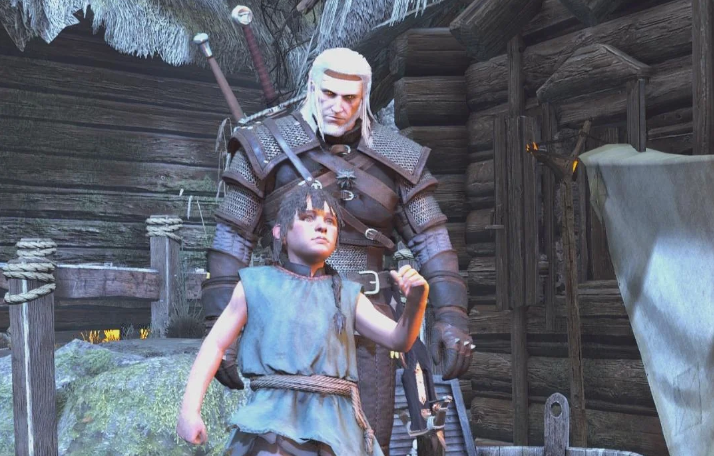
The system treated children as ordinary static loot – a mug of ale or a loaf of bread, for example. As a result, whenever danger arose, the peasant women immediately shed their “cargo.” According to Weber, this chaos continued for several weeks until the programmers rewrote the NPC inventory logic. The bug was fixed long before the game shipped.
How the chaos was fixed: a “points of interest” system instead of routes
Traditional RPGs use rigid scripts: the character moves from point A to point B according to a strict schedule. CD Projekt Red abandoned this approach in order to simplify their life when creating a large-scale world, but it ran into new problems.
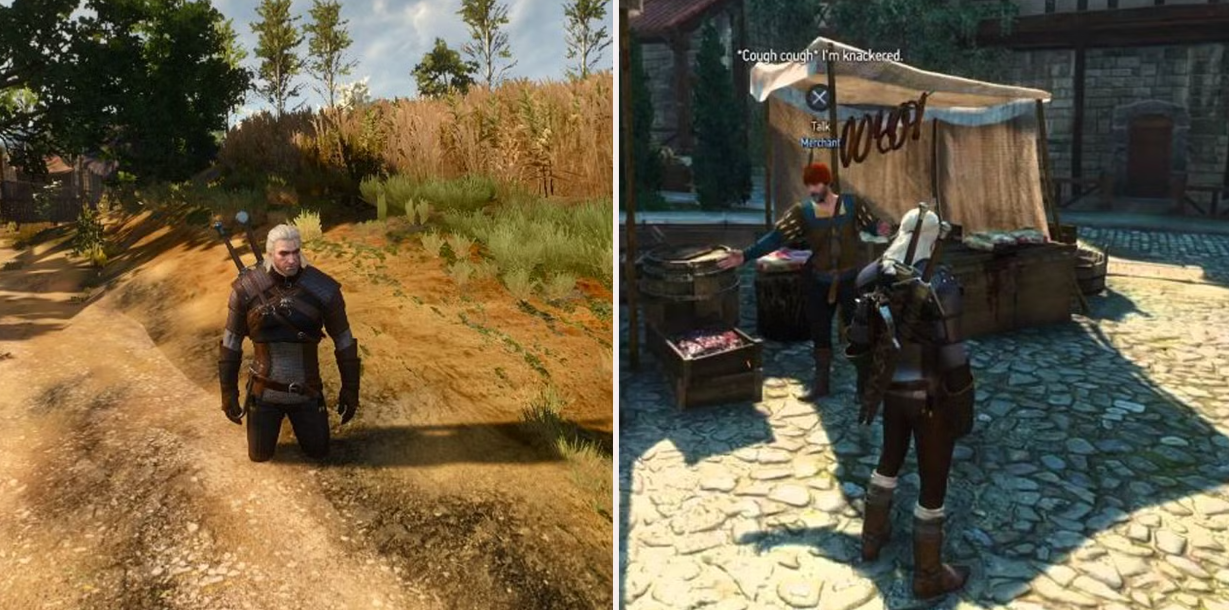
Instead of prescribing a route for each inhabitant, the developers filled Novigrad and the no-man’s-land with “points of interest.” Extras chose their own destinations. To prevent 50 sailors from crowding around a single inn at the port, around 200 random interaction nodes were created for them. This life simulator would occasionally break down—if the triggers malfunctioned, the virtual people would begin to behave extremely inappropriately.
The Top 5 Most Absurd Bugs in The Witcher 3
Over the years of development, the game generated hundreds of insane edge cases. We dug through archived studio interviews and compiled the wildest collection of internal crashes.
However, the bird incident stands out among this array. An ordinary goose would regularly enter the establishment, carefully close the door behind itself, and block the player’s passage. The developers couldn’t figure out for a long time why the story quest was stalled until they tracked the feathered pest. A good example of how emergent AI can break the script.
From The Witcher 3 to the present day: How CDPR’s approach has changed
The experience gained during the production of Wild Hunt has radically changed the Poles’ toolset. In a recent conversation with journalists, Weber frankly admitted that the structure of village connections and routines, which took weeks of manual labor in 2015, the team could now assemble in literally two hours.
The studio has gone from buggy scripts to fully-fledged procedural behavior generation systems. Mistakes like panicked mothers and dancing in a cemetery became hard lessons for CDPR, which helped them develop content production at a completely different level.