

Some games age gracefully. Others simply stop noticing time has passed. Age of Wonders III belongs to the second category. It’s over a decade old, its graphics feel dated by today’s standards, and its interface annoyed plenty of players even at launch — yet people still recommend it, still sink hundreds of hours into it, and still actively mod it. The paradox has a simple explanation: this is one of the few 4X strategy games where tactical combat matters just as much as economy on the world map. And that combination is still rare.
Table of Contents
What Is Age of Wonders III and Who Is It For
Age of Wonders III is a turn-based fantasy 4X strategy game developed by Triumph Studios and published by Paradox Interactive in 2014. The classic “explore, expand, exploit, exterminate” formula is blended here with RPG-style leader progression and a full tactical combat system — essentially what you’d get if Heroes of Might and Magic met Total War, with the whole thing polished by fans of Master of Magic.
The game is a great fit if you:
-
enjoy turn-based strategy with RPG elements and don’t mind a single campaign eating 15–40 hours;
-
want deep tactical battles instead of abstract “stack vs. stack” resolution;
-
are looking for an alternative to Heroes of Might and Magic or Disciples with a more substantial empire-building layer;
-
can forgive 2014-era visuals and UI in exchange for mechanics that still hold up.
If you want a visually modern strategy game with a low barrier to entry, Age of Wonders 4 is the better starting point. But if tactical depth and that “real tabletop wargame” feeling matter more to you, the third entry remains one of the best picks in the genre.
Story and Campaigns: A Conflict Between Nature and Progress
At the core of the game is a conflict between the technologically-driven Commonwealth — uniting humans, dwarves, and other “civilized” races — and the Council of Elven Kin, which stands for a deeper connection to nature and elemental magic. The game offers two separate campaigns that tell the same conflict from opposing perspectives, a structural choice that pulls you into the world more effectively than you’d expect from a strategy title.
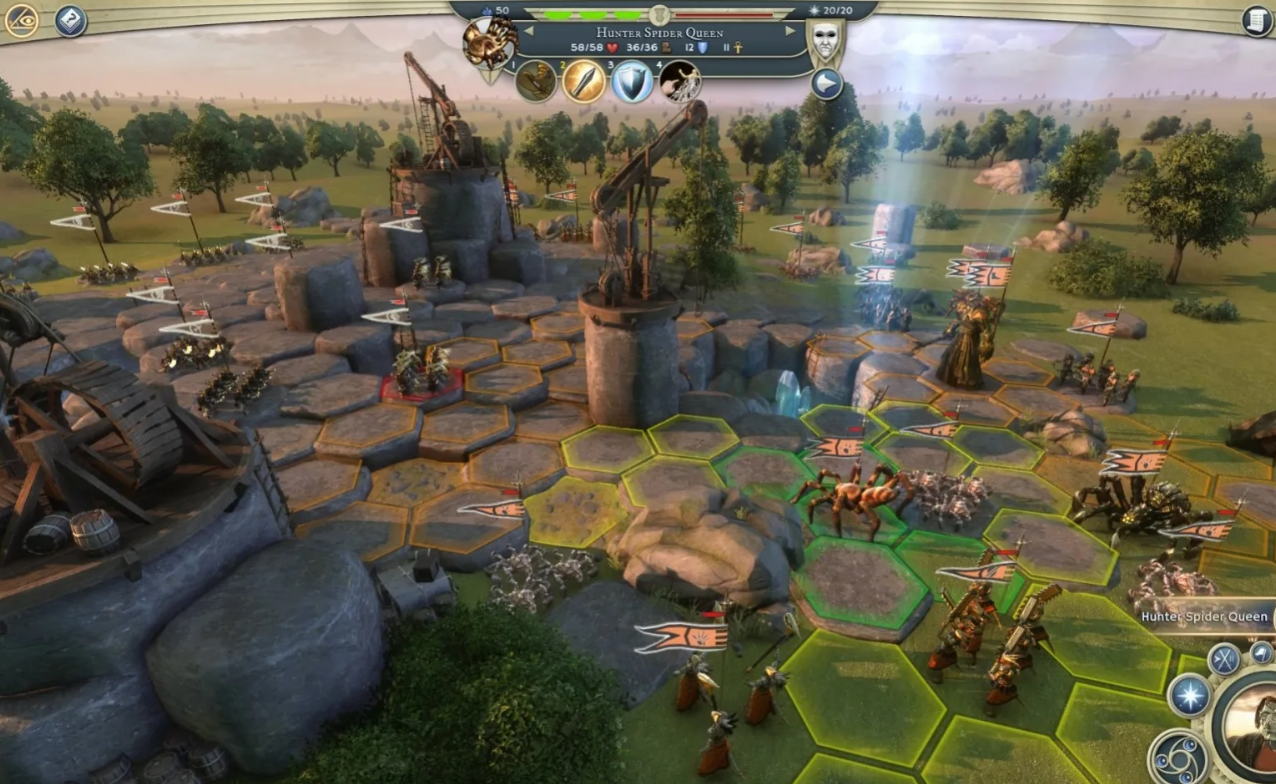
The story doesn’t aim for literary ambition: expect familiar quest archetypes like escorting a key character to an artifact or a ritual site. But the delivery — full dialogue, cutscenes, and side quests — is a noticeable step up compared to the earlier games in the series, where the campaign was little more than a sequence of maps with no real narrative direction.
Class System and Leaders: What Changed from Previous Age of Wonders Games
The biggest RPG addition in the third entry is a full leader class system, replacing the old approach where available spells depended only on race and chosen magic sphere.
| Class | Specialization | Gameplay Features |
|---|---|---|
| Sorcerer | Summoning creatures and monsters | Armies built from summoned creatures instead of regular troops — costs mana rather than gold |
| Theocrat | Religion and morale | Fanatics, crusaders, mechanics built around boosting morale |
| Rogue | Stealth and sabotage | Assassins, scouting, economic strikes against opponents |
| Warlord | Direct military strength | Attack bonuses, leadership abilities for large armies |
| Archdruid | Nature magic | Terraforming, control over terrain and creatures |
| Dreadnought | Technology | Firearms, steam machinery, fire tanks instead of classic magic |
Every leader and the heroes who join them gain levels, equipment, and dozens of active and passive skills — some of which are exclusive to a specific class. Progress doesn’t carry over between scenarios: every new map starts from scratch, and difficulty is now tuned by choosing how many skills a hero has unlocked from the start.
Tactical Combat: Why Strategy Doesn’t End on the World Map
The key thing separating Age of Wonders from something like Civilization is that combat isn’t abstracted into a simple comparison of unit strength. Every clash moves to a dedicated tactical battlefield where the following actually matter:
-
terrain and cover;
-
flanking maneuvers and formation;
-
range to target for ranged units (unlike earlier games in the series, distance now genuinely affects attack effectiveness);
-
siege equipment — battering rams, trebuchets, siege ladders;
-
dozens of unique active unit abilities.
City and fortress sieges stand out as their own set-piece events: large fortifications with defenders on the walls demand real tactical planning rather than simply throwing an army at them. This is exactly what draws comparisons to Total War, even though in scale the battles sit closer to a compact tactical RPG.
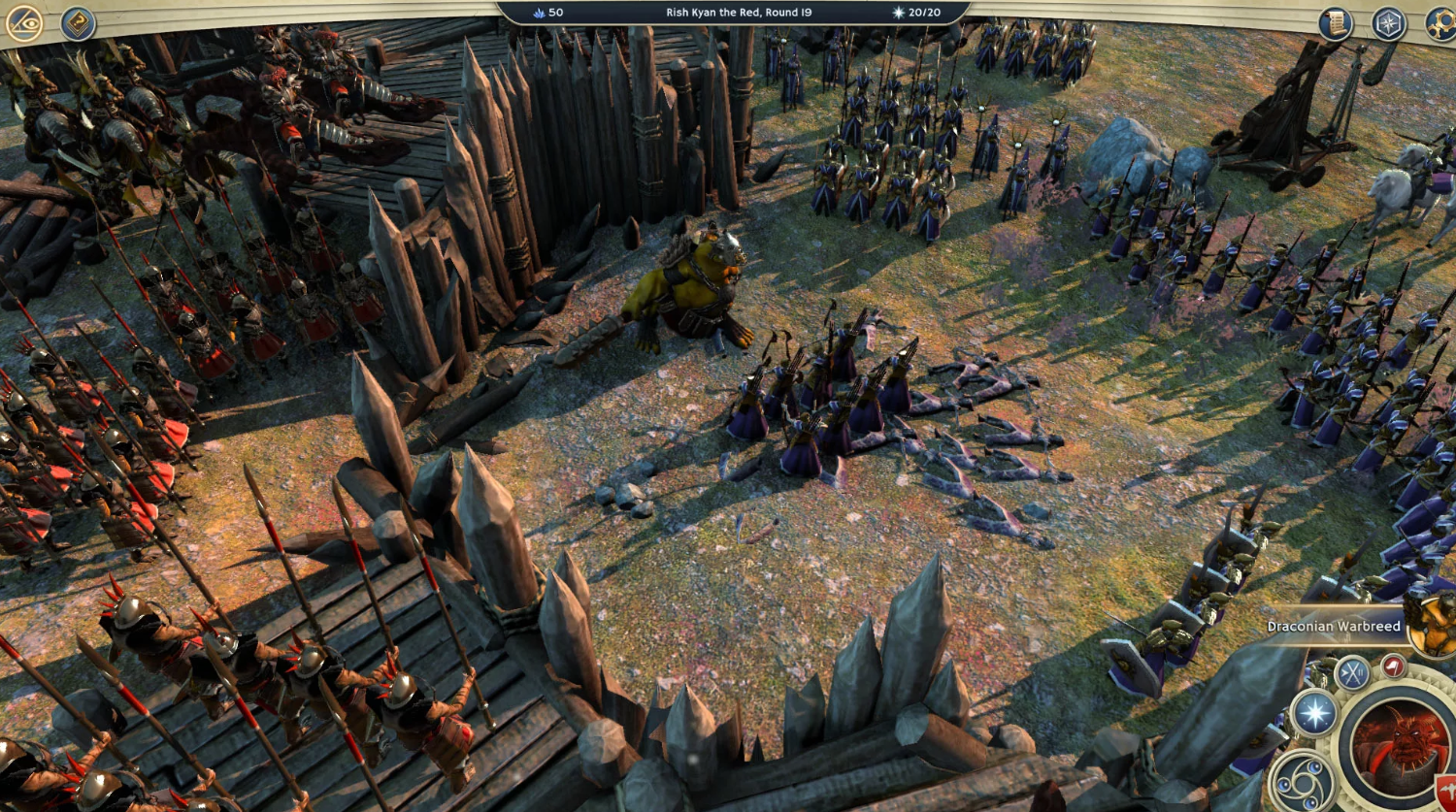
The maximum army size was reduced to 6 units per stack in the third game, down from 8 in previous entries — a debated change. Some players see it as a simplification, others as a way to make battles more readable and tactically meaningful.
Empire Economy, Resources, and the Mood System
Beyond the familiar gold and mana, the game introduces a third resource — Knowledge — spent on researching spells and passive skills. The more Knowledge your empire generates, the faster new abilities become available.
The mood system deserves special attention, affecting both individual cities and the empire as a whole:
-
a happy population throws celebrations that generate extra gold;
-
troops with high morale never desert in tough battles;
-
mood is shaped by the outcome of battles, the fate of conquered cities (razed, annexed, or resettled), and even terrain type — dwarves, for example, love mountains but dislike volcanic land.
On top of this sits a reputation system tracking “good” and “evil” actions: razing a city counts as evil, peacefully annexing it counts as good, and this directly shapes relations with other factions and how likely the AI is to negotiate versus fight.
A steam account free often works well if you just want quick access to a few titles.
Diplomacy and AI: Strengths and Weaknesses
Diplomacy isn’t just window dressing here. You can form alliances, negotiate free passage for troops, trade gold and spells — or declare war, knowing full well it’ll hurt your reputation. Angering one faction can drag its allies into the conflict too, so reckless aggression tends to catch up with you quickly.
The AI situation is mixed. On lower difficulties and in the early campaign missions, it barely puts up a fight, which turns the game into a routine resource-accumulation loop. Crank the difficulty up, though, and opponents start expanding aggressively, launching bold raids, and stirring up rebellions in your cities — meaning the actual challenge depends heavily on the difficulty settings you choose, something newcomers should factor in from the start.
Age of Wonders III vs. Previous Entries and Genre Rivals
Compared to Age of Wonders 1–2 and the Shadow Magic expansion, the third game keeps the core formula intact — exploring the map, building up cities, recruiting troops, turn-based battles with spells — while modernizing it substantially through 3D visuals, a new interface, and detailed combat animations.
Common comparisons that come up in player reviews and critical coverage include:
-
Heroes of Might and Magic — shared hero/army RPG structure, though AoW III’s empire economy and city-building run deeper;
-
Master of Magic — the historical lineage of “a mage builds an empire” as a core concept;
-
Total War — thanks to large-scale sieges and detailed tactical combat;
-
Civilization — thanks to the world map, diplomacy, and city systems, though many note AoW III’s diplomacy is notably simpler — you can’t, for example, turn one AI opponent against another through negotiation.
Multiplayer, Skirmish Mode, and the Random Map Generator
Beyond the campaigns, the game offers a full skirmish mode with a random map generator, letting you customize map size, opponent count, starting conditions, and races. This is really the main source of replayability: the story campaigns are finite, while random scenarios and up-to-8-player multiplayer can easily add dozens more hours on top.
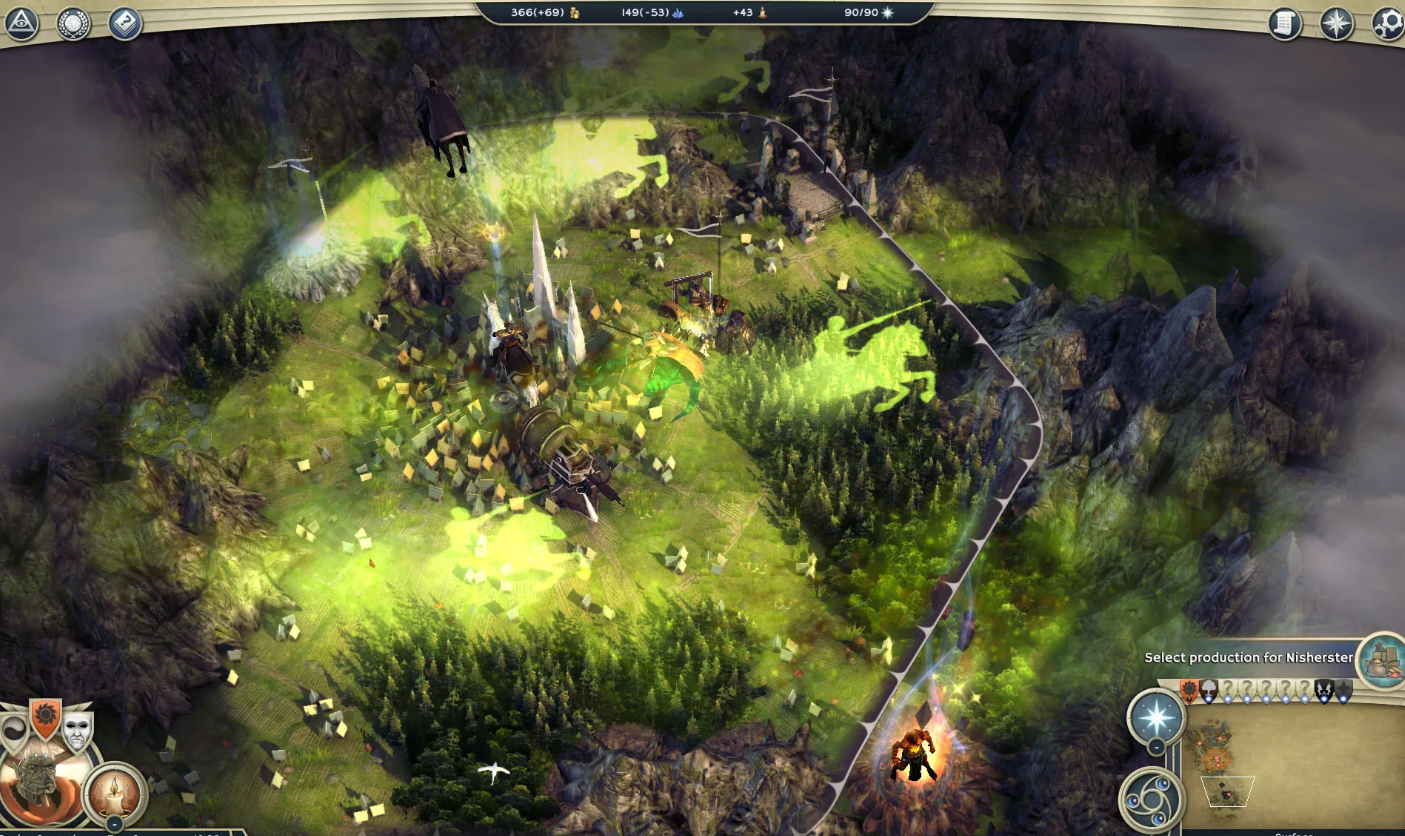
Local hot seat play is also supported — a two-player mode on a single computer that’s been part of the series since its earliest entries, and remains a nice option for friends who want to play together without dealing with online setup.
Is Age of Wonders III Worth Buying in 2026
Over a decade after release, the game still has an active Steam community, ongoing forum discussions, and mods through the Steam Workshop. That’s rare for a niche turn-based strategy game of this age.
Reasons to buy:
-
a tactical combat system that hasn’t aged conceptually;
-
a wide variety of classes and races enabling dozens of distinct playstyles;
-
two story campaigns plus near-endless replayability through skirmish mode;
-
an affordable price, especially bundled with the Golden Realms and Eternal Lords expansions, which add more races and classes.
Reasons for caution:
-
the interface takes time to learn and can feel overloaded with information;
-
the AI is inconsistent — too passive on lower difficulties and prone to questionable combat decisions (for instance, it may march archers out from behind walls instead of holding a defensive position);
-
2014-era visuals clearly lag behind modern strategy games, though the art direction and soundtrack have aged far better than the technical side;
-
some players consider the second game in the series mechanically tougher and deeper, even if it lacks the visual polish and RPG depth of the third.
System Requirements and Technical Details
By modern standards, the game is very lightweight: the minimum spec calls for a Core 2 Duo E6600, 2 GB of RAM, and a GeForce 8800-class GPU, meaning Age of Wonders III runs comfortably on virtually any current PC, laptop, or even older hardware. It supports Windows, macOS, and SteamOS/Linux, along with co-op, Steam Workshop mod support, achievements, and cloud saves.
Table: Key Facts About Age of Wonders III
| Detail | Value |
|---|---|
| Developer | Triumph Studios |
| Publisher | Paradox Interactive |
| Release Date | March 31, 2014 |
| Genre | Turn-based 4X strategy / RPG |
| Platforms | Windows, macOS, SteamOS/Linux |
| Modes | Campaign, skirmish, multiplayer (up to 8 players), hot seat, co-op |
| Expansions | Golden Realms Expansion, Eternal Lords Expansion, Deluxe Edition DLC |
| Metacritic Score | 80 out of 100 |
How to play Age of Wonders III for free on Steam via VpeSports
You know, there are games where you sit down “for half an hour,” and then you look up — and it’s already dawn outside the window. Age of Wonders III is one of those. Here you don’t just push buttons — you really build your empire, negotiate with some races and declare war on others, come up with strategies that seem brilliant at three o’clock in the morning. Elves, dwarves, undead, demons — each faction feels alive, with its own character and habits, and after a couple of hours of playing, you find yourself thinking that you are already rooting for your horde as for your own.
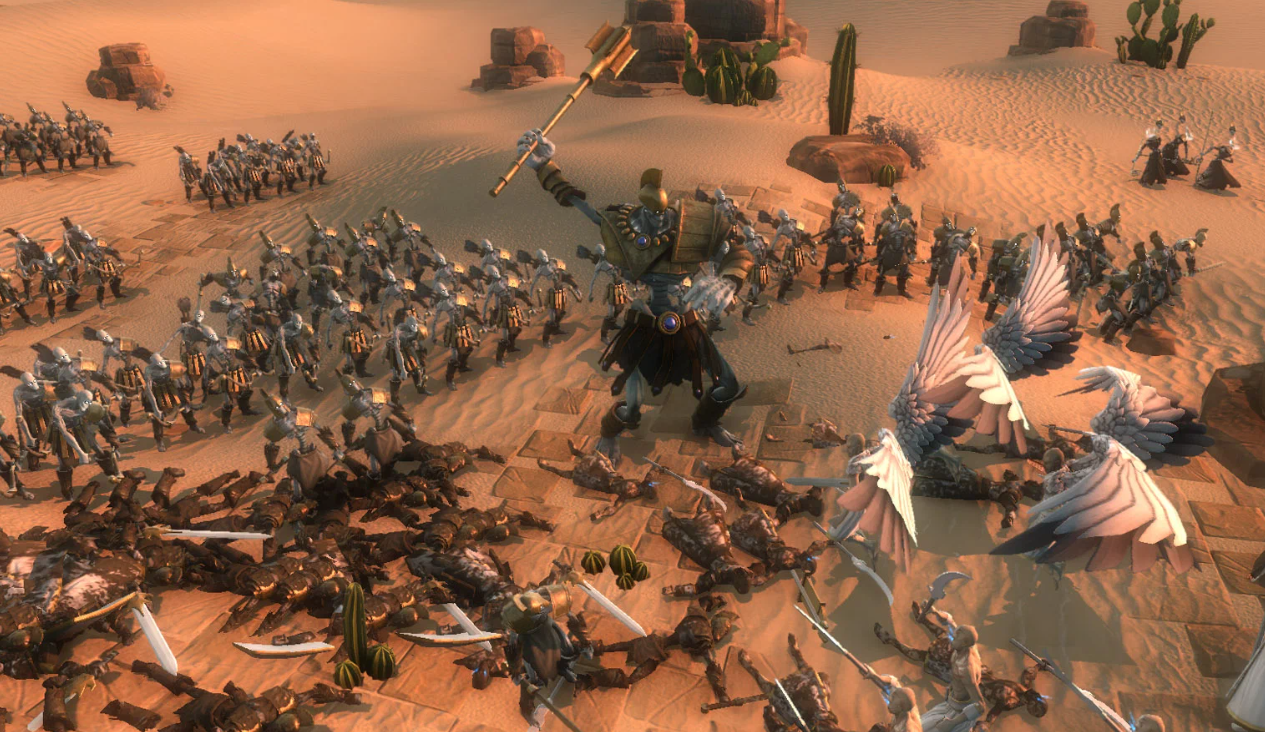
This is one of those strategies that doesn’t age, no matter how many years have passed since the release. And since we ourselves adore such games and know what it’s like to want to play, but to run into a lot of unnecessary steps and settings, we decided to simplify everything. No hassle, no running around ten sites. All you need to do is register with us, log in to your account, go back to the beginning of this article and click GET ACCOUNT. Next, we will take you by the hand through all the steps — quickly and without unnecessary nerves.
By the way, if you don’t want to miss anything, go to our Telegram channel. We don’t just drop links to accounts there, but we really communicate: we share patches, discuss news, argue about our favorite strategies, and just chat with fans of the genre like yourself.
Well, if something doesn’t work out or you have any questions, don’t worry. Take a look at the “How to play for free — the complete guide” section, it’s literally laid out on the shelves. Or just write to us in the chat — we are real people who will be happy to help you figure it out, and not a soulless bot with boilerplate answers.