
Here’s the paradox: the more cheaters Battlefield 6 bans, the higher the percentage of matches getting ruined by them. That contradiction is the real story buried in the developers’ latest anti-cheat report.
Battlefield Studios just published its developer diary covering June — the first full month of Season 3, and more importantly, the first season to feature ranked play. Going by the team’s own wording, this stretch delivered “a lot of useful lessons,” which, translated from PR-speak, usually means the problem turned out bigger than expected.
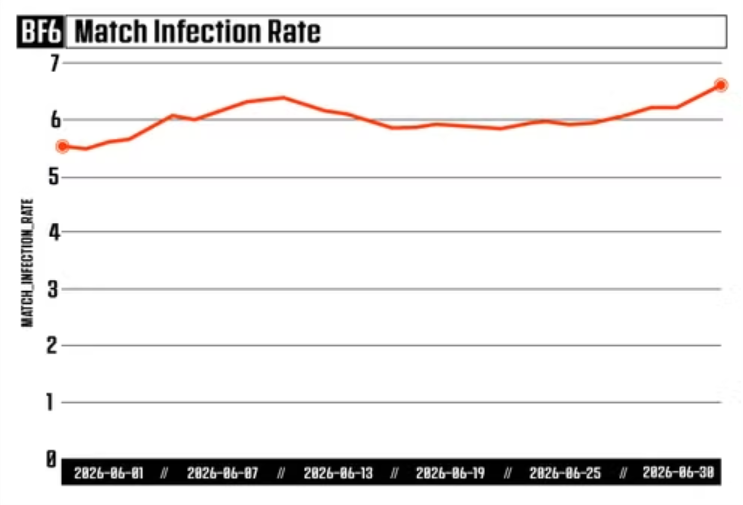
The key metric here is MIR — Match Infraction Rate, the share of matches negatively affected by at least one cheater. That count includes every suspected offender, even those the studio doesn’t have enough evidence to actually ban. MIR opened June at 5.52%, climbed to an early peak of 6.37% by the 11th, dipped slightly through the month, then crept back up starting June 24th and closed out at 6.59%. In other words, roughly one in every fifteen or sixteen matches in BF6 gets touched by cheating in some way — and the trend isn’t moving in honest players’ favor.
That said, EA’s Javelin Anti-Cheat system isn’t sitting idle. Over June, it prevented 226,592 cheat attempts or tampering incidents before they could actually affect match outcomes. The developers also say they’re tracking over a hundred cheat vendors and cheat projects, many of which are reportedly complaining about their own software breaking — meaning Javelin is causing headaches on both sides of the fight.
Table of Contents
Why Ban Numbers and MIR Are Rising Together
The explanation isn’t that the anti-cheat is weak — it’s scale. Ranked mode raised the stakes considerably: players chasing rank are more willing to buy cheat software, which grows the overall pool of offenders. Javelin is catching more cheaters, but the total number of cheaters is also growing, so MIR isn’t showing visible improvement yet despite the crackdown.
What’s Coming in Season 4
The studio is working on an expanded blocklist covering banned hardware and software, set to take effect in Season 4. Hardware bans typically target so-called read/write cheat devices — external tools that are much harder to catch through software-only detection.
What this actually means for players right now:
-
Running into a cheater in a ranked match isn’t rare — roughly 6-7% of games are affected in some way;
-
Reporting still matters — the system clearly leans on community reports as part of its detection process;
-
Some bans happen preemptively, before a cheater can even impact a match — that’s working in your favor even when it’s invisible;
-
Things could get temporarily worse ahead of Season 4 — cheat developers often rush to squeeze value out of old exploits before they get patched out.
EA Javelin is clearly putting up a real fight, not just going through the motions — 226,000 prevented attempts in a single month backs that up. But the real test comes after Season 4’s expanded hardware blocklist goes live. If MIR finally starts trending downward, that’ll be the first solid proof ranked mode has the cheating problem under control.