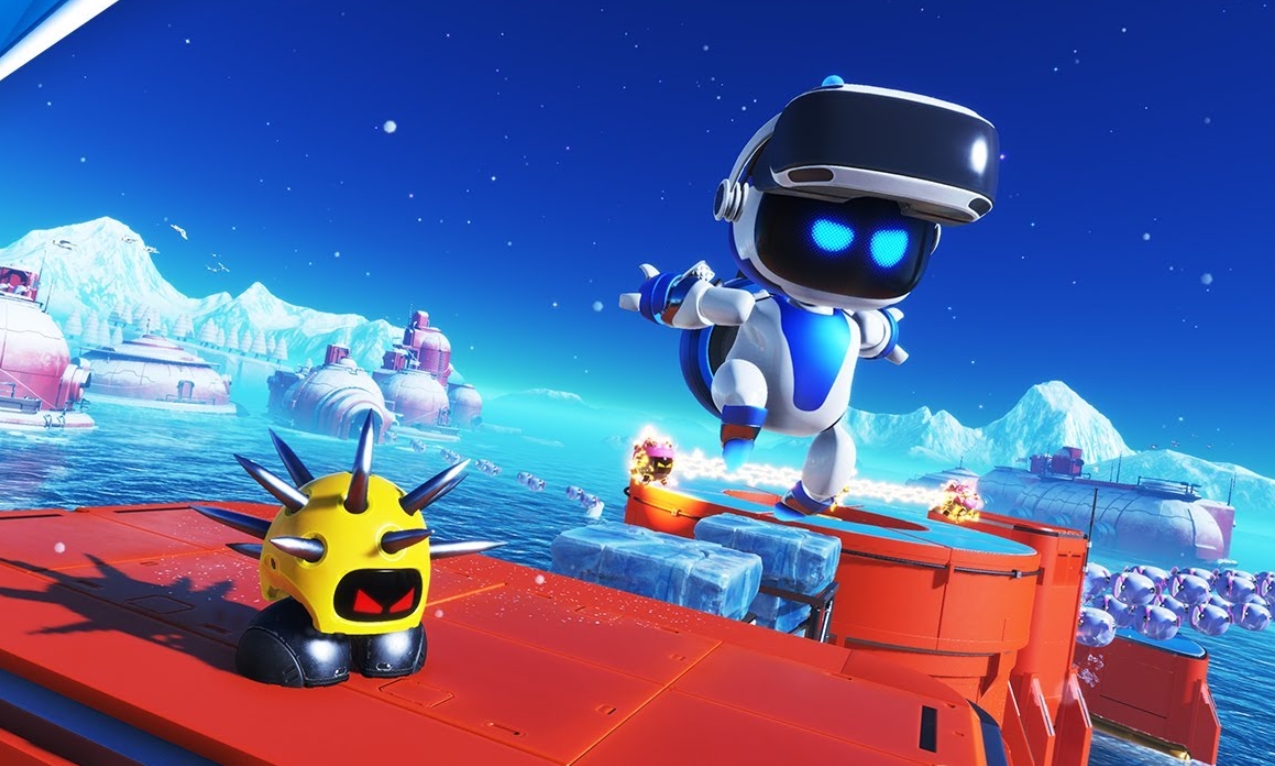
In an industry where a single blockbuster’s budget routinely tops $200 million and “success” has come to mean a hundred-plus-hour open world, a small robot armed with nothing but a controller is still making money — with no sequel announced, no aggressive discounting, and none of the marketing machinery you’d expect behind that kind of growth.
Quick facts:
-
Astro Bot’s total sales have reached roughly 4.3 million copies
-
The game’s revenue is estimated at $250 million
-
More than 600,000 copies have sold in 2026 alone
-
It launched on September 6, 2024, exclusively on PS5
-
The main campaign takes about 12–15 hours to complete
Table of Contents
How Many Copies Has Astro Bot Sold and How Much Has It Earned
The latest estimate comes from analytics firm Alinea Analytics: Astro Bot’s cumulative sales have reached around 4.3 million copies, with total revenue of roughly $250 million. That’s a third-party estimate rather than an official figure — Sony, as usual, doesn’t break out exact sales numbers for individual titles, so analyst projections are the best available benchmark.
What’s more interesting than the headline number is how it was built up. The launch surge was predictably strong — 1.5 million copies in the first nine weeks. But unlike most releases, the game never really cooled off: in 2026 alone, more than a year after launch, it has sold over 600,000 additional copies, bringing in roughly $33 million.
| Period | Copies Sold | Revenue |
|---|---|---|
| First 9 weeks (Sept–Nov 2024) | ~1.5 million | not separately disclosed |
| 2026 (year to date) | 600,000+ | ~$33 million |
| Cumulative as of June 2026 | ~4.3 million | ~$250 million |
A rough back-of-envelope calculation — total revenue divided by total units sold — works out to about $58 per copy. That’s a loose figure, since it ignores discounts, regional pricing, and the platform’s cut, but it’s a useful indicator: even without endless sales, Astro Bot’s average price realization has stayed high for a game of its scope.
Why Astro Bot Is Still Selling Almost Two Years After Launch
Most games make the bulk of their money in the first month or two before the sales curve drops off sharply. Astro Bot’s long tail has been unusually durable, and the reason mostly comes down to reputation. At The Game Awards 2024 the game swept four trophies in a single night, including the top Game of the Year prize, and at the 2025 BAFTA Games Awards it walked away as the most-awarded title of the ceremony. A strong critical reception combined with a steady stream of awards functions like free advertising: the game keeps resurfacing in PS Store recommendations, lands in “best of PS5” roundups, and continues to reach new console owners — buyers who simply weren’t around to purchase it on launch day.
The Free Springboard: Astro’s Playroom
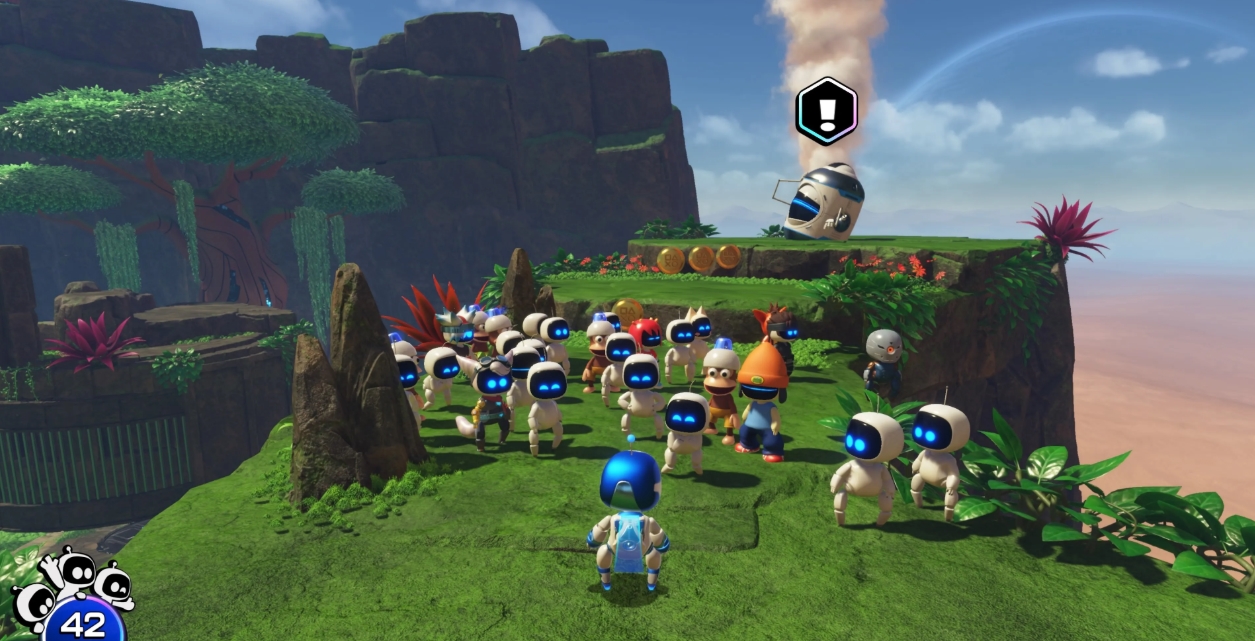
Another factor behind the staying power is the series’ previous entry, Astro’s Playroom. It has shipped pre-installed on every PlayStation 5 since the console’s 2020 launch, serving as an interactive showcase for the DualSense controller. Anyone who’s ever bought a PS5 — back in 2020 or just last week — is already familiar with Astro before they’ve even opened the store. It’s effectively a zero-cost-of-acquisition marketing funnel feeding a full-priced sequel, with no advertising spend required.
What Sets Astro Bot’s Modest Scale Apart From Sony’s Typical Budgets
The exact development budget has never been disclosed, but every available signal points to something considerably smaller than Sony’s usual blockbusters — no overlong cinematic set pieces, no sprawling open world stretched out to a hundred hours. Team Asobi head and creative director Nicolas Doucet has repeatedly made clear that the studio deliberately kept the campaign tight at 12–15 hours and chose not to artificially pad the runtime just to inflate the number on the store page.
In an industry where bloated budgets and overworked schedules routinely lead to studio closures and layoffs, that approach looks almost countercultural. A smaller scope means less risk, and less risk means more room to turn a profit even without record-breaking sales on the level of GTA or Call of Duty.
Who Should Buy Astro Bot in 2026 — A Quick Guide
-
Fans of family-friendly platformers. The game won Best Family Game at TGA 2024, making it a solid pick for co-op play with kids.
-
DualSense owners who haven’t fully experienced the controller yet. Haptic feedback and adaptive triggers are used more extensively here than in almost any other PS5 game.
-
Anyone burned out on 60-hour open worlds. The campaign fits into 12–15 hours with no artificial padding.
-
Award and review-score collectors. The most-decorated game of 2024 at The Game Awards and the top performer at the 2025 BAFTA Games Awards — a built-in quality guarantee for anyone who shops by ratings.
-
One important caveat: the game is PlayStation 5 exclusive. There is currently no PC or PSVR2 version.
Will Astro Bot Come to PC
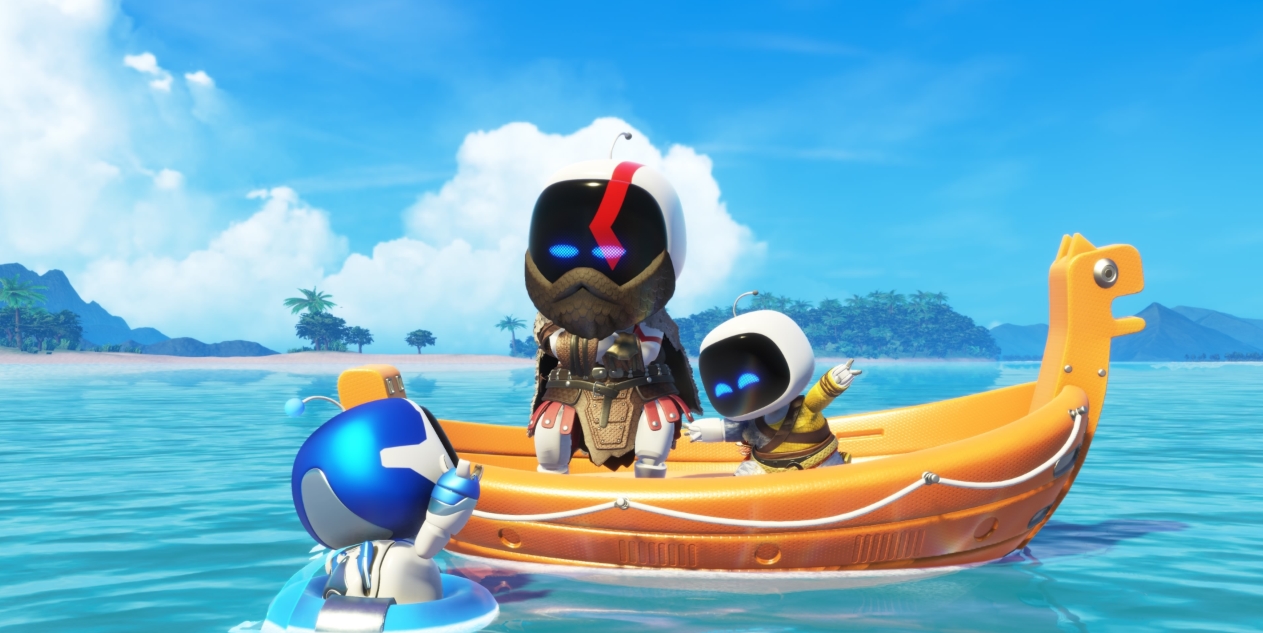
This is one of the most common questions surrounding the game, and there’s still no definitive answer. Doucet has previously said a PSVR2 version is essentially off the table on principle — in his view, putting the concept in a headset would turn it into a fundamentally different game. The studio’s stance on a PC port is softer: the creative director has indicated the decision would hinge on player demand rather than a pre-set publisher roadmap. As of mid-2026, no PC version has been officially announced.
What This Success Means for the Franchise’s Future
$250 million in revenue on a comparatively modest budget, with no DLC to speak of, makes its own case: the “tight, polished, no artificial padding” model can compete with — and at times outperform — the typical AAA production line. For players, this is above all a sign that Sony now has a strong argument for investing further in the Astro franchise, whether that’s a sequel or some other expansion. There’s no official announcement yet, but sustained demand nearly two years after launch tends to be a deciding factor in those calls.
It’s also a useful data point for the industry at large. Amid a steady drip of stories about studio layoffs and games that fail to turn a profit despite millions of units sold — simply because their budgets ballooned out of control — Astro Bot makes the case that a successful exclusive doesn’t have to be a hundred-hour giant. Sometimes it pays to build something smaller and more precise, then let a strong reputation do the heavy lifting on sales.