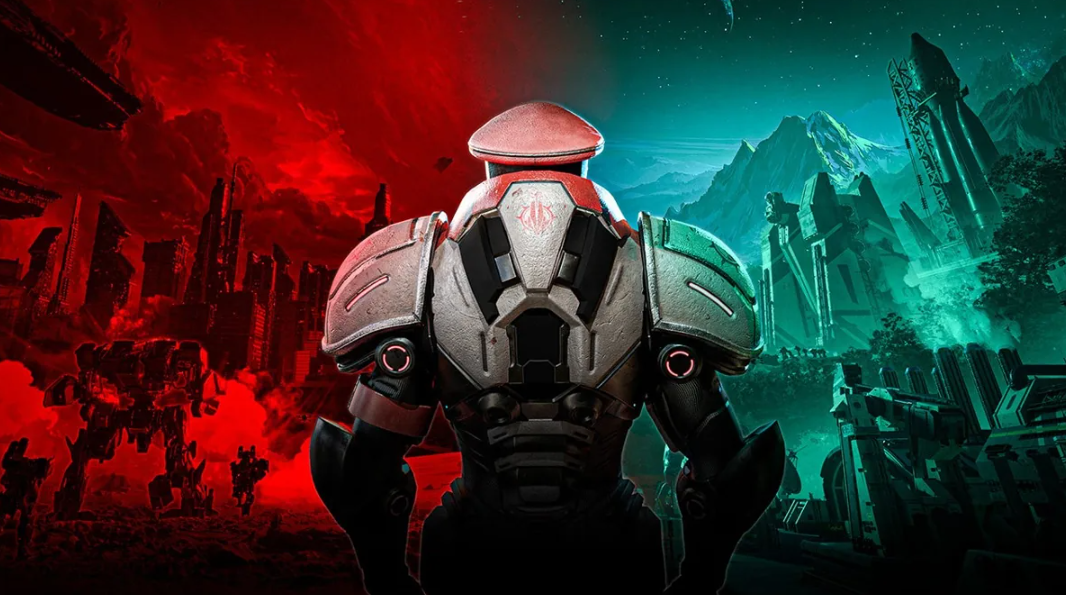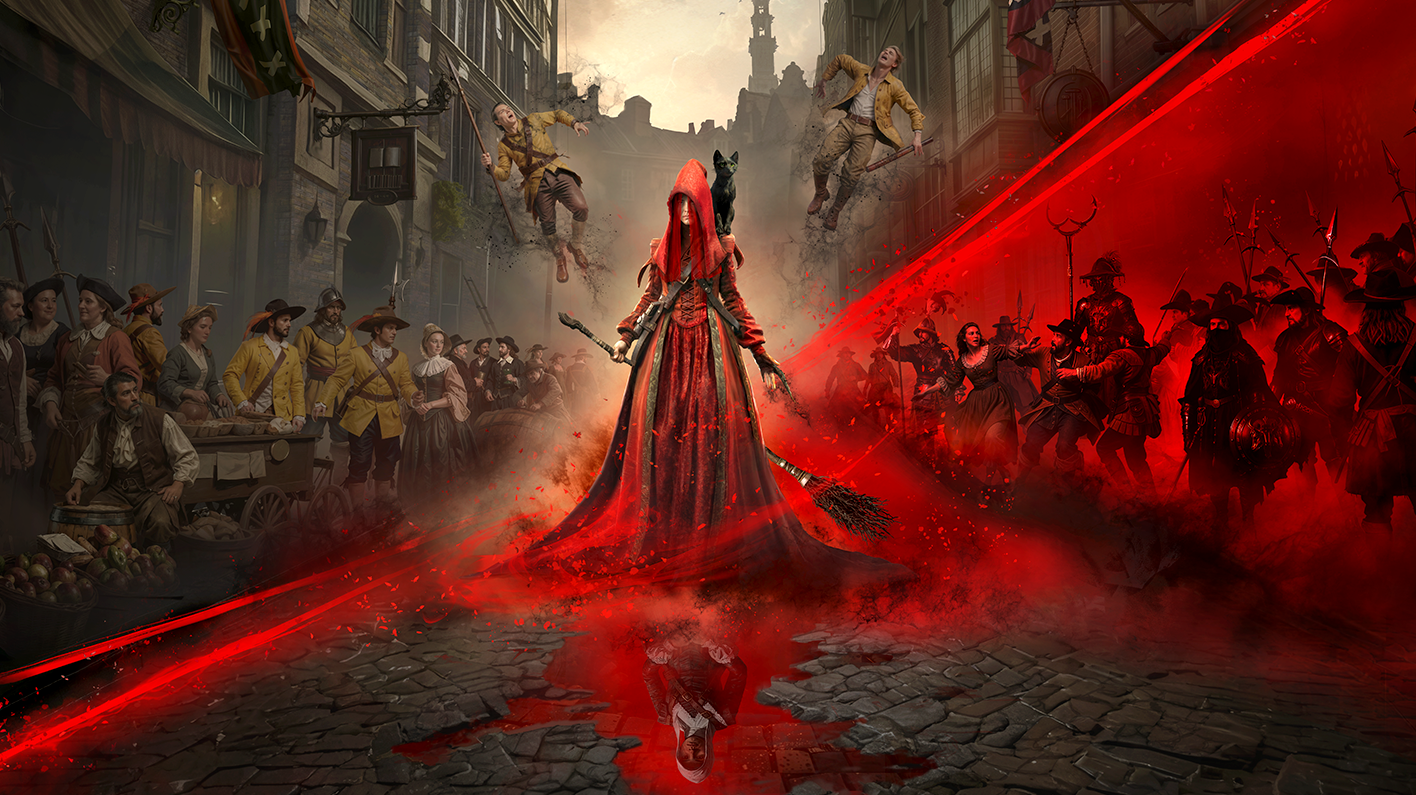
Shock from the creator of Assassin’s Creed: Panache Games admitted to using AI in the prologue of 1666: Amsterdam and promises to replace everything.
What was supposed to be a triumphant return for Patrice Désilets, the founding father of Assassin’s Creed, turned into a scandal just days after its announcement. Players who tried out the free prologue of the dark fantasy game 1666: Amsterdam on PC quickly identified suspicious artifacts in the game and promotional materials.
Finally, Panache Games released an official statement on the social media platform X: they acknowledged the embarrassment and promised to fix it soon.
In fact, the company employs a team of over a dozen artists, but an internal review revealed that early versions of some assets—mostly character portraits and external marketing materials—were generated by a neural network and mistakenly leaked into the prologue. “We acknowledge this oversight and apologize for any inconvenience caused,” the developers stated, hastily adding that the elements “under review” would be replaced with hand-generated versions in one of the upcoming updates.
And the most important detail that Désilet had to promise fans: no AI generation would make it into the Early Access version, much less the final release of the game. However, officials did not specify whether the replacement of these controversial images was originally planned or whether the decision was an emergency response to the barrage of criticism.
Table of Contents
How exactly do players detect generative AI in new games and why does it work against developers?
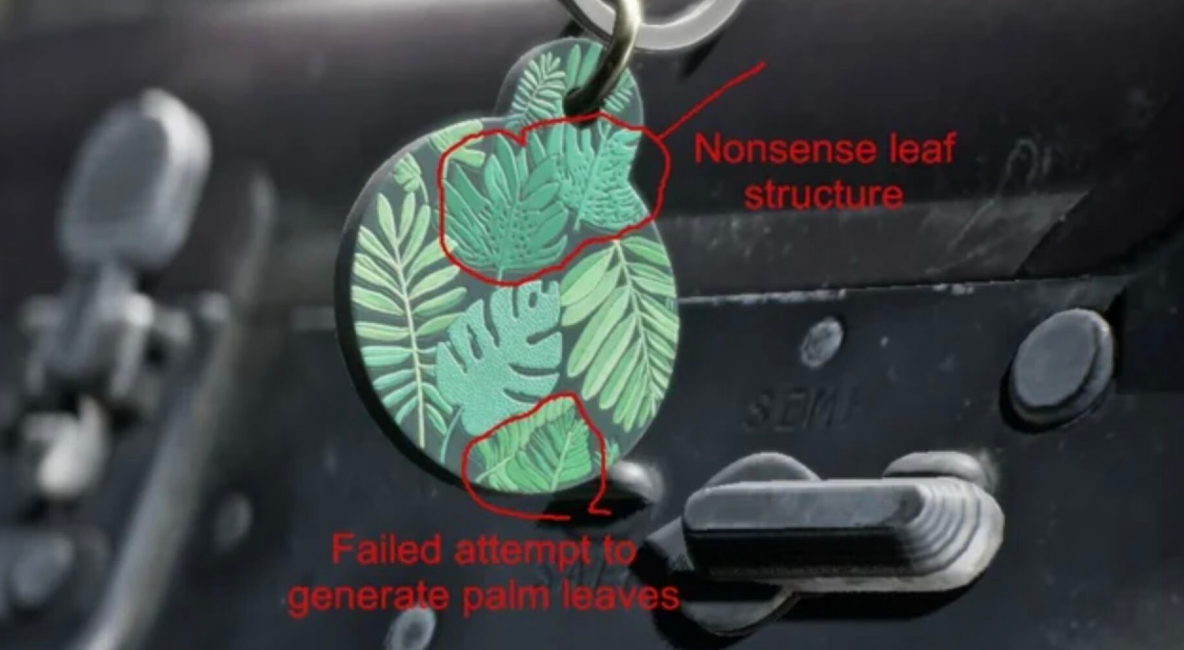
The gaming community today is armed not only with gamepads but also with a keen eye for deepfake artifacts. Typically, small but common errors can “blow” a neural network.
Visual anomalies as the main indicator of AI content
For example, in Battlefield 6, players recently stumbled upon a sticker of an M4A1 rifle that appeared to have two barrels, while the character was missing a trigger—a classic oversight of a machine that doesn’t understand the anatomy and physics of objects.
An even more amusing situation arose with War Thunder: on expensive premium packs sold for real money, observant users spotted the signature four-pointed logo of the Google Gemini neural network.
This wasn’t a hidden hint, but a direct watermark inadvertently left by the developers. Another striking case is The Alters: there, players found not just a suspicious image, but an entire fragment of a chatbot response, woven right into the background text in the command center.
Impact on ratings and commercial success
The community reaction is usually swift and vicious. For example, the demo version of 1666: Amsterdam received a “Mixed” rating on Steam.
“They use generative AI everywhere: in-game images, assets, even the promotional art is generated. I’m removing this game from my wishlist,” wrote one disappointed user.
Such scandals also damage reputations. Previously, the indie hit Expedition 33 lost its “Game of the Year” award at the prestigious Indie Game Awards due to its use of AI art.
Why are neural networks becoming easier to spot?
Audiences have learned to detect even the slightest inconsistencies in proportions, odd limbs, unnatural lighting, and nonsensical text (Chinese symbols or pseudo-hieroglyphs generated by a neural network as a “pretty picture” without understanding the meaning).
The introduction of generative AI is becoming a major tension point, affecting not only aesthetics but also basic trust in the product—customers want to be sure they are paying for handcrafted work, not a “digested amalgam” of someone else’s creativity.