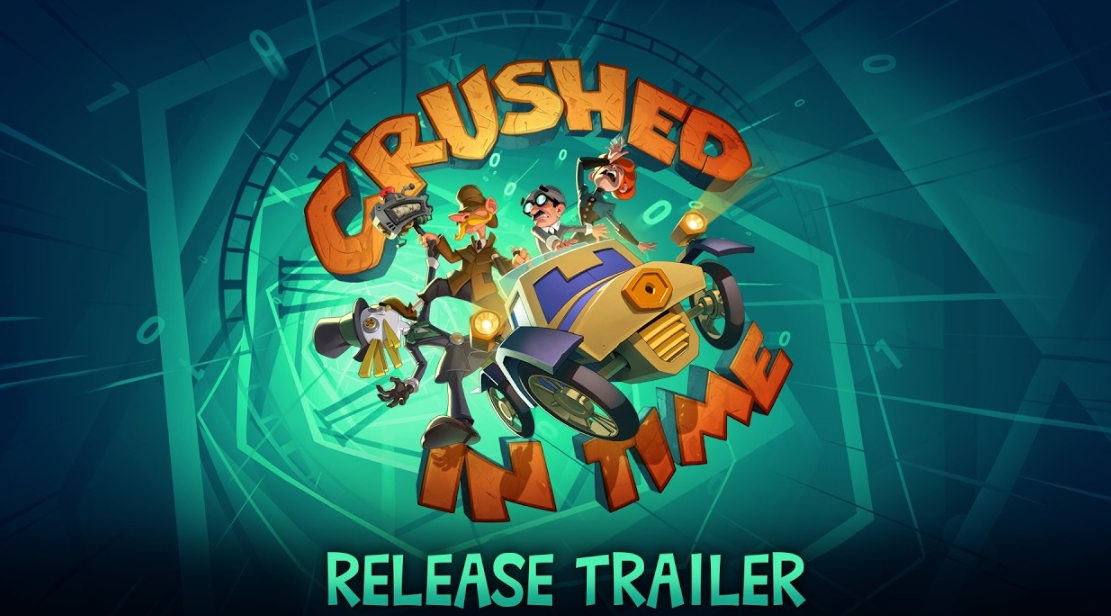
Picture this: a game has just launched, one of its characters has mysteriously vanished — and now Holmes and Watson must investigate the case by traveling through the very stages of their own game’s development. Not in London. Not in the past. Right inside the game engine, somewhere between beta builds and placeholder assets. That is the absurd premise behind Crushed in Time, the new point-and-click adventure from Draw Me A Pixel, the studio behind the cult hit There Is No Game: Wrong Dimension.
The game arrived on Steam and mobile platforms on June 10, 2026 — and it may well be the strangest release of the year.
Table of Contents
What Is Crushed in Time and Why Should You Play It
The full title is Crushed in Time: An Elastic Adventure. It is a spin-off of There Is No Game: Wrong Dimension, built around Holmes and Watson — characters who first appeared in the original game and quickly became fan favorites.
The setup goes like this: a freshly released video game starring Sherlock Holmes starts tanking in reviews because one of its NPCs has inexplicably gone missing. The real-world developers are scrambling. But while the humans search for the bug, the in-game characters — Holmes and Watson — decide to take matters into their own hands. Their investigation leads them straight through the space-time boundaries of their world, meaning through the various stages of the game’s development: unfinished levels, discarded builds, concept art brought to life.
This is exactly the kind of thing Draw Me A Pixel does best: fourth-wall destruction as the core narrative, not just a punchline. The difference this time is the ambition behind it.
Crushed in Time Gameplay: What Is Elastic Gameplay and How Does It Change Point-and-Click
At its heart, Crushed in Time is still a point-and-click adventure — but it introduces a central new mechanic called elastic gameplay. Instead of simply clicking or dragging objects, players must pull, stretch, and release them, like a rubber band. This mechanic gives the game its subtitle and defines almost every puzzle in it.
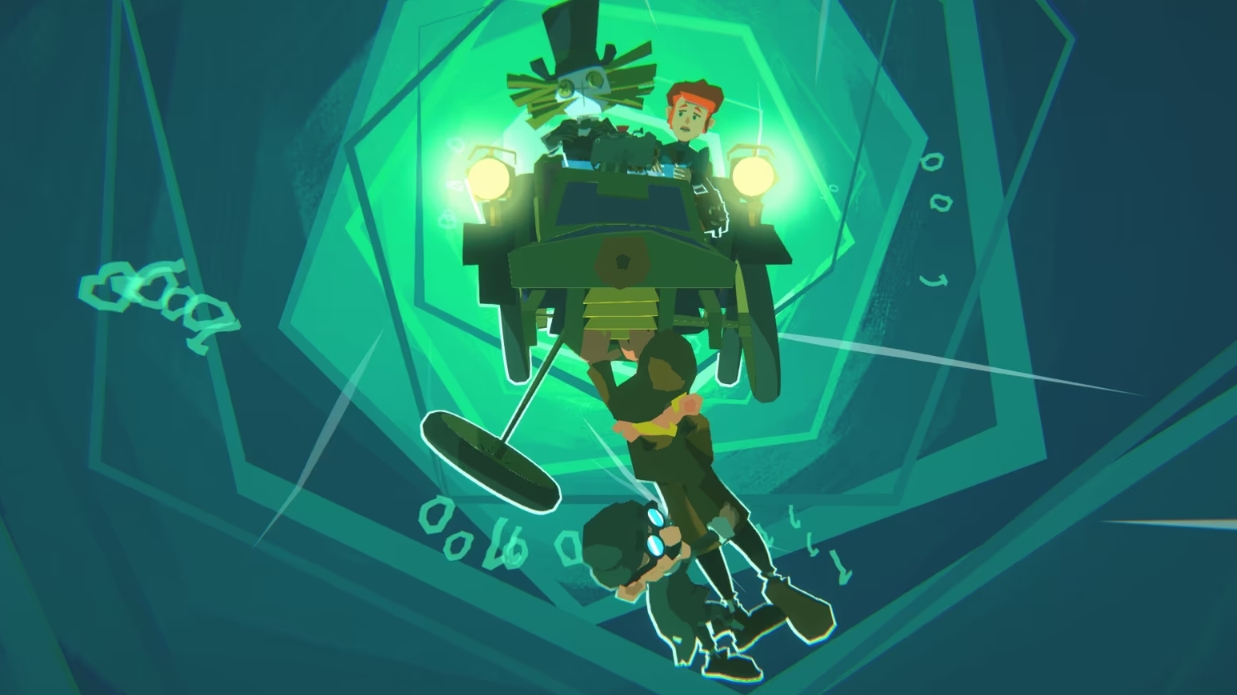
In practice, that looks something like this:
-
Pull back a branch and release it at the right moment to launch Watson through a gap
-
Attach a shield to a suit of armor and tug it to refract sunlight and light a candle
-
Swing a key on a string and fling it into a lock across the room
-
Crank the Sherlock-O-Motive to keep it moving through a time vortex
This is not a cosmetic upgrade to the genre. The mechanic genuinely changes how puzzles feel — timing and trajectory matter alongside logic. That combination is rare in point-and-click games, and it gives Crushed in Time its own distinct identity even within a well-established genre.
Crushed in Time Characters: Who Joins Holmes on the Investigation
Alongside the iconic duo, two original characters take center stage:
| Character | Description | Role in the Story |
|---|---|---|
| Emma Files | A red-headed scientist who describes science as her greatest passion | Helps Holmes and Watson navigate wave-flux gravitational teleportation; has little patience for Sherlock’s condescension |
| Emmett Placeholder | A scarecrow-like figure with a very telling name | Appears to be a literal placeholder character — a basic stand-in never replaced with a finished design. Eager to see the world beyond his corner of the code |
Mr. Wilhelm also returns from Wrong Dimension. Having survived what appeared to be death-by-glitch, he can now see beyond the boundaries of the game world — and has concluded that aliens are watching. Which, from a certain angle, is not entirely wrong.
How Crushed in Time Compares to There Is No Game: Wrong Dimension
Fans of the original have already started drawing comparisons. Here is how the two games stack up:
| Feature | There Is No Game: Wrong Dimension | Crushed in Time |
|---|---|---|
| Visual Style | Pixel art 2D | 3D aesthetic with 2D elements |
| Core Mechanic | Classic point-and-click | Elastic gameplay — pull, stretch, release |
| Main Characters | GiGi and Game | Sherlock Holmes and Watson |
| Narrative Frame | Traveling across game genre dimensions | Traveling through stages of game development |
| Platforms | PC, mobile | Steam, Nintendo Switch, iOS, Android |
| Language Support | Limited | Subtitles in 10 languages |
The developers have confirmed the runtime is expected to match or exceed Wrong Dimension — so this is not a short side story.
Crushed in Time Release Date and Available Platforms
The game launched on June 10, 2026. The release is rolling out in stages:
-
PC (Steam) — available now
-
iOS and Android — mobile port coming next
-
Nintendo Switch — console version arriving last
The game supports subtitles in 10 languages, with full voice acting recorded by real human performers. The studio made a point of highlighting this — all dialogue is natural, unscripted in feel, and free of the kind of stilted delivery that synthetic voices tend to produce.
A public demo was available on Steam from February 12 to May 8, 2026, covering the opening cutscene and a portion of the first chapter, The Weight of Words. The demo was English-only, with optional French subtitles.
Easter Eggs and References for There Is No Game Fans
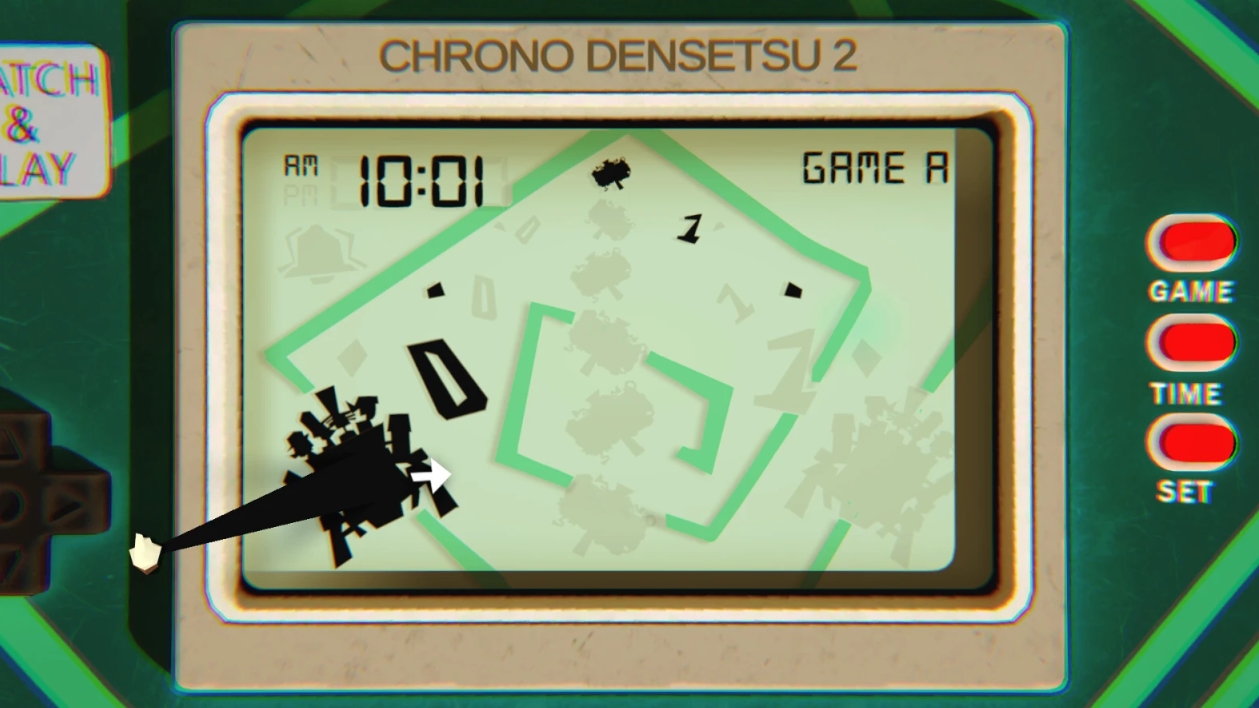
Draw Me A Pixel packed Crushed in Time with callbacks to Wrong Dimension, and dedicated fans will spot them immediately:
-
The Two-Headed Squirrel from Wrong Dimension appears on a newspaper
-
Posters referencing Legend of the Secret are visible on walls
-
Watson delivers the line “I hate you” in nearly the same way he did in the Behind the Scenes chapter
-
Sherlock earnestly suggests that the anomalies might be caused by an inversion of the Earth’s poles
-
The mini-game Chrono Densetsu 2 references both Chrono Trigger and Seiken Densetsu 2
One standout moment involves an oscilloscope: the Sherlock-O-Motive drives along a waveform while the player changes the signal shape to guide it forward. It is a quiet nod to the very origins of video games — back when the first interactive displays were built on radar hardware. That kind of layered reference is exactly what makes the series special for players who catch it.
Should You Play Crushed in Time: Who This Game Is For
This is not a game for everyone — and it does not try to be. But if any of the following applies to you, it is worth buying without hesitation:
-
You finished There Is No Game: Wrong Dimension and wanted more
-
Games that constantly break their own rules do not frustrate you — they delight you
-
You enjoy absurdist humor in the vein of Monkey Island or The Stanley Parable
-
Meta-narratives where the game is aware of itself genuinely interest you
-
You want to see Sherlock Holmes completely powerless against a software bug
If you are looking for a serious detective mystery with logical deductions and a grounded plot — this is not that game. Holmes here is less a brilliant mind and more a victim of circumstances entirely outside his control. Which, given everything, feels intentional and quietly hilarious.
What Crushed in Time Means for the Genre and What Comes Next
Draw Me A Pixel are doing what they have always done well: making games about games. The difference now is scope. A proper 3D visual style, a brand-new physics-based mechanic, a Nintendo Switch release, and a mobile port built for touch — this is a studio growing into something bigger without losing what made the original work.
The elastic gameplay mechanic in particular feels like something designed with mobile in mind from the start. Pulling and releasing with a finger is more intuitive than it would ever be with a mouse. That deliberate design choice suggests the studio is thinking well beyond the Steam audience this time.
Reviews are not live yet — Metacritic opens its window on June 11. So the real verdict from players and critics is still incoming. Based on what the demo and trailers showed, a poor reception would be genuinely surprising. Whether it clears the very high bar set by Wrong Dimension is the only real question left. The next few days will answer it.