Owlcat Games did something unusual for a big RPG trailer — instead of another cinematic reel with a grim voiceover, the studio showed actual gameplay. That changes the conversation around Dark Heresy immediately: this isn’t just another Warhammer game riding the license. It looks like a genuine detective cRPG built around investigation mechanics that almost nobody else is doing.
Table of Contents
What Is Warhammer 40,000: Dark Heresy and Who Is Owlcat Games
For those not following: Dark Heresy is a party-based cRPG from Owlcat Games — the same studio that already explored the Warhammer 40K universe with Rogue Trader. This time they’re taking a very different angle. No Rogue Trader aristocrat with a fleet. Instead, you play as an Acolyte serving the Inquisition.
The mission is spelled out in blunt, brutal terms: investigate heresy deep within the Calixis Sector, expose the rot hiding in places no one dares look, and stand as humanity’s last line of defense against annihilation. That’s not a quest with map markers — that’s the premise of a full-blown detective operation in the darkest setting fiction has to offer.
Owlcat knows this universe well, and judging by what the trailer revealed, the studio is building exactly the game that fans of the original Dark Heresy tabletop system have been waiting for.
Dark Heresy Investigation Mechanics: Clues, Interrogations, Accusations
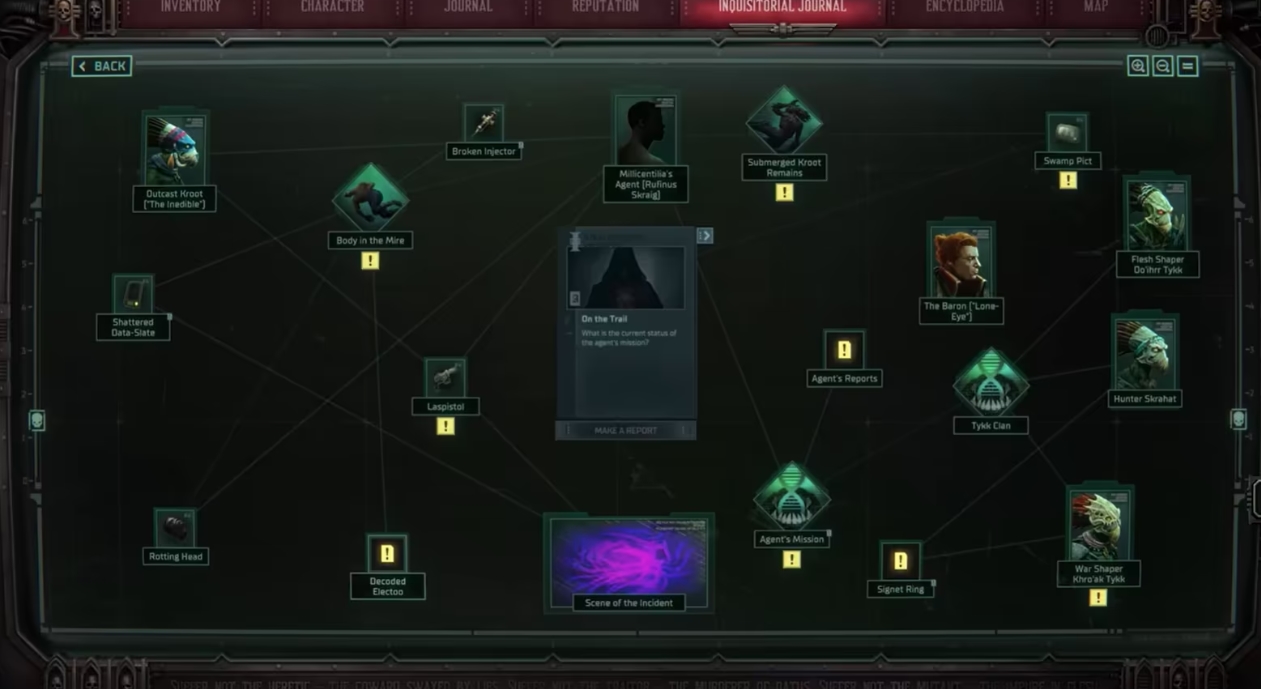
The biggest reveal in the gameplay trailer is that the investigation system functions like an actual detective game — not a string of dialogue prompts with obvious correct answers.
Here’s how the system works step by step:
-
Gathering clues — the Acolyte explores locations and uncovers evidence of crimes or heresy.
-
Systematizing evidence — clues aren’t just collected; they need to be assembled into a coherent picture.
-
Interrogation — using the evidence gathered, the player can conduct interrogations of suspects and witnesses.
-
Accusation — the final step: the Acolyte names the guilty party and brings the case to a close.
This is meaningfully different from how most RPGs handle “investigation” — which usually means talking to three NPCs and picking the correct dialogue option. The structure here looks far closer to the original Dark Heresy tabletop ruleset, which the game takes its name from.
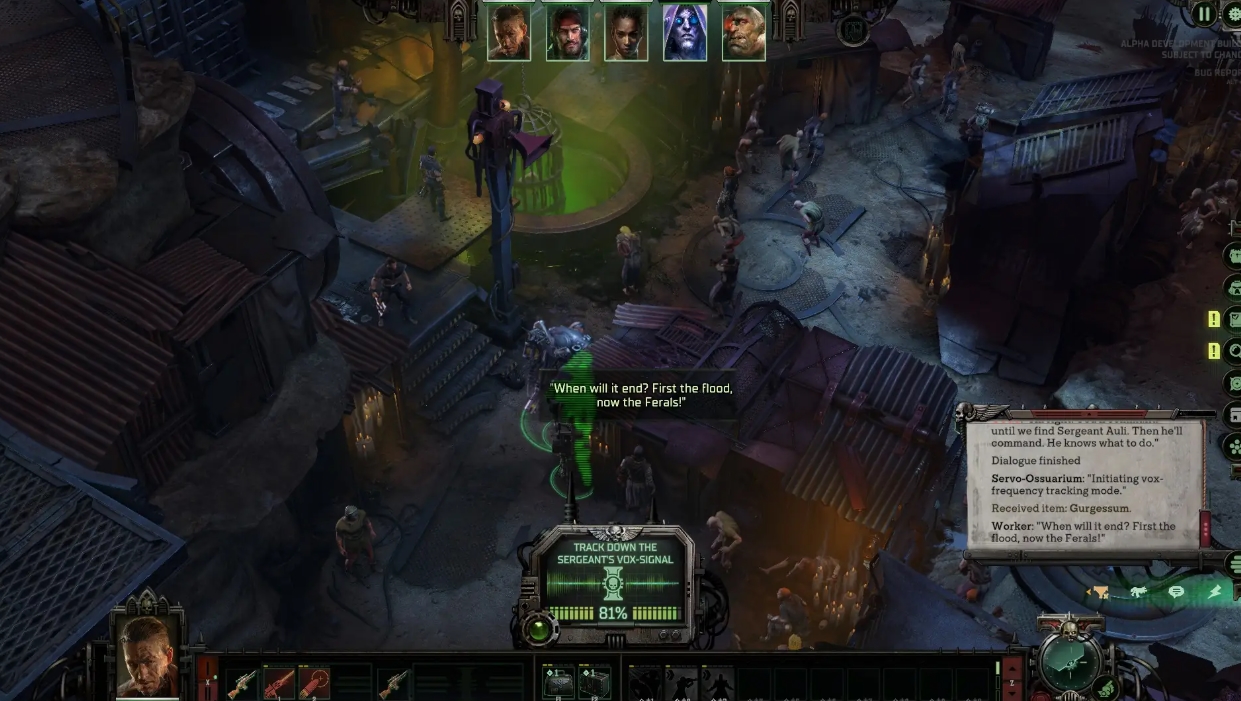
How deep this system actually runs in the final game remains to be seen. But the fact that Owlcat is leading with it — putting it front and center in their first gameplay showcase — suggests it’s the core of the experience, not a side feature.
Dark Heresy Companions: Who Joins the Acolyte’s Warband
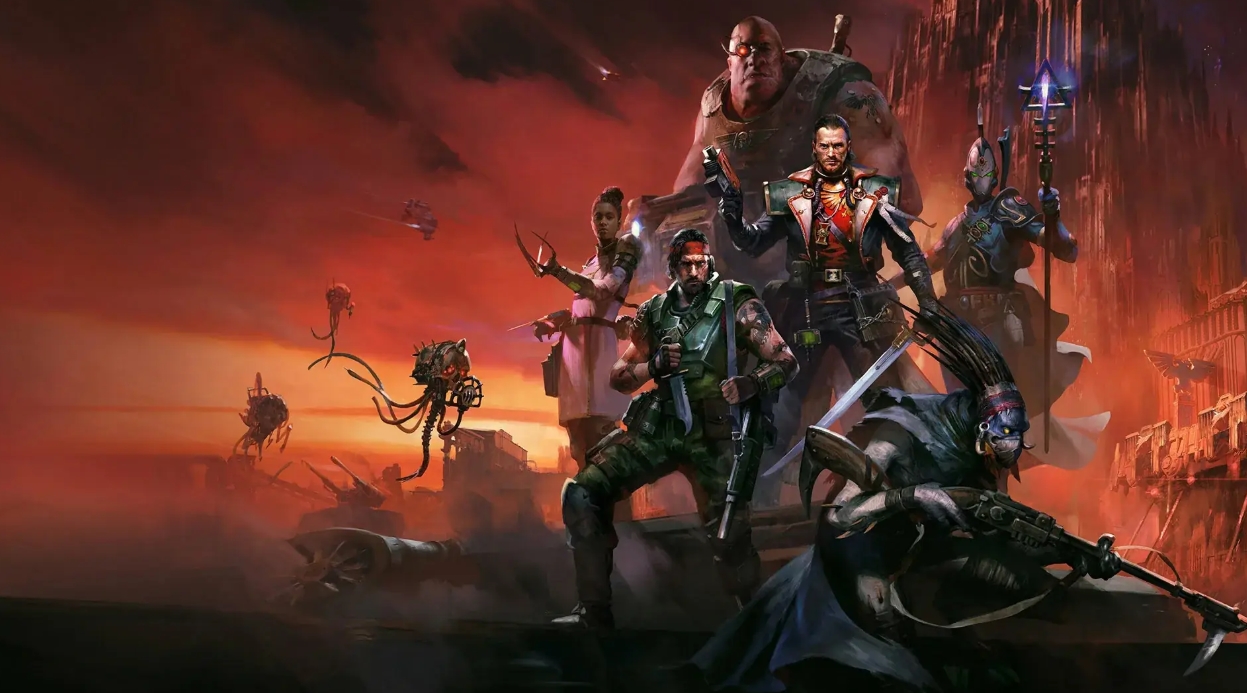
The Acolyte won’t be working alone. Owlcat revealed four companions, and the roster is more interesting than the usual RPG party lineup.
| Companion | Who They Are |
|---|---|
| Ogryn | A mutated abhuman — a loyal, hulking combat asset in service of the Inquisition |
| Epiona Spes | A medicae — an essential specialist for any covert Inquisitorial operation |
| Laartir Keirnaet | A xenos — a non-human ally, which is already a loaded ideological choice for the Inquisition |
| Heimard Devos | A former Astra Militarum guardsman — a soldier with combat experience and likely a complicated past |
The xenos companion is worth paying attention to. In Warhammer 40K lore, the Inquisition working alongside a non-human is always politically and ideologically charged territory — it’s the kind of thing that gets Inquisitors accused of heresy themselves. Laartir Keirnaet already received a dedicated character trailer earlier, which suggests Owlcat is planning to explore that tension in depth.
The roster as a whole avoids the lazy warrior-mage-healer template. Each companion fills a distinct niche, and the studio clearly put thought into who these people are beyond their combat roles.
How Dark Heresy Differs From Rogue Trader: A Different Game Entirely
Owlcat’s previous Warhammer 40K project, Rogue Trader, was a strong RPG — but a very specific one: a merchant-lord with a fleet, navigating the politics of the Imperium’s frontier. Dark Heresy operates in a completely different register.
Key differences between the two games:
-
Tone: Rogue Trader is an adventure at the edges of the Imperium. Dark Heresy is paranoia, suspicion, and the work of a secret police force operating in the shadows.
-
Gameplay: instead of fleet management and trade routes, the focus is on detective mechanics and investigation.
-
Scale: the Acolyte is not an aristocrat with a warship — they’re an operative no one is supposed to notice.
-
Stakes: in Rogue Trader you build an empire. In Dark Heresy you try to stop it from rotting from within.
For RPG players, this is genuinely good news. Owlcat isn’t retreading the same ground — they’re working in a different subgenre, and one that suits the 40K universe in ways that haven’t been properly explored in games before.
Warhammer 40,000: Dark Heresy Beta Access and Release Date
There’s no official release date for Warhammer 40,000: Dark Heresy yet. Owlcat has not announced a window.
However, players who have already placed a pre-order have received access to a beta version — meaning the game is playable right now for those who commit early. The game is available on Steam, where it can also be wishlisted.
What this means practically:
-
Pre-order unlocks the beta — if you want to try the game before launch, pre-ordering is currently the way in.
-
No date announced — this likely means a full release is not imminent; Owlcat tends not to rush their announcements.
-
A gameplay trailer at this stage — a deliberate signal that the studio is confident in its core systems and wants the audience to understand what kind of game this is.
The Dark Heresy gameplay trailer isn’t routine marketing. It’s a statement about what kind of game Owlcat is building — not an action-RPG with a Space Marine on the cover, but a considered, party-based detective RPG in a setting that is perfectly suited for exactly that. The grimdark Imperium, heresy lurking everywhere, an Acolyte with the authority to kill on suspicion — and a system that demands you actually think before you act.
Owlcat has already proven they can do Warhammer 40K justice. The real question now is how deep the investigation system goes in the final release — and whether it holds up at that depth all the way through. This one is worth keeping on your radar.