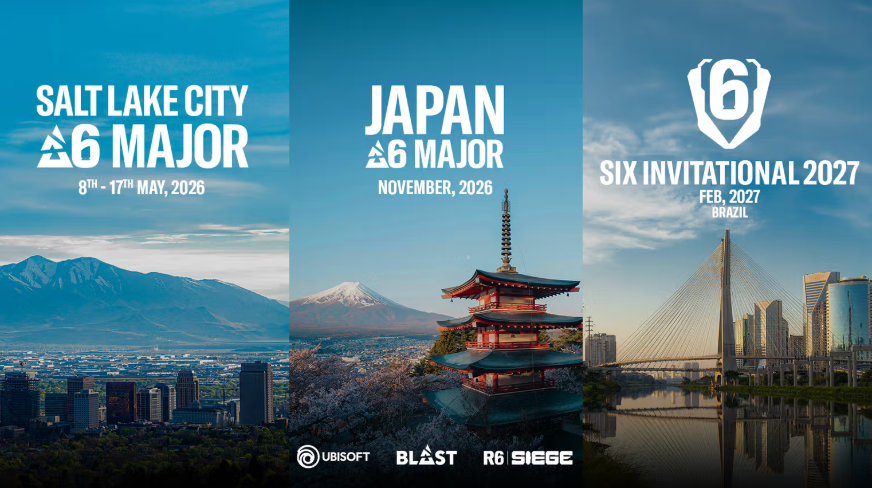
Publisher Ubisoft and tournament operator BLAST have decided not to break what is already working fine — the companies have officially extended their global partnership on Rainbow Six Siege (R6) until the end of the 2028/29 season.
We made a big announcement right before the grand final of the Six Invitational 2026. BLAST, in general, did not limit themselves to papers alone and immediately revealed the geography of future battles for the 2026/27 cycle. Interestingly, Salt Lake City and Japan will host major R6 events – an excellent choice of venues. But the main holiday of the year, the Six Invitational 2027, will take place in Brazil again.
The new agreement was the logical finale to a three-year test drive of their collaboration. During this time, BLAST has traveled half the world — from Montreal to Munich. Brazil, by the way, deserved its comeback. Do you remember the 2024 tournament? It was a full house — more than 500,000 people watched the finale online at the same time.
Table of Contents
Schedule and structure of the R6 2026 season
The upcoming competitive year, to be honest, will bring the long-awaited order to the fans. BLAST apparently heard the community and introduced the most transparent calendar structure. As a result, there are no confusions, only clear paths to the world arenas.
The start of the season, in short, is scheduled for the Challenger Series in February and March. In April, the teams will start farming their first points for qualifying for the Six Invitational. In addition, we are waiting for two stages of regional leagues — they will be held in the summer and autumn periods, exactly around the two majors.
The Esports World Cup is now not just an outside show, but a full—fledged bridge to the top league. The winner of the tournament in the middle of the season will receive a direct ticket to SI 2027. Fair enough, let’s say.
The new R6 format and the role of BLAST in 2026
Interestingly, BLAST, in fact, took full control of Rainbow Six Siege esports, deciding to rebuild the qualification system from scratch. Now the path to the coveted Six Invitational has become, apparently, more accessible for those who are ready to grind — the open selections have returned in full. At the same time, partner organizations have maintained their stable positions, and the SI global rating has become the only reliable measure of success for a trip to the main event of the year.
The R6 qualification system and the path to SI 2027
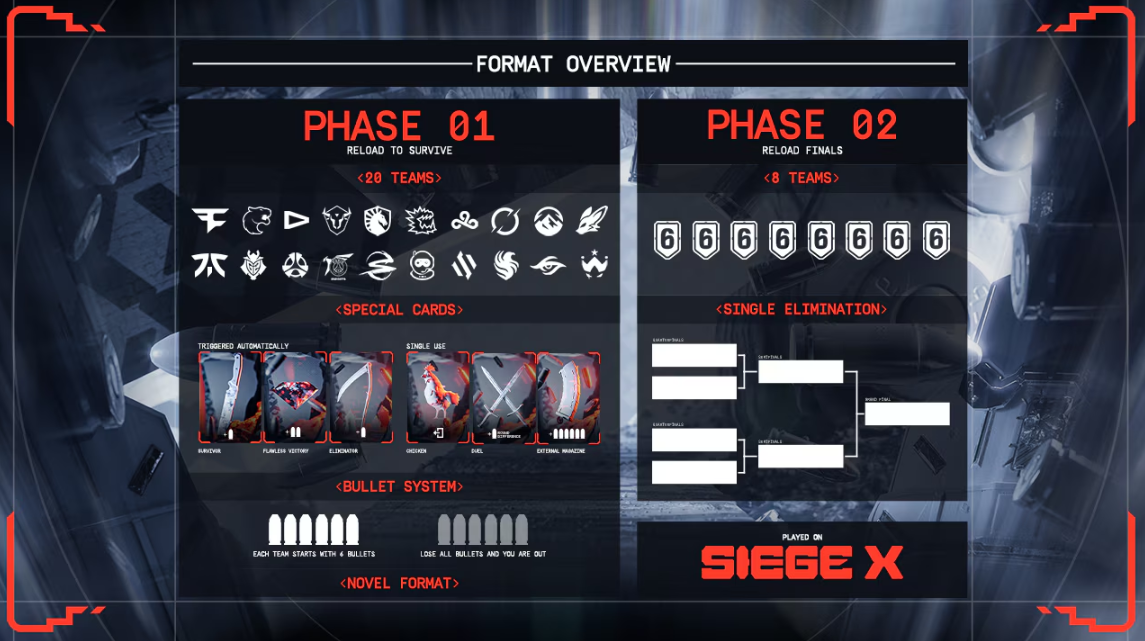
The current structure, in short, is tied to two Majors — in May and November. It is there that teams compete for SI points, which determine the 16 lucky winners out of 20 Invitational participants. The regional map, by the way, was divided into four key zones: EML (covers Europe and MENA), NAL (North America), SAL (South America) and APL (Asia Pacific). There are at least 10 teams in each league.
In April, the Kickoff Season, in fact, gives the first serious boost in points. Then there are Stage 1 and Stage 2 with their harsh group stages in the Bo1 format and the playoffs, where mistakes in Double Elimination (Bo3) are no longer forgiven. The top 4 teams from each regional final go to the Major, and the winner — this is important — takes a direct pass to SI.
There is a real practical benefit for teams here: focus on stability within your league. SI points now drip for decent spots in the Stage Finals and at the Majors themselves. This greatly reduces the role of randomness and luck in a single match.
However, the real heat starts in the open qualifiers.
Open R6 qualifications and new chances
BLAST did a cool thing — they brought back open qualifiers for all landmark events, including the Challenger Series and the New Year’s LCQS. In Europe (EML), for example, four qualifying rounds will be held in February and March. The two best teams from each, along the way, fly into the Swiss stage, then to make their way to Tier 1 through the Challenger Circuit.
Unlike what we’ve seen before, the “openers” are now firmly embedded in the global rankings. The winners receive not just a diploma, but access to regional leagues and precious SI points. For example, in the Kickoff Season, it is through open qualifications #1-4 that it is determined who will go to test the strength of partner teams.
Take a tip for beginners: register for the selections via the Ubisoft website — slots are usually opened a week before the start. You’ll have to work hard at Bo1 roulette, but aim for at least the top 8. 100 points are awarded for the first place, 75 for the second. This is, in fact, the only honest social elevator to the pro scene when you don’t have the extra millions to buy a slot.
R6 Partner Teams and the BLAST model
The top of the food chain are the partners. Giants like Team BDS, FNATIC or G2 in Europe, as well as LOUD and FURIA in South America, feel quite confident. They seem to have ironclad guarantees of participation in all stages and priority in the Majors.
BLAST, by the way, has expanded this model: now each league has 5 partners and 5 affiliates (in Asia, the system is slightly more complicated due to the division into subregions). Affiliations like Virtus.pro or Gen.G is gnawing out its seats through Challenger, while partners are rumored to shell out huge sums for stability — they talk about checks of $350,000+ per slot, just like in CS.
The benefits are obvious for organizations: partners share the jackpot from the R6 Share program and get maximum coverage at LAN tournaments. For players, this means at least 2-3 major trips per year and the opportunity to safely accumulate SI points without thinking about how to survive in the meat grinder of qualifications. In general, stability for money is a working scheme.
The path to the Six Invitational 2027 step by step
The road to SI27 now looks extremely transparent: 16 teams are flying by rating, and 4 more are making their way through LCQ (a mixture of open and closed qualifiers). There is another “cheat code” – the winner of the Esports World Cup in the summer of 2026 takes the slot automatically.
If you decompose the path for, say, a European team from EML, then step by step it looks like this:
First, the Challenger Series — from there we jump to the league (Kickoff or Stage 1/2).
-
Next, we need to get to the top of the regional finals in order to go to the Major in May or November.
-
We save up SI points, stay at the top of the rating, and we have a ticket to the February SI27 in our pocket.
-
If it didn’t work out, we can only hope for a miracle at EWC or a harsh LCQ in December.
This hierarchy makes every game in the season worth its weight in gold.
Earn 1000+ points by the end of the year and you’re in the game. Track your rankings at Ubisoft.
CN League and R6 expansion in China
Rainbow Six’s esports landscape will grow decently. It seems that Ubisoft is seriously taking on the Asian market through the creation of the CN League (CNL). It will be a full-fledged ecosystem for 10 pro clubs — a serious scale.
The Chinese league, by the way, will receive its own slots for global championships. Moreover, starting in 2027, local teams will be included in the R6 Share income distribution program. In general, the Celestial Empire is officially breaking into the game.
Robbie Dweck, BLAST’s CEO, considers this expansion a natural step. Over the past three years, he and Ubisoft have been building this system hand in hand. According to him, this is a positive signal for the entire industry and, of course, for R6 fans. Control over the market has been established — we will keep an eye on it.