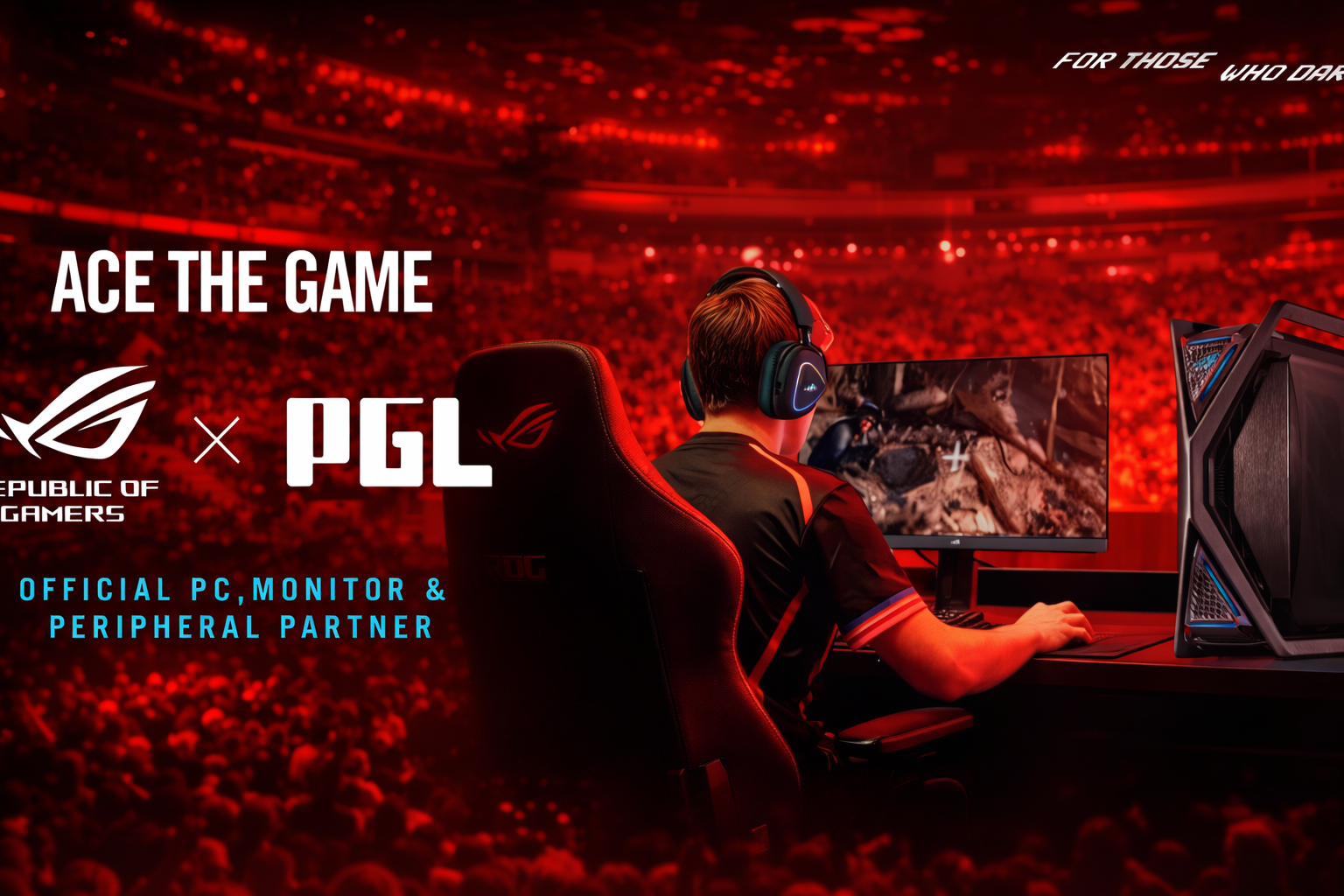
Tournament operator PGL, along the way, decided to finally close the issue of technical superiority — the company officially struck a deal with ASUS Republic of Gamers (ROG) for the entire 2026 season. Now, for the next 10 months, this brand will become the sole supplier of PCs, monitors and other body kits for all Counter-Strike 2 and Dota 2 events. By the way, the agreement forces us to take a closer look at how the organizers began to fight for the comfort of pro players, which, to be honest, often remained in the background.
Actually, the main trick here is to create a “unified technical environment.” ASUS ROG plans to pack the PGL training areas and main stages with absolutely identical equipment — cool, really. This is done so that esports players do not have their eyes “swimming” when moving from practice to the stage. The focus was on the ROG Strix XG248QSG Ace monitor, a beast with a frequency of 610 Hz and a response of 0.1 ms. In a world where the fate of a million dollars is decided by a single pixel, such numbers are just space, in fact.
The focus was on the ROG Strix XG248QSG Ace monitor, a beast with a frequency of 610 Hz and a response of 0.1 ms. In a world where the fate of a million dollars is decided by a single pixel, such numbers are high.
Table of Contents
Advantages of ASUS ROG 540 Hz monitors in CS2
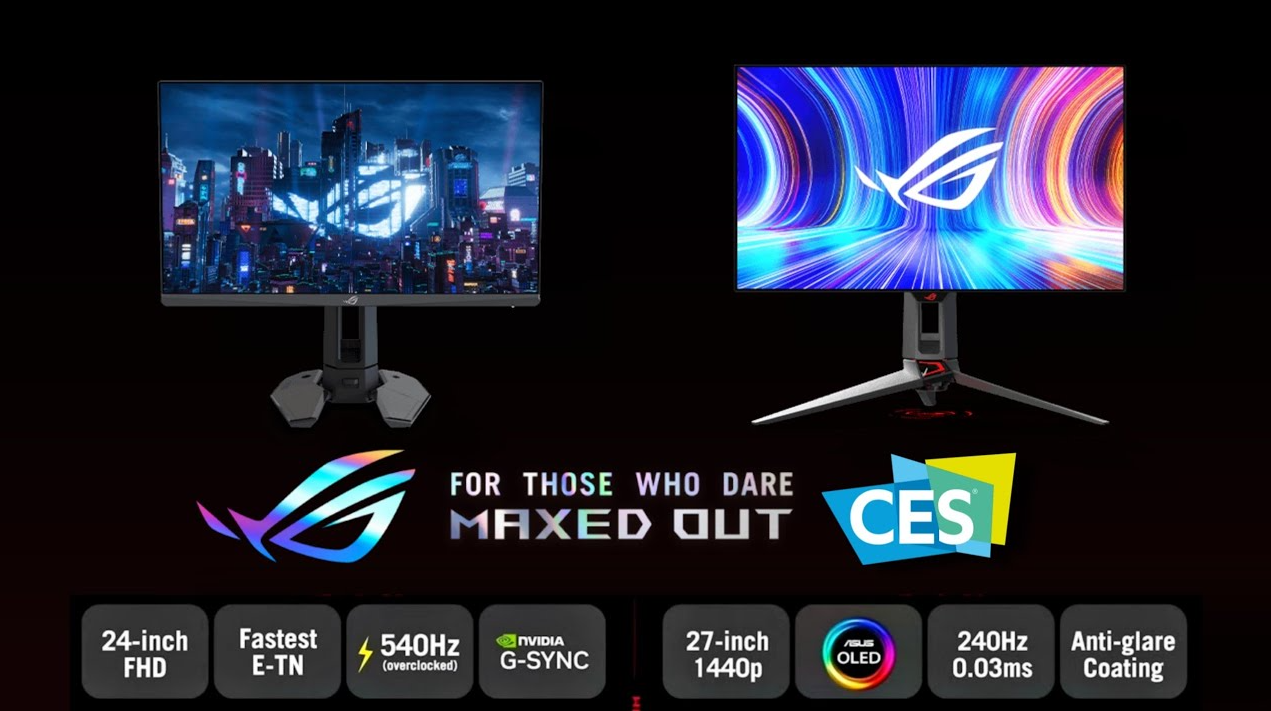
The 540 Hz ROG Swift Pro series monitors have completely rewritten the rules of the game in Counter-Strike 2. The partnership between PGL and ASUS is not just marketing, but a technical ultimatum: such panels provide the very edge that separates the champion from the loser. When the time between frames collapses to a paltry 1.85 ms, any duel turns into a pure demonstration of reaction. By the way, it’s worth digging deeper into the numbers to understand how such dominance is achieved.
Analysis of response time and refresh rate
The actual measurements of the ROG Swift Pro PG248QP surprise even skeptics. The manufacturer claims a response of 0.2 ms, but tests in Normal mode at 540 Hz show an average of 1.8 ms — this is, for a moment, half as fast as the good old TN matrices. Even without overdrive, the panel bypasses most competitors, and with it any “boosting”-blurring disappears altogether. For top esports, this means one thing: the sight sticks firmly to the mouse, and the enemy models do not turn into mush with a sharp strafe — it makes sense, really.
Interestingly, this speed is just the tip of the iceberg, because behind it there is a phenomenal clarity that literally opens players’ eyes to the details.
Clarity of movement of LCD matrices versus OLED
The clarity of the image in motion on these monitors is head and shoulders above anything that has been before. If the text can still float slightly at 360 Hz, then here, thanks to ULMB 2 technology, the blurring effect is reduced by 4 times. In CS2, this is critical: recoil animations and micro-movements of opponents become noticeable where there would be just emptiness at 240 Hz. Curiously, the tests confirm that this LCD monster surpasses even modern OLED panels in terms of smoothness in multiplayer. And although the difference of 18% in the tests seems small, for the pros it is an extra millisecond of advantage, which, in fact, decides the outcome of the round.
It is this smoothness that makes the stars of esports change their minds about the “limit of human vision.”
ROG Swift Pro vs. 360Hz
Monitor Comparison: ROG Swift Pro 540Hz vs 360Hz
The effect of the ending on the accuracy of the players shooting
Professional players, by the way, have already started reporting a 5-7% increase in shooting accuracy after switching to ROG Swift Pro 540Hz. This is especially noticeable for snipers with AWP, where tracking control is a matter of life and death. Coupled with an RTX 4090 graphics card, it produces stable FPS, at which the old 360-degree panels begin to seem “slow” — strangely, but a fact. Even if the frame counter drops to 300, the picture remains twice as clear as on standard gaming monitors.
Such progress in accuracy would not have been possible without total delay control, where ASUS engineers reached the finish line.
Minimizing the input lag in the esports environment
Input lag on ROG Swift Pro is an elite level, to be honest. The total system latency due to NVIDIA Reflex drops below 5 ms, and the net lag of the monitor itself is fixed at less than 1 ms. For comparison, 540 Hz produces a frame every 1.85 ms, while 360 Hz takes 2.78 ms to wait — in a hard flick shot, this difference becomes fatal.
As a result, the PGL and ASUS alliance uses these developments to create the very “zero delay” at tournaments in Singapore and Cluj-Napoca. We can see how technology is no longer just numbers in a specification and is turning into a real advantage that will soon become mandatory for everyone aiming for the TOP 1. It seems that the era of compromise in esports hardware is officially over.
Standardization of equipment at PGL tournaments
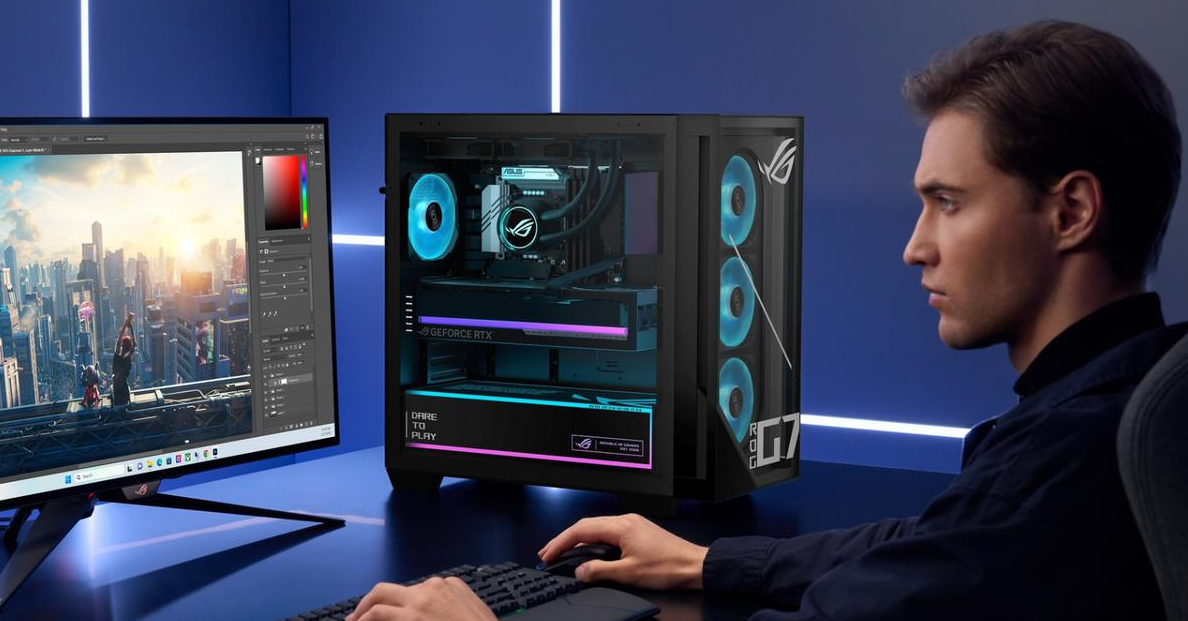
PGL CEO Silviu Stroye says bluntly that this partnership helps to adjust the tournament system to the harsh demands of modern esports. This standardization based on ROG Strix lines will allow teams not to waste time adjusting the image for a new device at each tournament — it is logical that the focus will now be only on the rink itself. It is worth noting that PGL is not the only one who chose ASUS: literally on February 9, the brand extended the contract with BLAST Premier — it seems that a monopoly is emerging in the monitor market.
But you won’t be satisfied with the equipment, because PGL has a really crazy schedule ahead. And here we come to the most interesting thing — where exactly will all these trucks with top-end monitors go in the near future.
PGL tournament schedule for the 2026 season
The nearest stop is Romania. From February 14 to 22, the first Tier 1 CS2 mega-tournament will be held in Cluj-Napoca, where the new ASUS ecosystem will be a baptism of fire. Moreover, the organizers come in with a trump card: in December, they already signed a contract with Secretlab, so the players will sit as cool as they play. All this stuffing from the sponsors brings us to the season finale — the legendary major in Singapore.
PGL Singapore Major 2026, by the way, will be the final chord of the year, where 32 of the best teams on the planet will come together in a battle for $ 1.25 million — an impressive amount, really. This event promises to be the most technologically advanced in the history of the discipline. As a result, we see how PGL methodically builds an empire where every detail — from the chair to the monitor cover — works for entertainment and results. It seems that 2026 will be the time when the technical whims of the players will finally become a thing of the past.