A specialized esports campaign, a joint project of the English Football League (EFL) and British Esports, has finally received funding from the UK government. The national organization British Esports has raised funds to launch the Safe to Play initiative, which is a cool topic for youth development, by the way.
The essence of the project — it is currently unfolding in ten communities at football clubs — is to use esports as a tool. The goal is simple but important: to help young people improve their digital skills and, critically today, learn how to be safe online. According to the press release, which is quite detailed, the campaign will take from 6 to 8 weeks. According to the plan, workshops and “esports gaming sessions” will be held every week, a format where digital learning is mixed with a safe, inclusive environment. By the way, public money will be used for training and content creation.
The responsible body of the initiative will be the Sheffield United Community Foundation, a serious player in the field, and Sheffield Hallam University will provide external consultations.
There are currently 10 football club charities in operation — this is, in fact, a pilot launch. If everything goes well — and there are high hopes — the initiative will be scaled up to all 72 clubs in the EFL structure.
British Esports President Chester King responded enthusiastically: “We are incredibly grateful to the government for supporting this new EFL safe play campaign.” According to him, such support will allow, in partnership with the Sheffield United Foundation, to really teach young people important things through gaming.
Table of Contents
Development of the British Esports organization in 2025
Throughout 2025, British Esports, to be honest, did not slow down and continued to expand its influence in the growing UK industry. Back in July, the national organization announced — remember this moment — the opening of a specialized esports and gaming center in 2026, which will become a hub for training.
Moreover, they joined forces with the British Ministry of Defense — it sounds powerful, really — to host International esports games in the field of defense. This is an annual tournament, which is open, by the way, to active military personnel. British football is also actively using esports to work with fans — in addition to the EFL, the same Premier League, along with EA, has already launched the eighth season of the ePremier League.
Analysis of the EFL model and prospects for its implementation
The experience of the English Football League — or simply EFL — has now become the gold standard. He is being watched by countries that are trying to find the most delicate balance between tough commerce and the real development of local clubs.
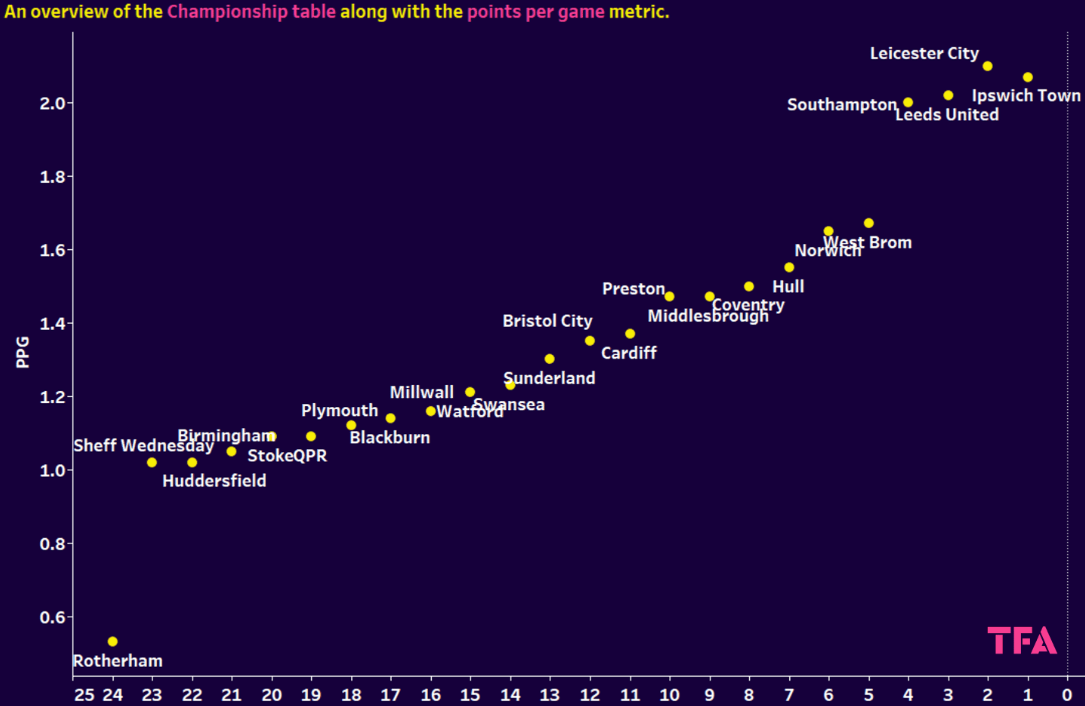
The trick of the English model, to be honest, is in a unique mix: draconian regulations, a solidary redistribution of money, and — most importantly — a lively sports pyramid with a system of departures and promotions.
What exactly is the “EFL model”?
When the pros talk about EFL, they usually mean the whole ecosystem. This is a bundle of several leagues below the elite level, uniform strict rules, total financial control and a powerful infrastructure of academies.
By the way, the scheme is working — small and medium-sized clubs live not only at the expense of local sponsors. They develop on the transfer margin, receive income from tickets and, of course, compensation payments from above. This will give a big profit to the system to breathe.
Germany: another way
In Germany, which is also interesting there, the DFL plus the first and second Bundesliga bundles work as a supporting structure. All this is polished by regional leagues and the strictest financial rules. Licensing there, I must say, is tough — debts are controlled mercilessly.
The main difference, however, is something else. The Germans rely on the 50+1 rule — club members rule the property. This, in fact, blocks the aggressive entry of external capital, but the system turns out to be wildly stable.
Key differences between EFL and Germany
| Aspect | EFL (England) | Germany |
|---|---|---|
| Pyramid structure | Deep pyramid, strong links with amateur leagues | Multi-tier system with regional focus |
| Club ownership | Broad access for private investors and consortiums | Predominance of the 50+1 rule and member-owned clubs |
| Financial control | “Profit & Sustainability” regulations with sanctions | Strict licensing and bans on chronic debt |
| Role of federation / league | League and federation are separate but closely coordinated | Strong authority of DFL and DFB within a unified structure |
Features of the franchise model of the MLS and NBA leagues
The United States has historically gone the other way altogether — the franchise model. Leagues like MLS, NBA, or NFL are closed gatherings. There is simply no classic relegation or promotion.
The advantages are obvious — investors are sleeping soundly, the schedule is stable. But unfortunately, there is not enough development of a deep pyramid and an incentive for local clubs outside the elite.
Key differences between the EFL and the USA
| Aspect | EFL (England) | USA (MLS / Other Leagues) |
|---|---|---|
| Sporting principle | Promotion and relegation as a core mechanism | Closed leagues with no promotion or relegation |
| Licensing & franchises | Club as part of an open pyramid, not a “franchise” | Franchise treated as an owner-held asset |
| Revenue redistribution | Solidarity payments flowing down the pyramid | Centralized revenue sharing within a single league |
| Role of the federation | Federation acts as an oversight layer above leagues | League often stronger than the federation operationally |
Scalability and portability of EFL League standards
Let’s be honest — it’s unrealistic to make a “clean copy” of EFL. This colossus grew up on a century-old football tradition, a dense network of clubs and a giant TV market.
However, individual elements can and should be taken. The multi-level pyramid, transparent financial control, solidarity payments and uniform standards for academies scale perfectly.
What exactly should you choose:
-
Step pyramid — we introduce rigidly prescribed transitions between divisions.
-
Sustainability regulations include budget deficit limits, infrastructure requirements, and, of course, youth programs.
-
Transfer market — we are developing internal mechanisms and compensation for students.
Who is responsible for what: Federations vs. Leagues
In successful models — take England or Germany, for example — the roles are clearly divided. The Federation sets the framework: regulations, licenses, disciplinary procedures and national teams.
The leagues, in turn, are engaged in business. Commerce, TV rights, sponsors, marketing are their field. At the same time, they remain accountable to the federation.
Recommendations for creating an effective league structure
For countries that are eyeing the EFL, it is important to consider a couple of points:
Separation of powers — separate the functions of the federation and the league, but make them coordinate the interests of the national team and the clubs.
The role of the state may be minimal, but it is critical. Infrastructure, taxes, legal guarantees for investors — that’s where you need to look.
Target regions for the implementation of the English model
The EFL experience is ideal for countries where there is already a football culture, a lot of clubs and growing media interest.
For emerging markets — Asia, Africa, and parts of Latin America — it’s probably better to mix. Take EFL elements, but add closed franchise approaches. This will protect investors and, most importantly, give the system time to become legendary.