In short, GSC Game World has officially released patch 1.7 for S.T.A.L.K.E.R. 2: Heart of Chornobyl. There they seriously overhauled A-Life, tweaked the brains of NPCs, introduced two new challenge modes and tightened the graphon on all platforms. Additionally, from now on you can install mods normally, the game will sort itself out if they are not friends with each other.
Table of Contents
A-Life system: how the dynamics of the Zone has changed
The main innovation of version 1.7 is the overhaul of artificial life in a post-apocalyptic world. Factions have the opportunity to expand control over locations and lose them if they fail to defend the territory. Roadblocks, points of interest, and most locations (hubs are excluded from this mechanic) have become objects of constant struggle between factions.
Mutants are now actively protecting their areas of influence from stalkers, which makes every intrusion into their territory a real threat. The exclusion zone has come to life: the balance of power is changing without the player’s participation, creating a feeling of a living, breathing world. The seizure of territories by factions occurs organically — one can observe how Duty wins back positions from bandits, and Freedom expands the perimeter of control.
This reworking brings back the spirit of the original trilogy, where the Zone existed according to its own laws. NPCs are no longer extras — they pursue goals, engage in skirmishes, and move between locations. Emergent gameplay has reached a new level: each playthrough generates unique situations
New modes: Master Difficulty and Expedition Mode
The update has added two modes for fans of extreme challenges. The Master difficulty mode increases the skill requirements: enemies deal more damage, resources are less common, and zone anomalies have become more deadly. This challenge level is only available when starting a new game, which highlights its hardcore nature.
The Expedition mode offers its own conditions for survival in Chernobyl. Details are still limited, but judging by the name, we are talking about a challenge with minimal savings or permadeath mechanics. Auto-saves in camps will probably be the only insurance — it will be impossible to manually record progress.
For the veterans of the series, this is a welcome addition. The basic difficulty seemed too soft to many. Now GSC’s survival shooter has received a real depth of testing.
NPC Combat Mechanics: Opponents’ intelligence has increased
AI improvements have affected almost all aspects of combat. Enemies have learned to retreat at critical health levels instead of suicidal attacks. NPC flanking maneuvers have become a frequent occurrence — opponents try to bypass the player’s hiding place using the terrain.
The combat distance now depends on the type of weapon in the NPC’s hands. A bandit with a shotgun will try to shorten the distance, while a sniper will maintain a distant position. Animation timing has been adjusted: opponents’ movements look more natural, reactions look more plausible.
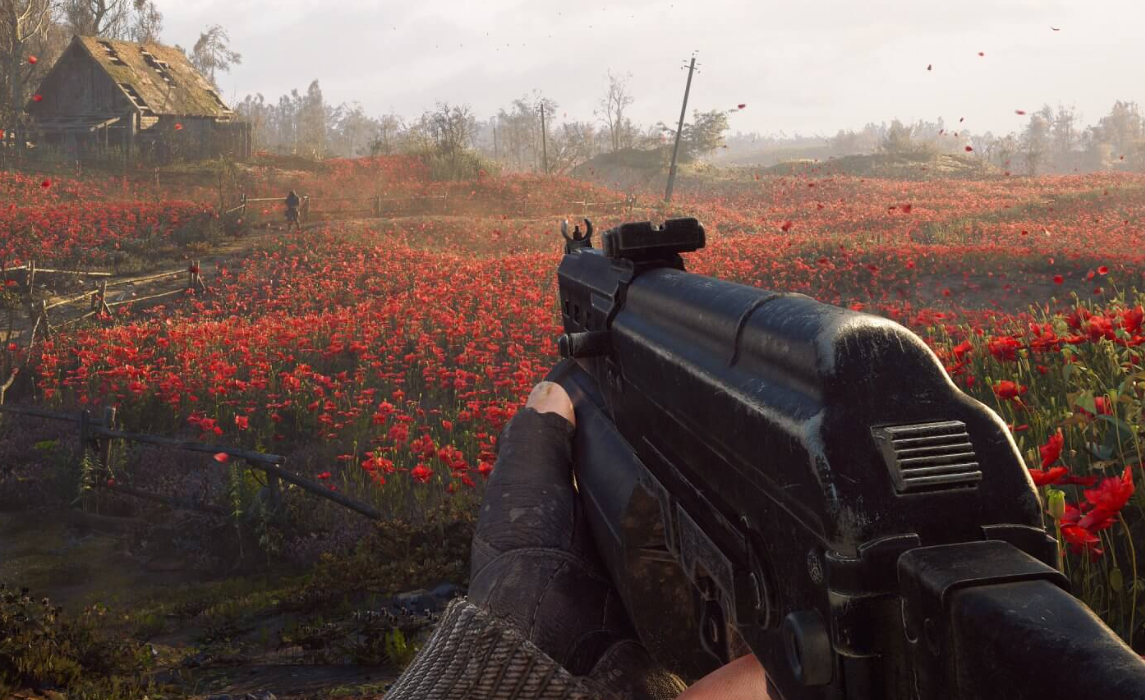
Mutants have received new death animations, which adds naturalness to the skirmishes. A bloodsucker who receives a headshot falls differently than when shot in the body. These details enhance immersion.
Aiming for controllers and other mobs has been improved — they no longer miss out of the blue, but they also don’t turn into snipers. The balance between challenge and justice has been found.
Stealth and detection: vegetation as a tool
The system for identifying opponents has undergone drastic changes. Tall grass and reeds have become an effective hiding place — enemies are having serious problems detecting a lurking stalker. The closer the distance, the higher the risk, but at an average distance, vegetation works fine.
Shooting through the bushes reduced the accuracy of the NPC. Opponents firing through dense undergrowth are noticeably less likely to be hit. This opens up new tactical possibilities: you can lure a group of bandits into the thicket and use the terrain as an advantage.
Emissions now affect the behavior of NPCs — they seek shelter, which makes these events more dynamic. Weather like light rain also makes adjustments to visibility.
Optimization and technical improvements
Version 1.7 brought significant performance gains on all platforms: PC (Steam, GOG, Microsoft Store), Xbox Series X/S. Collision calculations are optimized, fabric modeling works more efficiently, and location lighting consumes fewer resources.
Critical errors that caused crashes and freezes have been fixed. Story quests and side quests are no longer blocked by bugs. Downloads have become faster, especially when moving between large locations.

The interface has received a number of improvements. The detector occupies a 1×1 cell in the inventory instead of the previous two. Icons of hiding places on the map show the status: looted, partially emptied or untouched. This saves time when planning a route.
Dolby Atmos 3D audio for headphones now functions correctly, creating a surround sound picture. Added the option to mute the headshot sound for those who prefer a more restrained sound palette. Font readability has been improved for Japanese, Simplified Chinese, and Korean.
Additional weapon modules and body kits have been placed in the game world of the Zone — more opportunities for customization of the arsenal.
Modification Support: A new era for modding
The compatibility of mods has received professional tools. The system automatically detects modification conflicts and displays a pop-up notification. A detailed conflict report is saved in AppData, so modders can quickly find the source of problems.
This is a fundamental change for the community. Previously, detecting incompatibilities required manual testing. Now the game will tell you which mods are in conflict. GSC Game World warns that the update may cause problems with existing mods created for earlier versions. The authors of the modifications will need time to adapt.
When did the sale of the game start?
S.T.A.L.K.E.R. 2: Heart of Chornobyl began active sales in November 2024 on PC and Xbox Series consoles, at that time players uploaded videos with numerous bugs and brakes to YouTube, but within a year all the flaws were removed. 12 months later (approximately), the PS5 version will be released as specified in the agreements. The game debuted in Game Pass at the same time as the release.
The A-Life system was one of the most anticipated features, but it was unstable at the start. Update 1.7 is an attempt by the developers to realize the original vision. Judging by the gameplay trailer and player feedback after installing the patch, the goal has been achieved.
GSC Game World continues to support the project. The studio is planning further updates, expansions and, most likely, DLC in a couple of years. The Chernobyl exclusion Zone remains a vibrant project with long-term development prospects.
New anomalies and danger Zones
In addition to the redesign of A-Life, version 1.7 added new types of anomalies. The details have not yet been fully disclosed, but the community has already reported on previously unknown energy fields and gravity traps. These dangers require rethinking the usual routes.
Artifacts are now more common in non-standard locations. Hunting for them has become riskier, but also more profitable. Psi storms have changed their patterns, making them more difficult to predict.
The full list of patch 1.7 changes is available on the official GSC Game World website. The update weighs about 15 GB and is installed automatically through digital store clients.
S.T.A.L.K.E.R. 2: Heart of Chornobyl is turning into the game that its fans wanted to see. Update 1.7 is not just a set of fixes, but a rethink of key mechanics. The zone came alive.