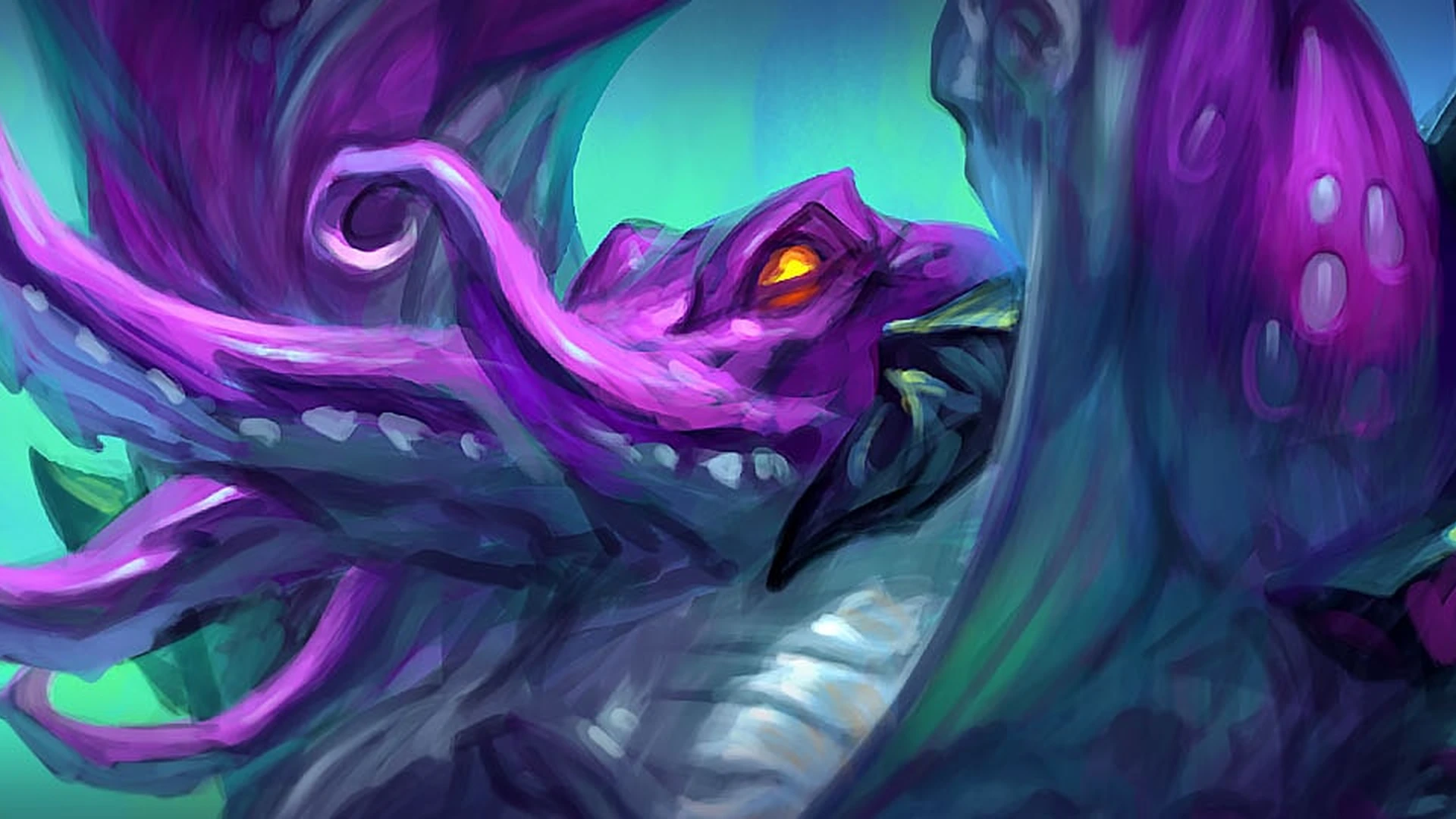
Battlegrounds patch 36.6.1 introduces Aberrations as a new minion type, adds Drest’agath and Kith’ix as heroes and rotates Naga out of the active pool. The update is live from September 22, while C’Thun and Y’Shaarj appear as deities awakened through sacrifices.
Table of Contents
Aberrations reward planned losses
The new minion group turns discarded or sacrificed units into progress toward stronger boards and summoned deities. Aberrations make death part of the economy, so losing a minion can be correct only when the surviving board remains strong enough for the next combat. The new tribe changes tavern priorities because a modest minion may carry future value that is not represented by its immediate attack and health.
That structure asks players to distinguish a deliberate cost from a weak turn that merely gives away tempo. Tempo remains important: a clever sacrifice plan is not successful if the hero takes avoidable damage during every turn needed to complete it. Early balance changes may adjust individual values, but the central decision should remain readable: accept a controlled loss now for a defined board payoff later.
Two Old Gods shape different decisions
One of two deities, C’Thun or Y’Shaarj, is selected at the start and joins the fight after three friendly Aberrations have died. The three-death requirement gives players a visible checkpoint, but reaching it too quickly can still cost more health than the summoned deity can recover. The strongest early boards will probably mix immediate defence with a controlled route toward the deity instead of committing every slot to one package.
The route to that reward still has to survive early combat without sacrificing every source of immediate board strength. C’Thun and Y’Shaarj should be treated as delayed rewards rather than ordinary shop purchases because their arrival depends on earlier sacrifice decisions. Drest’agath and Kith’ix add fresh hero choices, but their value should be judged across several lobbies rather than one unusually favourable shop sequence.
A rotation creates room for the new tribe
Naga leave the active minion pool as Aberrations arrive, reducing overlap between scaling packages and tavern demand. With one familiar tribe absent, early shops require fresh probability estimates instead of relying on the previous patch’s most common scaling route. Clear interface counters are essential because players should not have to reconstruct the sacrifice total from memory during a timed recruiting phase.
The removal changes familiar recruiting habits, so old turn-by-turn shortcuts may be less reliable during the opening days. The rotation also gives Aberrations room in the tavern without forcing every tribe to compete for the same limited number of recruitment slots.
Discard is now a visible resource
Cards that leave the hand can contribute to a larger plan instead of representing only lost flexibility. A hand slot can now represent a future trigger, so holding, cycling and selling a card should be judged across the full turn rather than one isolated effect. Health is a resource in Battlegrounds, but the patch does not make it unlimited; each weak combat narrows the time available for the plan to mature.
Players still need to count what remains available, because a sacrifice engine without defence can collapse before its reward arrives. A player needs to count both the Aberrations already lost and the useful bodies still available before selling or replacing another unit.
Early experimentation needs simple checkpoints
A practical first goal is to track health, board strength and the number of turns before the promised summon becomes useful. Players testing the patch should record when the engine became stable, which purchases were essential and whether the final reward arrived before lethal pressure. The live patch gives the community immediate evidence, so practical results should replace predictions as more games reveal the reliable sacrifice curves.
That method keeps testing focused and makes it easier to separate a strong core mechanic from one lucky shop sequence.
A useful comparison separates the power of the mechanic from the strength of one hero, one tribe pairing or one high-roll sequence.