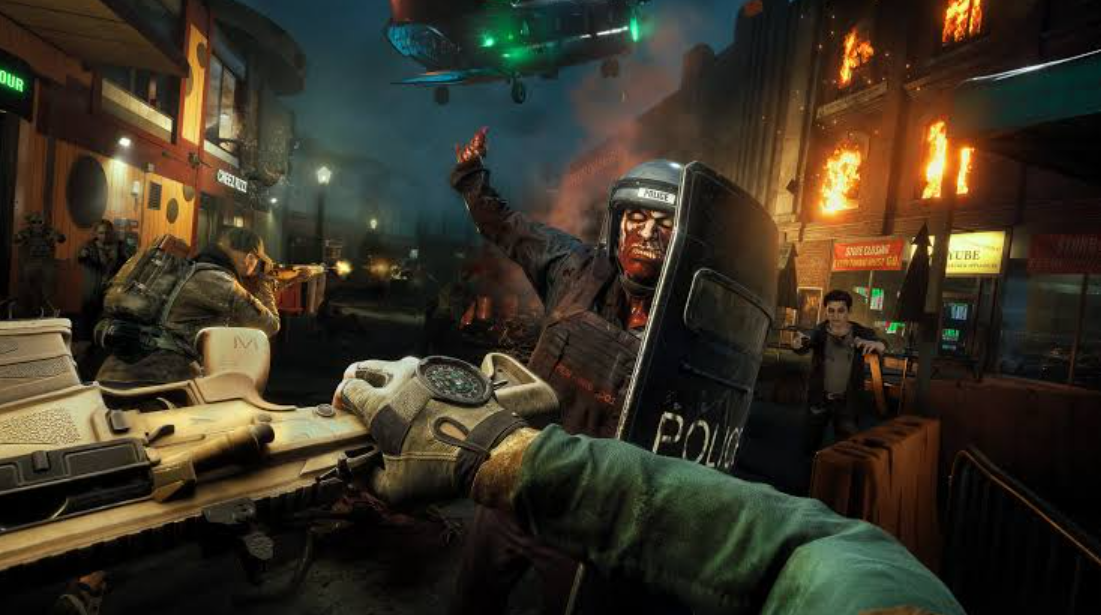
On August 11, 2026, No More Room in Hell 2 exited Early Access. Version 1.0, dubbed Armageddon, brought a full progress reset, the “Survival” wave mode, a new story map, Raven Rock, a reworked economy with the “Merit” currency, melee rebalancing, and many other changes. This article covers everything you need to know about the release update: how the new mechanics work, what changes have been made to builds, and which strategies actually work.
Table of Contents
What is the Armageddon update and why is it important?
Release version 1.0 is more than just another patch. Torn Banner Studios ended Early Access, which lasted since October 2024, and released the game on PC (Steam, Epic Games Store), PlayStation 5, and Xbox Series X/S. Along with the exit from Early Access, the developers performed a full progress wipe—all accumulated points, skills, and items are reset. This means all players are starting with a clean slate. The Armageddon update is the result of community feedback. It focuses on new modes, maps, and a progression system designed to make the game more dynamic and diverse.
Survival Mode – How It Works and How to Survive
The new Survival mode is a wave defense. A team of several players defends loudspeakers from hordes of zombies. Waves last five minutes each. To evacuate, you must survive three waves. If a team fails two waves in a row, an early evacuation option becomes available. After successfully completing a wave, CRC sends an additional supply drop, and the group moves on to the next objective.
The mode is available on three maps:
-
Flooded – a flooded area with limited visibility and water that slows movement. Here, it’s crucial to control narrow passages and prevent zombies from encircling your defenses.
-
Lighthouse – a vertical map with a lighthouse. Defenses are built around several levels. The key is to distribute players across the floors to block approaches.
-
Night of the Living Dead – a classic siege map. The map is a nod to the film of the same name: a house surrounded by zombies. It’s important to quickly close windows and doors, and keep an eye on your rear.
General strategy: at the start of each wave, focus on quickly eliminating nearby zombies and avoid wasting ammo on distant targets. Use close combat to conserve ammo. On maps with water (Flooded), zombies move slower but are harder to spot—rely on sound.
Raven Rock — New Story Map
Raven Rock is the sixth story map in the Objective mode. Set in an underground military bunker in the mountains of southern Pennsylvania, the map is designed for up to 8 players and takes over an hour to complete on Easy difficulty.
Key Stages (based on playthroughs):
-
North Gate — Activate the button with four words on it. This unlocks access to the bunker’s interior.
-
Elevator Bay — This requires a double scan. All players must be within the scanner area at the same time.
-
Power Plant — You need to flip several switches and read meters. Coordination is crucial to avoid missing deadlines.
Tips: Supplies are extremely scarce on Nightmare, so make sure everyone has a first aid kit and at least one ranged weapon before starting. Use cover in narrow corridors to avoid being surrounded. If the team successfully completes the first three zones, the chances of evacuation increase significantly.
Single Player Mode – A Sandbox Without Consequences
Version 1.0 introduces Single Player Mode – a sandbox without permadeath. Here you can explore maps, practice melee and ranged combat mechanics, test builds, and get used to new conditions without the risk of losing your character.
Important: Progression and rewards are disabled in this mode. This is a training ground. Use it to memorize loot locations on Raven Rock or practice dodge timing in Survival mode before jumping into co-op.
Economy 1.0 – Currency, Missions, and the Distress Beacon
With the release of 1.0, the developers reworked the economy. Progress has been reset, and now there are two currencies in the game:
-
Credits – a paid currency (purchased with real money).
-
Merits – a free currency earned by completing weekly missions.
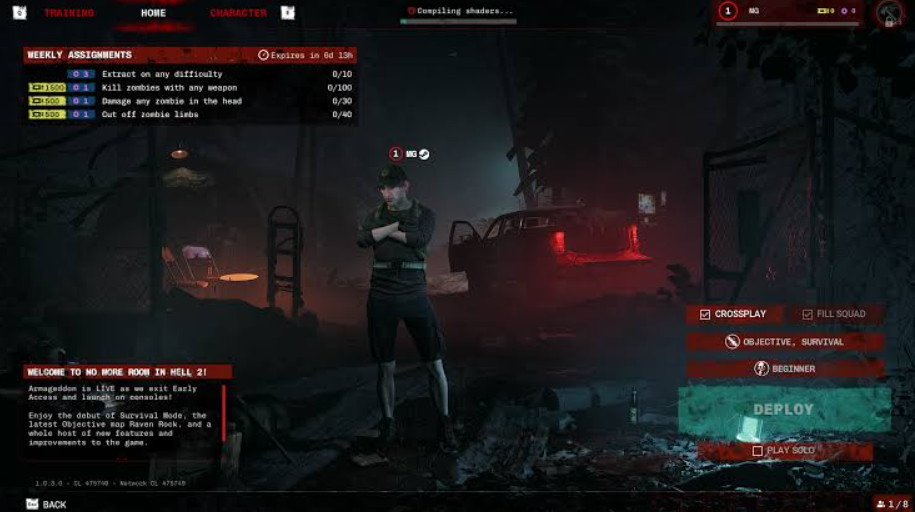
Four missions are available each week. They are updated on Tuesdays. Completing them awards both Merits and Credits.
The Rescue Beacon is an expensive piece of equipment. It can be purchased with Credits or Merits. When activated, the beacon prevents the next loss of a fighter—meaning, it saves the character if they would otherwise die. However, the beacon is consumed after use. It is considered a high-end item: it is rare and expensive, but in difficult Nightmare runs it can save the entire team.
Regarding spending choices: Merits are recommended for cosmetics and the beacon (if you often play on higher difficulties), while Credits are best reserved for emergencies.
Melee and Skill Rebalancing – What’s Really Changed
One of the most noticeable changes is a major rebalancing of melee weapons. The developers have revisited attack speed, damage, stability damage, and weapon tiers.
General Changes:
-
One-handed weapons now have +10% Heavy Attack Speed and +20% Charged Attack Speed.
-
Two-handed weapons now have +10% Charged Attack Speed.
-
Slashing weapons now deal +5 Stability Damage with Light Attacks and +10 with Heavy Attacks.
Specific changes by weapon type (from the official patch notes):
Reloading Skills:
Three new skills have been added: Handgun Reloading, Rifle Reloading, and Shotgun Reloading. They increase the reload speed of the corresponding weapon type. The Averaging, Guts, and Teddy Bear skills have been removed.
What does this mean for builds? It now makes sense to specialize in one weapon type and take the corresponding reloading skill. For close-quarters combat, the choice is obvious: the Fire Axe and Baseball Bat have become significantly stronger, while the Machete and Shovel have been weakened. The sledgehammer has lost damage, but retained its high damage consistency.
Difficulty – What’s changed at each level
Difficulty now has a greater impact on gameplay: horde composition and density change more noticeably, and story objectives scale depending on the selected level. Balance has been recalculated at all levels (Beginner, Normal, Hard, Nightmare). Additionally, the amount of ammo in firearms depends on the difficulty—at higher levels, there is less ammo.
Evacuation statistics (according to Free Weekend data from the developers):
Nightmare remains the most unpredictable: zombies are faster and more aggressive, supplies are scarcer, but experienced teams perform well (for example, Lewiston has an 83% evacuation rate). For beginners, we recommend starting with Casual to learn the maps and mechanics, and then moving on to Classic and higher.
Best Builds for Version 1.0
Based on the rebalancing, several working builds can be identified:
Firefighter Build
-
Weapon: Fire Axe (now deals massive damage, especially to the head).
-
Skills: Take a skill on your shotgun or rifle, depending on your secondary weapon.
-
Equipment: The Distress Beacon is a must-have on Nightmare.
Baseball Player Build
-
Weapon: Baseball Bat (Tier 3) – now one of the best in terms of speed and damage.
-
Skills: Handgun Reloading for your pistol, for quick finishing moves from a distance.
-
Equipment: First Aid Kits and Grenades for crowd control.
All-Round Build
-
Weapon: Machete (medium speed, but low damage stability) + Shotgun.
-
Skills: Shotgun Reloading.
-
Suitable: For team play, where teammates take on the main role of horde control.
Remember that the choice depends on the map and difficulty level. On open maps (like Flooded), a shotgun is better, while in closed areas (like Raven Rock), an automatic rifle is better.
At the time of publication, version 1.0 is already available to all game owners. The developers will likely release patches with fixes in the coming weeks, but the core mechanics described above will remain unchanged. If you’re returning from Early Access, prepare for a new economy, revised builds, and fresh strategies. All that remains is to assemble a team and test everything out.